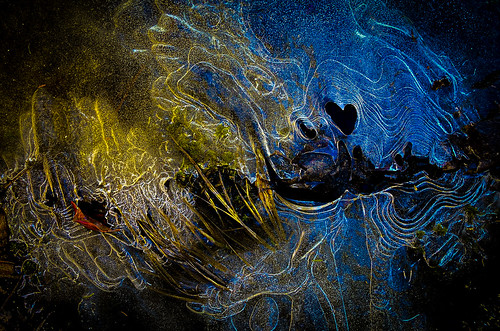
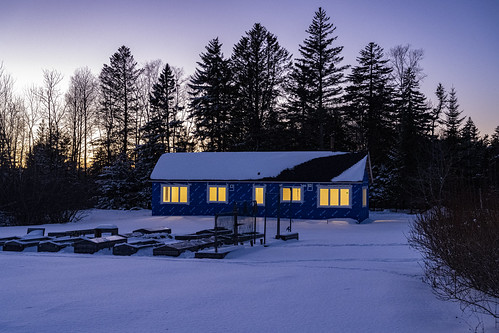
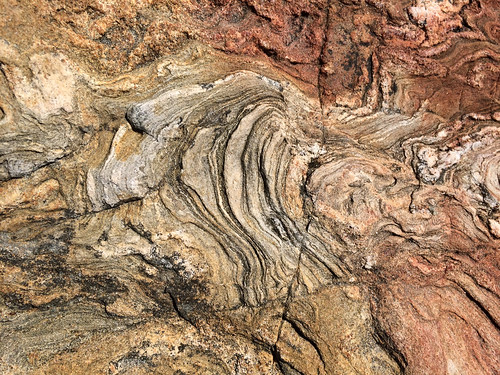
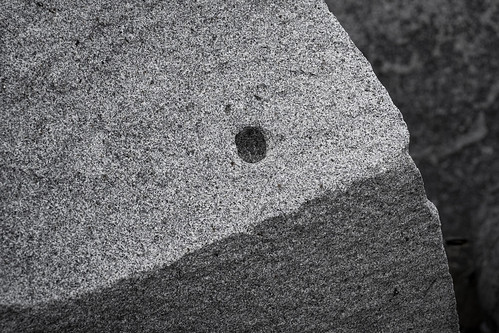
Yesterday’s trash pickup led me to a ditch on the Glenmere road which had some nice bits of ice. I had my new iPhone with me, and here’s what came from my first shot:
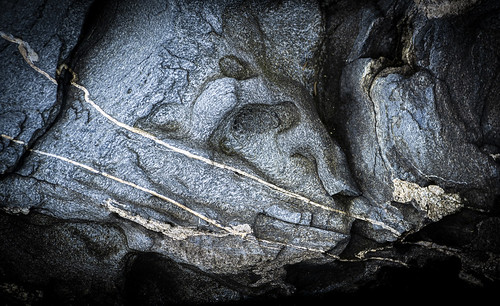
A bit of tweakage (crop, rotate, twiddle contrast and vibrance) produced this, in which my eyes see at least one creature, perhaps blue-faced and blonde-haired (YMMV, as usual):
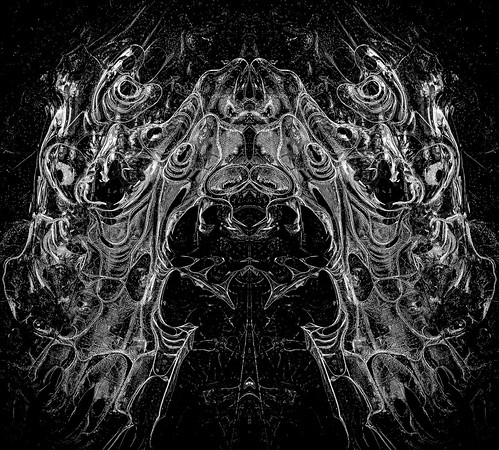
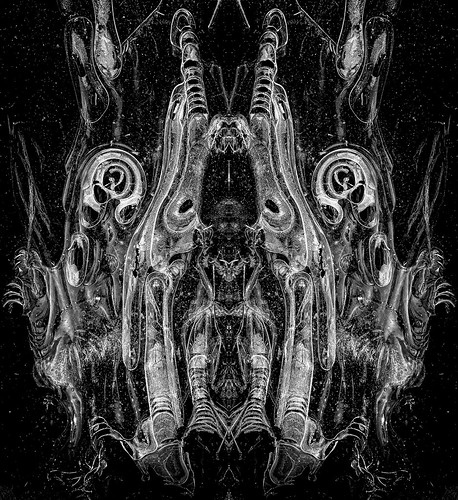
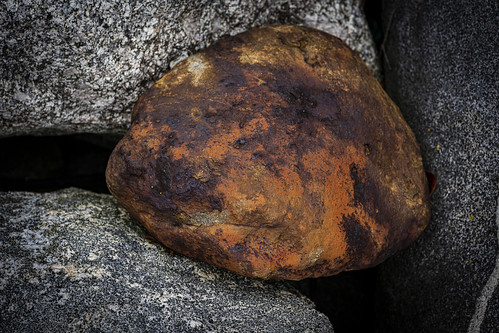
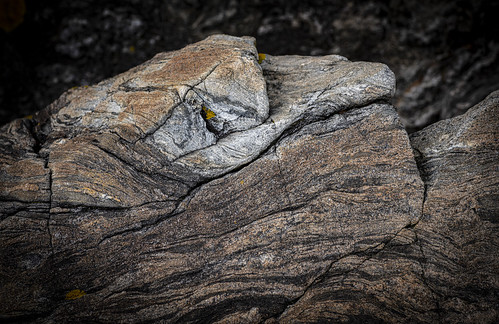
Just a few feet away were these two:
And here’s a further evolution of the lattermost, in which the latent creature is revealed (or perhaps it’s creatures…):
Similar treatment of the penultimate other produces a being with pronounced Northwest Coast sensibilities:
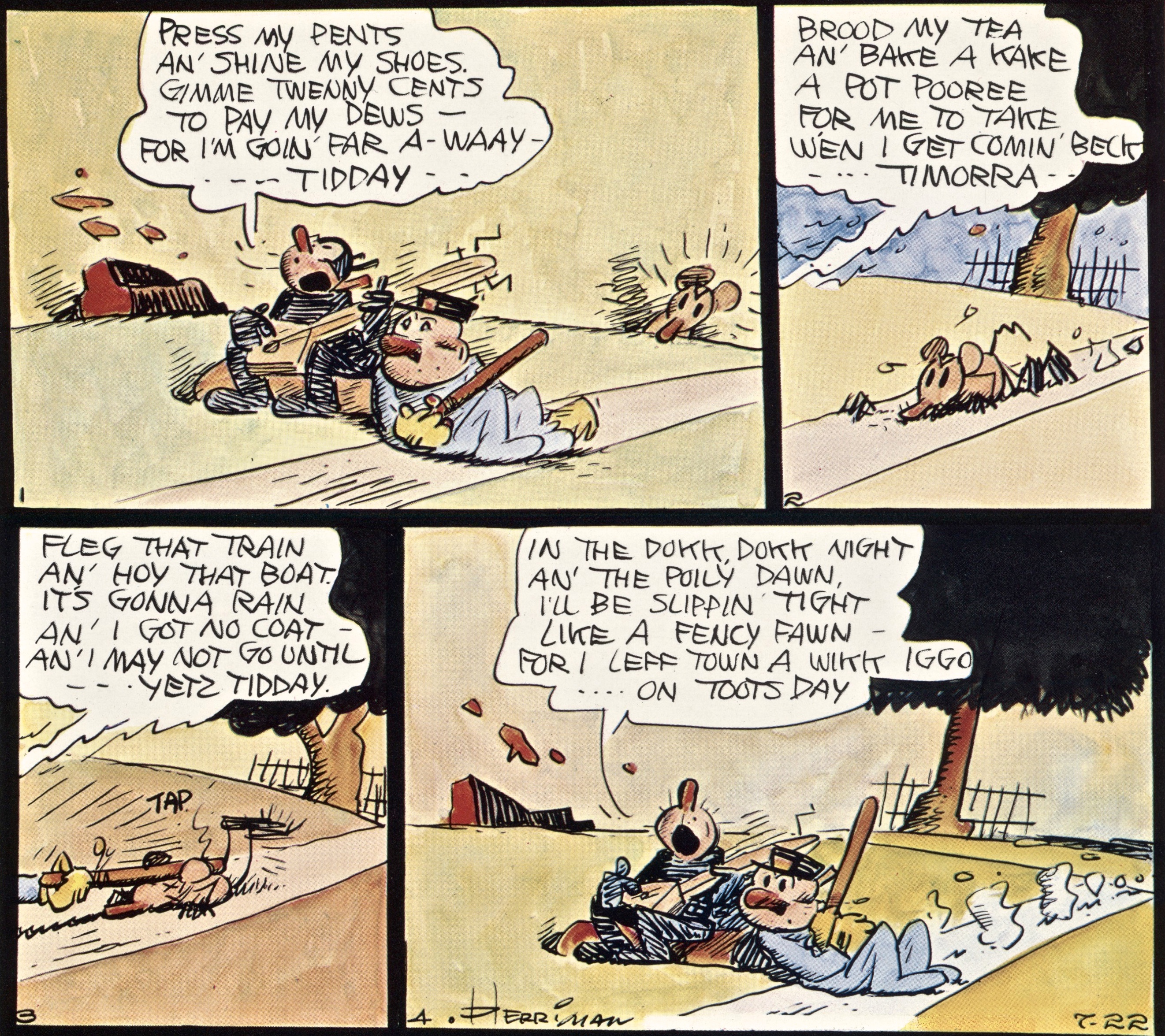
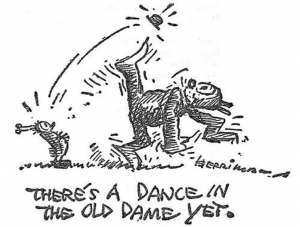
I often have the experience of being inspired by something I read or see to order a book (used via Amazon, most often), but when it arrives I don’t recall the details of the inspiration, having by then moved on to yet more inspirations… Today’s case in point is Louis Kronenberger’s Quality: Its Image in the Arts (1969), which turns out to have a very interesting chapter on Photography by Walker Evans (which I had read about a couple of weeks ago in Svetlana Alpers’ Walker Evans: Starting from Scratch (2020), and was, as I now reconstruct it, the source of the inspiration to order). The Kronenberger book has chapters by a variety of mid-20th century luminaries (Virgil Thompson on Music, Gilbert Seldes on Popular Arts, Milton Glaser on Graphics, Ada Louise Huxtable on Architecture, Eliza beth Hardwick on Literature…), some of which are a bit musty a half century later (though their points of view are memorable to those of us who were there then). There are lots of wonderful illustrations, some very familiar and others quite new to me. One that especially delights me is this from George Herriman’s Krazy Kat, ca. 1922 (that is, nearly a century ago):
Now, Herriman himself is an interesting character, subject of the biography Krazy: George Herriman, a Life in Black and White (2016), and “a visionary whose influence helped shape popular culture for decades after his death… you may never look at the zigzag on Charlie Brown’s t-shirt again without remembering that it was Charles Schulz’s tribute to the Navaho designs that recurred in Herriman’s work…” (from the Amazon blurb). I retrieved it from the Auxiliary Library in the barn and started reading it again.
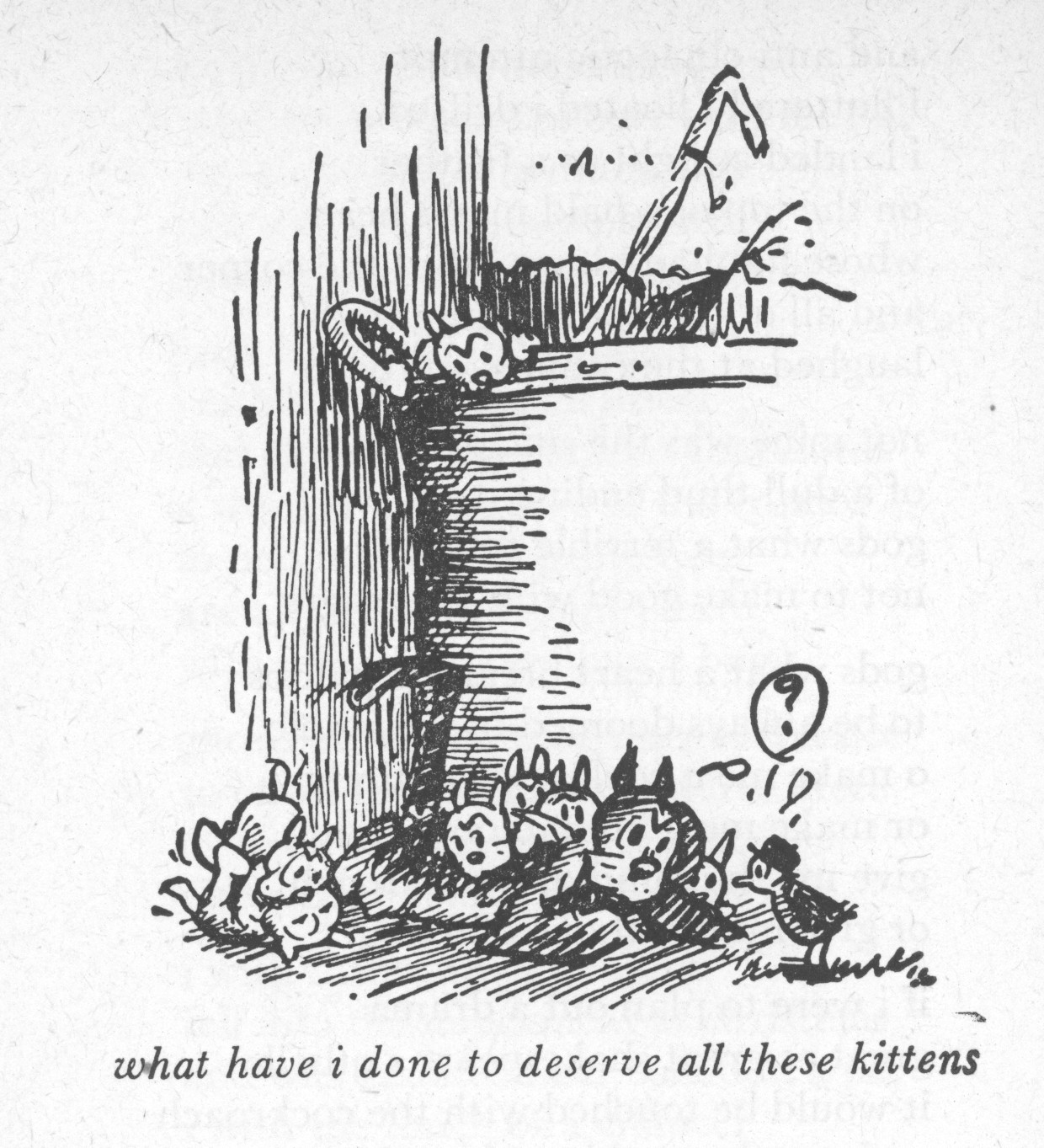
And Herriman drew the cartoons for Archy & Mehitabel (written by Don Marquis):
i have had my ups and downs
but wotthehell wotthehell
yesterday sceptres and crowns
fried oysters and velvet gowns
and today i herd with bums
but wotthehell wotthehell
i wake the world from sleep
as i caper and sing and leap
when i sing my wild free tune
wotthehell wotthehell
under the blear eyed moon
i am pelted with cast off shoon
but wotthehell wotthehell
We are 20 years into a brave new century.
Remember when 2000 rolled over and we all thought there weren’t gonna be enough digits to keep the internet from crashing? So much history has rolled by, over and around us . . .affecting each of us in a myriad of ways.
What has the impact of these years been on you and your inner life?
How might you be a different person from the one who saw in that new century with all the zeros?
So I went to my shelf of journals and found the volume that includes 2000 and read through that year and into 2001, and so I have data to help me note some ways in which I am
a different person
grandparent retiree photographer again last of a sibling set yogi
no longer
avid Appalachian Trail hiker (we finished the 11-year odyssey of day hikes in 2003) GIS (Geographic Information Systems) Evangelist in the role of Librarian and Professor engaged with liberal arts colleges working on Global Studies/Stewardship entangled with digital library initiatives
recognizably the same
omnivorous quester bibliophile cyberspace participant hypertext author foodie walker æsthete [in a good way…] collector heathen musician watcher from the sidelines Mocker [Ringo’s answer when asked if he was a Mod or a Rocker]
Yes, folks, for 20 years it’s been ODTAA (One Damned Thing After Another). Some things I discovered in the journal entries: few of the films I watched 20 years ago are memorable (most left no trace); I noted lots of boring meetings; lots of travel; lots of (less boring) task-focused meetings; lots of consultations, many leading to Web documents; a wide variety of courses and workshops taught; schemes to change the World around me hatched; weekends on the Appalachian Trail, lots of driving north and south from Lexington VA to trailheads. It was a very full and satisfying life, and so is its 2021 successor.
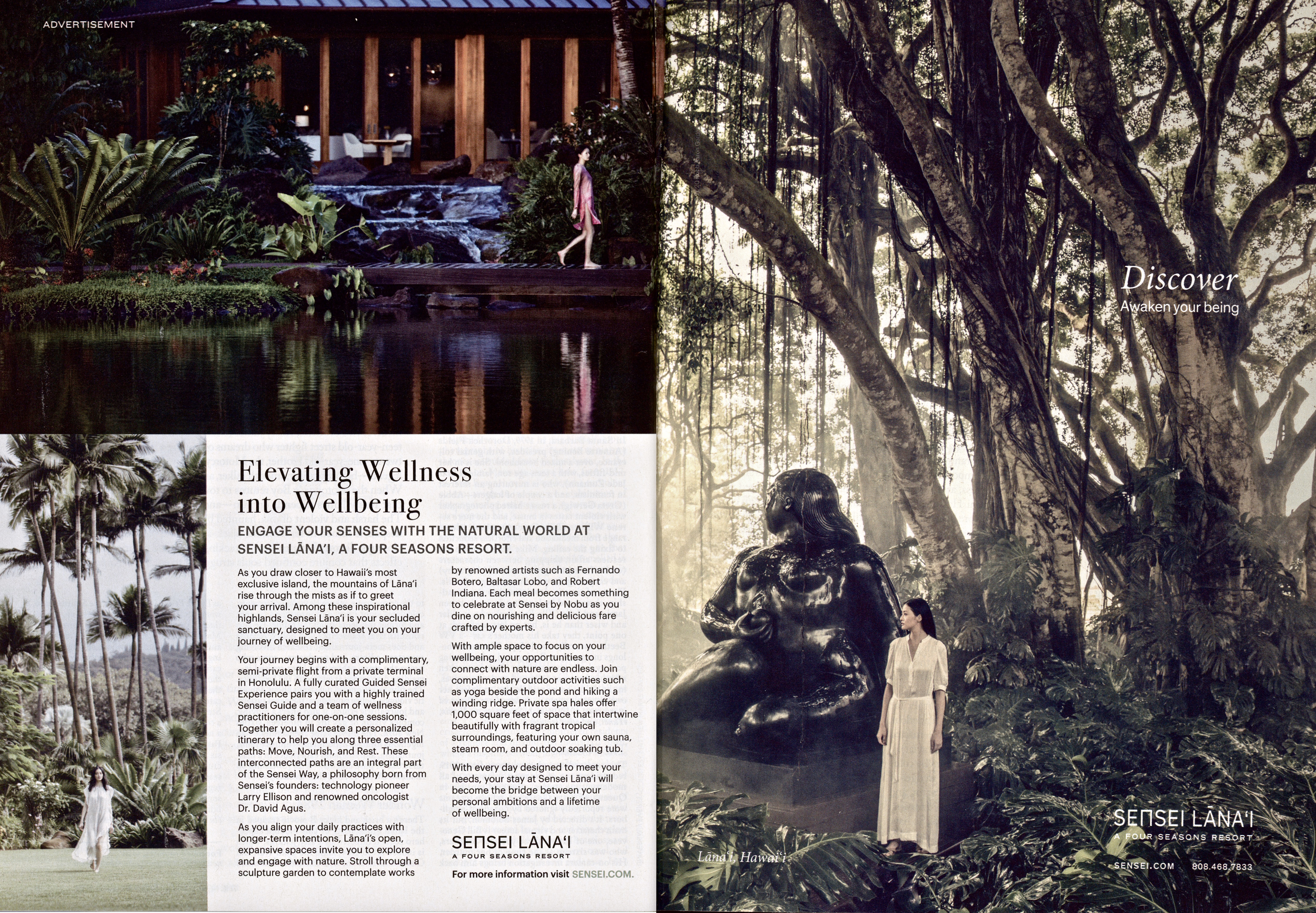
An early morning riffle through this week’s New Yorker produces a marvelous collision of Americas. The first is a two-page spread advertisement for Sensei Lānaʻi, a “Four Seasons Resort” which proposes “Elevating Wellness into Wellbeing”:
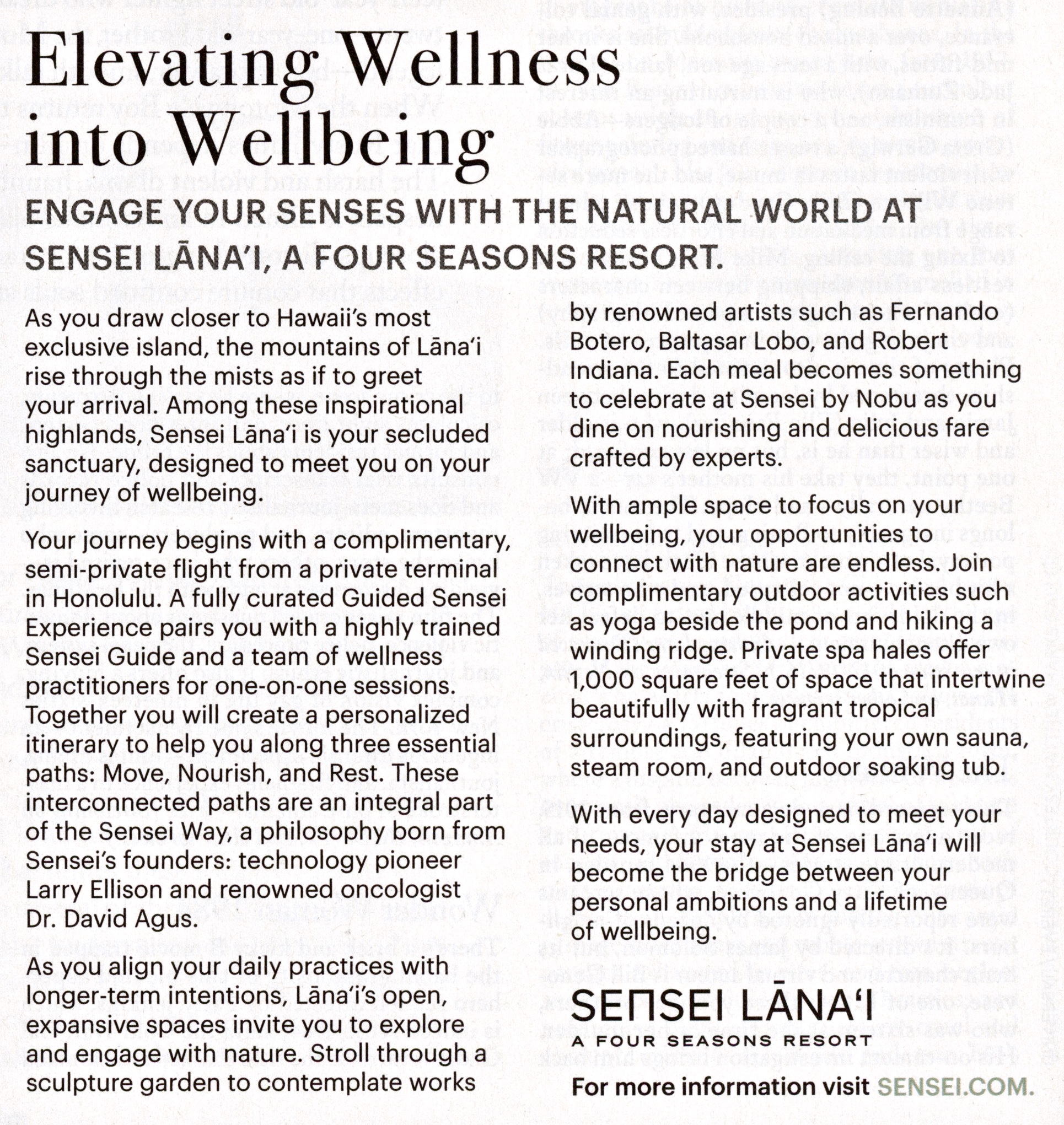
This is the single most offensive ad I’ve encountered so far this year, and maybe ever. You owe yourself a close reading of the text:
I then turned a couple of pages to arrive at The Talk of the Town, the lead piece of which is Adam Gopnik’s “Fault Lines” which begins
Readers of “Through the Looking-Glass” may recall the plight of the Bread-and-Butterfly, which, as the Gnat explains to Alice, can live only on weak tea with cream in it. “Supposing it couldn’t find any?” Alice asks. “Then it would die, of course,” the Gnat answers. “That must happen very often,” Alice reflects. “It always happens,” the Gnat admits dolefully.
Gopnik goes on to consider America’s current crisis of democracy, and says
The default condition of humankind, traced across thousands of years of history, is some sort of autocracy.
…Keeping a republic is a matter not of preserving it like pickles but of working it like dough—which sounds like something you’d serve alongside very weak tea. But it is the essential diet to feed our democracy if we are to make what always happens, for a little while longer, happily unhappen.
What a juxtaposition: the utter crass ME-ness of Larry Ellison’s Lānaʻi (“Oracle billionaire Larry Ellison bought 98% of the island of Lanai in 2012 for an estimated $300 million…”) with Gopnik’s rendition of our current slide toward the “default condition of humankind.” But Gopnik tells only a part of the story, which includes Lewis Carroll’s discription of the fatal anatomy of the Bread-and-Butterfly:
its wings are thin slices of bread-and-butter, its body is a crust, and its head is a lump of sugar.
Thus, if the Bread-and-Butterfly did find its weak tea with cream, it would die as its head dissolved; if it didn’t find its weak tea with cream, it would starve. The Bread-and-Butterfly is, as Gregory Bateson noted, a classic example of the Double Bind:
the essence of a double bind is two conflicting demands, each on a different logical level, neither of which can be ignored or escaped. This leaves the subject torn both ways, so that whichever demand he or she tries to meet, the other demand cannot be met. “I must do it, but I can’t do it” is a typical description of the double-bind experience.
Hobson’s Choice is another common trope, in which the Choice is between something and nothing. Both are all too present in today’s world.
Somewhere in the searching and reading that this conjunction provoked, I stumbled upon a term that was new to me: egregore, “powerful autonomous psychic entities created by a collective group mind.” Egregores: The Occult Entities That Watch Over Human Destiny
sustained by belief, ritual, and sacrifice and relies upon the devotion of a group of people, from a small coven to an entire nation, for its existence. An egregore that receives enough sustenance can take on a life of its own, becoming an independent deity with powers its believers can use to further their own spiritual advancement and material desires… provides instructions on how to identify egregores, free yourself from a parasitic and destructive collective entity, and destroy an egregore, should the need arise. Revealing how egregores form the foundation of nearly all human interactions, the author shows how egregores have moved into popular culture and media–underscoring the importance of intense selectivity in the information we accept and the ways we perceive the world and our place in it. (from the Amazon precis)
How very like the ‘Trumpism’ that seems to stalk the land and contribute to that “current crisis of democracy.”
The tendency to think of what we have lost in 9+ months of COVID is pretty pronounced. I awoke in the wee hours with the Question: what have we gained in those months of altered realities? And then: what might we do with those gains when the external world opens again, and we have once again choices about what to do and how to operate in the wider world?
There’s an obvious answer to [what have we gained?] and that’s time and space for contemplation, for looking at each and every thing to ask what really matters and how we can productively engage, how best to use the time we have?
Speaking for myself, these months have prompted me to make sense of my own collections, and that’s morphed into the notion of building Finding Aids—primarily to guide myself in the vastnesses of things accumulated, but also to improve accessibility to whatever posterity there might be for those collections. The Blurb books (which I began 5 years ago with Bluenose Physignomy) were a start in that effort, though I didn’t apply the archivist’s notion of Finding Aids exactly, and preferred the image of Narration—which in general seems a superior mode of presentation when the binding thread can be found and spun out coherently. And, looking back at least 20 years, the whole enterprise of hypertext and oook.info gatheration has been the armature for building and distribution.
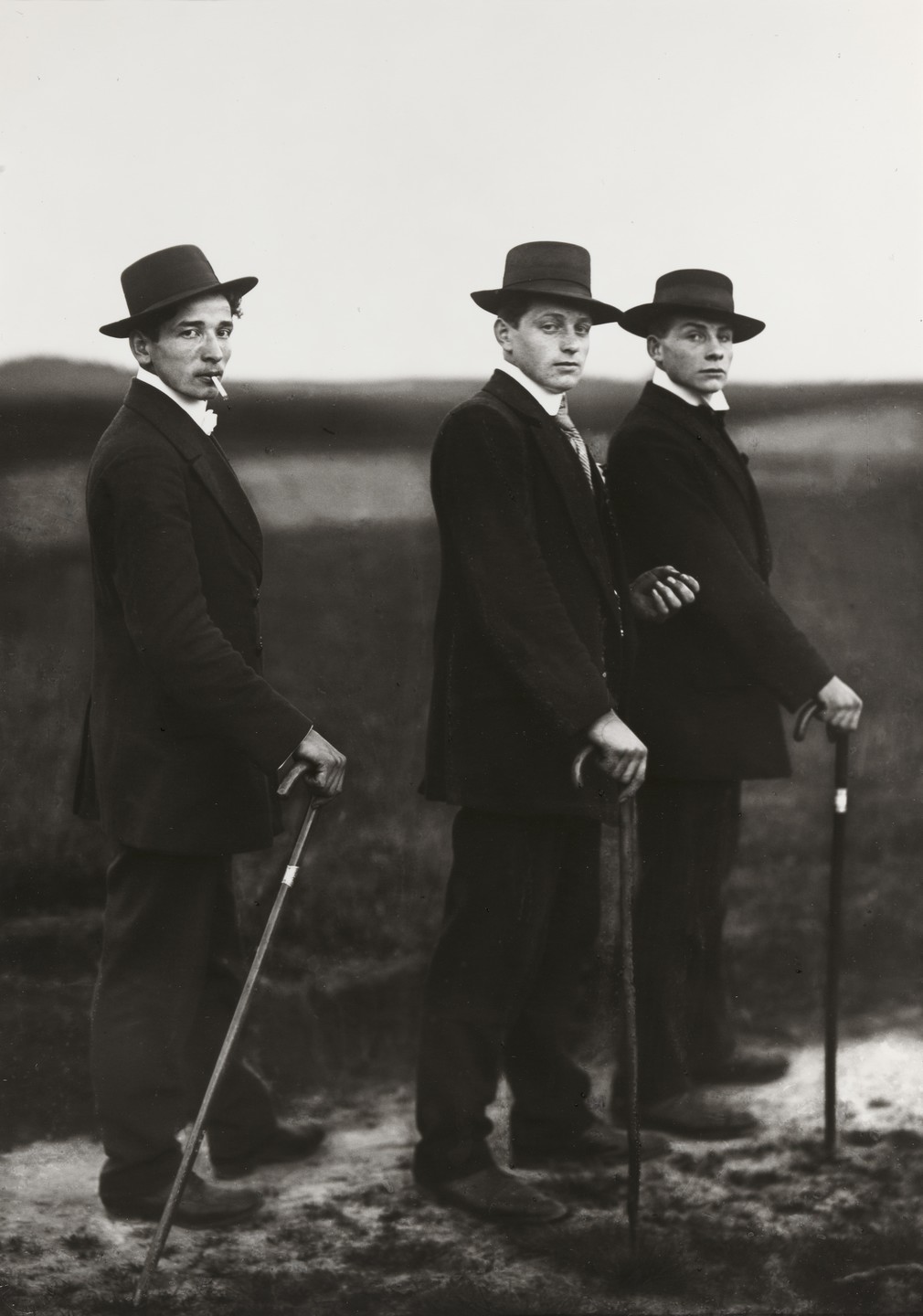
I fancy that I’m looking at things with closer attention, and certainly that’s true with the current engagement with the photography library, which I’ve barely begun and don’t really have a coherent plan for, beyond adding material from more books. There is a dawning sense that I might make a separate page for each of the photographers I revere, in which to gather thoughts and pointers outward to explicate that reverence.
Idle thought: Am I revisiting and reconceptualizing the Boy Scout notion of Reverent? What a surprise… what then for Obedient and Brave and Clean? Can these be redrawn into worthy ambitions?
The gallery of photographic inspiration (scans of especially redolent photographs, not for interwebs distribution for reasons of copyright) is turning out to be a productive contemplative device for exploring my own æsthetic, and for focusing my examination of the work of photographers by whom I think I’ve been influenced. I’m pleasantly surprised by their variety, even within the constraints of monochrome, and indeed it’s been worthwhile to discover how deeply steeped I am in the B&W world.
Digression: That thought provoked imagining a monochrome digital camera, with controls for refining the electronic viewfinder image…
So I have a rich sense of ongoing discovery in materials I’ve been accumulating for years, indeed for my whole life. The exploration has always been there, but it seems now that I’m more aware of it as personal raison d’etre, even without the captive audiences of students, or the library ‘patrons’ (whom I preferred to see as clients) who brought me questions. I feel myself to be a student, working toward general understanding of unlimited somethings in the world around me. Some of the tools are technologies of information—the camera, the computer, the sound makers, the books. Some tools are essentially mental—the processors of sensory inputs, the builders of texts, and link-makers in assemblages. Just what it is I’m building I can’t see clearly, and perhaps the absence of a specific goal is an advantage, even an operational necessity. It, whatever it is, won’t ever be completed, and completion of any part isn’t the point of the doing.
This week’s Convivium Question came to me in this form:
? Where do YOUR ideas of how people ought to be come from ?
I think the foundations are laid well before adolescence, though surely influences and examples in teenage and after-years are significant as refinements and augmentations, and some people may experience basic changes at inflection points in later life–Road to Damascus conversion, or the discovery of Ayn Rand (ew…) … But the foundations are laid in ways that may be behind the conscious memories, and still be recoverable by thinking about, by examining evidence (for me that’s bookshelves and family photographs), some of which may be so well-buried as to remain inaccessible.
For some people it’s a matter of “learn from the teachers by negative example” as Mao said (“I’m NEVER going to be like her/him…”); for some it’s something that grows out of admiration, out of positive example. The child of mercurial parents, of a household suffused by anger, develops different expectations and coping mechanisms than the child whose early life is calm and nurturing. Imagine how somebody whose basic experience is being bullied would respond –say Donald Trump, or Prince Charles– or consider Queen Elizabeth, who learned DUTY from a very early age (this in the context of watching The Crown and The Windsors). And if Michael Apted’s ‘7 Up’ series isn’t in your repertoire, it SHOULD be: 7-63 Up.
And consider this from today’s Guardian:
Biographers have told how he was raised by his father to be a “killer” and regard losing as a sign of unforgivable weakness. The family attended a church whose pastor, Norman Vincent Peale, wrote the bestseller The Power of Positive Thinking with advice to “stamp indelibly on your mind a mental picture of yourself as succeeding.”
I assume that we build our own personalities on notions of ‘how people ought to be’, though perhaps not very consciously. And I do wonder if ‘ought to be’ is different from ‘expect to be’, and how. We might read the Question as seeking the origins of a personal set of desirable virtues: “How people ought to be” is really asking how one ought to be oneself, since (however much we might deplore it) mostly others aren’t going to be how I think they ought. But the point of the Question is to recognize the models and inspirations of one’s own life, to acknowledge from whom one has learned to be.
I look forward to how you may unpack your own experiences. Here are some of mine:
and Richard Powers’ marvelous book (published in 1985) with the same title, which constructs an epic reading of the photograph. A couple of weeks ago the book was released as an Audible book, and I’ve been listening to it and re-reading my 1987 paperback too. The book has lost nothing of its power in those 33 years since I first read it.
That post followed one a week before, written while I was reading Powers’ Orfeo (2014), which contains this bit of insight:
…people take up all kinds of hobbies in retirement. They visit the birthplaces of Civil War generals. They practice the euphonium. They learn tai chi or collect Petoskey stones or photograph rock formations in the shape of human faces… (Orfeo, page 2 or so)
In 2014 I wasn’t seeking rock faces (though that was the first year we visited Brittany, and I did photograph megaliths), but it was about that time that I discovered the 12th Imam on a rock in Martinsville, and that was probably the beginning of my engagement with faces in rocks:
Since then I’ve done thousands of rock portraits, and just today we did an expedition to Marshall Point and I collected these:
Yesterday the day began with this advice from Kate:
Establish what actually matters to you and then do that. And support your local bookstore
What actually matters to me includes thinking things through and constructing summaries of the process, perhaps for an audience of one. The blog is a basically harmless venue for such maunderings, and has the advantage of being distributable to any like-minded others out there. So things like this have a home where they can be found again at need:
Wovon man nicht sprechen kann darüber muß man schweigen
Whereof one cannot speak Thereof one must remain silent
…which has, among other things, to do with Silence, investigation of which has occupied me for the last couple of days. The subject came up via an eloquent post by Andy Ilachinski, which mentions “the infinite variety of silences that permeate existence” and references Notes on Silence and the accompanying film In Pursuit of Silence. I got and inhaled both.
And so I’ve spent the last couple of days bouncing around in various texts. Herewith some of my findings, each worth lingering over:
SILENCE and LICENSE are anagrams; both are forms of Freedom.
***
People think that their experiences are the reality and in fact, experiences are always interpretation, they’re always a construct. (Ross NS 264)
“Sound imposes a narrative on you and it’s always someone else’s narrative. My experience of silence was like being awake inside a dream I could direct.” (Maria Popova)
***
Any musician will tell you that the most important part of playing a piece of music, especially classical music, is the rests, the silences. (NS 276)
Louis Armstrong maintained that the important notes were the ones he didn’t play. (Popova)
***
“you are confronted with your inner noise, with your inner resistances.” (Sturtewagen NS 161)
“…persistent self-noise of the internal sort… ‘the interminable fizz of anxious thoughts or the self-regarding monologue’.” (Shen NS 207)
***
“I think it’s hard for us in the West to see silence as an end in itself… We think of silence as an absence and something negative…
Silence is like a rest in a piece of music—it’s not blank space, it’s a concrete space that’s filled with something other than words. (Pico Iyer NS 123)
***
“…as simple as shifting your attention from the things that cause noise in your life to the vast interior spaciousness which is our natural silence… the process of ungrasping, the process of opening your hand, of unclenching the fist…” (Ross IPS)
***
In a world of movement, stillness has become the great luxury. And in the world of distraction, it’s attention we’re hungering for. And in a world of noise silence calls us like a beautiful piece of music on the far side of the mountains. (Pico Iyer, IPS)
***
“Silence is a sound, a sound with many qualities… Silence is one of the loudest sounds and the heaviest sounds that you’re ever likely to hear.” (Evelyn Glennie)
***
“Modern people don’t feel moved or impressed just by living. In order to do so, we need to keep the silence and examine ourselves.” (Roshi Gensho Hozumi IPS)
Give up haste and activity. Close your mouth. Only then will you comprehend the spirit of Tâo. (Lao-tzu)
I also took this opportunity to reacquaint myself with R. Murray Schafer’s The Tuning of the World (“a pioneering exploration into the past history and present state of the most neglected aspect of our environment: the SOUNDSCAPE”), and to put my perceptual apparatus to work on the soundscape of a 4-mile trash picking up expedition. The sound of car and truck tires on the road was the loudest, most frequent, but still intermittent interruptor of silence; dogs barked at my passing in four places. My own footfalls were the regular punctuation of an otherwise almost entirely silent passage.
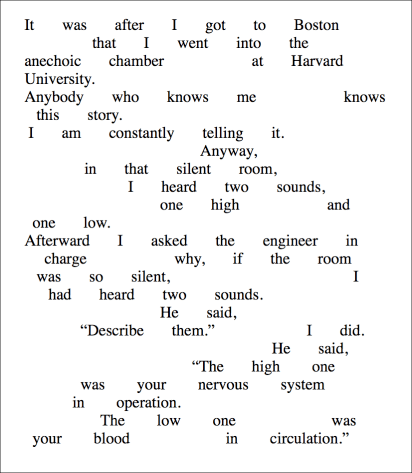
Schafer’s chapter on Silence provoked a brief dip into acoustical theory via Hermann von Helmholtz (1821-1894), whose On the Sensations of Tone as a Physiological Basis for the Theory of Music is a still-relevant exploration of the psychophysics of sound. von Helmholtz distinguished ‘non-periodic vibrations’ as “noise”, distinct from the ‘periodic vibrations’ that characterize music. Others (among them Claude Shannon) developed the notion of signal-to-noise ratio as a measure of the operational health of an information system. Noise is generally formless, seems to carry very little information, is inclined to the random rather than the patterned, and is that which we try to edit out of soundscapes as we pass through them. Anechoic chambers are sound environments that reduce noise to a minimum. John Cage’s description of his experience in such a space
is perhaps an exaggeration (the high frequency may have been tinnitus), but the reported basic disorienting experience of hearing ONLY the sound within (the “persistent self-noise” cited above) is worth the price of admission.
Evelyn Glennie is another wonderful and inspiring re-discovery in the context of silence: