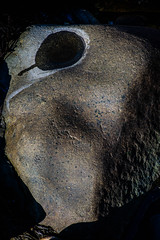
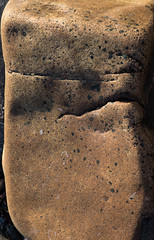
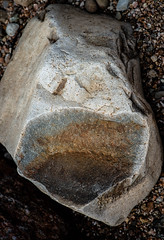
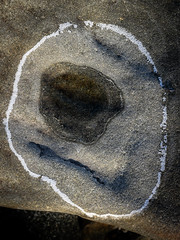
A story in the New York Times (These Mole Rats Felt No Pain, Even From Wasabi’s Burn) suggested the game of making haiku and senryu from headlines. The challenge is to add a line to complete the text of the headline, or perhaps find another way to work the text into the canonical 5-7-5 pattern. Here’s the opening salvo, in keeping with the sardonic and the mordant tone of the last post:
mole rats felt no pain even from wasabi’s burn try capsaicin next
(this assumes that tout le monde knows that ‘capsaicin’ is the active ingredient in the hotness of peppers) (and marks the conceit that the torture of mole rats is Science) (and with thanks to Nick for the capsaicin, C18H27NO3)
I’m at an age where I pay more attention than formerly to texts on health and Thanatos. Among the authors I seem to be engaged with are Atul Gawande, Sherwin Nuland, Jerome Groopman, Jenny Diski, and most recently Colm Tóibín. I’m especially interested in the grace and wit these writers apply to the direst of subject matter. Thus Tóibín in a recent article in London Review of Books:
A week later the phone rang and I was told that I had a cancer of the testicles that had spread to a lymph node and to one lung. Instead of seeing the urologist, I would now need to see an oncologist. For a few days I comforted myself by pretending that, because of my abiding interest in the mysteries and niceties of Being, I had to see an ontologist… (18 April 2019, page 3)
The art of the grim jest, the sardonic and the mordant, is not to everyone’s taste. Once again, Amazon seems to be reading my mind: as I wrote the last sentence, email binged a come-on for Tony Moyle’s The End of the World is Nigh (“If you love books about con-men, conspiracies, Renaissance history, massive agitated boar, exploding beds, marmalade and historical satire then this is the book for you…”). Did I succumb? Of course.
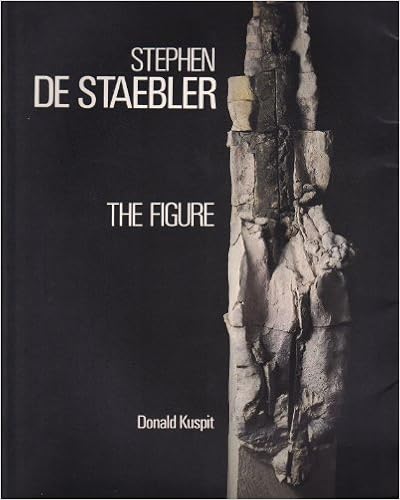
During a visit to Vashon Island, a series of unplanned conjunctions took me to the Vashon Bookshop for a half hour of browsing before our reservation at the marvelous May Kitchen and Bar. This book leapt into my arms:
Stephen De Staebler was my 9th grade history teacher (1957-58), and offered a high-energy version of World History to a class of 15 or so engaged and eager students. He also taught a class in stained glass for 5 of us, with lead and solder and glass cutters, the real deal. He was only at the school for a year, but was unforgettable for his contagious enthusiasm. He went on to become a well-known sculptor and teacher at San Francisco State, and died in 2011. His website (stephendestaebler.com) represents his work quite well. I was something between delighted and gobsmacked to discover a gallery of masks that presage my recent work with lithic personalities. At the very least, we draw upon the same mysterious vein of mimetic imagery (“a term used in literary criticism and philosophy that carries a wide range of meanings which include imitatio, imitation, nonsensuous similarity, receptivity, representation, mimicry, the act of expression, the act of resembling, and the presentation of the self” in its Wikipedia rendering). There’s also this quote to consider:
Much of art is play in the serious sense, like magic, trying to restructure reality so that we can live with the suffering.
-Stephen De Staebler, 1984
I’m not quite sure what to do with “the suffering” but I’m pleased to consider what he might mean. It’s the sort of responsibility one has toward one’s well-remembered teachers. Alas, there are only a couple of 9th grade classmates left who remember Steve De Staebler, and I wish I’d been able to convey my thanks to him for what he taught and what he Taught.
Just about to depart for a 6-week cross-country driving trip, anticipating many opportunities to photograph novel things in unfamiliar territories. I’m sure that thoughts about photography will arise as we go, and perhaps when we return I’ll have the requisite inspiration to plunge into the Blurb books that have been gathering a head of steam during the winter.
One that seems somehow inevitable is tentatively titled Elevenses, being the eleventh:
‘Elevenses’ (‘elevensies’ if you are a Hobbit, or a non-Hobbit with a penchant for puerile language) refers, as the word itself suggests, to food taken at eleven in the morning. Actually, the word applies not to the mere snack itself, but to the whole concept of a brief, healing pause in the crisis of the day. It is peculiarly British, and is rather more significant than its common definition of “a light informal snack” would suggest. It is, in fact, an institution, an inviolable right, a routine without which the British could not (would refuse to) continue with their working day. (Note to any country considering invading Britain: do it at eleven a.m. when everyone’s attention is focused elsewhere.) (from theoldfoodie.com)
Perhaps Elevenses wants to be free-standing, and thus able to include occasional images that have appeared in other books. Perhaps it’s about what I think about photography, and about my own practise in the medium. Sometimes it’s a bit difficult to know which are my own ideas, which are my distillations of others’ ideas, and which are basically purloined words of other writers. I imagine Elevenses as an effort to sort those various strains out.
As I have read about photography I have transcribed especially trenchant passages, in which authors seemed to be speaking directly to my concerns and sensibilities of the moment. It’s difficult to know how useful such extracts might be to others, unless I am able to use them to illustrate or exemplify some particular point or issue in my own photographic work.
Ansel Adams to Dick Miller, 1973:
My concept of photography is nothing tangible. I want my images to vibrate in vacuum, giving vent to the intangible tangibles of the immediate tangent. My prints reflect my deep non-concern with the concernable. When I am out with my camera I am in with my libido.
If photography is silence, then I am a sonic boom. If photography is a sonic boom then I am extinguished. One must make a decision: is photography an art or is it a rural funicular railway, descending into levels of non-comprehension, ornamented with the pangs of perverse euphoria?
My photographs reflect just that and nothing (more). My reflections reflect my photographs; a spiritual, Zen-like reflection of the reflectivity of the reflective spirit.
I stand supine at the realization of my semi-experience. May my prints cause a re-supinization of my spectators. Let us PRAY!
Question: can we chip off pieces we like and leave the rest? Purists and true believers will always say NO.
The question arises because I recently began to re-re-read Robertson Davies’ Deptford Trilogy (Fifth Business, The Manticore, World of Wonders), last visited maybe 20 years ago. Besides being a cracking good yarn and highly literate in a Canadian/British mode, it involves an extended meditation on entangled lives, on interwoven Stories, and on friendship. The second volume, The Manticore, was the source of pretty much everything I know of Jung. And now, in the context of thinking about life, and legacy, and Stories, it seems worthwhile to revisit one of the influential syntheses of the internal worlds.
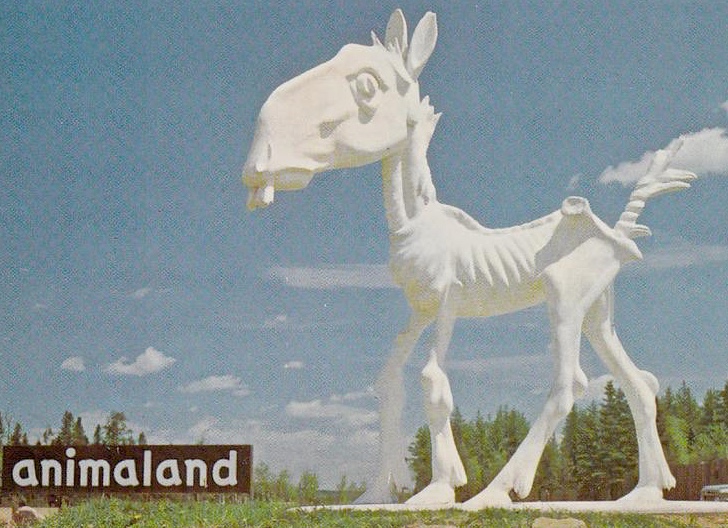
Interlude: On our many passages between Nova Scotia and New England we would pass by a bizarre theme park/sculpture garden in deepest New Brunswick, called Animaland, the entrance to which was graced by a skeletal statue of a horse.
Betsy joked that it was “a place for the Jung at heart.”
Jungian analysis (AKA ‘analytic psychology’) proceeds from a foundation in anamnesis, an exercise by the analysand in extended autobiography (‘subjective confession’) aimed at confronting neurosis (seen as a “state of disunity with oneself”) and an attempt at self-cure of “mild dissociation of personality”.
“We can start almost anywhere. But from what you have told me I think we would be best to stick to the usual course and begin at the beginning.” “Childhood recollections?” “Yes, and reflections of your life up to now. Important things. Formative experiences. People who have meant much gto you, whether good or bad… We look at your history, and meet some people there whom you may know or perhaps you don’t, but who are portions of yourself…” (The Manticore pg 70, 71)
This seems not irrelevant to some of what the Convivium is exploring. It’s not that I wish to immerse myself in Jungian bathos, but some of the terminology and background ideas may be provocative, evocative, useful to myself and others, so it’s useful to try to set out the framework, and to pick and choose elements that seem resonant.
…we are attempting to recapture some forgotten things and arousing almost forgotten feelings in the hope that we may throw new light on them, but even more new light on the present. Remember what I have said so many times; this is not simply rummaging in the trash-heap of the past for its own sake. It is your present situation and your future that concern us. All of
what we are; talking about is gone and unchangeable; if it had no importance we could dismiss it. But it has importance, if we are to heal the present and ensure the future. (The Manticore pg 100)
Powerful notions in the Jungian cosmology include the collective unconscious, broadly conceived as applicable to all Mankind, and coming from “somewhere beyond”, a “dynamic psychic substratum” encoded in myths “common to all humanity, on the basis of which each individual builds his or her private experience of life”—a grand and contentious notion [how transmitted? how across cultural/linguistic boundaries? from what origins? what are the Universals?].
Archetypes (“identical psychic structures common to all”) are another realm generally associated with Jung.
You may call these figures many things. You might call them the Comedy Company of the Psyche, but that would be flippant and not do justice to the cruel blows you have had from some of them. In my profession we call them archetypes, which means that they represent and body forth patterns to which human behavior seems to be disposed; patterns which repeat themselves endlessly, but never in precisely the same way… (The Manticore, pg 229)
And here we quickly find ourselves in deep waters. I ran across a list of 300+ Archetypes, the most familiar of which are
The Self
The Anima
The Animus
The Shadow
The Persona
The Father
The Mother
The Child
The Wise Old (Sage)
The Hero
The Trickster
The Maiden
The poignancy of this Archetype thing may be appreciated with another list, immediately resonant for the males among us:
The four healthy archetypes of boyhood are:
The Divine Child
The Hero
The Precocious Child
The Oedipal Child
The eight shadow archetypes of boyhood are:
The High Chair Tyrant
The Grandstander Bully
The Know-it-all Trickster
The Momma’s Boy
The Weakling Prince
The Coward
The Dummy
The Dreamer
Shudder.
In my search for efficient entrée into Jung, I’ve been reading the excellent Jung: A Very Short Introduction, and I also found Daryl Sharp’s Jung Lexicon: A Primer of Terms & Concepts, worth a few minutes of your time to scan and thus to realize how integral and hermetic and inward-facing the world of Jungians is, and how vast and dauntingly impenetrable. The idea of breaking off a few convenient ideas or insights would be Anathema to true believers, but there are tasty bits that seem to accord with notions we’ve already discussed among ourselves, such as
Individuation: to “realize one’s own potential, follow one’s own perception of the truth, and to become a whole person in one’s own right”, “to work with and confront the unconscious” as a lifelong process.
Projection: “confronted by a field of ignorance, we project into it our own psychic activity and fill it up with meaning.”
All the world is taken in through the eye,
to reach the soul,
where it becomes more,
representative of a realm deeper than appearances:
a realm ideal and sublime,
the deep stillness that is,
whose whole proclamation is
the silence and the lack of material instance
in which,
patiently and radiantly,
the universe exists.
(Mary Oliver, “Emerson”)
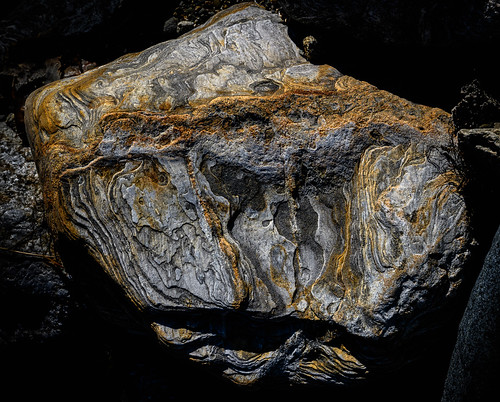
I’ve been thinking about this image ever since I captured it back in August, and wondering how to explain what I saw, what it means, and how it fits into my evolving sense of personal engagement with photography.
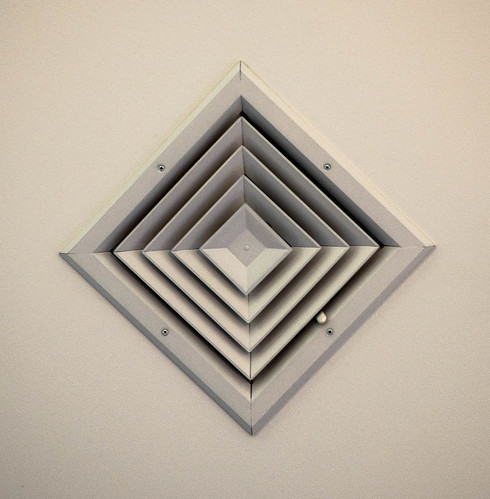
The train of thought came about during a yoga nidra session, as I lay immobile for 40 minutes or so with no other visual stimulus than a ho-hum quotidian ventilation duct on the ceiling 15 feet above me. The suggestion was that I close my eyes, but they decided to remain open. The eyes seem often to have minds of their own. The wider context included about a year of deep and deeper immersion in photography, including lots of reading and writing and thousands of photographs studied and taken.
Contemplation of the metal duct provoked the insight that narratives unfold —the case with most tessellations, and also with the presentation of groupings of images, exemplified by my galleries of faces on rocks and other materials. As one looks and studies and ponders, unexpected visions and associations arise, and underlying realities emerge, or (as it might be) are imagined.
The duct itself is pretty simple: a utilitarian presence with little or no artistic intent, a piece of unpretentious industrial design, one of many thousands of ducts, formed of sheet metal in a way that is sensitive to function and to market pricing, and surely not imagined by designers and manufacturers as the inspiration for anything. Geometrically it’s just a triangle, mirrored and then mirrored orthogonally into a symmetrical diamond shape. But upon contemplation it’s clear that there’s more to it: a something else that might be a Creature manifests, equipped with eyes and even a tongue. And suddenly the duct is not so simple, and inspires the viewer to consider Unfolding, and Creaturehood, and Allegory.
Namaste, tout le monde.
The next morning I returned with a camera and found that the Creature was still in residence, and was as provocative as it had been the day before.
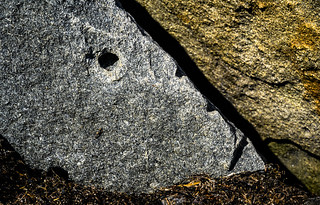
Addendum: the wee hours found me considering that Agglomerations consist of Agglomera, and that the singular would thus be Agglomerum; Agglomeratio would be the act of gathering up Agglomera. By itself,
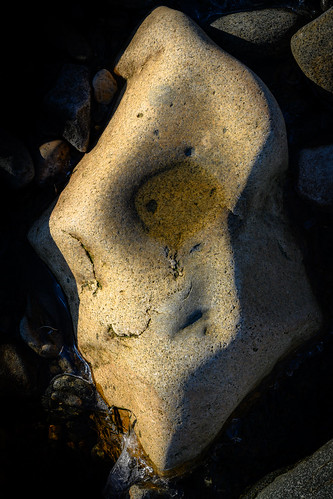
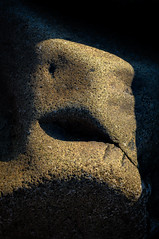
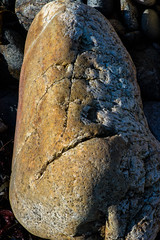
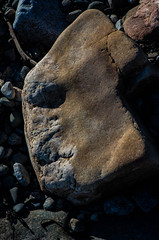
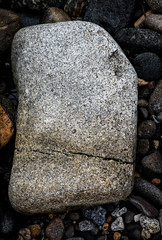
is just an oddly-shaped rock, but in company (Agglomerated) with others of its ilk, other possibilities emerge:
Stuff keeps washing up along my personal tidelines, some of it simple flotsam or jetsam, some of it elements in evolving sculpture and macramé, some of it of indeterminate utility. It All Counts, as my mentor Allen Smith said of the work of the Reference Librarian.
Two cases in point, the first an enduring puzzlement reeled in and partly digested a few months ago, the second a new discovery this morning, via a posting to The WELL’s State of the World (Paulina Borsook) which seems to make sense of the first:
“…Global warming is perhaps the most dramatic example of what Timothy Morton calls ‘hyperobjects’—entities of such vast temporal and spatial dimensions that they defeat traditional ideas about what a thing is in the first place… concepts such as world, nature, and even environment are no longer a meaningful horizon against which human events take place. Instead of inhabiting a world, we find ourselves inside a number of hyperobjects, such as climate, nuclear weapons, evolution, or relativity. Such objects put unbearable strains on our normal ways of reasoning.Insisting that we have to reinvent how we think to even begin to comprehend the world we now live in, Hyperobjects takes the first steps, outlining a genuinely postmodern ecological approach to thought and action…”
Nature’s economic system stores the energy that it does not immediately need
mostly in carbon formations
Second understanding
Nature does not charge a profit as do culture’s economic systems
Third understanding
All natural systems are dissipative structures with individuals that form them living,
reproducing then dying with indeterminacy as a norm
Fourth understanding
All natural systems have learned to nest within each other, and, within a context of
symbiosis contribute to collective systems survival, sometimes with abundance
Fifth understanding
Human constructed artifacts particularly legal, political, economic as well as
production and consumption systems seek constancy but are often in violation of the
laws of conservation of energy pointing toward systems entropy
Working out the implications, awaiting the next tide…
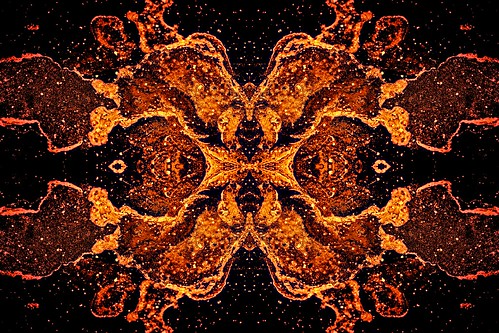
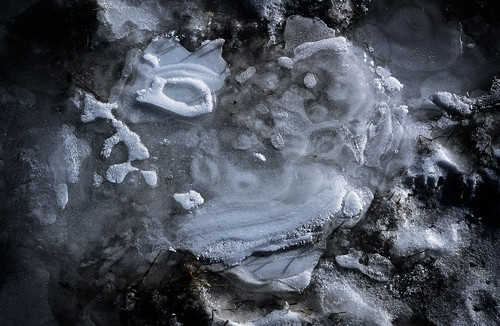
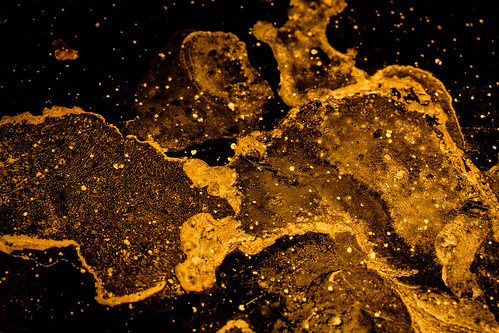
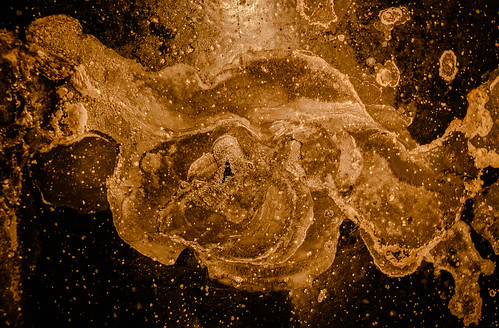
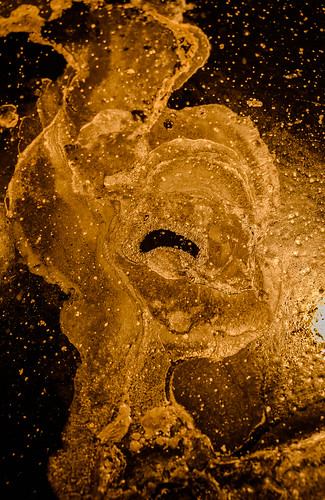
It began with a dozen very local oysters (Ice House Cove, thanks to Toni and John who presided over their growing). The very local trick for opening them is to put them in the oven for a few minutes, just until the shells open. Absolutely delicious. A byproduct is some of the salty oyster liquor leaking into the pan and crystallizing with the residual heat. Instant abstract, sort of galactic in flavor:
Of course I couldn’t let that be the final act…
And there were a couple of other captures from the same pan:
I like me a good enigma, and I’ve used that word in all sorts of connections over the years, but never thought to inquire into its etymology and various senses. Dictionaries seem to agree that the Greek ainos, ‘fable’, is the original progenitor, but others cited are Greek ainisessthai, ‘to speak allusively’, and Latin aenigma, ‘riddle’. The modern senses favor
mysterious
puzzling
hard to explain
inexplicable
hidden meaning or known thing concealed under obscure words or forms
dark saying
baffles understanding
Looking over my own past uses, I seem often to invoke enigma in describing something non-obvious that interests me or piques curiosity or captures my attention. An artful story is what’s required to dispel murk (or mirk). See Narrativium for the how and why.
Most dictionary senses seem to favor the textual enigma, but I’m especially drawn to visual instances, in which there’s something unresolved
or ???huh???
or flat-out puzzling
or ambiguous and suggestive of multiple possible readings
or just plain weird
Edward Gorey on writing:
…the way I write, since I do leave out most of the connections, and very little is pinned down, I feel that I am doing a minimum of damage to other possibilities that might arise in a reader’s mind. (New Yorker Dec 12 2018)
Photographers who traffic in enigma and abstractions of various kinds, and/or explore Buddhist and Taoist notions of the contemplative owe a lot to Minor White. Herewith some of my thoughts from more than a year ago: Major Minor.