Category Archives: Uncategorized

Bolivian interlude

In honor of Evo Morales’ victory in Bolivia, I’ve excavated a trove of Bolivian music.

35 years or so ago (in the very early 1970s) our friends Kent and Shel Anderson spent a couple of years in Cochabamba, where Shel did fieldwork on market systems. They brought back a small collection of 7-inch 33 1/3 records of music that was being played on the radio in Cochabamba at that time, and the records stayed with me when they left Nova Scotia in 1973. I puzzle over them every few years –the music is raw and amateurish in its production values, and completely unapologetic for being utterly Bolivian. I don’t have enough of the cultural context to appreciate the documentary significance of these records in Bolivian cultural terms, so for me they’re just a snapshot of another reality. I can’t imagine that there’s any harm in digitizing and distributing them in 2005.

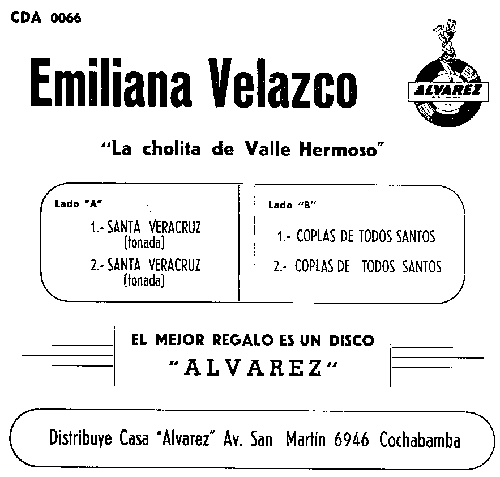
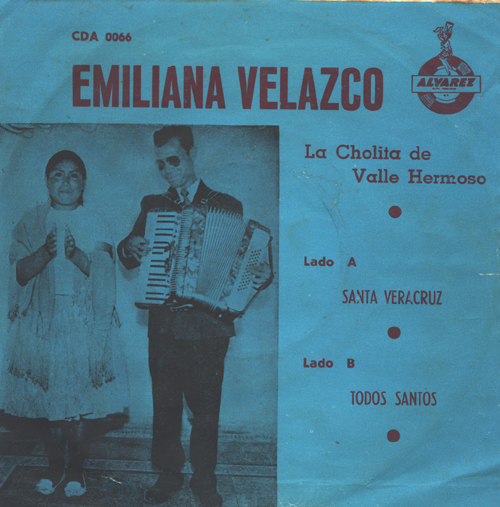
Emiliana Velazco should certainly be better known for her absolutely unique vocal style (or maybe it’s not unique, and everybody in Valle Hermoso sings that way…). You can’t quite believe she’s going to keep doing that for six minutes… and then you turn the record over, and find that she has another six minutes in her…

Santa Veracruz (tonada) 6 min, 11MB and Coplas de Todos Santos 6 min, 11MB

Extracting gems from vinyl

I finally got around to unpacking and shelving 30-odd boxes of 33 1/3 records, which have been seasoning in the barn since July. It’s delightful to revisit old favorites that I haven’t played in years, and today I rigged the wherewithal to extract sound to other media, via my Mackie mixer, an M-Audio USB preamp, and Sound Forge. I’m sure there are better ways to do this, and to do it better, but I was able to realize the scheme I awoke to find myself scheming this morning: recording a favorite bit from the Holy Modal Rounders version of “Hot Corn Cold Corn”: bupm bupm bupm de bupm bupm de bupm (ca. 1965, from The Holy Modal Rounders 2, Prestige 7410:B2).

This is really just another sort of quotation, and there must be a few thousand favorite bits that I’d love to share. How to regularize that, so as not to venture beyond Fair Use?

And for Proof of Concept, here’s an imperfect version of Moving Day, made by plugging the Ovation mandocello into the Mackie. I’ll make better versions eventually.

Dusting off quotations

I’ve kept a Commonplace of favorite bits for many years, mixing stuff in many different registers and various media. There’s a shoebox with 5 x 8 cards and less uniform scraps of paper (the oldest from, oh, 40-odd years ago), entries in various journals, a Web 1.0 gatheration… and I feel the thumbs itching to create something more 2.x in nature and style, but I haven’t quite divined its outlines. This one, from Alice in Wonderland, bubbled to the top this morning:

Alice: Would you tell me, please, which way I ought to go from here?
The Cat: That depends a good deal on where you want to get to
Alice: I don’t much care where.
The Cat: Then it doesn’t much matter which way you go.
Alice: …so long as I get somewhere.
The Cat: Oh, you’re sure to do that, if only you walk long enough.

Seems that such bits should be tagged for easier retrieval, or maybe assembled into a complex topography of time and subject… Any thoughts out there about novel ways to proceed?

‘Gesture Economy’

In a bombshell post Steve Gillmor instantiates the term ‘gesture economy’ (which Google tells me has another meaning in linguistics) as one of the puzzle pieces in the emerging dialog on Attention. It’ll be interesting to track the uses of the term, and the closely related ‘GestureBank’ which titles Steve’s post. What brought me up short, though, was this bit of clarity, to which I’ve added emphasis here and there:

Of course, nothing is for free, really. Gmail is free, but at the cost of your metadata. Search is free, but at the cost of a tactical answer, not a strategic one. Which result you choose is the payment, setting off an event chain that sometimes results in action and monetization. The metadata–which item you choose, the fork in the road you take–is captured but not shared. The result: an opportunity cost lost to the Google or Yahoo or MSN silo. The cost: time not saved.

Follow the breadcrumbs for a minute. If a gesture is not shared, what is lost? The network effect, for one. GestureRank for another. What? GestureRank–the price the market will bear for harvesting the authority of a particular gesture. Remember: this is a post-attention world we’re living in. Just as the RSS wave triggered an embarassment of riches and triage cost, the Attention wave triggers an authority architecture and corollary characteristics. If PageRank crystallizes link authority, GestureRank crystallizes gestures of intent and, crucially, the lack of intent.

Attention to something is valuable, but in a world of too much information divided by the time to consume a portion of it, signalling a lack of attention is more valuable. By that construct, gestures of inattention will fetch a greater price, and purveyors of gestures of indirection or redirection will gain inordinate value as compared to domain experts…

Plenty in there to chew upon. And then he drops this beauty of an example:

Gestures become inextricably interwoven with so-called content, creating a fabric of intelligence, emotion, and humor that is difficult if not impossible for audiences to resist… Shared laughter efficiently reveals the power of gestures. All around us we hear and generate the sounds of humor–the chuckle of recognition, the cackle of just deserts, the snort of derision mixed with self-knowledge, the humanity of it all. It’s jazz, isn’t it; the improvization we all want to sit in on.

Paying Attention

I listened to a 3-part Steve Gillmor AttentionTech podcast (with Dave Winer phoning in) and probably moved things along a bit further in the getting it dimension for OPML, but I’m somewhat bothered by the flatfilishness of the examples of attention I keep hearing –they seem to be stuck in ‘what blogs do you read how much’ territory, which makes for a pretty shallow and limited conception of attention, and the model seems to be *to sell attention data.

Attention is much more multifaceted, being both multidimensional and volatile too: from week to week and over months my attention is assigned to many different realms, often interconnected but sometimes quite disjunctive as I pick up and put down various threads, now more focused, now attending to more things more shallowly, now following a specific trail of interconnections. I want to be able to visualize and analyze that flux, and to be able to revisit any of the states of the past with a click. I want the kind of map that Dave Pollard implies (“your brain’s memory laid out as a wiki tableau”). I want that for myself, and I’d want to be able to export it to somebody else (perhaps in pruned/edited form). But most of all I want that as a long-haul tool for understanding my own progress in the digital realm.

Ears of another hippopotamus

I’ve observed before that Dave Pollard is prescient. This may be a further demonstration of his powers:

(from Sharing Your Brain: Making Your Hard Drive into a Wiki)

I think the next tipping point will be focused on wikis. We are close to the point where we will no longer have to pick an ‘application’ to create, open or change a document, any more than we have to pick a particular type of writing implement to do so in the physical world. What that will allow us to do is convert our entire hard drive — every document — and all the content we maintain on central servers — every message and blog post, into a single ‘virtual’ wiki, a kind of giant tableau of all our stuff, everything we have created or contributed to, and everything created by others we have filed away or bookmarked or otherwise ‘taken as our own’.

This would be useful, first of all, for personal navigation. Google Desktop is a big help, but it’s still a hunt-and-peck kind of personal content management. A wiki of our ‘universe of knowledge’ with a mind-map-type navigator would allow us to explore and amplify what we know and share with others in a more holistic, powerful way than anything we can do now. It would allow us to ‘get our head around’ everything we know, and care about, everything that has meaning for us. It could literally allow us to ‘expand our minds’.

But — and here’s the really exciting part — it could also allow us to ‘share our brain’ with someone else, to allow someone else to see how we think, and what we think about, and get an idea of the frame of mind that organizes, filters and colours our thoughts. And, if memory becomes cheap enough, we could even ‘subscribe to’ the wikis of those whose thoughts, for whatever personal or professional reason, we care about, and we could then annotate that other person’s ‘brain’, shared consciousness, with our own interpretations, understandings and amplifications, and, if we and that other person were so inclined, we could then share that ‘feedback’ with the person whose thoughts provoked it. A kind of digital, brain-to-brain, dialogue or conversation. What could come of all of this might be some shared spaces, some collective intelligence that two or more people agreed was a synthesis of information, agreement or shared understanding, that they owned in common. So your wiki would then have three ‘flavours’ of content:

  • stuff that you created (more or less) yourself
  • stuff that others created that you have taken for your own, your ‘accepted wisdom’
  • stuff that is ‘shared wisdom’ that you and others have inseparably created in common

We are presumably close to the point where transcriptions of conversations could also be indexed and added to this repository.

Quite a bit to wrap the mind around, and I don’t really see how to get there from here, but this is a posting to put where I can revisit it in weeks or months, and it’s certainly going to affect my scans of emergent wiki technologies and practise. It’s a deal more humane than Ray Kurzweil’s vision of the future in silico.

Otium: Gardner’s mot juste

Gardner tossed me a nice one in his Oook’s on a roll posting:

I hope he won’t dawdle too long in his splendid New England otium.

Now, this is everything I love: a really obscure word (I knew and use ‘otiose’, which springs from the same root –in fact, I recently wrote a tune with the title Otiose Maggie, in remembrance of a goat of my acquaintance) that leads me to a spasm of searching and stringing together, and turns out to be absolutely spot on: le mot juste, as the French foppishly call it…

The fundamental sense of otium is

leisure, ease, peace

…and my Latin dictionary glosses otium as

leisure, free time, relaxation, freedom from public affairs, retirement, peace, quiet, ease, idleness, inactivity

. But the fun really begins when one Googles the word: a glassblowing site says

“Otium”, which literally means “to be at ease”, reflects their desire to create environments that soothe, comfort, and nurture the soul.

Yup, that’s retirement, sure enough. Gardner nails it.

As I’ve so often found in my role as a Reference Librarian, it’s the hunt that’s the real fun. You find gems like this:

Otium cum dignitatem

El ideal de “vida contemplativa” que proponían algunos de los filósofos antiguos se veía reflejado en lo que ellos denominaron “Otium cum dignitatem”, una forma de emplear nuestro tiempo de ocio que nos permita desarrollar nuevas sensibilidades, ampliar nuestros conocimientos, entrar en contacto con otras culturas o contemplar la belleza en sus diferentes formas de expresión.

My Spanish is, well, vestigial, so I accepted Google’s offer of translation and got this:

The ideal of “contemplativa life” which they proposed some of the old philosophers saw reflected in which they denominated “Otium cum dignitatem”, a form to use our time of leisure that allows to develop the new sensitivities us, to extend our knowledge, to make contact with other cultures or to contemplate the beauty in its different forms from expression.

I also found an article in German, translated from Italian, which succumbs howlingly to translated be by Google

Yeah. Worth the price of admission.

And on a homeschool site I found a Latin phrase not entirely irrelevant to the present:

Otium bello saepe non conservamus
‘We do not often preserve peace by war’

I see that the word has snuck into Scandinavian languages –in Swedish and Danish and Norwegian it seems to be a good solid word for ‘vacation’

And I found (among the few Google hits in English) a Christian Science Monitor article from 2002, Richard O’Mara In praise of otium that offers this delicious nugget:

There is an archaic idea hardly ever discussed these days. The Romans had a word for it: otium, defined in the Oxford English Dictionary as “the aristocratic mode of leisure. Thinking,” or “dignified leisure,” “the otium of literary pursuits.”

Jeez but this is fun…
Trying out a wiki

For the last few days I’ve been exploring Schtuff, a free wiki environment. The current state takes off from here, and may continue to thrive as I explore the territory of Teaching and Learning. I’m hoping to get several co-conspirators to collaborate.
…and a nudge from Gardner Campbell projected me into creating a Nova Scotia Faces wiki as an extension of the conventional Web page… it’s too much fun.

Back at ya, Gardner

I keep finding gems that ought to be more widely appreciated, and I tuck them away in various Web pages, sometimes sending them on to others who will appreciate them. I resolve to put more of them into the blog, which I’m coming to think of as my very own Commonplace Book.

Today, a curious but eminently typical wandering amongst links took me to this wonderful bit of clarity from Gardner Campbell, balm to those wondering why they don’t Get It, and what to do about it:

…it’s very easy to grow babies in this business. On some level, I want a bit of that “I’m on my own” feeling among the faculty I serve because it helps them take constructive ownership of their use of the tools. In some respects, even a simple hammer in the hands of a single user becomes an occasion for support problems that (here’s the point) anyone who picks up a hammer more than once learns to accept. Doesn’t mean there’s no support, but it does mean that there are no guarantees, and that an acceptable level of risk and an appropriate level of personal resourcefulness needs to be part of any strategic deployment of any tool.

Again, in some respects: “small pieces loosely joined” reveals the responsibility that’s inherent in any kind of significant agency. That doesn’t mean no end-user support. It does mean that this tool we call a “computer” is useful in direct proportion to the amount of learning and risk we’re willing to accept.

How did I get here? The passage is hidden away in a comment on one of Brian Lamb’s postings from September 2005, linked in musings from the fog, which appeared yesterday (“…depending on third-party apps, even well-established ones like Technorati can cause its own form of pain…”). Gardner may not even remember that he wrote it, and Brian may not have been as cheered by it then as I am today.