Category Archives: reading

Merton & Barber on Serendipity

Today’s “word book” is Robert K. Merton and Elinor Barber’s The Travels and Adventures of Serendipity: A study in sociological semantics and the sociology of science (2004), a true gem of a book and one of the few on my shelves that is concerned with a single word and its connections. (The F Word is another, and we’ll get there eventually).

I wish I could remember when I first encountered ‘serendipity’, but it’s been with me for a long time as a personal leitmotiv, as I’ve wandered from thing to thing, notion to notion, idea to idea over the years. There’s a succession of factoids that piles up as one explores serendipity: the term was coined by Horace Walpole, in a letter to his friend Horace Mann in 1754; it is derived from or references a folk/fairy story of Three Princes of Serendib, the narrative line of which follows their fortuitous discoveries/inferences. Serendipity has come to mean discovery of the unexpected while in search of something else.

Of course, there’s much more to the story, and Merton & Barber are superb guides. I’ll include here a few bits of detail to whet the reader’s interest.

The 1754 letter from Walpole to Mann is redolent of 18th century epistolary prose (you can almost hear the scratching of the quill pen), and of essence of Walpole’s whimsy:

…This discovery I made by a talisman, which Mr. Chute calls the sortes Walpolianae, by which I find everything I want, à point nommée [at the very moment], wherever I dip for it. This discovery, indeed, is almost of that kind which I call Serendipity, a very expressive word, which, as I have nothing better to tell you, I shall endeavor to explain to you; you will understand it better by the derivation than by the definition. I once read a silly fairy tale, called the three Princes of Serendip: as their highnesses travelled, they were always making discoveries, by accidents and sagacity, of things which they were not in quest of: for instance, one of them discovered that a mule blind of the right eye had traveled the same road lately, because the grass was eaten only on the left side, where it was worse than on the right—now do you understand Serendipity? One of the most remarkable instances of this accidental sagacity (for you must observe that no discovery of a thing you are looking for comes under this description) was of my lord Shaftsbury, who happening to dine at Lord Chancellor Clarendon’s, found out the marriage of the Duke of York and Mrs. Hyde, by the respect with which her mother treated her at table.

It’s basic dictionary knowledge that ‘Serendip’ refers to Sri Lanka/Ceylon. But, says the etymologically curious, why Serendip/b? There’s a whole section of Merton & Barber that traces the history of dictionary definitions of ‘serendipity’ and includes this from the Century Dictionary and Cyclopedia (1909 supplement&mdashthe first dictionary definition of ‘serendipity’):

…the name of Serendib figures in Eastern romance. The name is from Ar. Serendib, Sarandib also Sarandip (LL: Serendivi, pl., as the name of the people), MGr. Skt. Sinhala-dvipa, the island of Ceylon… The Skt. Simhala is in Pali Sihalan, whence Silan, Old Tamil Ilan, whence the Malay Sailan, European Seilan, Zeilon, Ceylon… The happy faculty or luck, of finding by “accidental sagacity” interesting items of information or unexpected proofs of one’s theories; discovery of thing unsought: a factitious word humorously invented by Horace Walpole…

Clearly more than one wanted to know, and yet full of delicious nubbins. ‘Factitious’, say Merton & Barber “is well on its way to becoming a pejorative word, growing out of its meaning of ‘artificial’ and ‘unnatural’…” Elsewhere, Merton & Barber note that

In the early years of the twentieth century, a shop was opened in London to cater to those very bibliophiles who wanted “out-of-the-way books,” books by not-so-well-known authors at rather moderate prices. The first mention we have found of it comes, not surprisingly perhaps, in the form of a query in Notes and Queries… in 1903, one John Hebb writes: “A shop has recently opened at No. 118 Westbourne Grove, with the extraordinary name of ‘Serendipity Shop.” What is the meaning of ‘Serendipity’? I may add that the shop appears to be intended for the sale of rare books, pictures, and what Mrs. Malaprop (was it Mrs. Malaprop?) calls ‘articles of bigotry and virtue.’

Among the hares started by this nubbin is the pointer to Notes and Queries,

…a long-running quarterly scholarly journal that publishes short articles related to ‘English language and literature, lexicography, history, and scholarly antiquarianism’. Its emphasis is on ‘the factual rather than the speculative’. The journal has a long history, having been established in 1849 in London; it is now published by Oxford University Press. The journal was originally subtitled ‘a medium of inter-communication for literary men, artists, antiquaries, genealogists, etc’. It is now subtitled ‘For readers and writers, collectors and librarians’. Its motto was once ‘When found, make a note of’, the catchphrase of Capt. Cuttle, a character in Dickens’ Dombey and Son…

Wikisource has a portal to archive.org’s 1849-1922 holdings, to be explored on Rainy Days…

So many other facets of Merton & Barber draw one’s attention. Merton wrote On the Shoulders of Giants: A Shandean Postscript in 1965 (a thrice-marvelous analysis of the reach of that titular phrase ascribed to Isaac Newton but at least as old as Diego de Estella [Latin: Didacus Stella], a 16th-century Spanish Franciscan mystic and theologian), known as ‘OTSOG’ in some circles: “part parody, part history of ideas, and part sociology of science” as the back-cover blurb has it). In a footnote in that book he mentions The Travels and Adventures of Serendipity as “a carefully unpublished” manuscript. The Introduction tantalizes us thus:

Sometime in or before 1945, while looking for the definition of some now-forgotten word in volume 9 of The Oxford English Dictionary, Merton’s eye “happened upon the strange looking but euphonious word ‘serendipity.’ Just as Walpole wrote of his habit of playing a sortes Walpolianae, a random flip of the page led Merton to serendipity. It was, when Merton originally stumbled upon it, a strange beast pacing restlessly within the confines of a few learned vocabularies. Had he not chosen to spend a significant portion of his third-year graduate student stipend on the then twelve massive volumes of the OED, he might not have ever stumbled on the word. Had he heeded the call of whatever his pledged mission was that day—learning about sequestration or seraphim or sepulcher—this sociological tale of the wanderings of serendipity would have been stalled, ensnared in the maze of the dictionary, imprisoned from further adventures until some other wandering eye might find it and send it on its way.

As Merton himself notes in the Preface, the book was written in the 1950s, but first appeared in print only in 2002, in Italian. The Princeton University Press version in English appeared in 2004, with a magnificent Afterword by Merton (“Autobiographic reflections on The Travels and Adventures of Serendipity”). Merton died in 2003, and Barber in 1999.
Collateral Language

I awoke thinking of a mode of language and rhetoric that is ubiquitous in political discourse and especially in parlous times. The words that came to me were: self-serving, mollification, deception, bamboozlement, Buncombe. Which of my word books address this realm?

Word books live in temporal and spatial contexts. The two-word phrases of Grenville Kleiser’s Fifteen Thousand Useful Phrases echo the world of the book’s publication in 1917, and part of their charm and bite is that they are slightly outside of the current vernacular, but not so far removed that we can’t grasp their messages and apply them to our 21st century concerns and sensibilities.

In November 2003 I did a consultation gig on the GIS program at St. Lawrence University in uppermost New York—flew to Ottawa (the nearest airport), drove a rental car to Canton NY, spent a couple of days talking with faculty and staff, wrote a report. While in Canton I (of course) wandered into the college bookstore and found the just-published Collateral Language: A User’s Guide to America’s New War (edited by John Collins and Ross Glover), which presents short essays (“written to expose the tyranny of political rhetoric used to justify ‘America’s New War’.”) on 14 concepts that were especially of interest in those early years of the War in Iraq, after the shocks of September 11, 2001:

Anthrax, Blowback, Civilization versus Barbarism, Cowardice, Evil, Freedom, Fundamentalism, Jihad, Justice, Targets, Terrorism, Unity, Vital Interests, The War on _____

Most of those will resonate with anybody who was watching and listening in the early years of the 21st century. Collateral Language can be read as a gauge of the Emperor’s Raiment of that time, and of the modes of speech and rhetoric deployed in mass media.

U.S. officials, like their counterparts in decades past, attempted to generate public support for their actions by appealing to ideas as powerful as they are abstract: freedom, civilization, terrorism, evil. This language needs interrogation wherever it is found… Language, like terrorism,targets civilians and generates fear in order to effect political change… a specific type of fearfulness emerges, both intentionally and unintentionally… The use of specific kinds of language for political purposes exists within a long historical lineage of human development, and in order to understand any political system, we must understand the meaning created by that system. Rather than blindly accepting the meaning, usage, and truth of political leaders and news stories, we have an obligation, as citizens of a democratic state, to question, critique, and understand the language given to us by those who claim to represent our interests… (from the Introduction)

Manufacturing Consent … What You Hear Is What You See …

From Ross Glover’s “The War on _____”:

Fill in the blank. Regardless of what word you insert, the American public understands. U.S. presidents learned this lesson well over the past 40 [now almost 60…] years. “The War on _____” plays on our competitive heartstrings like a football cheer. “Yes,” we seem to respond, “fight the good fight, O fearless President, fight the war for us, fight the war for the good of humanity, but most importantly just fight.”

Poverty, Drugs, Terrorism, the “Chinese Virus”…

What Goes Around Comes Around.

Idea du jour

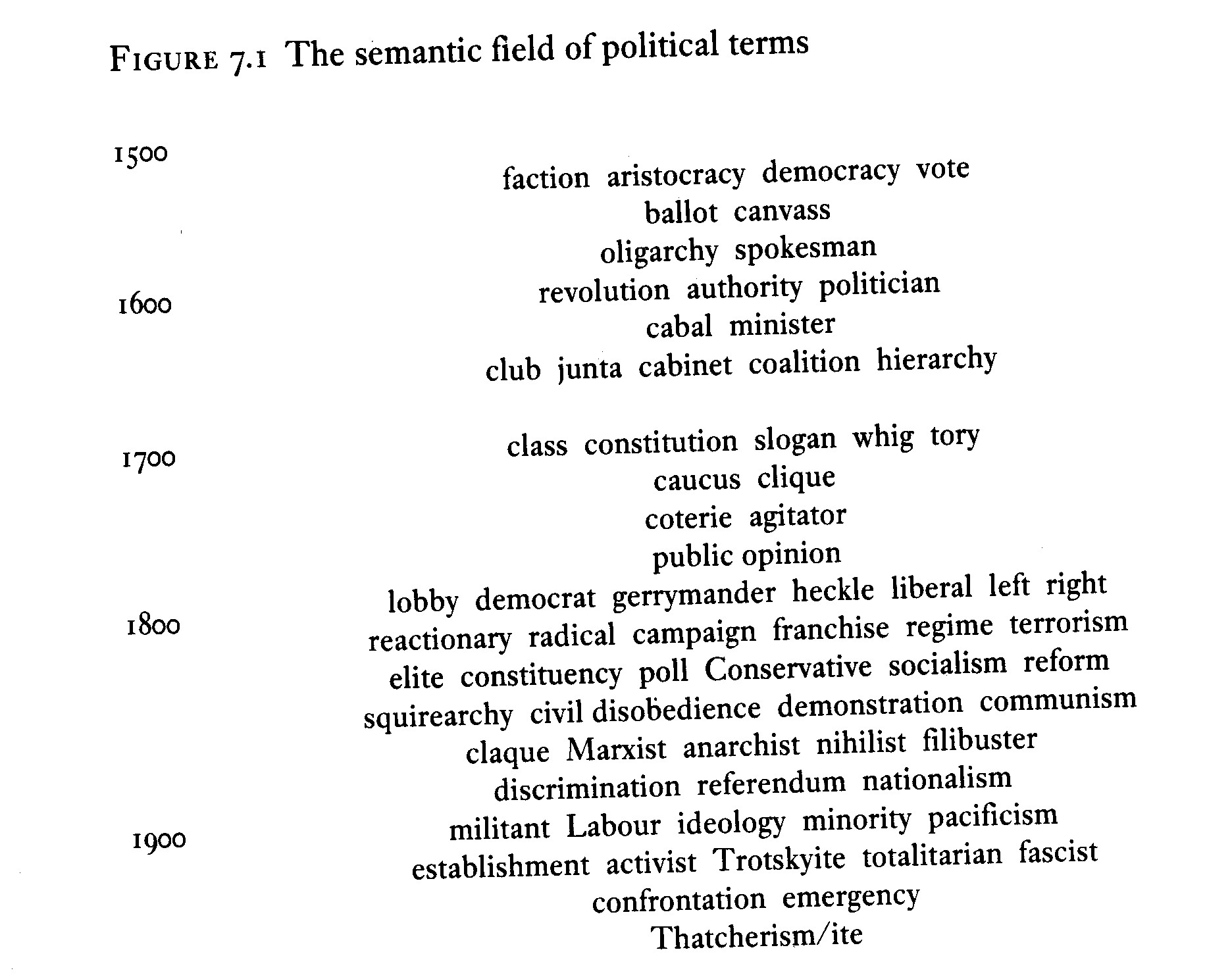
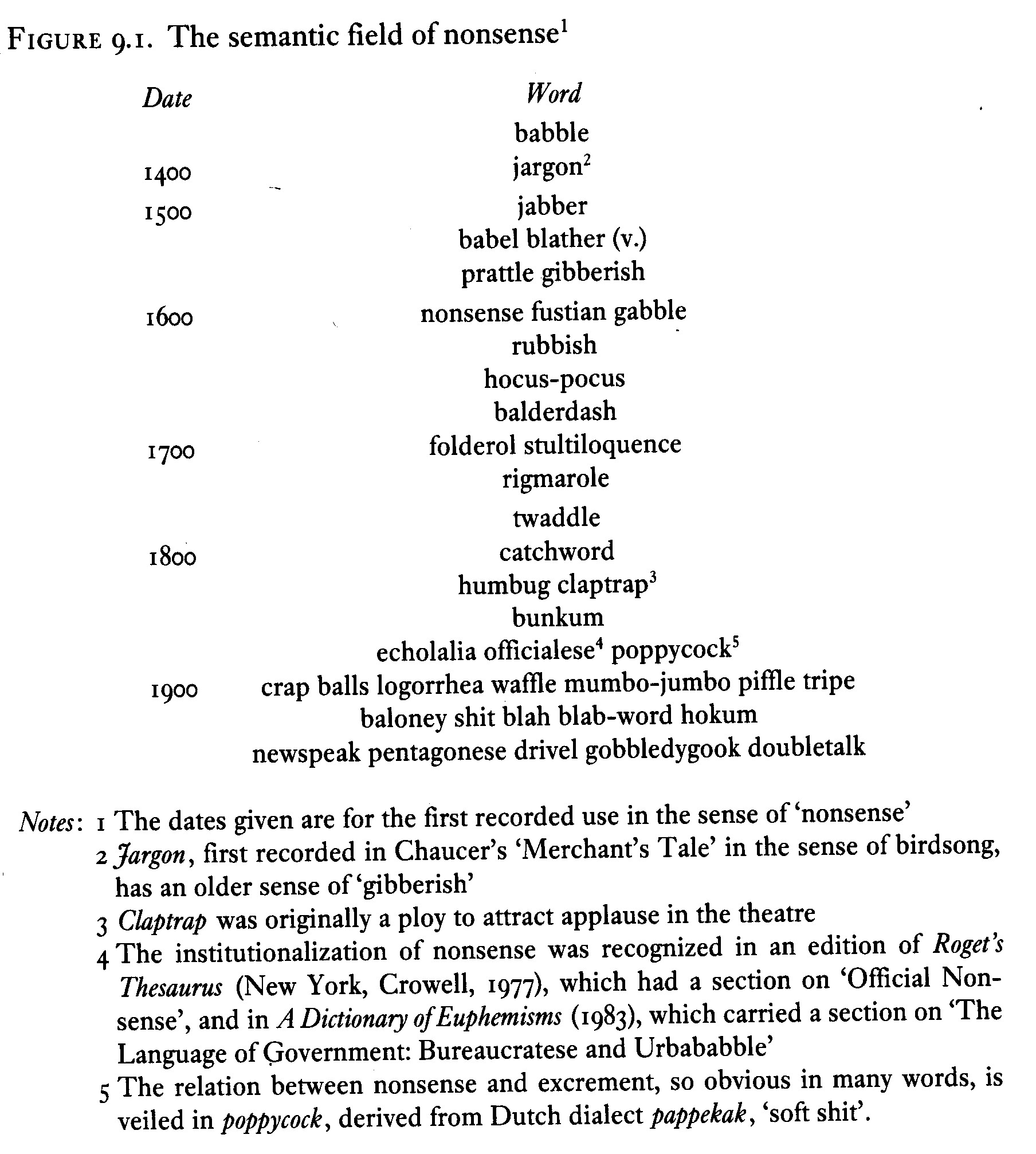
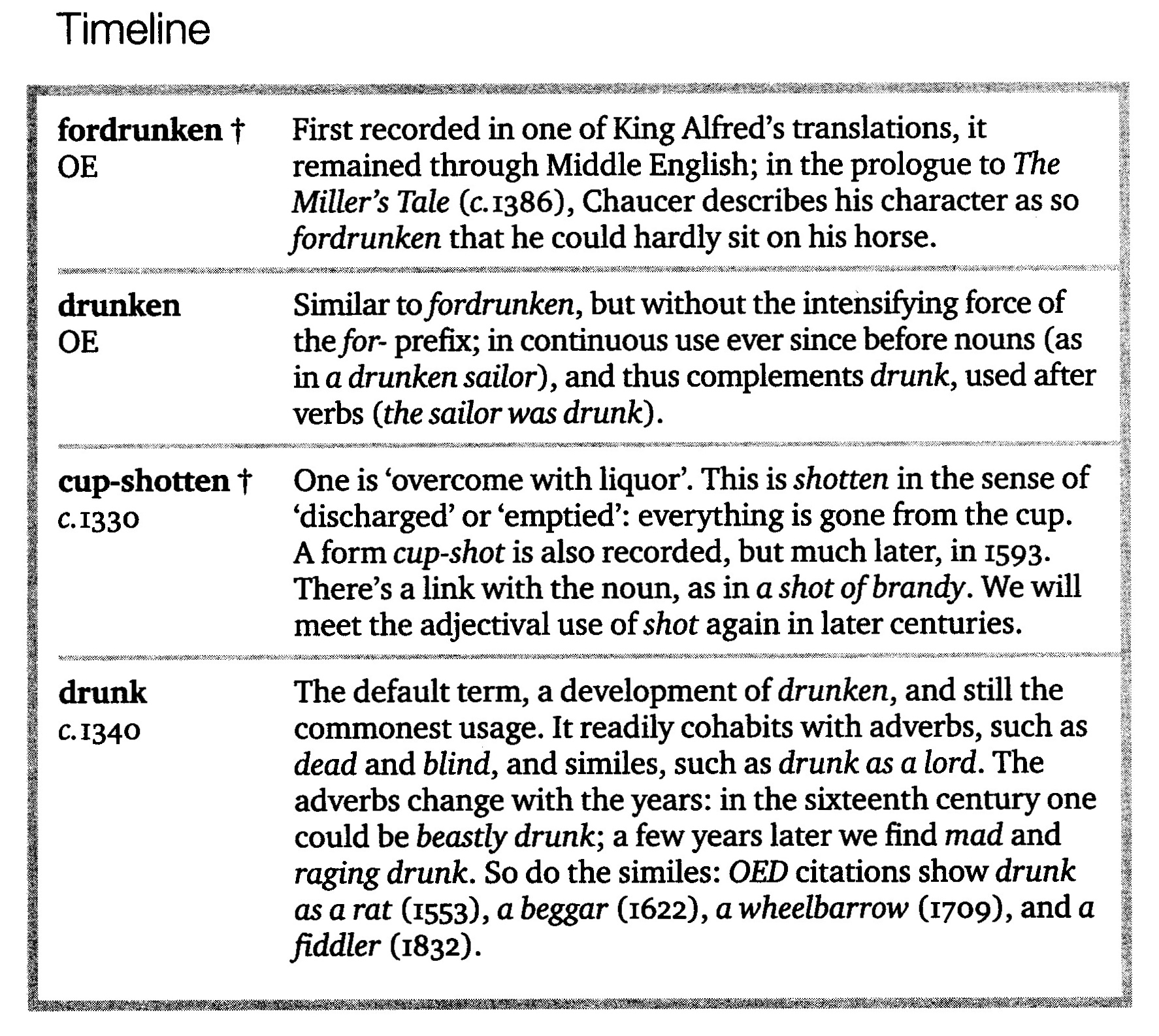
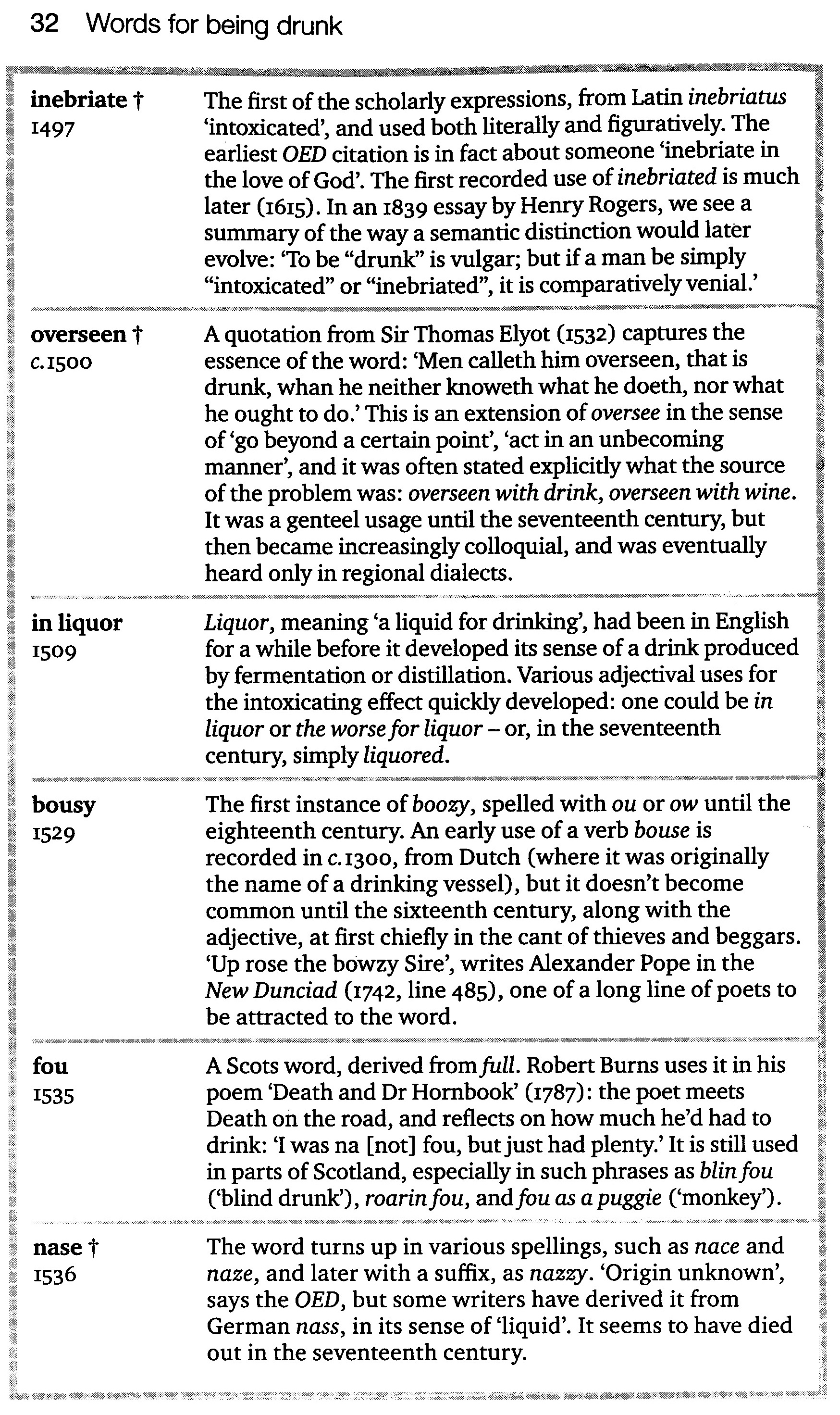
I have a LOT of “word books”: dictionaries, glossaries, usage manuals, specialized lexicons, etymologies, slang, commentaries on how she is spoke… This seems to be the moment to consider that trove, that tranche of my home library, and to put it to work.

This thought arose as I was exploring my mountain of Kindle texts and happened upon

Grenville Kleiser
Fifteen Thousand Useful Phrases: A Practical Handbook of Pertinent Expressions, Striking Similes, Literary, Commercial, Conversational, and Oratorical Terms, for the Embellishment of Speech and Literature, and The Improvement of the Vocabulary of Those Persons Who Read, Write, and Speak English

which can be downloaded via Project Gutenberg and, in another form, via LibriVox (e.g., https://ia800208.us.archive.org/11/items/15000_useful_phrases_librivox/useful_phrases_003_kleiser_64kb.mp3 )

and there’s even a 10 hour YouTube video of a Dramatic Reading: https://youtu.be/luTcjXsFbNI

The tipping point for me was glancing at a page of Kleiser’s phrases and seeing that just about every one I looked at was somehow relevant to the Moment we find ourselves in:

abandoned hope
abated pride
abbreviated visit
abhorred thraldom
abiding romance
abject submission
abjured ambition
able strategist
abnormal talents
abominably perverse
abounding happiness
abridged statement
abrogated law
abrupt transition
absolutely irrevocable
absorbed reverie
abstemious diet
…and so on

And so I found myself thinking about Boccaccio’s Decameron which, if you didn’t already know, consists of “…100 tales told by a group of seven young women and three young men sheltering in a secluded villa just outside Florence to escape the Black Death, which was afflicting the city…” in the 14th century.

…and bethought myself that there might be a Decamoron which collects dumb-ass commentary and jokes about the present straits; and a Decamiron for ironic commentary on the same; and perhaps others (Decamuron might be the tales of mice… etc.)

Anyway, I’m thinking to begin a Project to blog a dictionary-a-day (or maybe not quite so often), with a scanned page showing a particularly wonderful something from that volume, and providing some context for what each dictionary/word book is actually good for.

Solnit

ANYTHING Rebecca Solnit writes is worth attention, worth reading. I’ve just finished listening to this one:

Recollections of My Nonexistence: A Memoir

Amazon blurb:

An electric portrait of the artist as a young woman that asks how a writer finds her voice in a society that prefers women to be silent

In Recollections of My Nonexistence, Rebecca Solnit describes her formation as a writer and as a feminist in 1980s San Francisco, in an atmosphere of gender violence on the street and throughout society and the exclusion of women from cultural arenas. She tells of being poor, hopeful, and adrift in the city that became her great teacher, and of the small apartment that, when she was nineteen, became the home in which she transformed herself. She explores the forces that liberated her as a person and as a writer–books themselves; the gay community that presented a new model of what else gender, family, and joy could mean; and her eventual arrival in the spacious landscapes and overlooked conflicts of the American West.

Beyond being a memoir, Solnit’s book is also a passionate argument: that women are not just impacted by personal experience, but by membership in a society where violence against women pervades. Looking back, she describes how she came to recognize that her own experiences of harassment and menace were inseparable from the systemic problem of who has a voice, or rather who is heard and respected and who is silenced–and how she was galvanized to use her own voice for change.

For my money, as IMPORTANT a book as Maria Popova’s Figuring (which enlightened January and February for me), but for different reasons. Solnit’s seems to me like essential reading for men, for its clarity and forceful argument about how women have been and still are treated, seen (and not-seen), interpreted, condescended to and so on, a litany of patrifoolishness that is immediately recognizable and that one hopes one has never engaged in (but rather thinks one might have, witlessly…); for women, the messages are quite different and I’m hesitant to try to characterize them except to say that female readers will be punching the air and saying YESSSS! on pretty much every page. Solnit bloody NAILS it, but not via vituperation or anger or man-excluding rhetoric.

Some uncomfortable home truths

I read a lot of ‘long form’ journalism, mostly in the several periodicals I subscribe to and via RSS feeds that tempt me with links to articles, but I never gave much thought to where the texts come from, or under what conditions they are produced. I suppose I thought that writers (“journalists”) wrote them, editors acquired them and put them into publications, and readers like me read them and pointed other like-minded people to them, and so over time those texts became bricks in structures of what people thought and knew… which is a rather lovely but quite naïve/Pollyannish cartoon of a more complex reality.

James Pogue’s They made a movie out of it: the decline of nonfiction in the IP era, in the Jan-Feb 2020 issue of The Baffler, is an arresting corrective to the simplistic naïveté sketched above, and brings me abruptly into some of the grim realities of 2020.

It all has to do with “the rights” that attach to purchase of an item of Intellectual Property. Here’s what I didn’t know:

We are now in the mature stage of a book-to-film boom that is quietly transforming how Americans read and tell stories… Almost all written works that achieve prominence today (and many more that don’t) will be optioned… The emergence of streaming services from Amazon, Netflix, Apple, Disney, and even Walmart has driven a demand for writing on a bulk commodity scale at a time when the business of publishing—especially but not only in the world of magazines—has largely abdicated its responsibility for paying writers an amount that would secure a decent life.

Still more insidious:

…the book-to-film complex is bolstered by two imperatives that now govern our nonfiction almost without exception: foreground story as an ultimate good, ahead of deep personal insight, literary style, investigative reporting, or almost any other consideration that goes into the shaping of written work; and do not question too closely the aristocracy of tech and capital that looms over us, the same people who subsidize the system that produces America’s writing.

We live in a time when our writing finds its audience not through the publishers and journalistic outlets that commission writing, but through a handful of unregulated monopolies that siphon off most of the revenue this work produces and that are almost entirely in control of its delivery to its eventual readers…

…clicks and shares—today’s true determinants of the value of a piece of writing…

Hollywood has begun to morph into a business designed to develop content that fits easily into delivery systems designed by Amazon, Netflix, Apple, and Google, and that it was their entry into the market for IP that kicked off the book-to-film buying frenzy. They run the market, and from my desk, it looks like it is the same people who wrecked American writing—by colonizing the ad dollars, by seizing control of how books get delivered, by deliberately designing highly addictive devices and streaming services that pulled our attention away from writing and toward phones and forgettable, mass-produced Netflix shows—whose tastes and desire for palatable content I now get told my writing ought to be serving.

All this makes me more cynical about how “it” all works, but probably won’t diminish my use of Netflix and Amazon as (re)sources in the gratification of desires and the feeding of my appetites for textual and visual material.

Perhaps what ‘all this’ should do is encourage me to make more conscious and systematic use of what I read and see, via blog-form rediffusion and other forms of reflective writing. I’m experimenting with a reading log (essentially a daybook to keep track of texts I spend more than cursory time upon) and looking back through the last year of RSS feed stuff noted via Zotero (but mostly just marked as notable and not generally followed up).

Roger Caillois

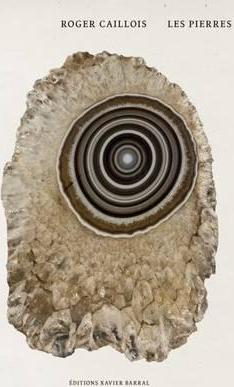
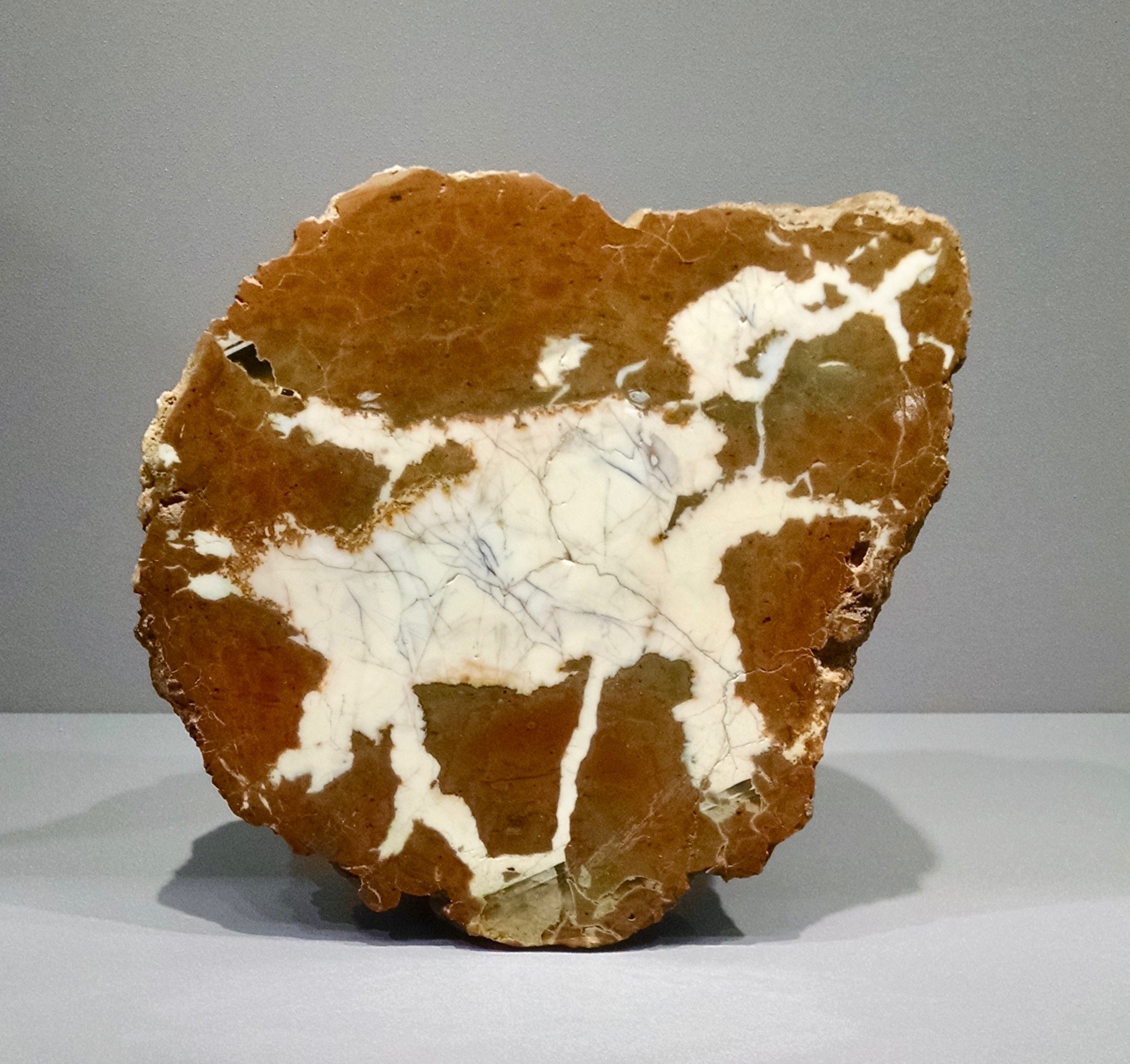
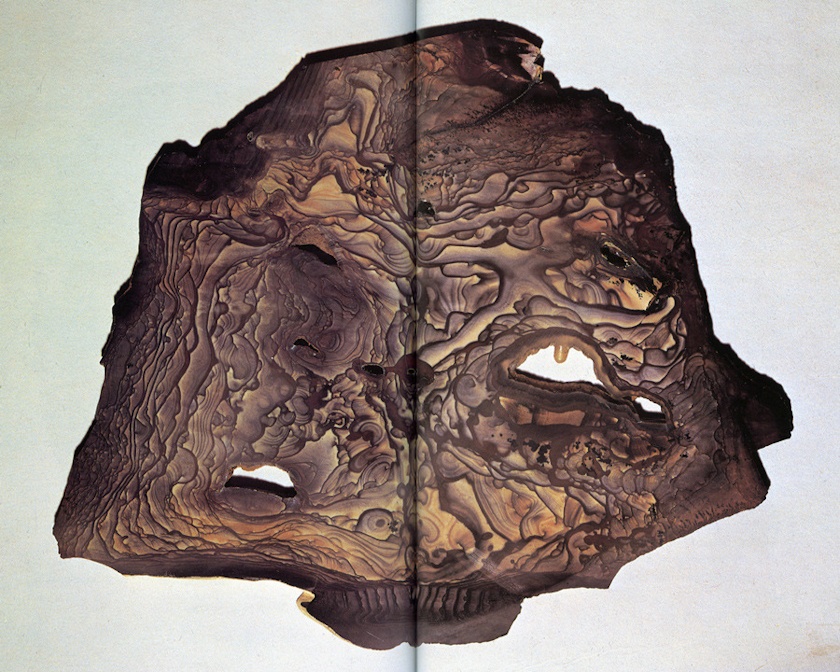
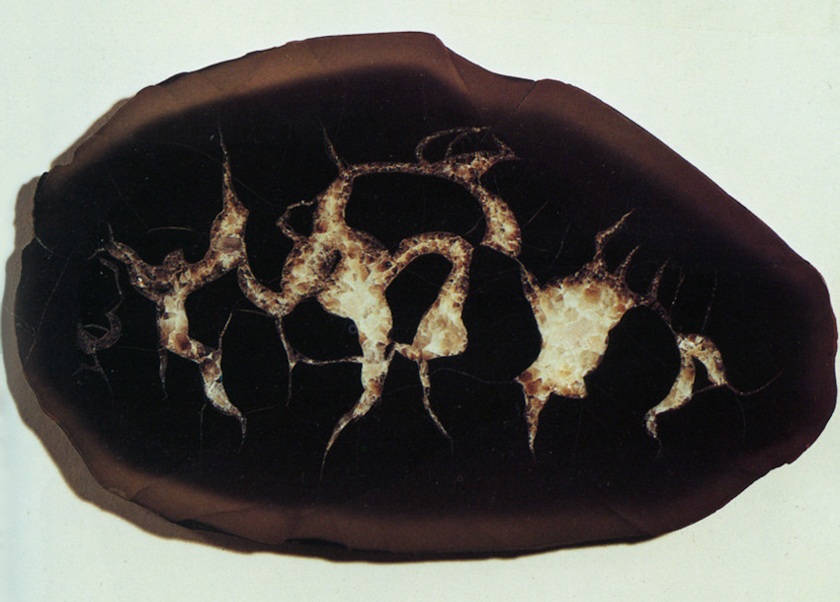
I never know where my reading will take me next. Today I was investigating the intersection of Pareidolia, Apophenia, and Mimesis (looking for a better handle on creatures seen in rocks and wood and ice) and stumbled upon the work of Roger Caillois (1913-1978), a sometime Surrealist, sociologist, philosopher and collector of rocks. The term “lithic scrying” appears in several descriptions of his activities.

In his classic work of lithic scrying, The Writing of Stones, Roger Caillois suggests that the pareidoliac’s interpretation of a stone’s pattern depends upon her own personal internalized database of stored images, a database defined by the cultural stock of mediated imagery forged and embellished by personal memory, emotion and psychical topography. For Caillois, “the vision the eye records is always impoverished and uncertain. Imagination fills it with the treasures of memory and knowledge.”

–Paul Prudence (https://www.transphormetic.com/Essays-in-Print)


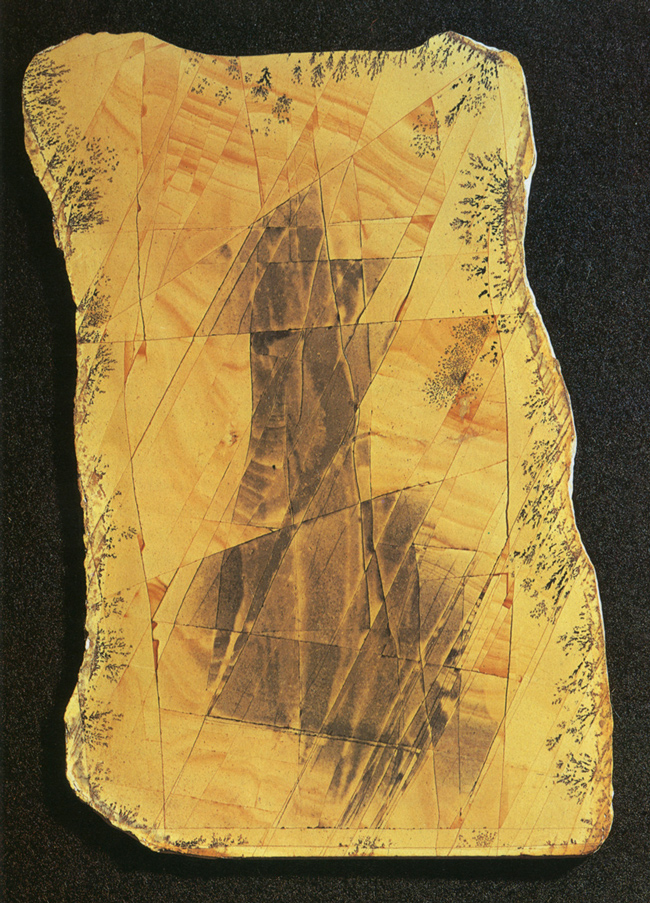
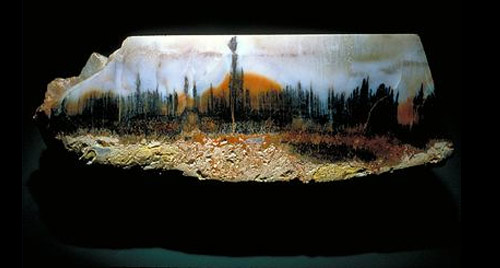
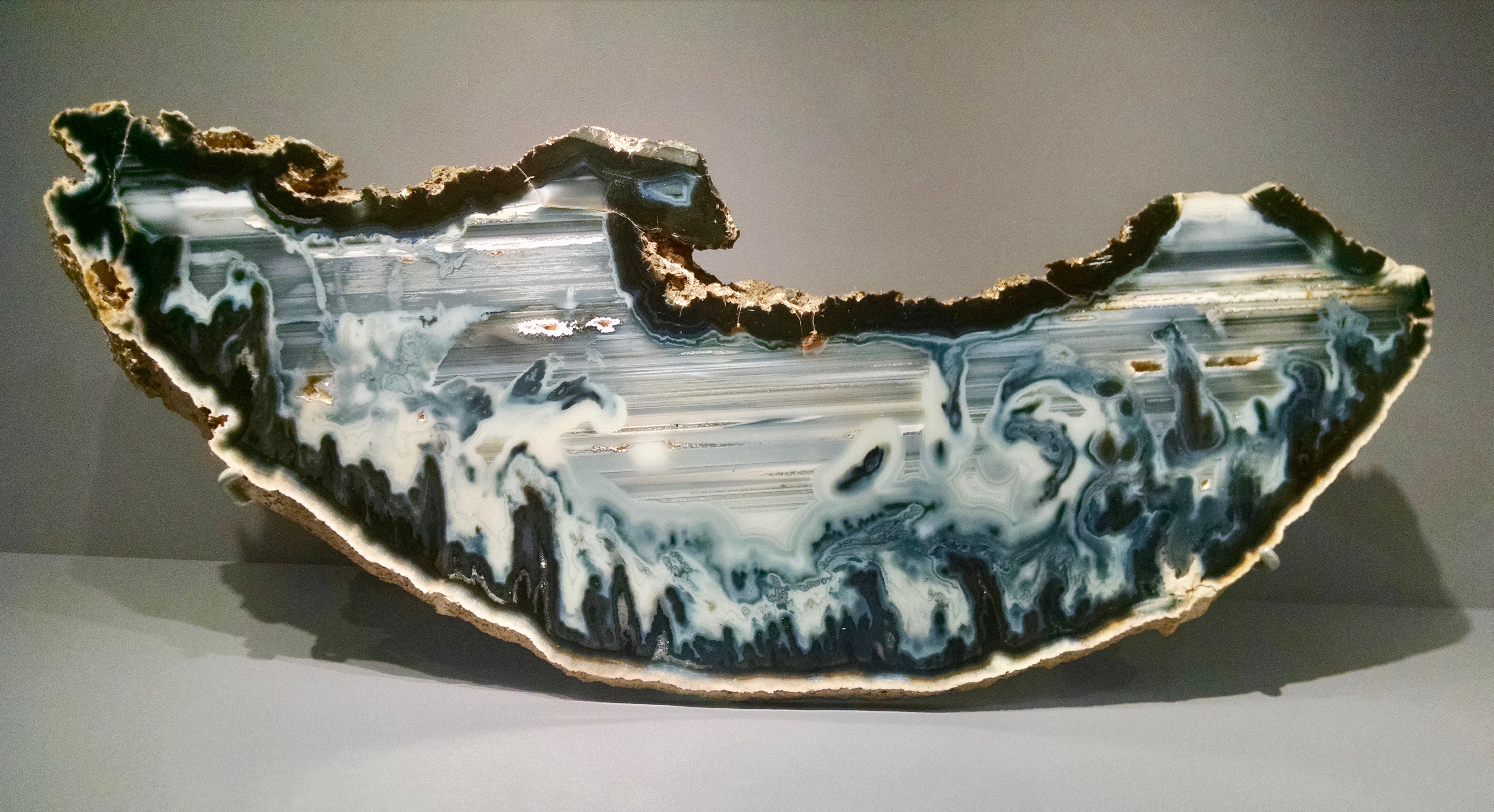
Caillois’ The Writing of Stones (1985) is out of print and costs a LOT. Part of his collection of rock specimens was exhibited at the 2013 Venice Biennale, and they are bewitching:

Caillois was also drawn to the ways in which stones seemed to provoke an imaginative response in humans which in some way made them difficult to conform to strict systems of classification. Caillois’ writings on stone are nourished by the lyrical tendencies of natural histories which reflect the wonder and confusion of classical and early modern scholars in the face of the hallucinatory pictographic forms of stones and their convergence of the brutal, energetic laws of nature with the play of chance. Throughout Stones, Caillois reveals his love of these kinds of paradoxes, defining stones as a ubiquitous and yet utterly marvelous phenomena. He explores how, through history, stones have fascinated human minds with their host of ambiguities, seeming at once animate and inanimate, organic and inorganic, mineral and vegetal, useful and useless, the stuff of poetic reverie and cultural symbolism as well as raw material, the access to which marks the technological advance of human civilization. Stones for Caillois are both an ancient source of human ingenuity and unchained imagination, both finalized by accident during some inhumanly distant epoch and forged according to certain inflexible laws of nature.

–Donna Roberts, An Introduction to Caillois’ Stones & Other Texts
(https://sensatejournal.com/an-introduction-to-caillois-stones-other-texts/)

Caillois himself, from The Writing of Stones:

Stones possess a kind of gravitas, something ultimate and unchanging, something that will never perish or else has already done so. They attract through intrinsic, infallible, immediate beauty, answerable or no one, necessarily perfect yet excluding the idea of perfection in order to exclude approximation, error, and excess. This spontaneous beauty thus precedes and goes beyond the actual notion of beauty, of which it is at once the promise and the foundation

Just as men have always sought after precious stones, so they have always prized curious ones, those that catch the attention through some anomaly of form, some suggestive oddity of color or pattern. Stones possess a kind of gravitas, something ultimate and unchanging, something that will never perish or else has already done so. They act through an intrinsic, infallible, immediate beauty, answerable to no one, necessarily perfect yet excluding the idea of perfection in order to exclude approximation, error, and excess. This spontaneous beauty thus precedes and goes beyond the actual notion of beauty, of which it is at once the promise and the foundation.

The vision the eye records is always impoverished and uncertain. Imagination fills it out with the treasures of memory and knowledge with all that is put at its disposal by experience, culture and history, not to mention what the imagination itself may, if necessary, invent or dream. So the imagination is never at a loss when it comes to making something rich and compelling out of a subject that might almost seem an absence of all life and significance. »

A stone represents obvious achievement yet one arrived at without invention, skill or industry, or anything else that would make it a work in the human sense of the word, much less a work of art. The work comes later, as does art, but the far-off roots and hidden models of both lie in the obscure yet irresistible suggestions in nature. These are subtle and ambiguous signals, reminding us, through all sorts of filters and obstacles, that there must be a pre-existing general beauty vaster than that perceived by human intuition, a beauty in which man delights and which, in his turn, he is proud to create. Stones – as well as roots, shells and wings and every other cipher and construction in nature – help to give us an idea of the proportions and laws of that general beauty about which we can only conjecture.

And Caillois in an article in Diogenes, Vol. 52, Issue 3:

I speak of stones that have always lain out in the open or sleep in their lair and the dark night of the seam. They hold no interest for the archaeologist, artist or diamond-cutter. No one made palaces, statues, jewels from them; or dams, ramparts, tombs. They are neither useful nor famous. They do not sparkle in any ring, any diadem. They do not publicize lists of victories, laws of Empire, carved in ineffable characters. Neither boundaries nor memorials, yet exposed to the elements, but without honour or veneration, they are witnesses only to themselves.

Architecture, sculpture, intaglio, mosaic, jewellery have made nothing of them. They belong to the planet’s beginnings, have sometimes come from another star. So they bear upon themselves the distortion of space like the stigmata of their terrible descent. They come from a time before humans; and when humans came, they did not leave on them the mark of their art or their industry. They did not work them, intending them for some trivial, luxury or historic use. They perpetuate only their own memory.

They are not carved in the effigy of anyone, man, beast or fable. The only tools they have known are those that were used to uncover them; the hammer to reveal their latent geometry, the grindstone to display their grain or awaken their dull colours. They have remained what they were, sometimes fresher, more legible, but always in their truth: themselves and nothing else.

I speak of stones that nothing has ever changed except the violence of tectonic crushing and the slow erosion that began with time, with them. I speak of gems before cutting, of nuggets before smelting, of the hard frost of crystals before the stone-cutter gets to work.

I speak of stones: algebra, vertigo and order; of stones, anthems and staggered rows, of stones, darts and corollas, dream’s margin, ferment and image; of this stone curtain of hair opaque and straight like the locks of a drowned woman, but which does not flow down any temple where in a blue canal a sap becomes more visible and more vulnerable; of these stones uncrumpled paper, incombustible and sprinkled with uncertain sparks; or the most watertight vase where there dances and finds its level again behind the only absolute walls a liquid before water, to preserve which a series of miracles was needed.

I speak of stones older than life that remain after it on cooling planets, when it was fortunate enough to unfold there. I speak of the stones that do not even have to await death…

Pullman, Purcell, Grandville

As is often the case, Chance is favoring the mind as it Prepares for a week-long project-centered workshop on InDesign (which I’ve used to construct most of my Blurb books, though clumsily). The first episode, a couple of days ago, was this fortuitous quotation that jumped off the page/screen of Philip Pullman’s just-published The Book of Dust: The Secret Commonwealth:

You won’t understand anything about the imagination until you realize that it’s not about making things up, it’s about perception.

(Much of my attention in recent years has been pinioned by the polyvalence of Imagination in my photographic life).

And then I stopped in at Hello Hello Books, as I frequently do, to eyeball the Photography shelf for anything new, and found Rosamond Purcell’s Bookworm, a beautifully designed book of her collages, constructions, and photographs of books “inevitably invaded by forces of nature and decay.” The whole issue of design is one I hope to attend to in the InDesign workshop, and Purcell’s book is a magnificent example.

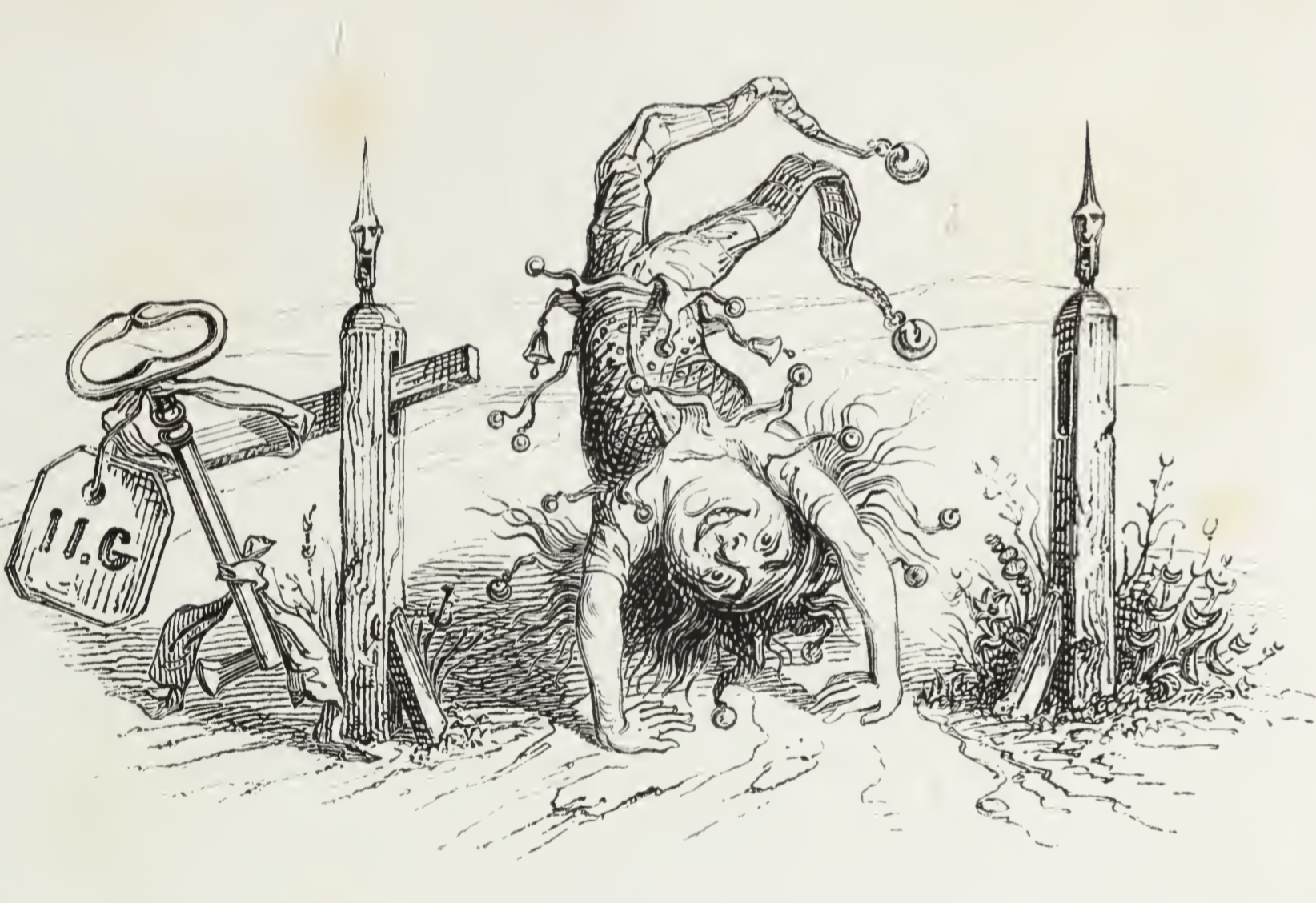
And yesterday’s email brought me a pointer from my co-conspirator Daniel to an essay on Grandville, whose work I’ve loved since discovering it long ago via a Dover book. The author (Patricia Mainardi) goes into some detail on a late and little-known book that Grandville inspired and illustrated, but which was never translated or republished after its first edition in 1844: Un autre monde. The subtitle seems absolutely on the money as a characterization of what I hope for my photographic work:

Transformations, Visions, Incarnations, Ascensions, Locomotions, Explorations, Peregrinations, Excursions, Vacations, Caprices, Cosmogonies, Reveries, Whimsies, Phantasmagorias, Apotheoses, Zoomorphoses, Lithomorphoses, Metamorphoses, Metempsychoses, and Other Things

This illustration from the book seems an ideal accompaniment to what I wrote two years ago in Reflection on my own Body of Work at the end of the Andy Ilachinski workshop:


The I is
playful, wry,
in search of
paradoxes, epiphanies, essences,
curiosities, ambiguities, amusements,
the occluded, the improvisatory,
stories.

Erdrich ftw

PortaChoix33

This morning’s online version of the New Yorker brought a short story by Louise Erdrich, The Stone, and the text of an interview of Erdrich by Deborah Treisman, from which this segment is harvested:

Sometimes I notice an odd, local type of stone and pick up a shard or a pebble… I’ve learned to put most of these stones back after looking. But stones ground me, quite literally, when I am in a new place. And they are mysterious and yet friendly inhabitants of my house. Every time I’ve moved, I’ve left behind a small pile of foreign stones in the garden. Have these stones used me to get from one place to the next? So I have a lot of stones around, I must admit, but this story isn’t based on a particular one among them. In the Ojibwe language, nouns are animate or inanimate; the word for stone, asin, is animate. One might think that stones have no actual power—after all, we throw them, build with them, pile them, crush them, slice them. But who is to say that the stones aren’t using us to assert themselves? To transform themselves? One day, the things we made out of stones may be all that’s left of our species. Of our complex history of chipping away at and arranging stones, what will be recorded or known?

The story itself is quite marvelous, and includes this resonant passage:

A stone is, in its own way, a living thing, not a biological being but one with a history far beyond our capacity to understand or even imagine. Basalt is a volcanic rock composed of augite and sometimes plagioclase and magnetite, which says nothing. The wave-worn piece of basalt that the woman [protagonist of the story] had slept with for more than a decade was thrown from a rift in the earth 1.1 billion years ago, which still says nothing. Before she broke it and dumped it at the bottom of a drawer, the stone had been broken time and again. It had been rolled smooth by water and the action of sand. Because of its strange shape, it had been picked up by several human beings in the course of the past ten thousand years. It had been buried with one until a tree had devoured the bones and pulled the stone back out of the ground. It had been kept by a woman who revered it as a household spirit and filled its eyes with sweetgrass. It had been shoved off a dock, lifted back up with a shovel, deposited in a heap. It had surfaced in a girl’s left hand. A stone is a thought that the earth develops over inhuman time. It is a living thing to some cultures and a dead thing to others. This one had been called nimishoomis, or “my grandfather,” and other names, too. The woman had not named the stone. She had thought that naming the stone would be an insult to its ineffable gravity.

My dealings with ineffable gravity are hereby declared entirely legitimate.

the ontologist will see you now


masked

I’m at an age where I pay more attention than formerly to texts on health and Thanatos. Among the authors I seem to be engaged with are Atul Gawande, Sherwin Nuland, Jerome Groopman, Jenny Diski, and most recently Colm Tóibín. I’m especially interested in the grace and wit these writers apply to the direst of subject matter. Thus Tóibín in a recent article in London Review of Books:

A week later the phone rang and I was told that I had a cancer of the testicles that had spread to a lymph node and to one lung. Instead of seeing the urologist, I would now need to see an oncologist. For a few days I comforted myself by pretending that, because of my abiding interest in the mysteries and niceties of Being, I had to see an ontologist… (18 April 2019, page 3)

The art of the grim jest, the sardonic and the mordant, is not to everyone’s taste. Once again, Amazon seems to be reading my mind: as I wrote the last sentence, email binged a come-on for Tony Moyle’s The End of the World is Nigh (“If you love books about con-men, conspiracies, Renaissance history, massive agitated boar, exploding beds, marmalade and historical satire then this is the book for you…”). Did I succumb? Of course.

Spiritual Smörgåsbord ?


Question: can we chip off pieces we like and leave the rest?
Purists and true believers will always say NO.


The question arises because I recently began to re-re-read Robertson Davies’ Deptford Trilogy (Fifth Business, The Manticore, World of Wonders), last visited maybe 20 years ago. Besides being a cracking good yarn and highly literate in a Canadian/British mode, it involves an extended meditation on entangled lives, on interwoven Stories, and on friendship. The second volume, The Manticore, was the source of pretty much everything I know of Jung. And now, in the context of thinking about life, and legacy, and Stories, it seems worthwhile to revisit one of the influential syntheses of the internal worlds.

Interlude: On our many passages between Nova Scotia and New England we would pass by a bizarre theme park/sculpture garden in deepest New Brunswick, called Animaland, the entrance to which was graced by a skeletal statue of a horse.

Betsy joked that it was “a place for the Jung at heart.”

Jungian analysis (AKA ‘analytic psychology’) proceeds from a foundation in anamnesis, an exercise by the analysand in extended autobiography (‘subjective confession’) aimed at confronting neurosis (seen as a “state of disunity with oneself”) and an attempt at self-cure of “mild dissociation of personality”.

“We can start almost anywhere. But from what you have told me I think we would be best to stick to the usual course and begin at the beginning.”
“Childhood recollections?”
“Yes, and reflections of your life up to now. Important things. Formative experiences. People who have meant much gto you, whether good or bad… We look at your history, and meet some people there whom you may know or perhaps you don’t, but who are portions of yourself…”
(The Manticore pg 70, 71)

This seems not irrelevant to some of what the Convivium is exploring. It’s not that I wish to immerse myself in Jungian bathos, but some of the terminology and background ideas may be provocative, evocative, useful to myself and others, so it’s useful to try to set out the framework, and to pick and choose elements that seem resonant.

…we are attempting to recapture some forgotten things and arousing almost forgotten feelings in the hope that we may throw new light on them, but even more new light on the present. Remember what I have said so many times; this is not simply rummaging in the trash-heap of the past for its own sake. It is your present situation and your future that concern us. All of what we are; talking about is gone and unchangeable; if it had no importance we could dismiss it. But it has importance, if we are to heal the present and ensure the future.
(The Manticore pg 100)

Powerful notions in the Jungian cosmology include the collective unconscious, broadly conceived as applicable to all Mankind, and coming from “somewhere beyond”, a “dynamic psychic substratum” encoded in myths “common to all humanity, on the basis of which each individual builds his or her private experience of life”—a grand and contentious notion [how transmitted? how across cultural/linguistic boundaries? from what origins? what are the Universals?].

Archetypes (“identical psychic structures common to all”) are another realm generally associated with Jung.

You may call these figures many things. You might call them the Comedy Company of the Psyche, but that would be flippant and not do justice to the cruel blows you have had from some of them. In my profession we call them archetypes, which means that they represent and body forth patterns to which human behavior seems to be disposed; patterns which repeat themselves endlessly, but never in precisely the same way…
(The Manticore, pg 229)

And here we quickly find ourselves in deep waters. I ran across a list of 300+ Archetypes, the most familiar of which are

The Self

The Anima

The Animus

The Shadow

The Persona

The Father

The Mother


The Child

The Wise Old (Sage)

The Hero

The Trickster

The Maiden

The poignancy of this Archetype thing may be appreciated with another list, immediately resonant for the males among us:

The four healthy archetypes of boyhood are:
The Divine Child
The Hero
The Precocious Child
The Oedipal Child

The eight shadow archetypes of boyhood are:
The High Chair Tyrant
The Grandstander Bully
The Know-it-all Trickster
The Momma’s Boy
The Weakling Prince
The Coward
The Dummy
The Dreamer

Shudder.

11ii1937

In my search for efficient entrée into Jung, I’ve been reading the excellent Jung: A Very Short Introduction, and I also found Daryl Sharp’s Jung Lexicon: A Primer of Terms & Concepts, worth a few minutes of your time to scan and thus to realize how integral and hermetic and inward-facing the world of Jungians is, and how vast and dauntingly impenetrable. The idea of breaking off a few convenient ideas or insights would be Anathema to true believers, but there are tasty bits that seem to accord with notions we’ve already discussed among ourselves, such as

Individuation: to “realize one’s own potential, follow one’s own perception of the truth, and to become a whole person in one’s own right”, “to work with and confront the unconscious” as a lifelong process.

Projection: “confronted by a field of ignorance, we project into it our own psychic activity and fill it up with meaning.”