This 3 CD reissue anthology is the first to track twentieth century American vernacular music of old time country, bluegrass, jazz and blues by tracing their beginnings in 19th century blackface minstrelsy and Tin Pan Alley.
Country Music is a genre driven by songwriting and publishing. This fact alone has given opportunity for songs to be refashioned again and again showcasing stylistic as well as lyrical changes over the past 100 years. The foundation of the American popular songbook traces its beginnings to the Vaudeville, Circus, Minstrel, Music Hall and Theater stages of the mid-late 1800s. The songs spread throughout the country and world creating a new musical tapestry that included both black and white performers of all backgrounds. Their songs and styles are presented in this three CD anthology.
By aligning performances from the earliest cylinder recordings with later 78 rpm, LP and CD versions, PROTOBILLY brings to life 81 historic recordings, more than half never before reissued…
Assembled by collectors and music scholars Henry Sapoznik, Dick Spottswood, David Giovannoni, and Dom Flemmons, this wowed me from the first cuts. I hadn’t realized that those Edison cylinders (and other brands too) had any relevance to the music recorded in the 78 era, or that the material captured in cylinder recordings had itself a considerable pedigree in sheet music and mid-19th century stage performance. Dom Flemmons puts it beautifully:
…songwriters, black and white, performed in the streets, theaters, music halls, medicine shows and circuses of a budding America reimagining the American Dream through song. The songs reflected and exaggerated the social climate of the world at that time. Like the internet memes of the digital era, Tin Pan Alley was not limited to unapologetically featuring songs that included ethnic humor lampooning working class people whether they be Irish, Italian, Jewish, German, African-American or Asian-American for the amusement of a paying audience. But it would be blackface minstrelsy, the songs that lampooned African-American experience, that would reach worldwide fame much to the chagrin of modern culture…
Black songsters pull songs of black buffoonery inside out and create humorous toasts of black ingenuity and excellency. Rural hillbilly singers take Broadway harmonies and give them the “high lonesome sound” of the Southern Mountains…
Here’s an example from Protobilly: The Arkansas Traveler seems to be datable as music and text from the 1850s, and was popularized on the vaudeville stage by Mose Case from the 1850s to 1880. There was a piano roll version by 1900, credited to Case. Here are three versions from Protobilly: Len Spencer (Edison cylinder 1902), Jilson Setters (Victor 78RPM 1928), and Clayton McMitchen & His Georgia Wildcats (Crown 78RPM 1932). And here’s a New Lost City Ramblers rendition:
The cylinder recordings I’ve heard before were so scratchy-noisy as to be almost unlistenable. The examples in the Protobilly compilation have been cleaned up beautifully, and I’m inspired to (re-)explore MAC’s (Michael Cumella) Antique Phonograph Music Program on WFMU, which has 23 years of archived programs (see list of artists played in those 23 years). MAC uses antique disk players, so you get a sense of how the original technology sounded to early 20th century ears.
MAC did programs of cylinder recordings as well, with guest collectors. Try this one for a good introduction to cylinder technology (broadcast date April 15, 2003):
Earnest and Bogus have been away on a Guitar Heroes and Other Musical Influences field trip, an effort to summarize my own musical history, which remains a subproject “Under Construction” in perpetuity, but has for the moment stabilized enough to feel distributable. I’m plunging back into the larger project of corralling Nacirema musics, but also being diverted into exploration of thousands of downloaded video clips.
(some necessary background, with links and illustrative videos)
“Hm.” I remember thinking. “Need to provide entrée to the collectors who found, preserved, annotated, packaged, released, and loved this music. And to the venues and mass media outlets that brought it to broader publics…” and the more I look into the background, the more stuff I find to explore and include, so more searches get done, more stuff gets ordered and read and heard. Case in point:
Just flew in through the transom: The Harry Smith B-Sides (“the flip side of 78-rpm records that Harry Smith included on the Anthology of American Folk Music”).
The B-Sides are fully as revelatory as the 84 cuts on the original Anthology:
a mirror image of the Anthology… a way to hear the complete statement of each 78RPM disc… as they were originally released in the 1920s and 1930s…
Most people interested by the Smith Anthology will agree that it stands as an esoteric beacon outside the whole dysfunctional culture system. Just like when it was first issued in 1952, you still won’t hear the music of the Smith Anthology on the radio, on TV or on the front pages of the internet…
By releasing his Anthology to the audience of Folkways Records, Harry Smith dropped an extraordinary rural working class culture bomb on a New York City world of artists, bohemians, radicals, and city musicians… (Eli Smith, B-Sides liner notes)
The 1927 Bristol recording sessions (the Big Bang of country music) captured 76 songs, recorded by 19 performers or performing groups, including the Carter Family.
The saga of recording Black musicians in the 1920s was somewhat more haphazard. There was a booking agency for the Black vaudeville circuit, the Theatre Owners Booking Association (TOBA, referred to by Ma Rainey as ‘Tough On Black Asses’) that dealt with jazz, comedians, dancers and (mostly female) blues acts (Ma Rainey, Bessie Smith). Country blues artists were mostly too small-time and local for TOBA, and were recorded in studios outside the South (e.g., “Paramount Records, based in Port Washington, Wisconsin. The company was a subsidiary of the Wisconsin Chair Company, who also made phonographs…”) but the musicians were recruited by
“field scouts” [used] to seek out new talent, though this is a somewhat grand name for men the likes of HC Speir, who ran stores in the South and simply kept an eye out for local musicians. Through Speir they recorded Tommy Johnson and, most importantly, Charley Patton. It was Patton that took Son House, Willie Brown and Louise Johnson to Paramount’s new studios in Grafton WI in 1930.
Several record companies had catalogs of “Race Records” made for a specifically Black rural public, and it is these disks that were rescued by record collectors in the 1960s.
Thinking about mass media and Nacirema musics, one of the constants for most of the last century has been Grand Ole Opry, which was first broadcast from Nashville in 1925 and came to blanket the rural South with versions of aural and, eventually with TV, visual imagery of regional culture. Separating the authentic and vital from the stereotyped and bogus is challenging, and just how accurate and inclusive the picture was/is/can be argued endlessly. The intrusions of commercial elements are everywhere, and might as well be acknowledged while we hunt for whatever purity they blanket. Resort complexes like Opryland USA and Dollywood and Branson MO and Graceland have drawn crowds seeking ‘authentic’ experiences, and have provided income for entertainers.
The cultural complexity of the Showcase experience is exemplified by Bascom Lamar Lunsford (1882-1973), who was a lawyer, performer, researcher, field collector, impresario, and tyrant for the cause of what he spoke of as “mountain music.” His Mountain Dance and Folk Festival in Asheville NC (first in 1928) was the paradigm for many other folk festivals.
Lunsford himself despised the commercialism and cultural nonsense he saw in Asheville’s Rhododendron Festival, and opposed the stereotyping of mountain folk as backward and ignorant. Still, as a performer he could produce material as bogus as Good Old Mountain Dew
A documentary on Lunsford, This Appalachian Music Man Lived A Beautiful Life, in which Alan Lomax shows up:
and David Hoffman’s Bluegrass Roots 1965 was filmed in a mountain tour conducted by Lunsford:
***
John (1867-1948) and Alan (1915-2002) Lomax are giants in the history of discovering and recording Nacirema music in the field. A site from the Musical Geography Project offers maps of Lomax travels. John Szwed’s biography of Alan Alan Lomax: The Man Who Recorded the World is excellent, and Duchazeau’s Lomax: Collectors of Folk Songs is a charming graphic-novel portrayal of a 1933 Lomax collecting foray into the South. Among the interesting videos on Alan Lomax:
Wikipedia lists more than 50 American folk song collectors, and American Folklife Center has a page of women collectors, including Frances Densmore (1867-1957), Zora Neale Hurston (1891-1960) and Mary Elizabeth Barnicle (1891-1978).
…an intense, competitive, and insular subculture with its own rules and economics—an oddball fraternity of men (and they are almost always men) obsessed with an outmoded technology and the aural rewards it could offer them. Because 78s are remarkably fragile and were sometimes produced in very limited quantities, they’re a finite resource, and the amount of time and effort required to find the coveted ones is astonishing. The maniacal pursuit of rare shellac seemed like an epic treasure hunt, a quest story—an elaburate, multipronged search for a prize that may or may not even exist. (pg. 4)
Among collectors of 78s, Joe Bussard stands out as a National Treasure. A Fretboard Journal profile introduces his rather unique personality:
Joe Bussard has an interesting theory: Musical forms seem to lose their value when the electric bass is introduced. “That goddamn electric bass ruined everything!” he shouts. “I went to Trashville—I mean Nashville—in ’57 to see the Opry, and I asked for my money back, I’ll tell you that right now. They didn’t have shit I wanted to hear. Garbage! When rock come in, I didn’t have any interest in anything that damn dumb! Elvis and all that bullshit! I already knew better than to fall for that, buncha goddam shit for retarded 4-year-old kids!”
but its essence is best appreciated in videos:
Joe has been very open-handed with his collection, making tapes for people and contributing to a vast array of compilations. There’s a video Desperate Man Blues: Discovering the Roots of American Music that I’d love to get my hands on. Looks like I had it in 2007 from Netflix, and I’ve requested it again.
Besides his Fonotone Records recording business which ran for a decade or so and lately produced a remarkable compilation
Massive 5CD set of American Primitive music unearthed for the first time (in various styles: Jug Band, Country, Old Time, Blues and Bluegrass), recorded and documented by Joe Bussard’s 78-RPM Fonotone label, 1956-1969 — not one track previously on CD before. Incredible package featuring 131 tracks over 5 discs, 160-page perfect-bound book, 17 full-color postcards, 3 record label reproductions in souvenir folder and a nickel-plated Fonotone Records bottle opener(!) — all packaged in a deluxe cigar box.
Joe Bussard recorded the young John Fahey in 1959-1960.
Fahey’s life was a trainwreck, with occasional bright interludes, and is perhaps best discussed under Guitar Heroes.
***
The fraternity of collectors is nicely documented via Mainspring Press (“Information and Resources for Historic-Sound Enthusiasts”, including Discographies). Their blogroll provides links to Excavated Shellac (mostly concerned with non-US sources) and Sound of the Hound (“dedicated to the story of how recording came into being and how it conquered the world”). See also Amanda Petrusich on John Heneghan and The Great 78 Project at the Internet Archive.
Some collectors have specialized in “ethnic” 78s (a whole other subset of my musical world), including Dick Spottswood (who grew up near John Fahey) and Ian Nagoski (of Canary Records and Fonotopia) and Karl Signell. See also 78rpm Collector’s Community (“a social network for collectors of 78rpms recordings, phonographs, memorabilia, recording machines and the history of the 78 rpm recording era”)
Experiments with recording at 78 RPM include American Epic (and accompanying CD and book).
(continuing semi-coherent explorations of Nacirema music holdings) (and surfacing topics to be expanded anon) (but barely scratching the surface)
Here’s a list I made for myself of issues to explore:
the “real folk” and the Tradition
authenticity and interpretation
versions and versioning
collectors, researchers, profit seekers
commercialization
the True Vine
appropriation
the place of folklore scholarship
To begin with the last of those, I reopened a file folder of notes and documents from summer 1991, when I spent a couple of months looking into issues of librarianship and access in the world of academic Folklore studies. I also hunted up some books on Folklore that I’d acquired then (Dundes 1965, Dorson 1972, Brunvand 1978), but found them unappealing and pretty much irrelevant to my Nacirema musics Finding Aid, since academic Folklore seems uninterested in the commercial world that produced the shellac and vinyl and digital documents, and ditto in the earnest efforts of non-“folk” musicians to study and then extend the works of early 20th century progenitors. Far more useful than the academic texts are liner notes from albums and books by non-academic enthusiasts who are free of the carapace of academic disciplines. There’s still plenty of contentious territory—John Fahey’s How Bluegrass Music Destroyed My Life represents that well.
It’s worthwhile to look into the work of 19th and early 20th century ballad scholars (Francis James Child and George Lyman Kittredge, Harvard professors of Rhetoric and English who sparked interest in texts and comparison), the songcatcher collectors (Cecil Sharp, Maud Karpeles, a few others), and the extra-academic road warriors (the Lomaxes père et fils most notably) who went out to record the “folk” in the 1930s. These were especially effective creators and anaysts of the body of work that the folk revivalists of the 1960s drew upon. Alan Lomax (as a fieldworker) and Moe Asch (as promulgator) laid the foundations; Harry Smith, Ralph Rinzler and Mike Seeger understood the potential locked away in all those 78s from the 1920s and 1930s. And a ragged band of collectors went out searching for revenant 78s and so eventually provided the feedstock for reissue compilations. In some cases they also found the still-living musicians who had made the records. Folk festivals and college tours acted as fuel for a boom in interest that also spawned coffee houses and record deals for performers.
A few LPs ignited the smouldering tinder. Joan Baez’s first album (1960) was one such for many people, and “Silver Dagger” pinioned (maybe even created) a whole generation of folkies:
The Wikipedia article on the song puts the Baez version into context: one of many variants, not a Child Ballad (though several on the Baez album were), and covering the same territory of love-and-death that runs wide and deep in folk and popular musics. Deja Morgana’s summary is helpful, and even Thomas Merton was bewitched:
“All the love and all the death in me are at the moment wound up in Joan Baez’s ‘Silver Dagger,'” the man wrote to his lady love in 1966. “I can’t get it out of my head, day or night. I am obsessed with it. My whole being is saturated with it. The song is myself—and yourself for me, in a way.”
(it’s worth thinking about other albums that had similar watershed effect)
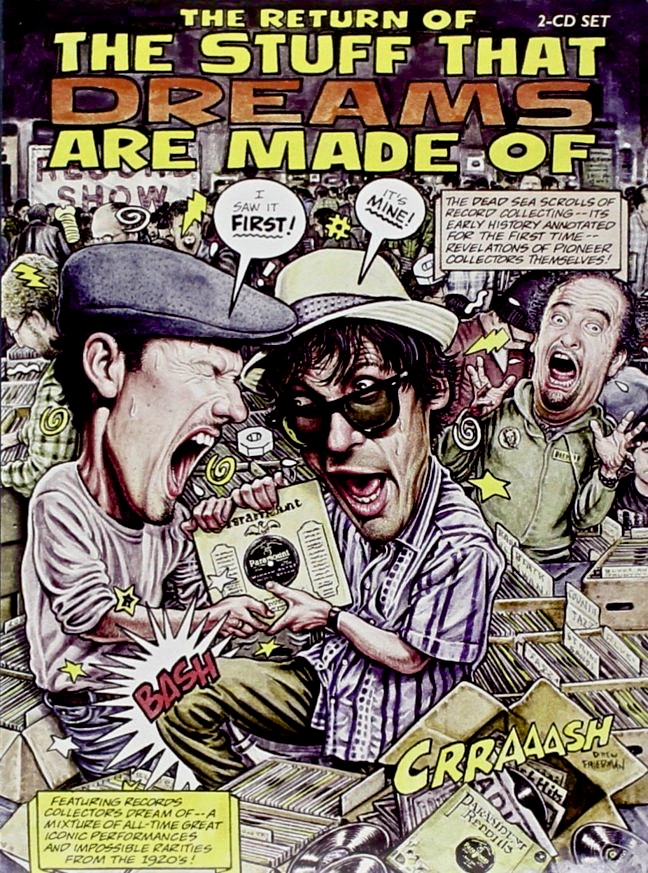
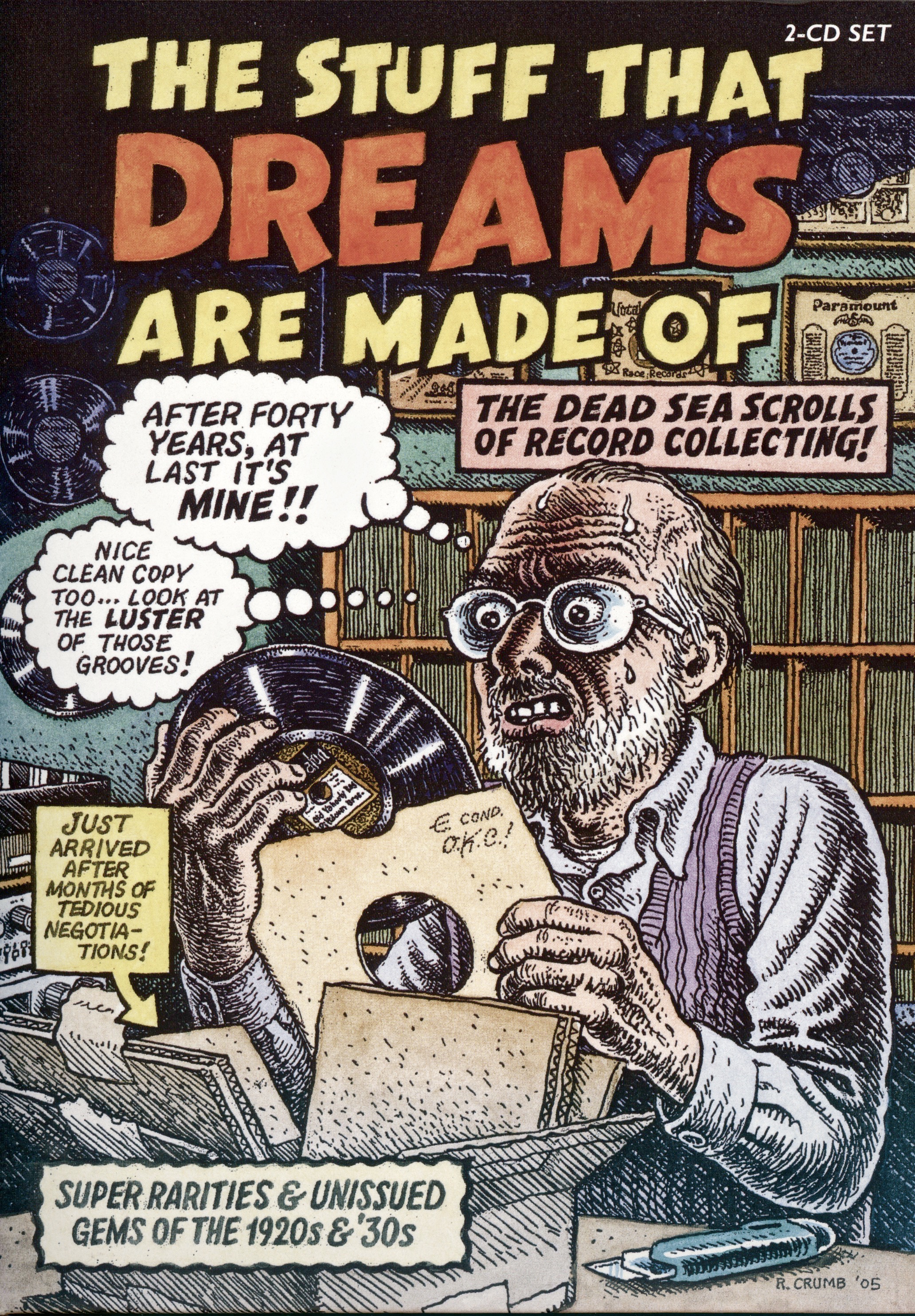
Fascination with particular instruments is another vein in the deep mine of the folk revival. The distinctive sound of the plucked string (guitar, banjo, dulcimer, mandolin…) and the powerful magnet of virtuosity (how does he/she DO that?) fueled the (largely unexamined) mania for playing that afflicts a small proportion of those who are attracted to this music. This minority is the feedstock of woodshedders and performers and instrument collectors whose obsessions underpin the vast edifice of tunes and drive the evolution of the various genres of popular music. And evolution there is, and has always been. For such folks, periodicals like Fretboard Journal and the now-defunct Mandolin World News (1978-1985) are tailor-made, and bits of lore like Ry Cooder’s instruments and David Lindley’s instruments are eye candy, the Stuff of which Dreams are made.
The life stories of the personalities in these musical worlds are a perennial fascination: how did they first become musicians, who and what influenced their development, with whom have they played, what demons have they wrestled with… A few examples:
Turning a passion for music into a viable career is perilous, and it’s has been true for the last century at least that life “on the road” is the lot of most who try to make a living from music: festivals, concerts in a string of cities, occasional tv and radio appearances, maybe recordings. Many also eke a living from session and sideperson work with recording studios. Austin City Limits, the NPR Tiny Desk miniconcerts, and personal YouTube channels are relatively new venues for performers, designed to reach wide audiences, but most “folk” musicians live pretty much hand-to-mouth. Needed here, and probably the subject of the next post in the series, is consideration of mass media (radio, TV, YouTube…), festivals and concert venues, and the infrastructure of the recording industry (A&R, studios, record labels)—stuff I know is important in the overall story, and missing pieces in the context of the Nacirema musics in my collections. Only a few of these are part of my experience, but they’re things I need to learn about as mise-en-scène for the music I experience by ear.
Meanwhile, a few videos of some of my own musical heroes:
Norman Blake:
John Hartford (1937-2001) Master of Ceremonies for the inaugural Ryman Auditorium performance of “Down From The Mountain”, an absolute must-see concert film.
(the beginning of a thread that will probably continue)
I was brought up short today by Alex Abramovich’s “Even When It’s a Big Fat Lie” in LRB, a review of Ken Burns’ Country Music, when I realized that I had been blithely ignoring the counterfeit nostalgia and encoded racism that clings to (or is perhaps at the core of) the genre. Music does carry multiple messages, serves various purposes, and is heard and interpreted in multifarious ways by different audiences and at different times. None of that should surprise—it’s just what Culture does, and there are cognate issues of the Dark Underbelly in Blues, in Rock’n’Roll, in the the various worlds of jazz, in “folk music” generally, and in High Culture musics too. There’s plenty of opportunity to descry the Emperor’s Clothes at work, and to call out various -isms on display, if that’s where one’s interests bloom.
My paths into these issues were via genres that might sustain the labels “ethnic” and “folk” and that partook of the early-1960s Harvard Square ferment so well documented in Eric von Schmidt and Jim Rooney’s Baby Let Me Follow You Down: The Illustrated Story of the Cambridge Folk Years. Robert Cantwell’s When We Were Good: The Folk Revival broadens the focus, and Scott Alarik’s Deep Community: Adventures in the Modern Folk Underground kicks out the jambs with a collection of 10 years of articles from The Boston Globe, which also ventures into English and Irish folk realms. Another dozen or so books on specific performers and groups clamor for inclusion in this canon, and may find their way in as we proceed.
…Alan’s public influence reached its peak between 1940 and 1960, when he was the single greatest force in bringing folksongs to American awareness… At times his influence can be seen in the distortions of the funhouse mirror of American culture, where a hard-fought idea can be perverted through the countervailing forces of social and technological interests and the discourse of fashion…
To those who knew Alan’s work only from his songbooks he seemed to be the pied piper of the folk, a kindly guide for a nostalgic return trip to simpler times.But he might have thought of himself as spokesperson for the Other America, the common people, the forgotten and excluded, the ethnic, those who always come to life in troubled times… those who could evoke deep fears of their resentment and unpredictability. At such times folk songs seemed not so much charming souvenirs as ominous and threatening portents. (pp 390-391; 3)
Robert Cantwell reflects on the experience of my own age cohort, we who were born during World War II:
…I remembered lovely Joan Baez, with her dark eyes and hair, her delicate shoulders, warbling to the plinking accompaniment of her guitar some British ballad in a voice somberly and exquisitely pure; images of Bob Dylan, the real inventor of punk, brazen, wasted, outrageous, excoriating racists and warmongers and capitalists in the drawling, swearing, muttering, doggerel-ridden songs we adored, and in the elliptic, visionary, lyrical ones that remade our world, but most of all felt again the defiant spirit in which we listened to them and the sense of strength and indomitability they gave us. (pg 15)
What wants explanation for me, and I trust to many of my readers, is the seven-year period between the release of the Kingston Trio’s “Tom Dooley” and Bob Dylan’s appearance at the Newport Folk Festival in 1965 with an electric guitar and a blues band. These are artificial but not arbitrary points; by general agreement they mark the boundaries between which a longstanding folksong movement, with elaborate political and social affiliations, emerged out of relative obscurity to become an immensely popular commercial fad, only to be swallowed up by a rock-and-roll revolution whose origins, ironically, it shared. (pp 20-21)
[I] declare that folksong, whether high or low, old or new, traditional or original, survived or revived, refects the deepest and most persistent of human dreams, and marks the human face and human habitat with their power. Often it is poetically subtle and precise, melodically and harmonically striking and fresh, elegant formally and structurally sturdy and ingenious, in performance a source of lasting inspiration and intense joy. Within its basic simplicity there is, in execution especially, a complexity that will always defy analysis. (pg 44)
The tunes I still attempt to play, the recordings that moved me, this or that unforgettable performance, have assumed over time nearly the status of persons—like brothers or sisters, perhaps, in whom one inevitably catches the old family resemblance, with whom one can always become reacquainted, in whom time collapses in upon itself, and yet who must finally remain independent, other, unconquerable. We cannot, finally, abandon them—for as surely as we must relinquish our youth, so must we honor and sustain the life force that is the gift of youth. As in any youth movement, what drove the folk revival was sheer erotic magnetism and beauty, idealism and aspiration, personal, social, and political striving, forces that, perhaps more than any other art, music is capable of communicating. (pp 45-46)
And von Schmidt and Rooney capture the feeling in the Cambridge air at the start of the 1960s:
Listening to music and trying to play and sing a few songs started to become more important than whatever was going on in school. For some it became a passion that started to smoulder inside. It was at this point that certain individuals made a difference. Some were teachers, some were organizers, some were sources of energy, instigators, and others were simply talented, musically gifted.
So, where no scene had existed before, one came into being. What had been smouldering before burst into flames. Jan Baez was the most prominent member of a group whose numbers were growing daily, as were their abilities as musicians and performers. More important still was the fact that there was an audience for this music. People wanted to hear it. It filled some need that we all shared in common before we ever knew what it was. Whatever plans we might have had before were to be totally changed. (from the Foreword)
Quintessential for me has been the New Lost City Ramblers: Mike Seeger, John Cohen, Tom Paley (replaced in 1963 by Tracy Schwarz). The Early Years 1958-1962 is a good introduction, and the liner notes are an essential accompaniment. An extract:
The New Lost City Ramblers will leave barely a blip in the history of the entertainment business, as they predicted in their jokes about their “long-playing, short-selling” albums on the Folkways label. But they have nevertheless earned the touch of immortality for their central role in our discovery of the folkloristic riches preserved electronically in the early years of our century. As individual performers, Mike Seeger, Tom Paley, and John Cohen had during the 1950s become interested in performance style in American folk music, exactly that dimension of the music which recordings uniquely capture. In 1958 they formed The New Lost City Ramblers with the explicit intention of performing American folk music as it had sounded before the inroads of radio, movies, and television had begun to homogenize our diverse regional folkways.
They studied and learned from commercial 78 rpm discs of “hillbilly” musicians recorded in what has come to be called the Golden Age (1923–1940), from blues and “race” records of the same era, from the bluegrass recordings of the post-war period, from the field recordings on deposit in the Library of Congress. In turn, they began their own field trips to seek out and record and learn the music of older rural musicians who still played and sang in the old way. Over the next twenty years, the Ramblers poured forth a steady stream of their own performances live and recorded, albums of their field recordings, and festival performances and workshops in which they introduced musicians they had met in the South to urban audiences of the folk song revival of the 1960s. Their lasting influence was greatest upon a relatively small but important part of that urban audience—those few who wanted not only to study the music seriously, but who also wanted to learn to play the music themselves, actually to be the heirs of a musically rich American culture which by the 1960s largely existed only in the scratchy echoes found on primitive recordings, and in the memories of an ever-fewer number of elders.
I awoke thinking about Material and Immaterial Touchstones, and about Touchstones as property, as fungible, as shareable.
Becoming slightly more lucid, after first sips of coffee, I wondered why would it occur to my semi-waking mind to even consider Touchstones as legal entities, as assignable property? Aren’t they imagine-ary? Creations/creatures of the mind?
And by then fully awake, I realized that Touchstones are ways that the mind notes and labels Significance, such that one can make a mental map of things that matter, tantamount to personal wampeters
Reminder from Vonnegut’s Cat’s Cradle (1963): a wampeter is the pivot of a karass, “a central element around which a karass is formed, which can be practically anything: a tree, a rock, an animal, an idea, a book, a melody, the Holy Grail”
And just to remind anyone not with the Program already,
a karass is “a network or group of people linked in a cosmically significant manner, even when superficial linkages are not evident”
A quick Google search for ‘karass’ gets 225,000 results, of which the third is my own 2004 explication, which is a subpart of something I wrote 16 years ago to the bloody DAY, and still find a clear and relevant summary, despite a few rotten hyperlinks! YCMTSU, folks.
‘Touchstone’ has come up a few times in our Convivial conversations, in the context of things/ideas [material/immaterial] of great personal significance. The term’s literal meaning refers to assaying and purity-testing of ore samples (“gold and silver was rubbed, or touched against black quartz — the touchstone — to determine the purity of the metals. This was done by looking at the color of the streaks left on the stone.” [Vocabulary.com]), and by extension “a basis for comparison; a reference point against which other things can be evaluated” [WordNet.com]). By still further extension, “A touchstone can be a short passage from recognized masters’ works used in assaying the relative merit of poetry and literature. This sense was coined by Matthew Arnold in his essay “The Study of Poetry”, where he gives Hamlet’s dying words to Horatio as an example of a touchstone.” [Wikipedia]). Thoreau takes it still further, and into territory we’ve traversed:
Dreams are the touchstones of our characters. We are scarcely less afflicted when we remember some unworthiness in our conduct in a dream, than if it had been actual, and the intensity of our grief, which is our atonement, measures inversely the degree by which this is separated from an actual unworthiness. For in dreams we but act a part which must have been learned and rehearsed in our waking hours, and no doubt could discover some waking consent thereto. If this meanness has not its foundation in us, why are we grieved at it? (from A Week on the Concord and Merrimack Rivers)
The Question du jour arose while reading about books in two Guardian pieces, one by Philip Pullman and the other by Neil Gaiman. (I’ve snagged both texts, just in case they disappear from Guardian accessibility), and here’s what I wrote as a note-to-self:
There are books which seize us, to which we may return again and again to relive the pleasures and insights they provided, and often enough to discover previously unnoticed depths and messages. How many times have I read Tolkien, or Jan De Hartog’s Spiral Road, or Patrick Rothfuss’ Kingkiller Chronicles (still awaiting the unpublished third volume of the trilogy) or Trollope’s Barsetshire novels, or Delderfield, or Eric Ambler, or Manning Coles… and how many authors have I read pretty much everything by and kept in expectation of reading again (Pratchett, Gaiman, William Gibson, etc. …)
And here’s the Question as spawned:
=====
What are your TOUCHSTONE books? [and/or images, films, music… whatever]
by which you’ve been especially influenced
which mark turning points in life/understanding
to which you’ve returned repeatedly
which you would press on others
And more generally, what’s a TOUCHSTONE to and/or for you? (book or otherwise, point being to explore the meaning/significance of ‘Touchstone’ in your life).
=====
Here’s a nice elaboration of the term, placing it directly in Convivium territory:
The word touchstone has several meanings. In times past, a touchstone was a dark stone, such as basalt or jasper that was used to test the quality of gold or silver. From that came the more common meaning, that of a reference point from which to evaluate the quality or excellence of something.
A touchstone can be a personal symbol or emblem that represents your dream and that helps you to stay on track and stay true to your vision. Throughout the centuries, indigenous people on every continent have used ‘medicine bags’ in a similar way. … The term ‘medicine’ in this context refers to anything related to the spirit world, Medicine bags provide guidance, healing and protection for their owners. The bags or pouches can be leather, are often decorated with beads, and contain items such as quartz crystals, feathers, plants, or shells. The items in a medicine bag represent the wearer and are often gathered as part of a vision quest.
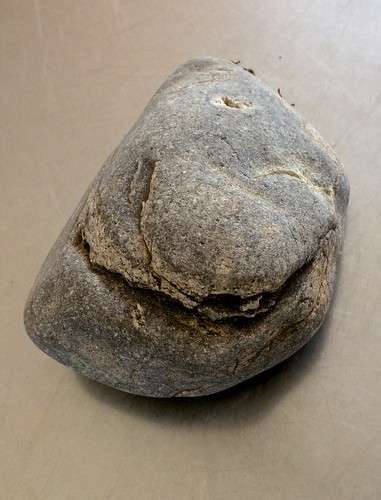
Your own touchstone or ‘medicine’ should be something meaningful to you, something that has special significance or resonates with you. I’m sure you’ve had the experience of finding a small item, perhaps a rock, leaf, flower or shell that seemed to be just waiting for you to pick it up and carry it home. Then when you get it there you have no idea what to do with it. Such a finding might become your touchstone.
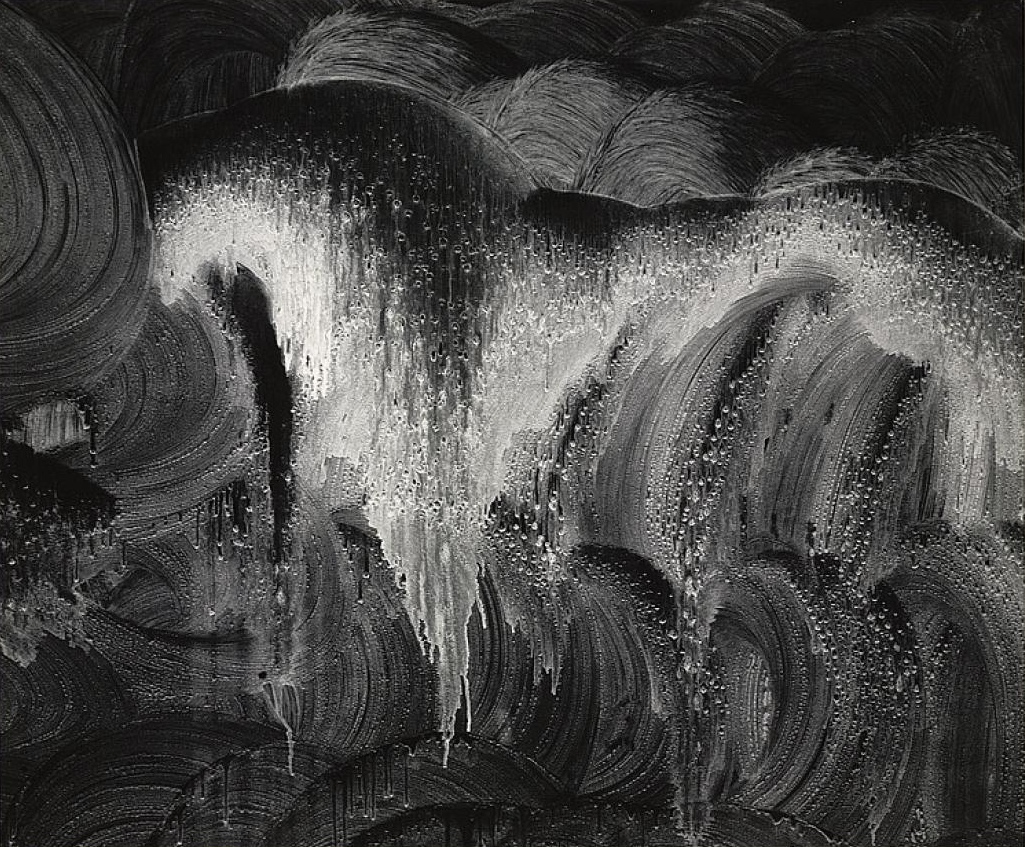
Speaking for myself, I recognize a pretty broad array of literal and metaphorical Touchstones—the literal ones in actual rocks collected for their personalities and beauty, and the metaphorical ones being some sort of epitome, some sort of representation of an ideal or crystallization of value or memory. This reading might be easiest to convey in photographs that seem to operate as personal Touchstones, as epitomes of what I most value in the medium, to which I’ve returned again and again. Some are completed thoughts, as in Paul Caponigro’s “there’s a horse in that one” (his comment when I told him that the image had changed my life)
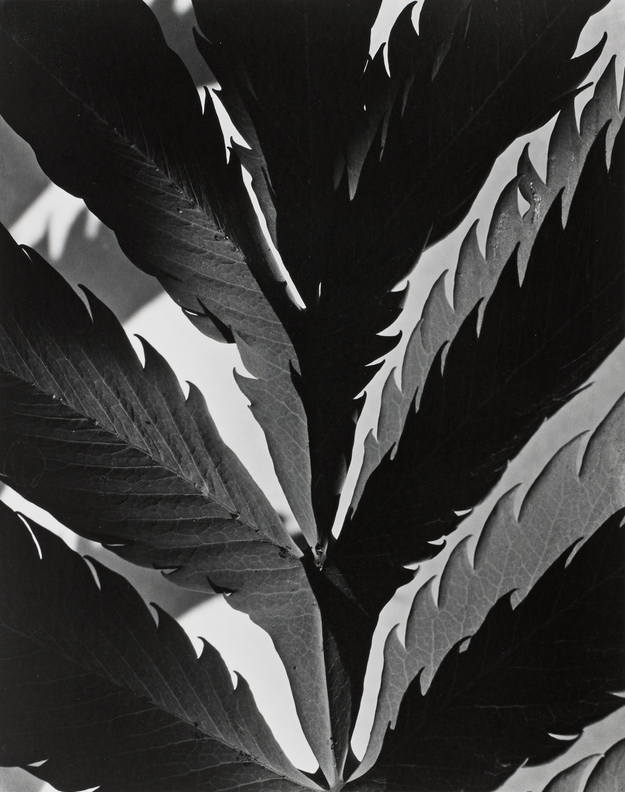
while others relate more to the puzzles and uncertainties, as in Imogen Cunningham’s Leaf Pattern
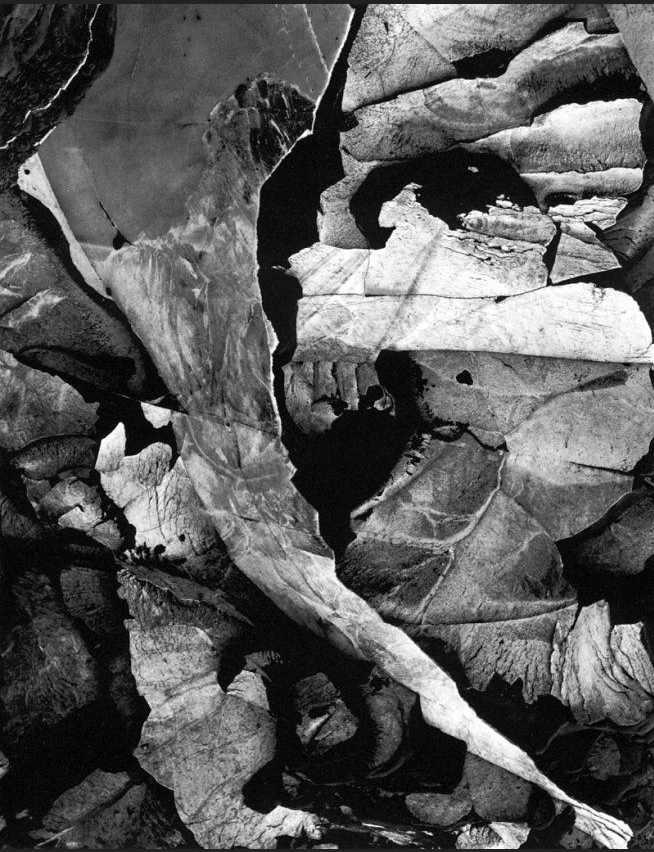
or Minor White’s abstract Moenkopi rocks
These are Touchstones for me because they stick firmly in the mind and embody some insight that I gained when I first saw them, some undertanding of photographic design. But transitivity isn’t necessarily a part of this: one person’s Touchstone is another’s enigma, or ho-hum. A Touchstone is intensely personal, something that comes alive in the mind of a person and might be shared with others, or not.
I also have a wide-and-deep array of musical Touchstones, some going back to my youth and others discovered only yesterday. The earliest seems to be the first Allegro from Bach’s Concerto for 3 harpsichords, strings and continuo (BWV 1064), which I remember hearing while lying under the piano, via a 78RPM record. And then just yesterday I heard Pat Conte’s Half Shaved for the first time, and it immediately joined the Canon.
And needless to say there’s been a long succession of touchstone films, The Big Lebowski prominent among them.
This morning, while reading about the early years of phonograph and gramophone and thus the imprint of technology on the evolution of “popular” music, it occurred to me that there are two tales of music heard but not recorded that are foundational in the history of blues and jazz—that is, of the vital part played in Nacirema musical evolution by Black music(s) of the rural and urban South.
W.C. Handy
One tale finds bandleader W.C. Handy waiting for a train in Tutwiler, MS in (probably) 1903, and
A lean, loose-jointed Negro had commenced plunking a guitar beside me while I slept. His clothes were rags; his feet peeped out of his shoes. His face had on it some of the sadness of the ages. As he played, he pressed a knife on the strings of a guitar in a manner popularized by Hawaiian guitarists who used steel bars. The effect was unforgettable. His song, too, struck me instantly. ‘Goin’ where the Southern cross’ the Dog.’’The singer repeated the line three times, accompanying himself on the guitar with the weirdest music I ever heard. (from Handy’s 1941 autobiography)
…The song referred to the crossing of the Southern and Yazoo & Mississippi Valley railroads in Moorhead, forty-two miles to the south; the Y&MV (sometimes called the Yazoo Delta or Y.D.) was nicknamed the “Dog,” or “Yellow Dog.” After moving to Memphis in 1905, Handy adapted the blues into a series of compositions that helped sparked America’s first blues craze, including “Memphis Blues,” “Yellow Dog Blues,” “Beale Street Blues,” and, most popularly, the classic “St. Louis Blues.” He was already being hailed as the “Daddy of the Blues” by 1919. (http://msbluestrail.org/blues-trail-markers/w-c-handy)
Some consider “Funky Butt” the oldest known jazz tune. It was Jelly Roll Morton (1885-1941) who bestowed the title “Buddy Bolden’s Blues” upon it and fashioned his own lyrics. Jelly made two commercial recordings of the song, in 1939, rendering it as a solo piano piece and as a band number. It is also included in the epic 1938 Library of Congress session that folklorist Alan Lomax recorded of Morton telling the story of his life, providing an account of the early years of jazz, and expatiating upon New Orleans history, all to the accompaniment of his piano. Jelly does the vocal on all three versions. And here is what he sings:
I thought I heard Buddy Bolden say You nasty, you dirty—take it away You terrible, you awful—take it away I thought I heard him say
I thought I heard Buddy Bolden shout Open up that window and let that bad air out Open up that window, and let the foul air out I thought I heard Buddy Bolden say
I thought I heard Judge Fogarty say Thirty days in the market—take him away Get him a good broom to sweep with—take him away I thought I heard him say
I thought I heard Frankie Dusen shout Gal, give me that money—I’m gonna beat it out I mean give me that money, like I explain you, or I’m gonna beat it out I thought I heard Frankie Dusen say
This article by Luc Sante, from Believer (2004), is an excellent summary of the historical significance and musical and linguistic aspects of Bolden’s “Funky Butt”:
Jazz is too large and fluid a category of music to have had a single eureka moment of origin, let alone a sole inventor, but just about everybody agrees that no nameable person was more important to its creation than Buddy Bolden. He was a cornet player, born in 1877, and he got his first band together sometime around 1895. He was known for playing loud—stories of how far his horn could be heard sound like tall tales, but are so numerous there must be something to them—and for playing loose and rowdy. He was by all accounts the first major New Orleans musician to make a virtue of not being able to read a score. You can begin to get an idea of how distinctive his band was from looking at photographs. The traditional-style brass bands of the era wore military-style uniforms, complete with peaked caps, as their parade-band successors do to this day; the getups proclaim unison and discipline, even if the New Orleans version allowed for more latitude than was the rule among the oompah outfits active in every American village of the time. The orchestras—the term was then applied to non-marching musical agglomerations of virtually any size or composition—dressed in mufti, but their sedate poses attest to rigor and sobriety. The John Robichaux Orchestra may have had a big drum, as shown in an 1896 portrait, but its legendarily virtuosic members look as serious as divinity students, and by all accounts they played as sweetly.
Buddy Bolden’s band, on the other hand, is clearly a band, in the sense in which we use the word today. In the only extant photograph, circa 1905, each member has chosen his own stance, with no attempt at homogenization. They all rode in on different trolleys, the picture says, but up on the stage they talk to each other as much as to the audience. Drummer Cornelius Tillman is unaccountably absent. Shy Jimmy Johnson disappears into his bull fiddle. B-flat clarinetist Frank Lewis sits gaunt and upright as a picket. Willie Warner holds his C-clarinet with the kind of delicacy you sometimes see in men with massive hands. Jefferson “Brock” Mumford, the guitarist, looks a bit like circa-1960 Muddy Waters and a bit like he just woke up fully dressed and out of sorts. Willie Cornish shows you his valve trombone as if you had challenged his possession of it. Buddy Bolden rests his weight on his left leg, holds his little horn balanced on one palm, shoulder slumping a bit, and allows a faint smile to take hold of his face. You could cut him out of the frame and set him down on the sidewalk outside the Three Deuces in 1944, alongside Bird and Diz, and then the smile and the posture would plainly say “reefer.” You could cut him out of the frame and set him down on the sidewalk outside right now, and passing him you would think “significant character, and he knows it, too,” and spend the rest of the day trying to attach a name to the face.
You can’t hear the Bolden band, of course.They may actually have cut a cylinder recording around 1898, but the beeswax surfaces of the time were good for maybe a dozen plays, so it’s hardly surprising that no copy has ever been found.And then Bolden suddenly and dramatically left the picture. In March, 1906, he began complaining of severe headaches, and one day, persuaded that his mother-in-law was trying to poison him, he hit her on the head with a water pitcher. It was the only time in his life that he made the newspapers. His behavior became more erratic, he lost control of his own band, and then he dropped out of that year’s Labor Day parade in midroute—no small matter since the parade was an occasion for strutting that involved nearly every musician in the city. Not long thereafter his family had him committed for dementia. His induction papers cite alcohol poisoning as the cause, but modern scholars suggest it might have been meningitis. In any case he remained incarcerated and incommunicado in the state Insane Asylum at Jackson until his death in 1931, aged fifty-four. He missed the leap of the New Orleans sound to Chicago and beyond, the rise of Louis Armstrong (who, born in 1901, may have remembered hearing Bolden play when he was five), the massive popularity of hot jazz that finally allowed acquaintances and quasi-contemporaries such as Freddie Keppard and Bunk Johnson to record, however fleetingly or belatedly. His name became known outside Louisiana only when white researchers from the North began knocking on doors in the late 1930s. He achieved worldwide fame as a ghost…
But the band needs air. They need to fill their lungs to blow, remember? And the air is this yellow soup with filaments of monkey shit running around in it. So Bolden stands up, slices laterally with his hand, and the music stops, abruptly, right in the middle of the third chorus of “All the Whores Like the Way I Ride.” Then he stomps hard once, twice, three times to get the crowd’s attention. “For God’s sake open up a window!” he bellows. “And take that funky butt away!” The crowd laughs. People look around to see who the goat is or to shift blame away from themselves, as somebody with a pole topped with a brass hook finally pivots open the tall windows. Everybody knows that this will mean noise complaints and then probably a police raid, but nobody leaves. Finally Bolden blows his signature call, and the machine starts up again. Afterward, people straggling home keep hooting, “Take that funky butt away!” For days they shout it in the streets when they’re drunk, or they approach their friends very seriously, as if to convey something of grave significance, then let loose: “Take that funky butt away!” Various Chesters and Lesters in the area become “Funky Butt” for a week or a month, or for the rest of their natural lives. And then the hall, which everybody calls Kinney’s after the head of the Union Sons, starts being referred to as Funky Butt Hall, and the name sticks.
Cut to a week later, to a dance at the Odd Fellows and Masonic Hall, a couple of blocks down on Perdido and South Rampart. In the second part of the set, right after “Mama’s Got a Baby Called Tee-Na-Na,” when everything is getting loose and crazy, Willie Cornish stands up and starts singing: “I thought I heard Buddy Bolden say / Funky butt, funky butt, take it away…” There is a silence from the crowd, and then pandemonium. People can’t believe what they’re hearing. It’s as if the band had looked into their minds. And the song is more than a joke. It’s a fully worked-out rag, immediately memorable on its own merits, while the words are irresistibly singable, a banner headline set to music. If there were records available, and people owned record players, storekeepers would not be able to keep copies on their shelves. Within a week or two dockworkers are singing it, and well-dressed young people are whistling it, and barbers are humming it, and drunks are caterwauling it. New verses proliferate. The tune, which instantly calls up the memory of the original words, is annexed by comedians and political campaigners and every sort of cabaret singer. Most of the versions are filthy, some are idle, some topical. For a long time the song goes unrecorded on paper, since even its title is unprintable, until an enterprising—not to say larcenous—ragtime publisher finally copyrights a wordless piano arrangement entitled, for some reason,”St. Louis Tickle.”
For anyone who spent time at the dances and parades of black New Orleans at the very beginning of the century, though, the song will remain Bolden’s monument, his living memory for decades after he is first locked up and then stone-cold dead, as the long line of graybeard interviewees of the earnest young Northern jazz fans knocking on doors from the 1930s to the 1960s will attest. Buddy Bolden wrote other songs, some of them—although attribution is always uncertain—more famous than he ever was, but “Funky Butt” is not merely his song; in alchemical fashion it has replaced the man himself. But no version of the lyrics was set down until an entire generation and then some had gone by….
Morton’s recordings, for all their testamentary aspect and intent, can actually be seen as marking the start of a second life for at least one aspect of the song. Although funk is a versatile word, with secondary denotations of fear and depression and second-order thievery, the phrase funky butt would have clearly signified an odoriferous posterior for at least a century before Bolden famously used the phrase, and in context it can still be so interpreted. In the glossary of hepcat jive that Mezz Mezzrow inserted at the end of his memoir, Really the Blues (1946), funk is defined as “stench,” and funky as “smelly, obnoxious.” In less than a decade, however, the meaning of the word had begun to turn, at least in jazz circles, particularly on the West Coast.The scat singer King Pleasure, backed by Quincy Jones, put out a record called Funk Junction in 1954, and 1957 saw the issue of Creme de Funk by Phil Woods and Gene Quill, and of Funky by Gene Ammons’s All-Stars. In 1958 beatnik fellow-traveler John Clellon Holmes employed funk in a strictly musical sense in his novel The Horn, and not much later the word was being applied favorably to a performance by Miles Davis. By 1964 even the New York Times was throwing it around.
The word was in general currency from the early 1960s on as a musical term signifying some combination of authenticity, earthiness, greasiness, muscularity, perspiration, and the presence of one or more of the following: fuzz-tone bass, hoarse cries produced on the lower register of the tenor sax, a bottom-heavy and high-hat-intensive drum style, and a particularly dirty sound obtainable on the Hammond organ. The turning point came in 1966 when Arlester Christian wrote, and recorded with his band Dyke and the Blazers, the epochal “Funky Broadway,” which was covered and made into a huge hit by Wilson Pickett the following year. The way funky was employed in the lyrics did not refer to music, although it retained many of the cluster of meanings associated with musical use: authenticity, earthiness, greasiness, etc. All of these dove-tailed with and enlarged usefully upon the word’s original olfactory denotation, welcoming the noxious odor and giving it a room and a new suit without actually rehabilitating it. From there it was a short step to Arthur Conley’s “Funky Street” (1968), Rufus Thomas’s “Funky Chicken” (1970), Toots and the Maytals’ “Funky Kingston” (1973), and “Funky Nassau” by the Beginning of the End (1973), among many. James Brown virtually bought the franchise, from “Funk Bomb” (1967) through “Ain’t It Funky,” “Make It Funky,” “Funky Side of Town,” “Funky President,” “Funky Drummer,” and scads more from all quadrants of meaning by a man who spent a year or two calling himself “Minister of the New New Super Heavy Funk.” He had no peers atop the funk pyramid, or at least that was the case until George Clinton (of Funkadelic) concocted something like a theology of funk. (One of my proudest possessions is a T-shirt I can’t fit into anymore that is emblazoned with the legend “Take Funk to Heaven in 77.”) Clinton, in full evangelical feather, instituted a principle of spiritual surrender he termed “Giving up the Funk.” This was mana, total communion with the life force manifested as a fried fish.
Funk has climbed down from those heights. It has been devalued by George Michael’s “Too Funky,” and the Eagles’ “Funky New Year,” and “Funky Funky Xmas” by the New Kids on the Block, not to speak of the lingering memory of Grand Funk Railroad. But the word has not been shucked. It is too valuable. It appears in hiphop strictly as a place-marker (the Notorious B.I.G.’s “Machine Gun Funk,” Too Short’s “Short but Funky,” OutKast’s “Funky Ride,” etc.), but it is a place-marker that will not go away anytime soon. Payments are kept up on the word. Its license is renewed. It is periodically removed from the shelf and dusted off and cradled, occasionally taken for a spin to shake out the knots. The day will come before very long when it is immediately necessary once again, when all of its putative substitutes have been tarnished and made risible, when “ghetto” has been redeveloped and “real” become irredeemably fake—when it will have acquired a previously undreamed-of nuance temporarily undetectable by the white middle-class ear. It awaits a further development of the process set in motion on the rickety stage of some fraternal hall in uptown New Orleans in the year 1902 or thereabouts. It permanently embodies the voice of Buddy Bolden, speaking through a cloud.
The Finding Aid for my collections of Nacirema Music is progressing slowly, and lately my ears have been reimmersed in musical genres I haven’t paid much attention to in recent years. One of my ad hoc categories is “So Very American”, containing tunes that just couldn’t have any other source or identity, and that rend the patriot heart. Not that they’re ‘patriotic’, not at all, but they evoke a warm feeling of recognition of shared understanding that might be difficult to explain to auslanders. Here are two that surfaced today in my Spotify Discover Weekly:
I don’t know much, when I knew less
And I was heartbroke for the first time
I was drowning in my tears
I went looking for a lifeline
Trying to find some comfort
A simple tender touch
Searching for some little cure
That would not cost too much
And I could hear that produce wagon on the street
I could hear that farmer singing
As I cried myself to sleep
I got ba-na-na, watermelon, peaches by the pound
Sweet corn, mirleton, mo’ better than in town
I got okra, enough to choke ya
Beans of every kind
If hungry is what’s eatin’ you
I’ll sell you peace of mind
But this ain’t what you came to hear me say
And I hate to disappoint you
But I got no love today
I got no love today
I got no love today
No love today
I could not love to save myself
From lonesome desperation
Everything I thought was love
Was worthless imitation
My concept of commitment
Was to take all you could give
I thought the cheapest thrills I loved
Were teachin’ me to live
But nothin’ seemed to last or see me through
Nothin’ but that little song
That I still sing for you
I got ba-na-na, watermelon, peaches by the pound
Sweet corn, mirleton, mo’ better than in town
I got okra, enough to choke ya
Beans of every kind
If hungry is what’s eatin’ you
I’ll sell you peace of mind
But this ain’t what you came to hear me say
And I hate to disappoint you
But I got no love today
I got no love today
I got no love today
No love today
No love today, none tomorrow
Not now, not forever
You can’t see what comes for free
I think you much too clever
For your own good I will tell you
What’s right before your eyes
Intelligence is no defense
Against what this implies
In the end no one will sell you what you need
You can’t buy it off the shelf
You got to grow it from the seed
I got ba-na-na, watermelon, peaches by the pound
Sweet corn, mirleton, mo’ better than in town
I got okra, enough to choke ya
Beans of every kind
If hungry is what’s eatin’ you
I’ll sell you peace of mind
But this ain’t what you came to hear me say
And I hate to disappoint you
But I got no love today
I got no love today
I got no love today
No love today
[Chorus]
I have seen American flowers all across this land
From the banks of the Shenandoah, along the Rio Grande
Do not fear the winter blowing in the hearts of men
I have seen American flowers they will bloom again
[Verse 1]
On the Southside of Chicago, a man who’s not yet grown
Went out for a ride but the car was not his own
He did not see the stop sign or the boy on a skateboard
Now he’s lying broken on the ground
Nobody around he coulda, he coulda drove away
But he pulled on over to the curb and he ran out where he lay
Used his hoodie for a pillow said “little man you’re gonna be ok”
And he waited for the ambulance to come
[Chorus]
I have seen American flowers all across this land
From the banks of the Shenandoah, along the Rio Grande
Do not fear the winter blowing in the hearts of men
I have seen American flowers they will bloom again
[Verse 2]
Tender was the night down in the Tenderloin
In an alley off O’Farrell Street, in the neon glow
Well she finally caught that dragon a mile from Chinatown
She took her wings and eased her body down
She gave a little shudder, but no pain, she felt no pain
And she knew that she was back on home in Morgantown again
She could smell the lady slippers and the wild thimble weeds
“Mama I was just mad, I never meant to leave”
[Chorus]
I have seen American flowers all across this land
From the banks of the Shenandoah, along the Rio Grande
Do not fear the winter blowing in the hearts of men
I have seen American flowers they will bloom again
[Verse 3]
Layin’ roof in Texas is the job for someone younger
And so is catching fastballs from your Grandson in the summer
But there you are saying “Come on kid, lemme feel that hummer”
With your back and hips and knees on fire
And he says “Come on Grandpa, when you gonna let me throw a curve?”
And you’re looking back at him in the sun and you feel your heart is bursting
Let me keep him from himself and those that mean to hurt him
If that be your will, oh Lord
[Chorus]
I have seen American flowers all across this land
From the banks of the Shenandoah, along the Rio Grande
Do not fear the winter blowing in the hearts of men
I have seen American flowers they will bloom again
[Verse 4]
Right there off the interstate in Northwest Ohio
In the amber waves of grain and the assemblies of crows
There rose the two twin spires beside a golden dome
The Islamic Mosque of Greater Toledo
I was flying down the highway when it caught my eye
I was sipping red cream soda, I was listening to Johnny Prine
And I saw that golden dome against a pink and purple sky
I was singing “don’t let your baby down”
[Chorus]
I have seen American flowers all across this land
From the banks of the Shenandoah, along the Rio Grande
Do not fear the winter blowing in the hearts of men
I have seen American flowers they will bloom again
“I” (me, my, etc.) figures prominently in this blog and in the thinking that precedes the construction of an entry. This seems a fact to acknowledge, rather than a failing to expunge or an error to vitiate, and reflects the personal nature of its contents, which emerge as a catalog of mental states and doings and projects, mostly quotidian and only occasionally nudging into territory of the sublime or transcendent. The author is no Bodhisattva:
no Bodhisattva who is a real Bodhisattva cherishes the idea of an ego-identity, a personality, a being, or a separated individuality
as Dr. W.Y. Evans-Wentz puts it in his Foreword to the Shambhala 1969 version of The Diamond Sutra.
The photographer projects himself
into everything he sees,
identifying himself with
everything
in order to know and feel it better
All photographs are
self-portraits.
(which ended a post that followed a post on the Dude abiding, which itself harked back to discussion of the Convivial question of the previous week…) evinced this response from one of my Convivial interlocutors:
Which raises the question of the “self” if every _______ is a self-portrait. Assuming, of course, that there is a self. Or are there more than one “selves?” Nobody seems to agree on any of these possibilities.
Hm. I thought. Well, I’m a self, conscious of constructing myself over a lifetime, in continuing inner dialog that continues to be constructive, and aware that sometime it will all cease. But meanwhile it’s not an illusion, but rather a performance space in which various plays are enacted, alone and with others. I can be self-critical, self-absorbed, self-centered, self-involved… but those are choices made. I can also attend to the broader performances outside my own little theater of the mind, and choose to participate, or not. Choose to display and communicate, or not. Have close alliances with others, or not. Engage with external stimuli and events, or not. That choosing is done from within the wheelhouse of the mind, where attention may be directed as I choose.
And what’s the point of it all? It’s continuously interesting as a story with episodic complexities and pleasures/gratifications. My own performance space is happy, untrammeled, little bothered by slings and arrows of tragedy, suffering, dissatisfaction. In short, felicitous. Just why and how I’m not sure, perhaps more by “luck” and ultimately chance of the initial draw than by any inherent virtue, or any karmic head start.
I am at home in the Sensorium, attentive to Umwelt. The Dude abides.
I can imagine that there might not be “an ego identity, a personality, a being, or a separated individuality” just as I can imagine breathing into my toes, shoulder blades, etc., or that the rocks are peopled. It’s the imagining in which I take refuge.
All of that stuff emerges in the contemporaneous context of reading Madeleine Thien’s Poems Without an ‘I’ in the October 8th issue of NYRB, a review of 3 books on classical Chinese poetry, a subject in which I didn’t know I was interested. She avers that “The essential experience of Chinese poetry is all but untranslatable” (which set off a kerfuffle among linguists) and continues
the dimensionality of the Chinese writing system itself is akin to a forest we walk through (where the trees keep grouping and regrouping as we move among them), rather than a series of twigs arranged on a surface. Cheng observes that the writing system “has refused to be simply a support for the spoken language: its development has been characterized by a constant struggle to assure for itself both autonomy and freedom of combination.” To add to the constellations of meaning within any given poem, the disciplines of poetry, calligraphy, and painting are not considered distinct but rather facets of a single complete art.
Hinton notes that the Chinese language is not constructed around “a center of identity”; each time we see an “I” in a translation of Tang poetry, it was almost certainly not in the original text. Chinese grammar—a genderless and verb-tense-less system in which past, present, and future are inferred by context—allows for a complex blurring of subjectivities, which is not just a side effect but a fundamental aspect of the language. In Chinese poetry, fiction, and philosophy, the “I” is not the nerve center from which thought and knowledge begin.
The whole business of translation has amused me ever since high school Latin, and Thien’s characterization of David Hinton’s approach is elegant:
Hinton’s translations have always gone against the grain. He has been building, translation by translation, an English language for a Chinese conceptual world. His versions get closest to what makes Du Fu sublime for Chinese readers. He isn’t afraid to baffle us; the gaps remind us that we are only guests here, and that the poems do—indeed should—hover a bit beyond our grasp.
So does all this sort out the self/no-self question? Um, no, but it surely puts me on one side of the chasm.