Right on

The closing paragraphs of today’s Tom Dispatch:

It’s clear enough — or should be by now — that the electoral process has been occupied by the 1%; which means that what you hear in this “campaign” is largely refracted versions of their praise, their condemnation, their slurs, their views, their needs, their fears, and their wishes. They are making money off, and electing a president via, you. Which means that you — that all of us — are occupied, too.

So stop calling this an “election.” Whatever it is, we need a new name for it.

And this just in via Juan Cole:

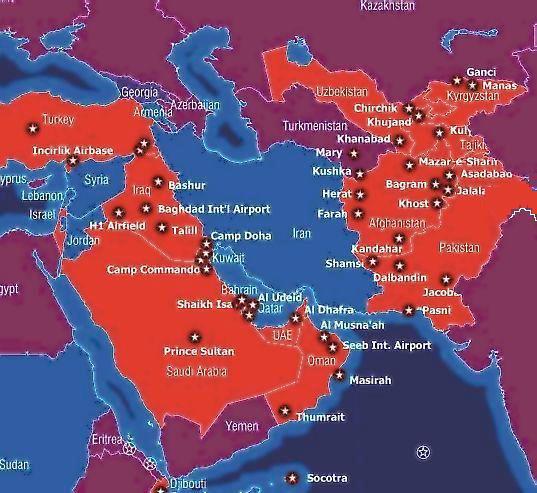
Iran has US Surrounded, All Right

The Parenthesis

Here’s Dave Weinberger liveblogging Jeff Jarvis at the Berkman Center:

We’re going through a huge transition, he says. He refers to the Gutenberg Parenthesis. Before Gutenberg, knowledge was passed around, person to person. It was meant to honor and preserve ancient knowledge. After Gutenberg, knowledge became linear. There are beginnings and ends and boxes around things. It’s about product. There’s a clear sense of ownership. It honors current knowledge and its authors. Then you get to the other side of the parenthesis, and there are similarities. More passing it around, more remixing, less sense of ownership. The knowledge we revere starts to become the network itself. Our cognition of the world changes. The CTO of the Veterans Admin calls the Internet the Eighth Continent. “I used to think of the Internet as a medium,” but now he thinks of it more as a place, although there are problems with the place metaphor. (“All metaphors are wrong,” interjects Doc Searls. “That’s why they work.”) It was a hard transition into the parenthesis, and it’ll be hard coming out of it. It took 50 years after Gutenberg for books to come into their own, and 100 years to recognize the impact of books. We’re still looking at the Net using our the past as our analog.

Sure is a lot to chew on in that paragraph.

In praise of Gardner

I’m ALWAYS interested in what Gardner Campbell has to say, even when it’s in a realm of which I’m largely ignorant (e.g., Miltonics) or one where I have a different and possibly complementary take on the subject (viz musics). Gardner has a way of putting things that piques and niggles and provokes hmmmmmm, and my chief regret is that my responses don’t see the light of blogging day more often. Today’s case in point is his post on the origins and prospective utility of the RFC. Vintage Gardner, riffing like the bass player he [also] is:

  • begin with a pointer to something one might could have already known about but, well, didn’t (in this case, John Naughton’s A Brief History of the Future: From Radio Days to Internet Years in a Lifetime),
  • extract an essential nubbin of metastuff (here it’s the tale of the origin of the Request For Comment, an essential integral to the evolution of ARPANET, instantiated by Steve Crocker) and labelling it memorably (“a new genre of professional writing”),
  • summarize the intellectual linkages and broader significance in a few trenchant phrases (“a praxis of intellectual discourse”) and offer cogent linkages to familiar domains

    You can see the similarity to blogging right away. At least two primary Network Working Groups are involved: that of all the other people in the world (let’s call that civilization), and that of the network that constitutes one’s own cognition and the resulting “strange loop,” to use Douglas Hofstadter’s language…

  • and then challenge, in the nicest way possible, all of us to rethink what we do and how we’re doing it:

    Why would we not want to produce such a record within the academy and share it with the public? Or are we content with the ordinary, forgotten, and non-riveting so long as the business model holds up?

  • and then close with a rumination on self:

    I yearn for documentation conventions that will produce an extraordinary record of thought in action, with the production shared by all who work within a community of learning. And I wonder if I’m capable of Crocker’s humility or wisdom, and answerable to his invitation. I want to be.

My admiration for Gardner’s Way is unbounded and perpetually renewed with each post at Gardner Writes. AND the bookshelves chez my splendid otium are incremented when the Brown Trucks roll to bring me the volume he’s mentioned…

of towel-snapping

Mark Liberman, over at Language Log, has a totally brilliant post: Towel-snapping semiotics: How the frontal lobe comes out through the mouth. He closes with this essential HL Mencken quote, perennially useful:

… more than anywhere else that I know of or have heard of, the daily panorama of human existence, of private and communal folly–the unending procession of governmental extortions and chicaneries, of commercial brigandages, and throat-slittings, of theological buffooneries, of aesthetic ribaldries, of legal swindles and harlotries, of miscellaneous rogueries, villainies, imbecilities, grotesqueries, and extravagances–is so inordinately gross and preposterous, so perfectly brought up to the highest conceivable amperage, so steadily enriched with an almost fabulous daring and originality, that only the man who was born with a petrified diaphragm can fail to laugh himself to sleep every night, and to awake every morning with all the eager, unflagging expectation of a Sunday-school superintendent touring the Paris peep-shows. [“On Being an American“, 1922]

I’m currently enjoying Colin Woodard’s American Nations: A History of the Eleven Rival Regional Cultures of North America, and this fits right in.

a modest education in economics

via Crooked Timber, Cosma’s engaging fable Dives, Lazarus, and Alice. A couple of bits to whet the ummmm appetite:

…Gloomy, snarky, heavy-handed, academic, and obvious to anyone who knows enough about the subject to care…

…The larger point is that while what is technologically efficient depends on facts of nature, what is economically efficient is a function of our social arrangements, of who owns how much of what. Economic efficiency may be a good tool, but it is perverse to serve your own tools, and monstrous to be ruled by them. Let us be thankful for the extent to which we escape perversion and monstrosity.

Boomerang

John Lanchester’s review of Michael Lewis’s Boomerang in NYRB is worth a read today, as markets head south. A few trenchant quotes:

A writer making society-wide generalizations is picking up a big and very full bag by a single handle; in that position, it’s easy to end up writing about the handle, because it’s the thing on which you have a secure grip…

…“There was no credit boom in Germany,” an official told Lewis. “Real estate prices were completely flat. There was no borrowing for consumption. Because this behavior is totally unacceptable in Germany.”…

This one is ostensibly about Greece and Greek monetary delusions, but is uncomfortably relevant to contemporary American civic culture:

But the place does not behave as a collective…. It behaves as a collection of atomized particles, each of which has grown accustomed to pursuing its own interest at the expense of the common good. There’s no question that the government is resolved to at least try to re-create Greek civic life. The only question is: Can such a thing, once lost, ever be re-created?

And here’s another passage (the Envoi) with Goose over Grave frisson, in which one just might try substituting ‘politics’ for ‘economics’ and perhaps ‘truth’ for ‘money’:

The collective momentum of a culture is, for more or less everybody more or less all of the time, overwhelming. This is especially true for anything to do with economics. The evidence is clear: it is easy to mislead people about money, and easy to lead members of the public astray both individually and en masse, because when it comes to money, most of us, most of the time, don’t know what we’re doing. The corollary is also clear: the whole Western world misled itself over debt, and the road back from where we are goes only uphill.

Some quotage

from Tom Dispatch:

The outrage that it has transformed into activity is over those who are still living high and profiting off that world’s demise — the privateers, looters, subprime hucksters, corporate grifters, Wall Street gamblers, and all those willing to take a buck to shill for them, to make sure in every way that they thrive as other Americans crash and burn.

From Jeff Madrick in New York Review of Books:

…compensation tied to stock options along with unusually high profits by financial firms, much of which was passed on to their executives, seems to be the overriding factor. This is probably now the main driver of what we call income inequality in America and what we should more accurately call runaway incomes at the very top…

…This may seem counterintuitive at first. After all, analysts have long painted a picture of growing inequality over the past few decades in which the top quintile’s share of the national income has risen while the share of the other 80 percent has fallen. But almost all the gains for the top 20 percent was for the top 1 percent. And half of that is accounted for by a tiny group within the top percent—those earners in the top 0.1 percent. Meanwhile, for the four quintiles below the 80 percent level, the share of total income fell significantly. For those from the 80th to the 99th percentile, the share rose only slightly (a little more rapidly as you go higher up). In other words, Occupy Wall Street’s claim that “We are the 99 percent” is dead on right.