Here’s a bit of text I wrote a couple of days ago, while walking to the post office:
A local landscape is a palimpsest of building history, and any wall or roof or chimney or porch or doorway is a product of choices make by somebody, or a succession of somebodies. Untangling the history is no simple task, even for a single property, but general patterns do emerge if one is attentive to local variation, and local knowledge can be eloquent if the investigator is patient.
The work of architects and builders is ‘vernacular’ insofar as it incorporates local tastes and predilections, and departs from the vernacular to the degree that its design and particulars use other (exogenous, not-popular) design items and materials. The vernacular is ‘popular’ in the sense that it’s how things are done in local tradition and practise.
Architectural history is a fruitful arena for the skills and tools of an anthropologist: there are observables and objective facts, but also plenty of room for the values and notions and delusions of the people who inhabit the architecture. People build houses with materials and tools and ideas congenial to climate and locality. Localities have styles, and variation within stylistic parameters, and the same is true of temporal eras. While uniformities may be imposed by sources of supply (e.g., window styles, shingle patterns, modular construction), there’s plenty of room for the expression of individual tastes and, for any particular feature, a fair bit of variety in details and alternatives. In the search for regional style we surely look for variation and hope for corroboration and patterned consistency at the core of variation, but we also expect and enjoy inconsistency and innovation.
Every house is to some degree an expression of the values and aspirations and preferences of the inhabitants. The dimensions of variation are not simple or without inconsistencies, and every house in the landscape has its own story, awash in accident and exception to whatever rules may seem to apply to the general situation. While occupants surely impress their own personalities onto properties, there are emergent patterns if one looks for long enough and listens carefully to the stories people construct to narrate their surroundings and doings. Even the most ungainly or prosaic doublewide fits somehow into the emergent grand scheme, and every bit of variation in decorative embellishment is potentially a jumping-off place for an essay that may reveal some deeper truth.
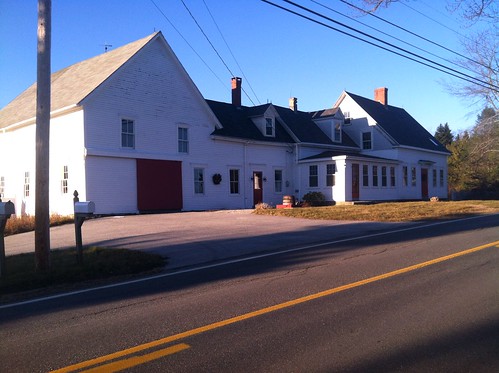
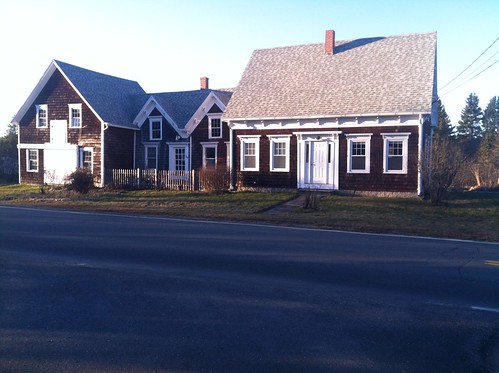
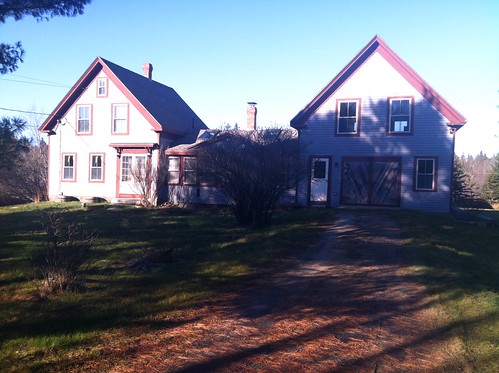
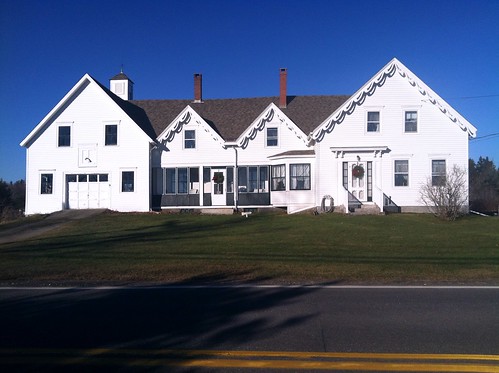
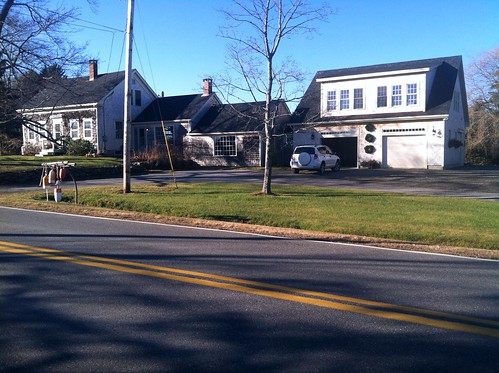
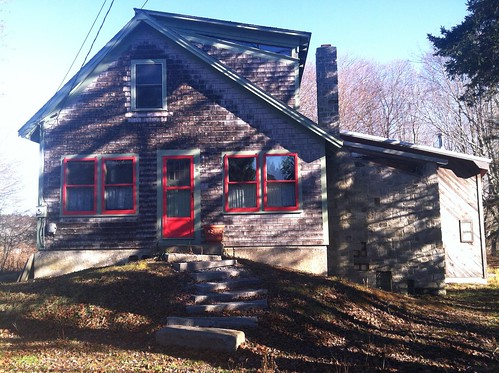
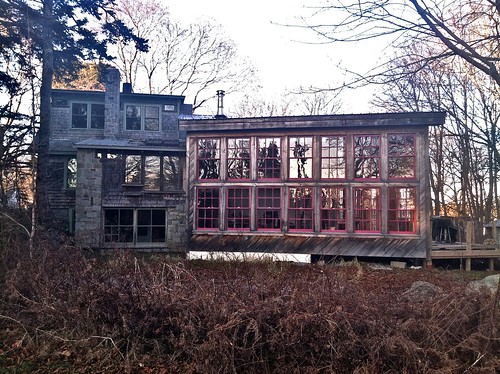
As one walks along a road looking at houses, a lot of repurposing is evident. A shed may be linked to a house to create a kitchen in one decade, and sometime later the barn may be liked to the shed and insulated to create more living space. A roof may be raised, dormers may sprout, and the porch may be enclosed to make more space for domestic redeployment. And at the other end of a building’s life cycle, the barn or shed may decay as bits of the roof succumb to time and neglect. Paint peels, stone foundations heave and slump, wood rots and warps, maintenance is deferred. The cribbing beneath an old barn bespeaks rotten sills to be replaced with a new foundation, poured in one afternoon by a cement truck, but probably by next summer nobody will be able to see the vestiges of the repair.
Even windows have complex histories, reflecting changes in construction methods, materials, and the evolution of continent-wide marketing (Pella windows come from Iowa…) as well as style preferences and price considerations. An entirely exogenous force like technological change in the glass industry can shift local parameters quite dramatically –after WWII, plate glass windows became fashionable; in the last decade double-glazing has made storm windows obsolete…