Adobe and Amazon Hell

On May 7th I bought a 12-month subscription to Adobe InDesign via Amazon, at $16.99/month. I installed the software and had been using it for almost 2 months. On Sunday June 26th I exported a pdf of my current project. When I then tried to use InDesign I got a message from Adobe saying that my account was cancelled for non-payment of the monthly subscription fee. The Amazon page showed that the payment had been made and that my subscription was active.

What to do?

I called Adobe’s Customer Care and spent more than half an hour on the phone with an agent in India, who told me that my only option was to CANCEL the suspended subscription and buy a NEW subscription—the cancelled account could not be reinstated.

I contacted Amazon and was told that everything on their end was correct: I had an “active” subscription for the product. So I cancelled that subscription (they waived the “early cancellation” fee and refunded the last month paid) and bought a NEW subscription, at the NEW price of $19.99/month (Adobe had raised the price without telling me and apparently without informing Amazon, so that [I deduce] Amazon’s payment of my subscription fee was $3.00 less than Adobe expected, hence the cancellation by Adobe of my access to InDesign).

My account information page at Amazon shows that the new subscription is paid and active. The Amazon Licenses page has a button labelled “Access Product” but the link is broken (“Trying to find something? The page you specified could not be found.”). Evidently THAT link is supposed to authenticate my purchase to the Adobe server; without that authentication, Adobe has no record of my License.

I’ve talked with Amazon Customer Care people in Cape Town (twice, two different reps) and somewhere in the US, and have been assured that the Problem has been Escalated. I tried again to use InDesign this morning, got the same message, called Amazon, and actually achieved a three-way call (me, Cape Town, India) and am assured that the issue will be resolved in 24 or 48 hours. I’m not holding my breath.

All of the people I talked with were friendly, professional, helpful… but not really able to DO anything. The connection between Amazon and Adobe (who are after all business partners in this) seems to be defective or worse: the arrogance/greed of Adobe’s subscription model is surely part of the problem (I thought I had what amounted to a contract for a year, at $16.99/month), but it seems the quality control on Amazon’s Web page link management is at least as much of a problem.

To add one more annoyance, when I open LightRoom there’s now a message from Adobe saying that they have found a problem with my payment for the Creative Cloud Photography package (LightRoom and Photoshop), which I ALSO have via an Amazon subscription, and that if I don’t straighten it out in 13 days, my access to THOSE products will be cancelled. It develops that Adobe has raised the price for that package, again without telling me or, seemingly, informing Amazon: $9.99/month instead of $6.99. Amazon knows about the issue and, I’m told, has a Team working on it.

It’s not about the money. I NEED those products (they are, in effect, the Only Wheel In Town), so I’m over the barrel and I’ll pay them the additional 20-25%. It’s about the Service. And the complete absence of recourse. I’ve now lost 3 days on my project with InDesign, and spent several hours on the phone (mostly on hold) trying to straighten out a problem that I certainly didn’t cause myself. And I very much doubt that I’m the only person in the world with this problem.
Bancroft and Tyszkiewicz

For the last few days I’ve been transfixed by a skein of mysteries connected to a grave site in Père Lachaise:
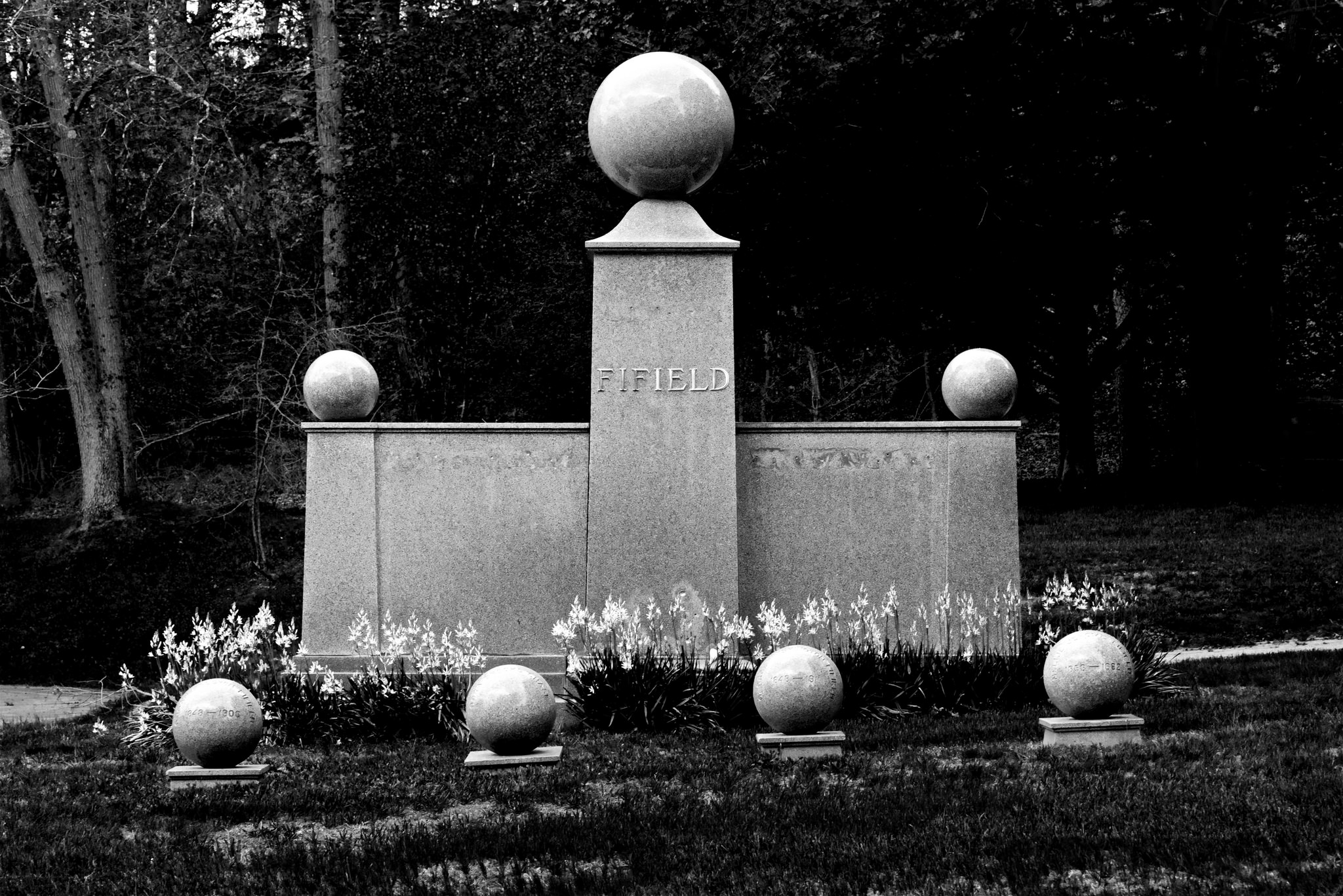
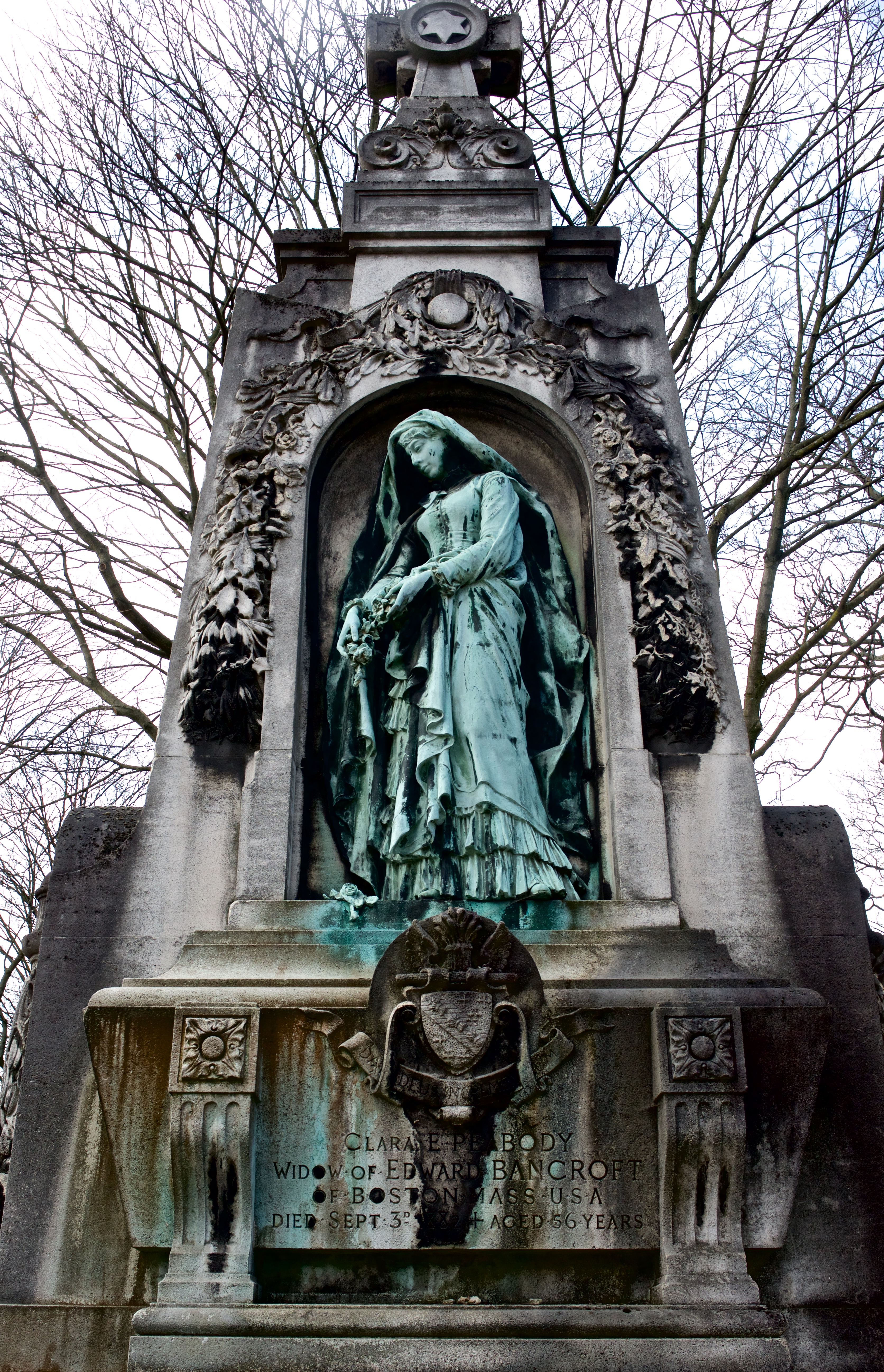
Clara's tomb
The questions at issue have changed as I’ve excavated bits of fact and built new conjectures from successive discoveries, and I need to go beyond the summary I’ve been writing for the currently-under-development v2.0 of Remembered: a graveyard book v1.0. The actors in this particular drama are:

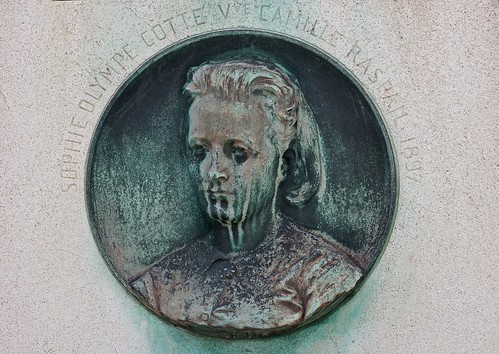
  • Clara Elizabeth Peabody Bancroft (1826-1882), the lady of the statue
  • Edward Payson Bancroft (1823-1865), her husband
  • Elizabeth Bancroft Tyszkiewicz (1857-1883), their daughter (also known as Klara Elżbieta Tyszkiewicz – Łohojska)
  • Count Benoit [Benedyk Henryk] Tyszkiewicz (1852-1935), husband of Elizabeth Bancroft Tyszkiewicz
  • their children Benedykt Jan Tyszkiewicz (1875-1948), Edward Tyszkiewicz (1880-1951), and Elizabeth Marie Tyszkiewicz Plater-Zybeck (1882-1969)
  • …and several other relatives of the above

The dates of death of the first three are the armature of the unfolding saga: it seems that Edward and Clara Bancroft were touring Europe in 1865, when Edward died in Naples (of what we don’t know, but he was subsequently interred in Mount Auburn cemetery). Clara herself was a wealthy widow when she died in Paris in 1882, and her daughter Elizabeth inherited a bundle but died in Switzerland in 1883, but (according to the plaque on Clara’s monument) her last wishes were that her mother’s tomb include a statue depicting her strewing roses:

Son gendre et ses petits enfants pour accomplir les dernières volontés de sa fille la comtesse Tyszkiewicz ont élevé ce monument témoignage d’un vieux souvenir

Her son-in-law and grandchildren, to fulfill the last wishes of her daughter the countess Tyszkiewicz, have raised this monument in witness of an old memory

The very opulence of the statue is reason enough to inquire further, but it’s as difficult to know where to start as when to stop the inquiry. Among the questions that arise (and that Google isn’t quite helpful enough with): how did Clara Peabody (a daughter of a mildly distinguished New Hampshire family) and Edward Bancroft (a very young Boston “broker”, possibly of stocks but maybe of Civil War-era cotton) meet and come to marry? What made the considerable fortune that Clara Bancroft inherited on her husband’s death? How did their daughter come to meet and subsequently marry a very young Polish count? Of what did the Countess Tyszkiewicz die (possibly TB? or some after-effects of the birth of her daughter?) and where is she buried? What happened afterwards in the lives of the Count and his children? How did the Count’s estates fare in the catastrophes of 20th century Poland?

As I’ve said in Remembered, this is all the stuff of a story that might be written by Somerset Maugham or Saki, and just the sort of digression that I’m susceptible to. Along the way I’ve been enticed into exploring the worlds of 19th century Polish nobility, Civil War banking in Boston, naval architecture (the Count commissioned the construction of a moderately famous yacht), sugar beets (the Count was evidently deeply involved in their cultivation on his estates in the 1890s), lawsuits (the three Tyszkiewicz children attempting unsuccessfully to get at the principal of their grandmother’s trust fund, of which they were the beneficiaries), and the online versions of the Almanach de Gotha. Each of those raises more questions than it answers, and a passage I read just this morning seems especially trenchant:

Archeology is always an encounter between a fixed past and a shifting present; we bring to it our fantasies, prejudices, and predilections—this year different from last year, next year different again. (Charlotte Higgins, New Yorker blog, 3 June 2016)

The trouble, or perhaps it’s the wonder, or the joy, is that pretty much each photograph in Remembered inspires or demands similar searchings and findings. That being the case, the revision of Remembered is proceeding more slowly than I’d wish.

A mind stridently blown, all in half an hour or so

Herewith a summary digest of one of those wonderfully cross-pollinating collisions, a bibliophile’s shaggy dog story, with musical flourishes:

I’ve been reading Robert Bringhurst’s The Elements of Typographic Style, one of those books that far too few people know of, and that just about ANYbody’s life would be vastly enhanced by contact with (the original recommendation thanks to Kate, who has a nose for such books besides being herself a witty typographer), and I got to this passage:

Sizing and spacing type, like composing and performing music or applying paint to canvas, is largely concerned with intervals and differences. As the texture builds, precise relationships and very small discrepancies are easily perceived. Establishing the overall dimensions of the page is more a matter of limits and sums. In this realm, it is usually sufficient, and often it is better, if structural harmony is not so much enforced as implied. That is one of the reasons typographers tend to fall in love with books. The pages flex and turn; their proportions ebb and flow against the underlying form. But the harmony of that underlying form is no less important, and no less easy to perceive, than the harmony of the letterforms themselves.

This page is a piece of paper. It is also a visible and tangible proportion, silently sounding the thoroughbass of the book. On it lies the textblock, which must answer to the page, The two together – page and textblock – produce an antiphonal geometry. That geometry alone can bond the reader to the book. Or conversely, it can put the reader to sleep, or put the reader’s nerves on edge, or drive the reader away. (p. 145)

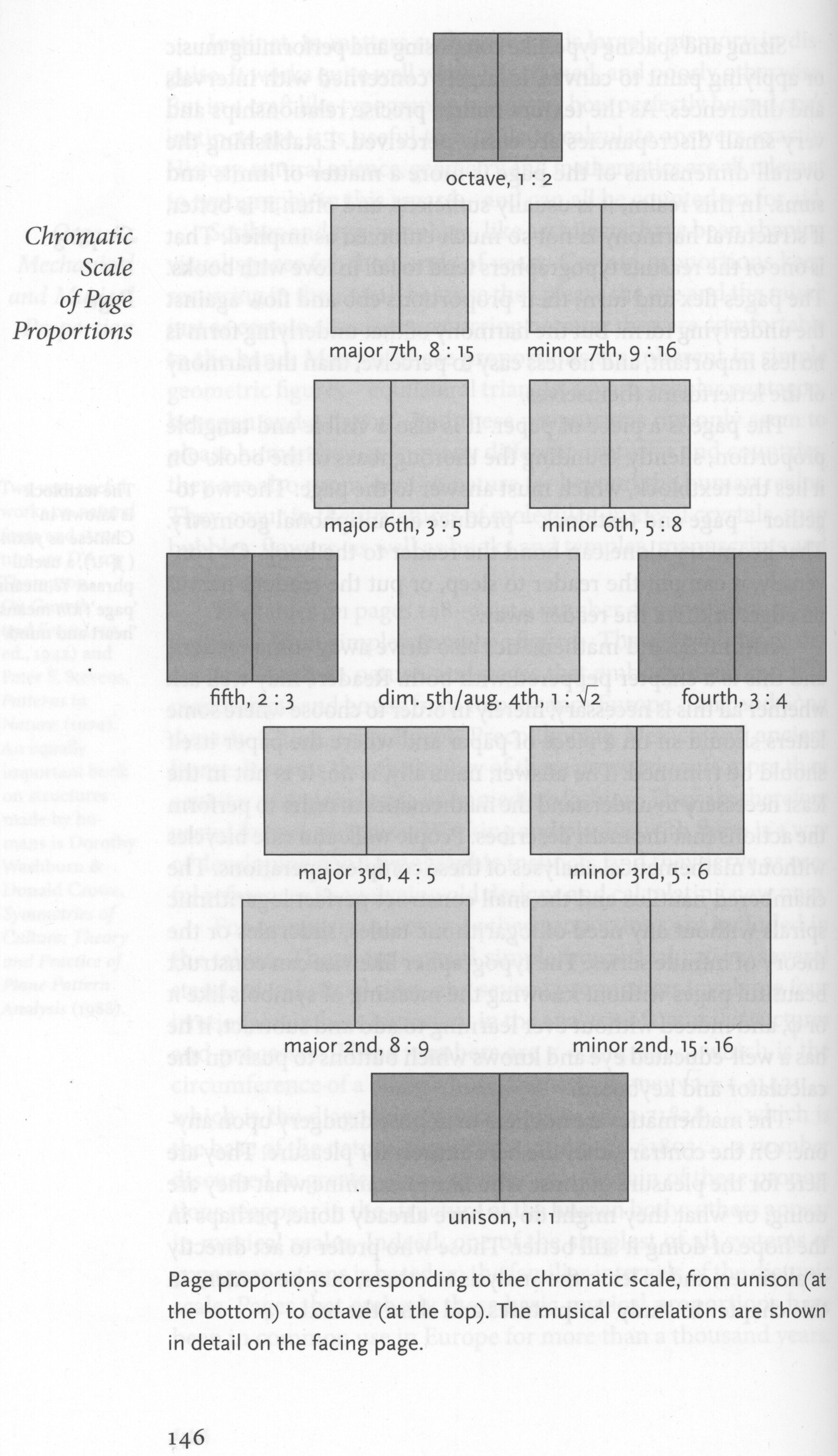
Now, I’m a sucker for musical analogies, so this piqued my interest. And then I turned the page, and here’s what most stridently blew my mind:
page proportions as musical intervals

The beauty and economy of this bridge between page layout and musical intervals gives me gooseflesh. “Stridently,” I thought. “Most stridently.”

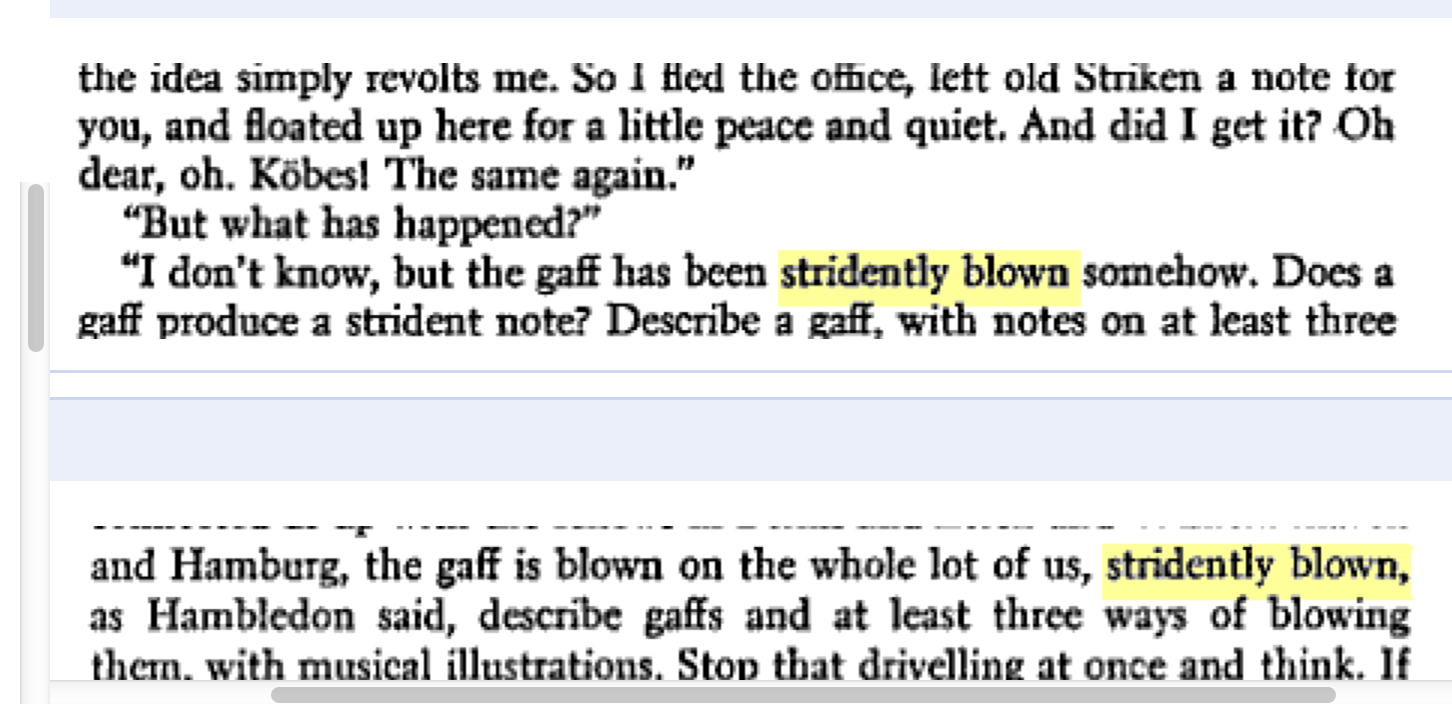
The phrase “stridently blown” has been with me for 50-odd years, since I first read it in Manning Coles’ Drink to Yesterday. Turns out it’s not common parlance, at least as said parlance is reflected in what Google knows. I searched books.google.com and got these truncated passages:
Hambledon quotes
So I trekked out to the barn, where the auxiliary library reposes, and found my copy of Drink to Yesterday, and so completed the passage:

…the gaff has been stridently blown somehow. Does a gaff produce a strident note? Describe a gaff, with notes on at least three different methods of blowing it…

I won’t go on to describe what I found via Google search for the phrase “describe a gaff” but suffice it to say my knowledge has been stridently augmented.

I was led to wonder why shaggy dog, and so I discovered and [need I even say?] ordered via Amazon Eric Partridge’s The ‘Shaggy Dog’ Story: Its Origin, Development and Nature (with a few seemly examples) (1953). Should be here in a week or so.

And so it goes….

Siblime and Ridiculous grade into each other

Lowell Cemetery

I spent the weekend in Massachusetts, much of the time skulking in graveyards with intent to depict. Lots of food for thought in my Flickr photostream, as I try to work out where this Remembered project is headed.

I visited the South Duxbury graveyard which was my own introduction to such spaces, probably before 1950.

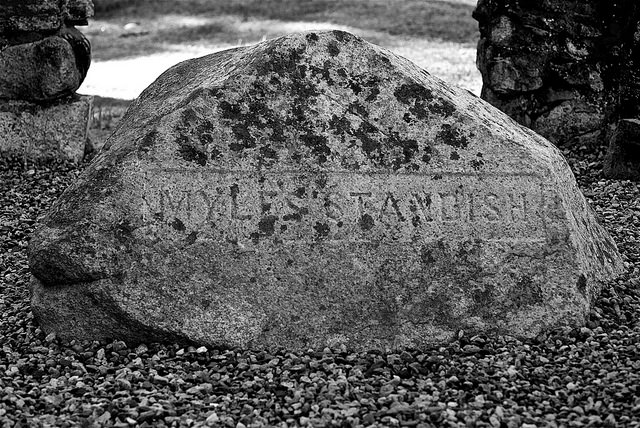
Myles Standish grave

I remember that I was impressed that Myles Standish was an Ancestor, dead almost 300 years (at the time, he having died in 1656) but still alive and well to me because of the nearby Standish Monument, not half a mile from the place we spent summers in the 40s and 50s, and about the same distance from the site of his house on the shore. Of course there was a healthy dose of bogosity in the whole Longfellow-induced Standishmania thing, but I didn’t know that then.

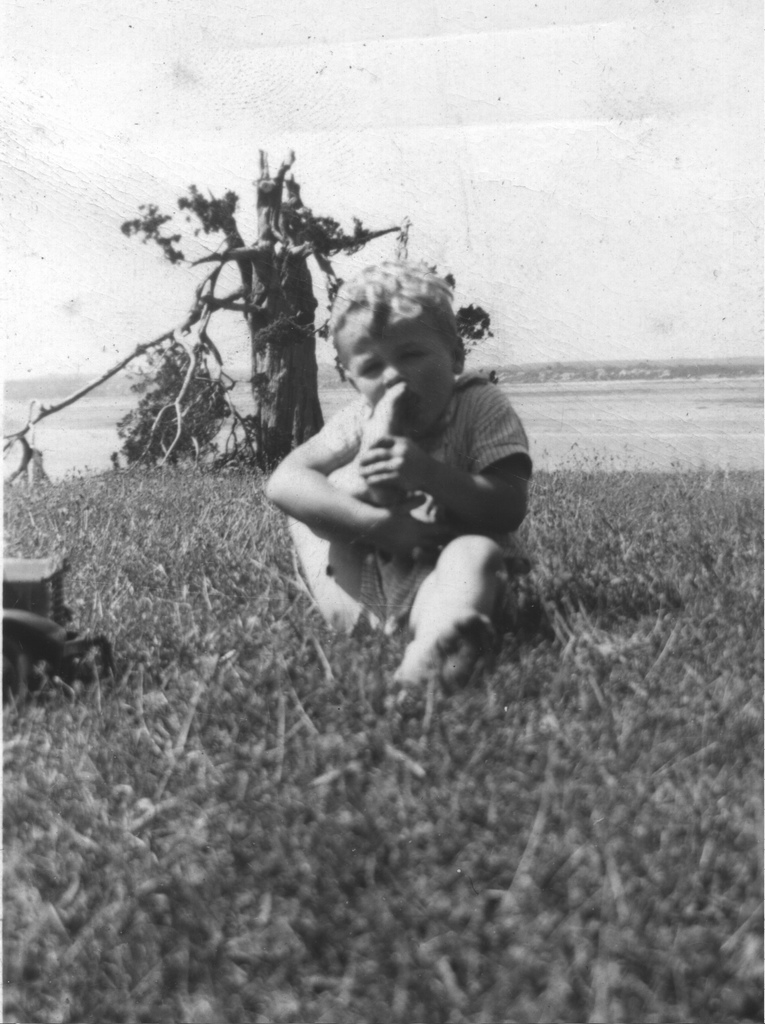
I stopped to check on the house where I had summered and was astounded to find it gone, replaced by a town-owned park. The vastly ancient cedar tree on the shore is all that remains, and a herd of goats had been brought in to eradicate the infinitude of cat briars that infested the woods when I was last there, probably 8 years ago. It’s a lovely site, and far better that it’s a park than replaced by another of the mogul homes that have sprung up all over Duxbury. Still, it does put one through Changes (as they used to say) to find the world changed out from under. The tree as it was in 1947 is behind the Author:


early yoga

I probably ought to promise not to do this

but sometimes people put the case so eloquently:

Future political scientists will analyze (let us hope in amused retrospect, rather than in exile in New Zealand or Alberta) the precise elements of Poujadisme, Peronism and Huck Finn’s Pap that compound in Trump’s “ideology.” But his personality and his program belong exclusively to the same dark strain of modern politics: an incoherent program of national revenge led by a strongman; a contempt for parliamentary government and procedures; an insistence that the existing, democratically elected government, whether Léon Blum’s or Barack Obama’s, is in league with evil outsiders and has been secretly trying to undermine the nation; a hysterical militarism designed to no particular end than the sheer spectacle of strength; an equally hysterical sense of beleaguerment and victimization; and a supposed suspicion of big capitalism entirely reconciled to the worship of wealth and “success.” It is always alike, and always leads inexorably to the same place: failure, met not by self-correction but by an inflation of the original program of grievances, and so then on to catastrophe. The idea that it can be bounded in by honest conservatives in a Cabinet or restrained by normal constitutional limits is, to put it mildly, unsupported by history….

Claire Underwood is a more stable person to have in office than a cross between Sauron and Bozo the Clown.
(Adam Gopnik New Yorker Daily Comment, 11 May 2016)

so why keep blogging?

I’ve been rethinking what blogging is for, and recognizing that my 2004-ish notions of its utility and purpose are, well, anachronistic. In the days before The Facebook and Twitter, back when hypertext seemed like the New Jerusalem of the conveyance of ideas via personal writing for the Web, my own blog felt like a channel to communicate discoveries and thoughts to an audience of … ah. People who added my blog to their RSS feeds, and thus would be notified whenever I posted something new. Those would mostly be friends to whom I’d sent the blog’s URL, plus maybe a few people who happened to stumble on the blog in other ways and added it to their RSS feeds. A pretty select, not to say limited, group. And now, in 2016, tending an RSS feed is just not something that people do.

So my blog postings, when I get around to making them, wander out into the aether and just keep wandering. Very occasionally a real person makes a comment on one of my posts, but most of the incoming traffic is basically spam (though why anybody would bother baffles me), and I’m mostly communicating with myself. I’ve decided that’s a good thing, not a limitation or still less a reason to stop using the medium. So the primary purpose is to record for myself things that I might want to find again, and/or be able to trace back to when I first encountered. Any communication with others that results is just gravy, though certainly very welcome gravy.

Today’s case in point of something I might wish to find later comes from the just-arrived New York Review of Books, from an article by Mark Danner on “The Magic of Donald Trump” in which he cites Richard Rorty, writing in 1997. That’s 19 years ago, right? Rorty died in 2007, but ‘prescient’ is perhaps an understatement:

members of labor unions, and unorganized unskilled workers, will sooner or later realize that their government is not even trying to prevent wages from sinking or to prevent jobs from being exported. Around the same time, they will realize that suburban white-collar workers—themselves desperately afraid of being downsized—are not going to let themselves be taxed to provide social benefits for anyone else.

At that point, something will crack. The nonsuburban electorate will decide that the system has failed and start looking around for a strongman to vote for—someone willing to assure them that, once he is elected, the smug bureaucrats, tricky lawyers, overpaid bond salesmen, and postmodernist professors will no longer be calling the shots. A scenario like that of Sinclair Lewis’ novel It Can’t Happen Here may then be played out. For once a strongman takes office, nobody can predict what will happen. In 1932, most of the predictions made about what would happen if Hindenburg named Hitler chancellor were wildly overoptimistic.

One thing that is very likely to happen is that the gains made in the past forty years by black and brown Americans, and by homosexuals, will be wiped out. Jocular contempt for women will come back into fashion. … All the resentment which badly educated Americans feel about having their manners dictated to them by college graduates will find an outlet. (in Achieving Our Country: Leftist Thought in TwentiethCentury, pp 89-90)

(a Google search for richard rorty “nonsuburban electorate” gets 420 hits, so it’s not like Mark Danner is the first to note the passage in connection with the present).

Yup, something I may want to locate again.

since mid-March

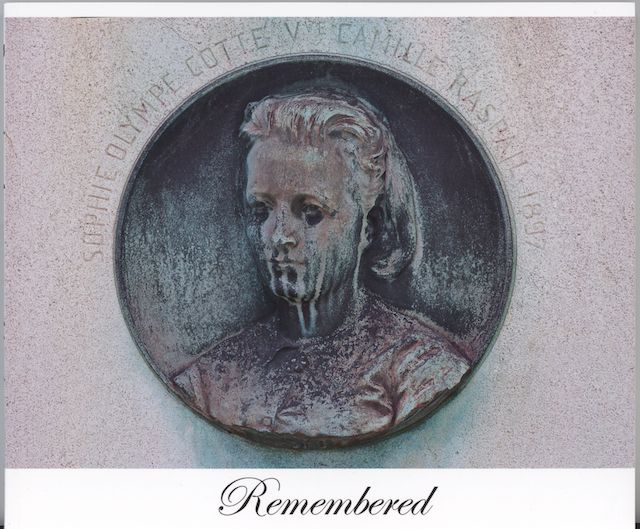
So we went to France in late March, and spent a few days in Paris on either end of a week in Brittany—our third annual Progress in those parts, with the usual eatings and wanderings (the Brittany parts mediated by our dear friends Rob and Barbara). I was able to spend several hours photographing in Père Lachaise and Montparnasse cemeteries, and that provoked another Blurb book project:

Remembered cover

The v1.0 version can be downloaded (it’s a BIG file) here via a right-click and Save As. When we got home it occurred to me to look more closely at graveyards in midcoast Maine, and I’ve been busy on that front ever since. Later this week I’m going to Lowell MA to spend a day with members of the Association for Gravestone Studies, an organization I’d previously known nothing of. It turns out that the first 25 issues of their annual publication Markings are available at archive.org, and the several articles I’ve read have been fascinating.

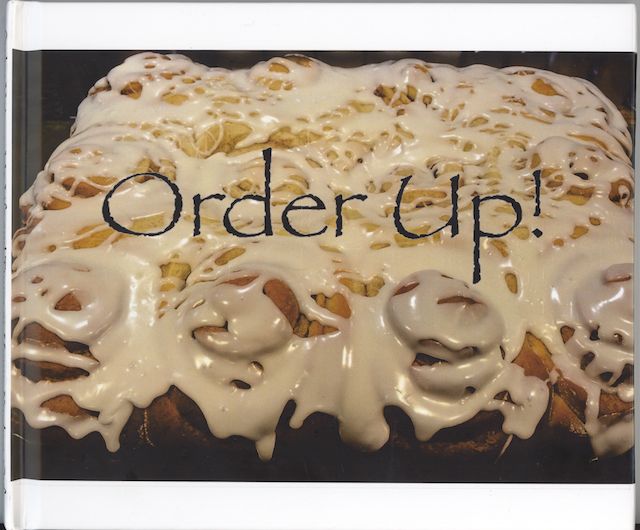
Another Blurb book project escaped my desktop, a narration of the collection of photos I’ve taken of meals enjoyed at Home Kitchen Cafe:

Order Up! cover

and that book is also available for download here.

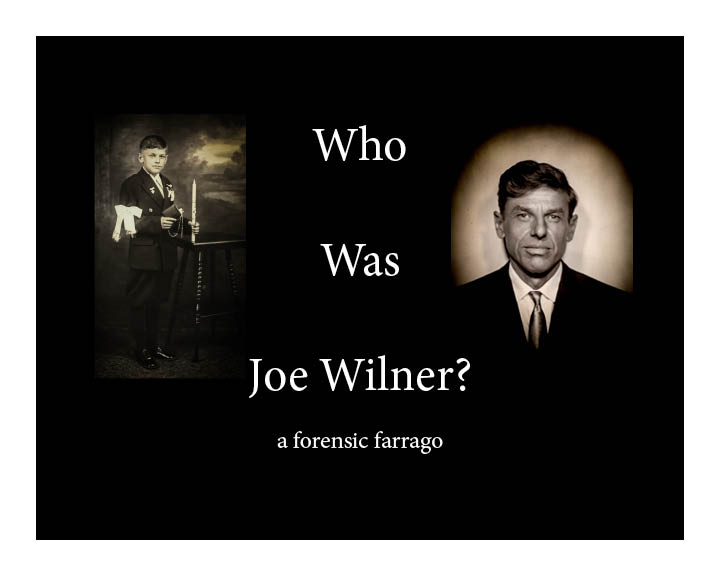
And as if that wasn’t enough, I’ve also put together a v1.0 of a project I’ve been working on for about 35 years:

Who Was Joe Wilner? cover

I’m still working on the cover, but the book itself is available for download here.

These books were all produced with Lightroom’s Book module, which is a bit confining (a restricted set of page templates), so I’ve just completed a week-long workshop at the Maine Media Center in Adobe’s InDesign, a vastly powerful program that should make it possible to make much more elegant versions of the six existing Blurb books and a bunch of others that I have in mind to do. Should keep me busy….

aaaaak!

I lost contact with the WordPress mother ship while trying to do an Update (back in March), and only just now managed to get things working again after far too long. Lots to catch up on, and several new ideas for what to do with the blog, so I’ll be thinking those things through a bit and posting again soon

Picking up where we left off?

It’s been months since I last posted anything to oookblog, but they’ve been busy months: some Blurb books, a bout of shop work, the usual flurriment around the holiday season. And here it is almost mid-March, and we’re preparing for a fortnight in France (a few days in Paris on either end of a week in Brittany) and contemplating other travels in the summer. A lot of material that I might have posted here (charting day by day encounters with stuff that piqued interest and comment) has gone into writing on paper instead, but I remain committed to the notion that it’s BETTER to put the quotidian flux where others might enjoy it.

The grandest accomplishment of the last 3 months has been a book of photographs and narrative drawn from the family archives that have been my responsibility for the last 40 years or so:


Forebears 3.0 cover

It’s now in its third revision/expansion, and almost ready for prime time release to its wider public, whatever that might be. The project has nudged me back into thinking about genealogical questions and the imponderables of Family, and it’s likely that I’ll pursue those subjects in the next few months.

And of course there’s photography to think about and work on. And the never-ending river of books to read.