I’ve made some extracts from a 3-foot photograph, showing 113 members of the Jordan Marsh Rifle Club on May 27 1916, as a branch of the Nova Scotia Faces project.
Charlie tells a story
My nephew Charlie is a master storyteller. I happened to catch one with the iRiver while we were recovering from Christmas dinner: Not much of a man.
Menard is right on
In an article on literary prizes in the latest New Yorker, Louis Menard offers a bit of lambent prose that skewers a number of hypocrisies at once:
[James] English [author of The Economy of Prestige] interprets the rise of the prize as part of the “struggle for power to produce value, which means power to confer value on that which does not intrinsically possess it.” In an information, or “symbolic,” economy, in other words, the goods themselves are physically worthless: they are mere print on a page or code on a disk. What makes them valuable is the recognition that they are valuable. This recognition is not automatic and intuitive; it has to be constructed. A work of art has to circulate through a sub-economy of exchange operated by a large and growing class of middlemen: publishers, curators, producers, publicists, philanthropists, foundation officers, critics, professors, and so on. The prize system, with its own cadre of career administrators and judges, is one of the ways in which value gets “added on” to a work. Of course, we like to think that the recognition of artistic excellence is intuitive. We don’t like to think of cultural value as something that requires middlemen —people who are not artists themselves— in order to emerge. We prefer to believe that truly good literature or music or film announces itself. Which is another reason that we need prizes: so that we can insist that we don’t really need them.
Other peoples’ musics
I’m a lifelong sucker for the obscure and peculiar, and an undying fan of 3 Mustaphas 3 and other Royalty of the Bogus. Doug Schulkind at WFMU has delivered this, 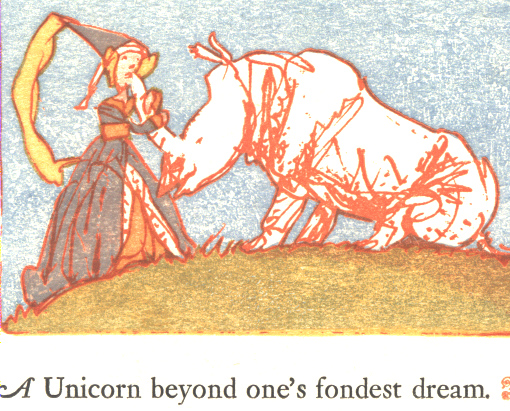
as an end-of-year treat:
a suite of 20 mp3s that, taken together, blast the notion of ‘genre’ into smithereens. And I thought I had a good collection of the bizarre… Resolve to add Doug’s Give the Drummer Some (“The finest in Micronesian doo-wop, Appalachian mambo, Turkish mariachi, Pygmy yodelling of Baltimore, Portuguese juju, Cajun gamelan, tuba choirs from Mozambique, Inuit marching bands, Filipino free jazz, Egyptian kabuki theater, and throat singers of the Lower East Side”) to my stable of weekly musts. Many of the shows are archived, too.
Bolivian interlude
In honor of Evo Morales’ victory in Bolivia, I’ve excavated a trove of Bolivian music.
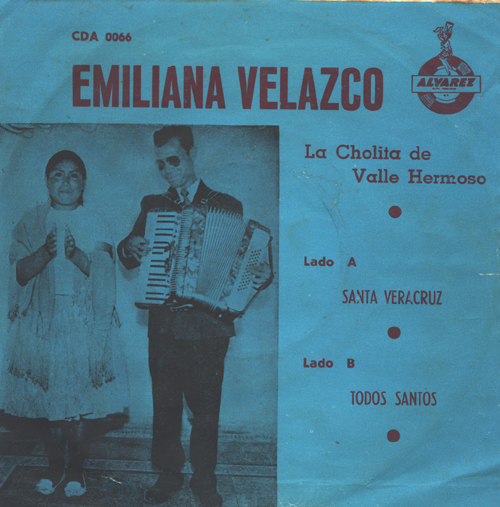
35 years or so ago (in the very early 1970s) our friends Kent and Shel Anderson spent a couple of years in Cochabamba, where Shel did fieldwork on market systems. They brought back a small collection of 7-inch 33 1/3 records of music that was being played on the radio in Cochabamba at that time, and the records stayed with me when they left Nova Scotia in 1973. I puzzle over them every few years –the music is raw and amateurish in its production values, and completely unapologetic for being utterly Bolivian. I don’t have enough of the cultural context to appreciate the documentary significance of these records in Bolivian cultural terms, so for me they’re just a snapshot of another reality. I can’t imagine that there’s any harm in digitizing and distributing them in 2005.
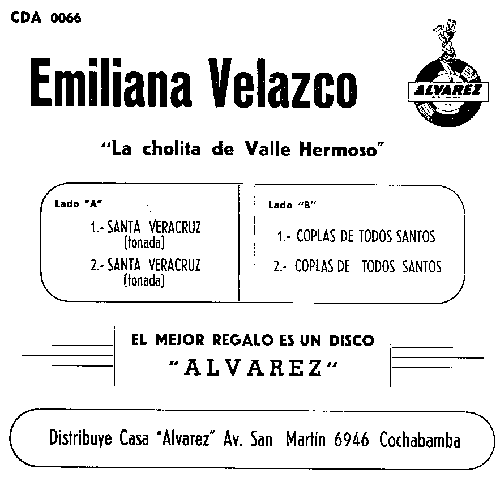
Emiliana Velazco should certainly be better known for her absolutely unique vocal style (or maybe it’s not unique, and everybody in Valle Hermoso sings that way…). You can’t quite believe she’s going to keep doing that for six minutes… and then you turn the record over, and find that she has another six minutes in her…
Santa Veracruz (tonada) 6 min, 11MB and Coplas de Todos Santos 6 min, 11MB
Extracting gems from vinyl
I finally got around to unpacking and shelving 30-odd boxes of 33 1/3 records, which have been seasoning in the barn since July. It’s delightful to revisit old favorites that I haven’t played in years, and today I rigged the wherewithal to extract sound to other media, via my Mackie mixer, an M-Audio USB preamp, and Sound Forge. I’m sure there are better ways to do this, and to do it better, but I was able to realize the scheme I awoke to find myself scheming this morning: recording a favorite bit from the Holy Modal Rounders version of “Hot Corn Cold Corn”: bupm bupm bupm de bupm bupm de bupm (ca. 1965, from The Holy Modal Rounders 2, Prestige 7410:B2).
This is really just another sort of quotation, and there must be a few thousand favorite bits that I’d love to share. How to regularize that, so as not to venture beyond Fair Use?
And for Proof of Concept, here’s an imperfect version of Moving Day, made by plugging the Ovation mandocello into the Mackie. I’ll make better versions eventually.
Dusting off quotations
I’ve kept a Commonplace of favorite bits for many years, mixing stuff in many different registers and various media. There’s a shoebox with 5 x 8 cards and less uniform scraps of paper (the oldest from, oh, 40-odd years ago), entries in various journals, a Web 1.0 gatheration… and I feel the thumbs itching to create something more 2.x in nature and style, but I haven’t quite divined its outlines. This one, from Alice in Wonderland, bubbled to the top this morning:
Alice: Would you tell me, please, which way I ought to go from here?
The Cat: That depends a good deal on where you want to get to
Alice: I don’t much care where.
The Cat: Then it doesn’t much matter which way you go.
Alice: …so long as I get somewhere.
The Cat: Oh, you’re sure to do that, if only you walk long enough.
Seems that such bits should be tagged for easier retrieval, or maybe assembled into a complex topography of time and subject… Any thoughts out there about novel ways to proceed?
Getting back up to speed
After a week away (a trip to Nova Scotia) I find several things awaiting the effort to wrap-mind-around, amidst the familiar feeling that it’s all moving a bit faster than I am, or can:
The impact of AJAX on web operations from bitcurrent
Structured Blogging (viz. D’Arcy Norman)
Alexa Web Crawl (viz. John Batelle‘s announcement and Read/Write Web entry)
…not to mention bits that continue and extend stuff I was already working on, like ambiientfindability in delicious, a very nice extension of the book itself (which I’ve been reading in gulps, via O’Reilly Safari)
…and Google Maps Creation Tools/Tutorials and News and blog-post roundup from Google Maps Mania
‘Gesture Economy’
In a bombshell post Steve Gillmor instantiates the term ‘gesture economy’ (which Google tells me has another meaning in linguistics) as one of the puzzle pieces in the emerging dialog on Attention. It’ll be interesting to track the uses of the term, and the closely related ‘GestureBank’ which titles Steve’s post. What brought me up short, though, was this bit of clarity, to which I’ve added emphasis here and there:
Of course, nothing is for free, really. Gmail is free, but at the cost of your metadata. Search is free, but at the cost of a tactical answer, not a strategic one. Which result you choose is the payment, setting off an event chain that sometimes results in action and monetization. The metadata–which item you choose, the fork in the road you take–is captured but not shared. The result: an opportunity cost lost to the Google or Yahoo or MSN silo. The cost: time not saved.
Follow the breadcrumbs for a minute. If a gesture is not shared, what is lost? The network effect, for one. GestureRank for another. What? GestureRank–the price the market will bear for harvesting the authority of a particular gesture. Remember: this is a post-attention world we’re living in. Just as the RSS wave triggered an embarassment of riches and triage cost, the Attention wave triggers an authority architecture and corollary characteristics. If PageRank crystallizes link authority, GestureRank crystallizes gestures of intent and, crucially, the lack of intent.
Attention to something is valuable, but in a world of too much information divided by the time to consume a portion of it, signalling a lack of attention is more valuable. By that construct, gestures of inattention will fetch a greater price, and purveyors of gestures of indirection or redirection will gain inordinate value as compared to domain experts…
Plenty in there to chew upon. And then he drops this beauty of an example:
Gestures become inextricably interwoven with so-called content, creating a fabric of intelligence, emotion, and humor that is difficult if not impossible for audiences to resist… Shared laughter efficiently reveals the power of gestures. All around us we hear and generate the sounds of humor–the chuckle of recognition, the cackle of just deserts, the snort of derision mixed with self-knowledge, the humanity of it all. It’s jazz, isn’t it; the improvization we all want to sit in on.
Paying Attention
I listened to a 3-part Steve Gillmor AttentionTech podcast (with Dave Winer phoning in) and probably moved things along a bit further in the getting it dimension for OPML, but I’m somewhat bothered by the flatfilishness of the examples of attention I keep hearing –they seem to be stuck in ‘what blogs do you read how much’ territory, which makes for a pretty shallow and limited conception of attention, and the model seems to be *to sell attention data.
Attention is much more multifaceted, being both multidimensional and volatile too: from week to week and over months my attention is assigned to many different realms, often interconnected but sometimes quite disjunctive as I pick up and put down various threads, now more focused, now attending to more things more shallowly, now following a specific trail of interconnections. I want to be able to visualize and analyze that flux, and to be able to revisit any of the states of the past with a click. I want the kind of map that Dave Pollard implies (“your brain’s memory laid out as a wiki tableau”). I want that for myself, and I’d want to be able to export it to somebody else (perhaps in pruned/edited form). But most of all I want that as a long-haul tool for understanding my own progress in the digital realm.