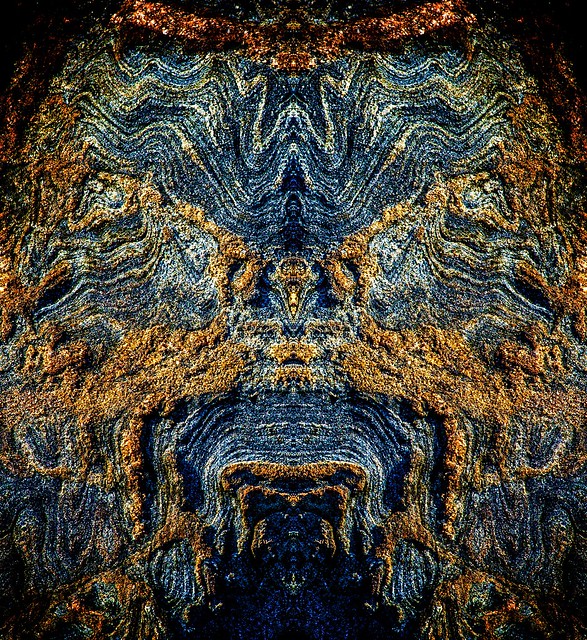
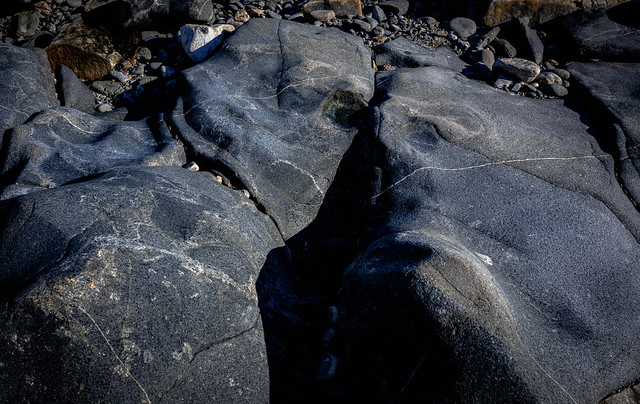
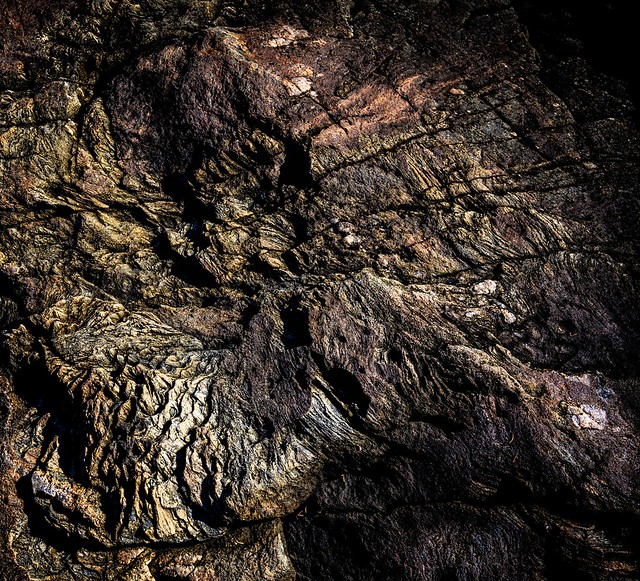
After a 24-hour period of contemplation, this image
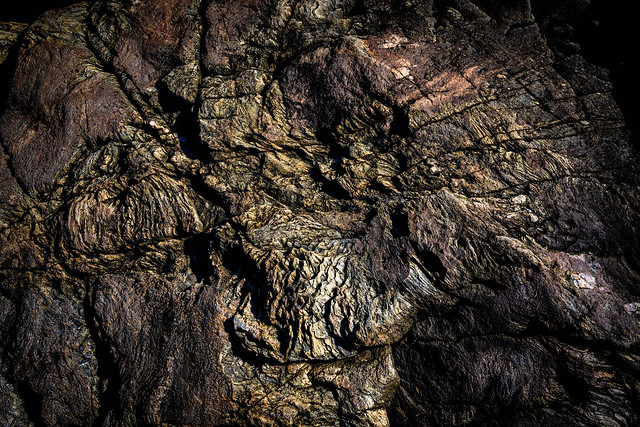
resolves into a Dwarf (note pointy hat, beard, general air of lawn ornamentude)
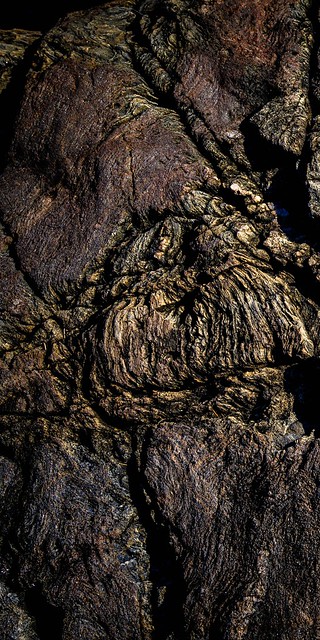
OBO
After a 24-hour period of contemplation, this image
I’ve been trying to figure out effective and efficient means to parse some of my more …erm… complicated images, to reveal what I see hidden in them. If I had the chops to be able to reproduce what I see as drawings, cartoons, or even tracings, I would spend many happy hours rendering photographic captures into hand-drawn graphics. While I can imagine what such translations would look like, I certainly haven’t the powers or skills to realize my imaginings. Yesterday it occurred to me that the combination of details clipped out and narrative might be effective enough to begin with. Here’s the starting point for today’s exercise:
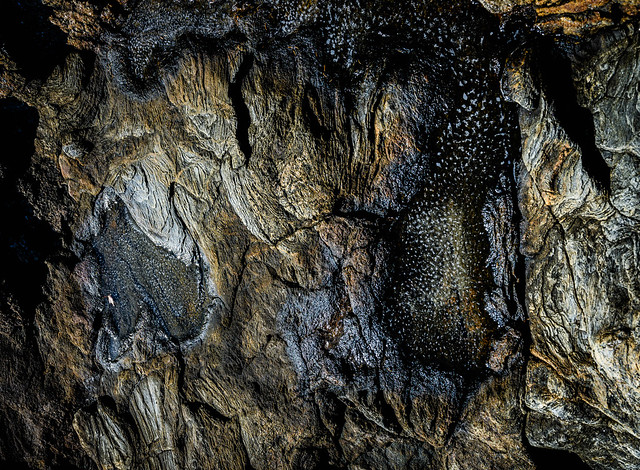
On the left I see a crowned bird-headed Hieronymus Boschish figure in a speckled robe, looking to the left over its right shoulder:
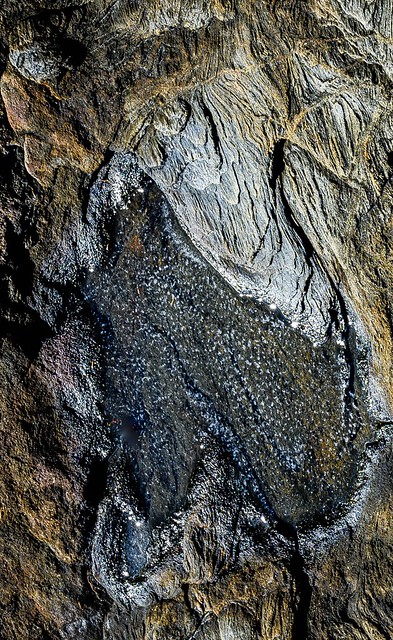
Below that is a long-toothed and perhaps cat-like nightmare figure, reminiscent of Ralph Steadman’s graphic style:
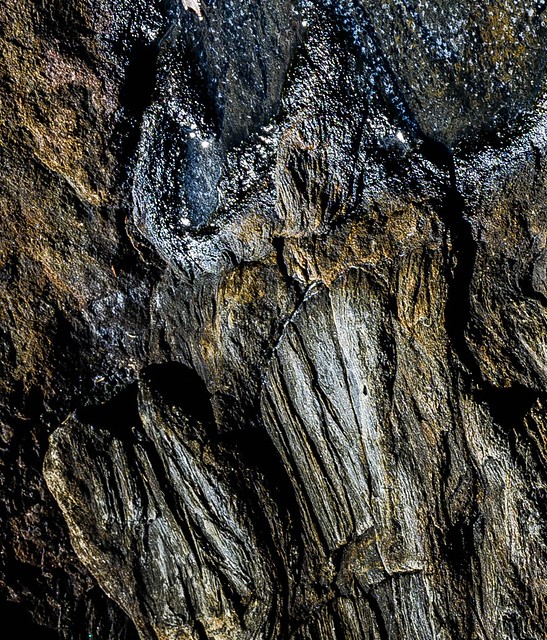
and to the right of those is a flame-haired human figure, arms raised and possibly with Harry Potter glasses or maybe just preternaturally googly eyes:
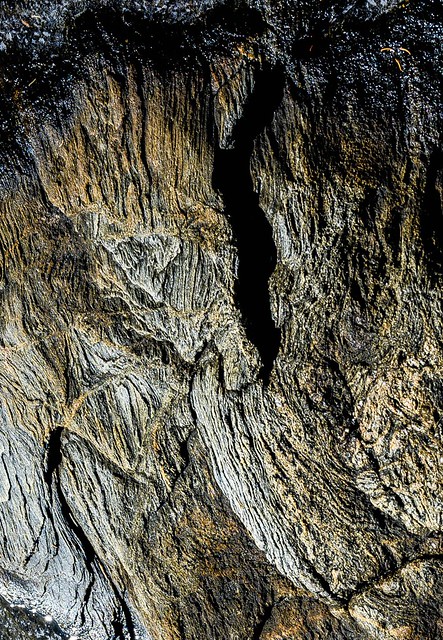
and on the far right edge, a long-snouted foxy-horsey creature, with what might be a single horn on its head:
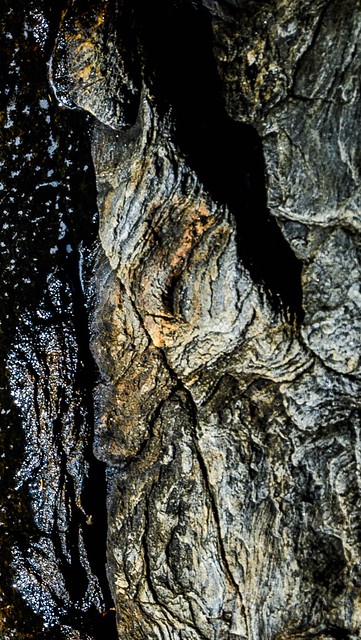
You may see none of these, or find other figures that I haven’t yet discerned. There’s another shot of most of the same scene, from the other side, which offers a whole different array of interpretative challenges:
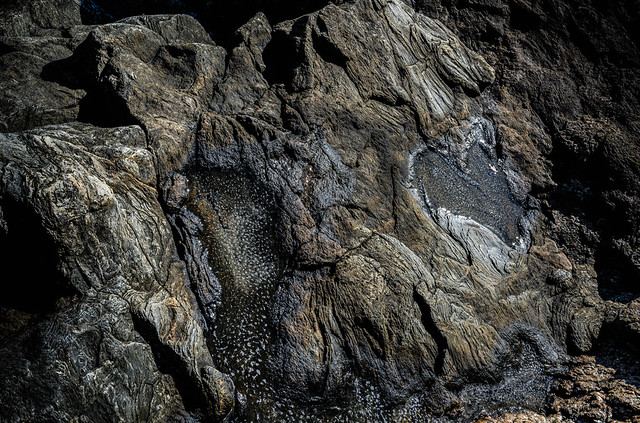
For the moment, I’ll just point out the insouciant but demented (and possibly fanged) flying squirrel in the upper left:
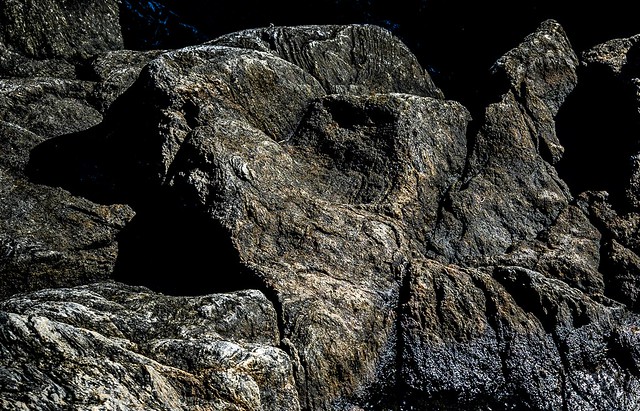
My friend Jan Broek, Argonaut of lexicographical vastnesses and master of le mot juste, seems always ready with a pithy showstopper, an observation distilled into an apposite phrase that may never have been spoken before, but which positively nails whatever he assays. His comment on my latest Album of Creatures:
…petroglyphic gnomons…
strange empathic encounters with the stony beings that bring us into terrestrial arrest
Van Gogh has nothing on your rabidic plunge…
It’s always worthwhile to consider what others see in and say about the images into which I invest (or from which I draw?) so much meaning. The constructive exercise of making meaning from fragments, of perceiving form in what might first appear chaotic, is surely worth documenting, explicating, tracing in line and word. I need to develop the tools to extract and display what I discover and discern.
I deal in the whimsical and the figurative, imagining the Story, as in Pas de Deux
and its Lindy Hop variant
Addendum:
went back a couple of days later and found the pair still muttering to one another:
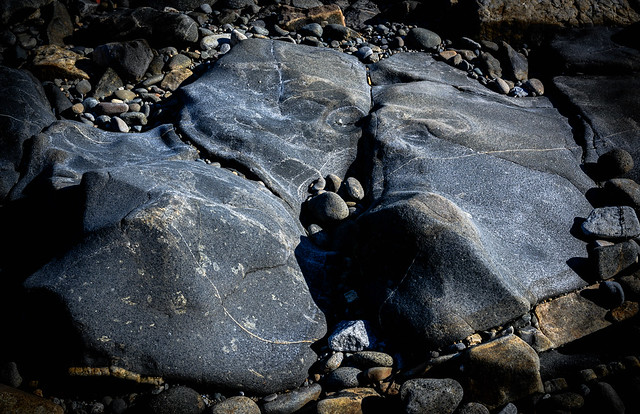
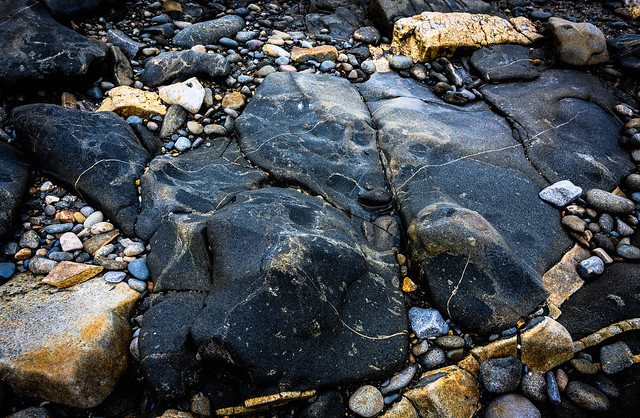
The ephemerality of rock is a perpetual surprise, looking different from hour to hour and day to day, and revealing new facets to every change of viewing angle. Here are two more of yesterday’s new perspectives on a beach that I’ve visited scores of times:
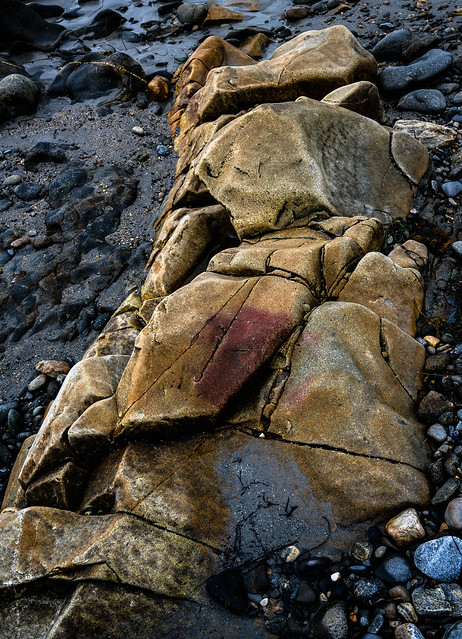
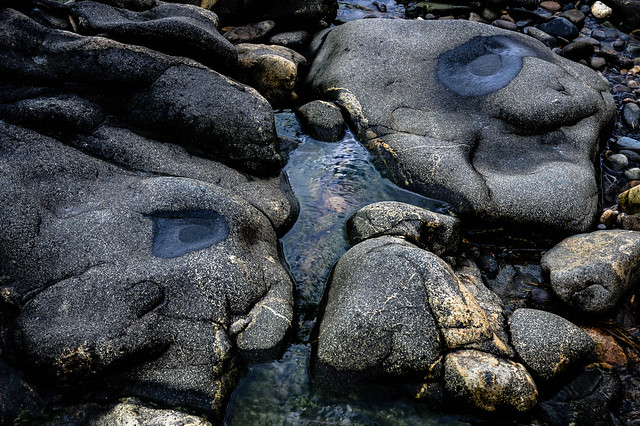
The muppets Statler and Waldorf, don’t you think?
Sometimes a second pass at an image reveals an unanticipated reading or unleashes a sleeping daemon. This one is OK but undistinguished, a bit of beach with outflowing stream and modest figure in the sand:
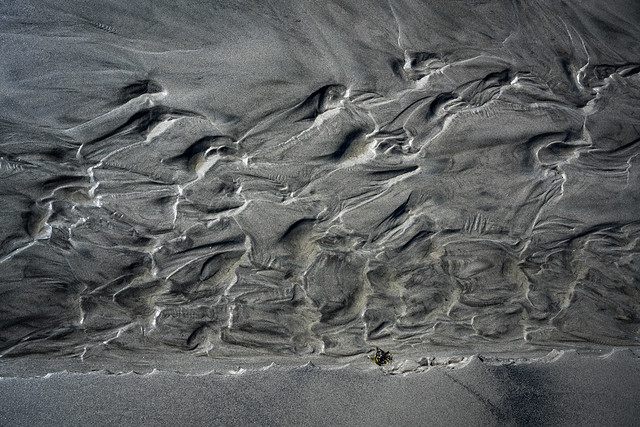
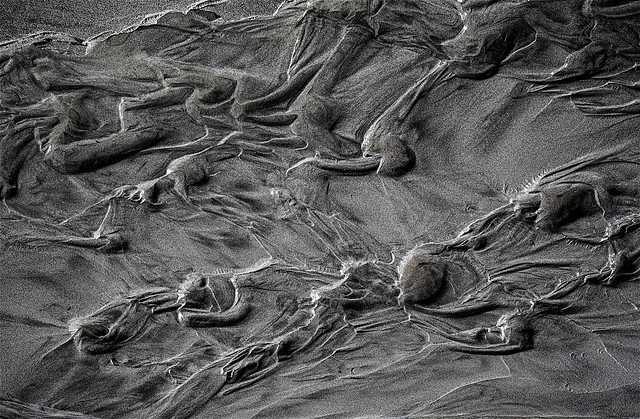
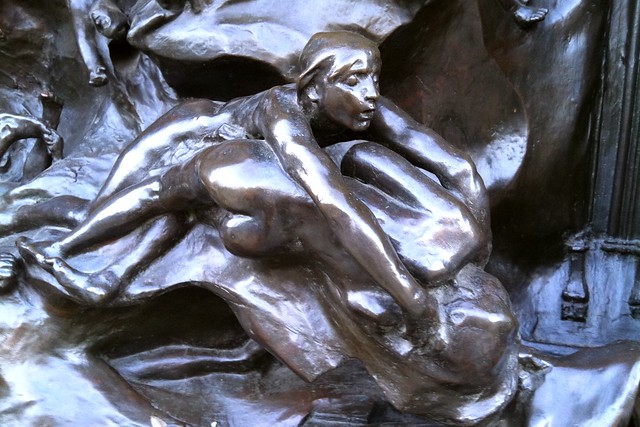
One should not only photograph things for what they are but for what else they are.
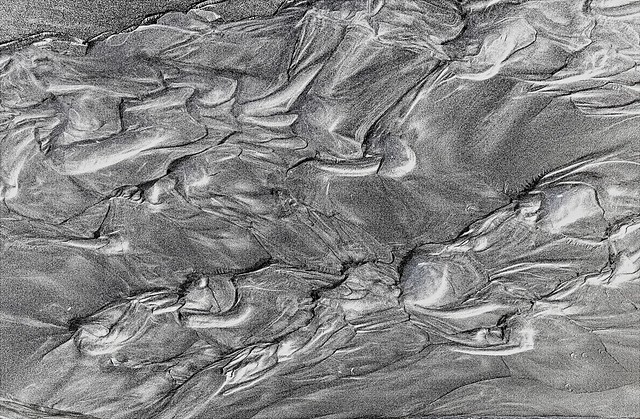
And then I thought … what would happen if I inverted the repurposed image?
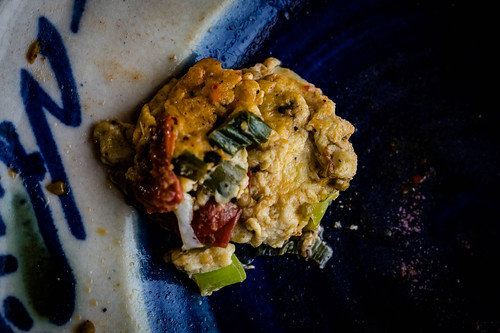
So there I was, most of the way through today’s breakfast (my version of menemen, Turkish eggs with tomato and scallion and Urfa peppers and oregano, with a side of kimchi) and this showed up:
I quite liked this image as an abstract:
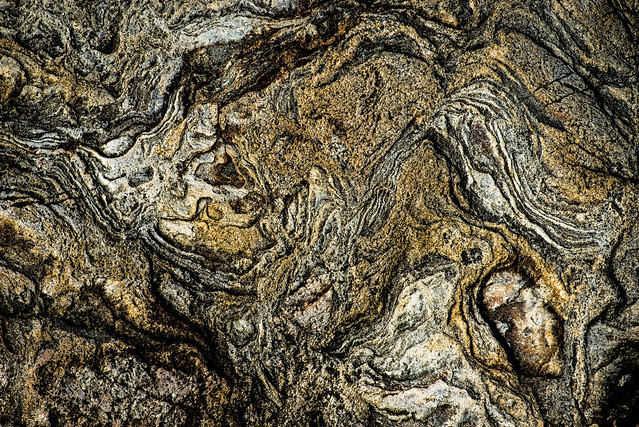
(a fancy word for naming)
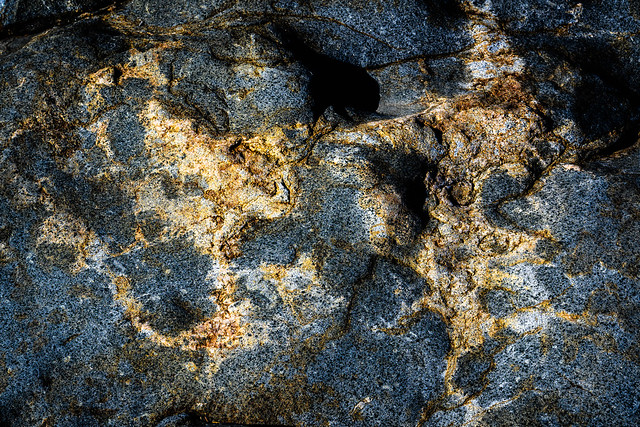
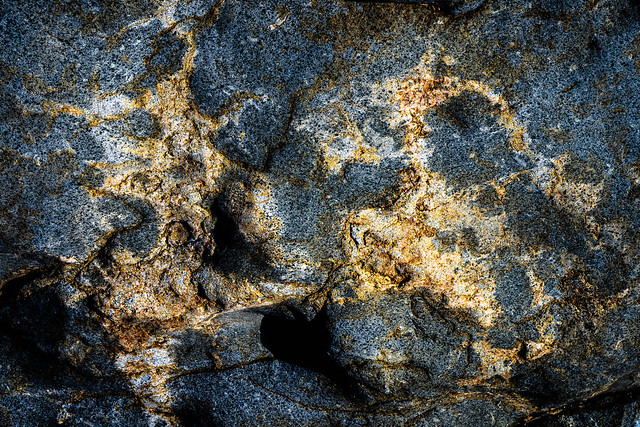
Images often announce their identities, sometimes quite a while after their first appearances. Here’s a case of two framings of one bit of rock, and my different readings of their essence after a couple of days of looking at them on Flickr.
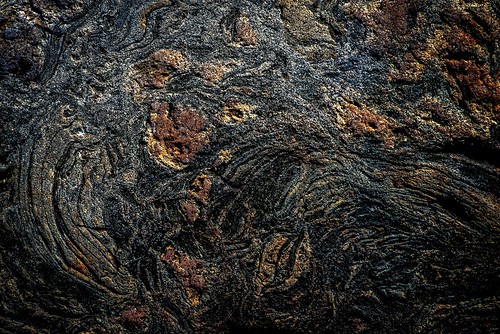
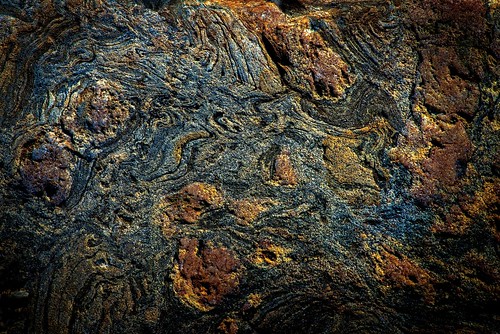
The lower obviously (!) depicts the dreams of a demented baboon, or so my onomastic intuition informed me. The baboon is in the lower center, two eyes and a brownish snout surrounded by a cascading chaos of curves and emergent figures. When I (somewhat later) explored the upper image it seemed to present the same face in a different setting, more of a whirlwind that brought to mind a Shinto spirit (kami) such as those one can experience in Miyazaki’s wonderful film Spirited Away (in Japanese: Sen to Chihiro no Kamikakushi), a sense of swirling motion in the curves below the face.
These readings are utterly idiosyncratic, and it’s unlikely that anybody else would have seen those different versions without my prompting, but they seem more plausible and obvious each time I look at them. This happens a lot out our way.
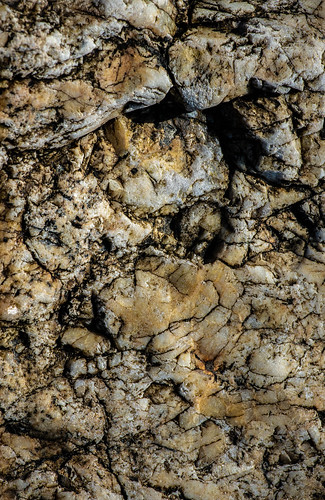
And while we’re at it, an example of a transformative tessellation. There’s a lovely rock at Drift Inn that is half marble and half something else, product of some very long-ago intrusion. All by itself it offers a complex landscape, not easily parsed for creatures unless one is really adept at spotting them:
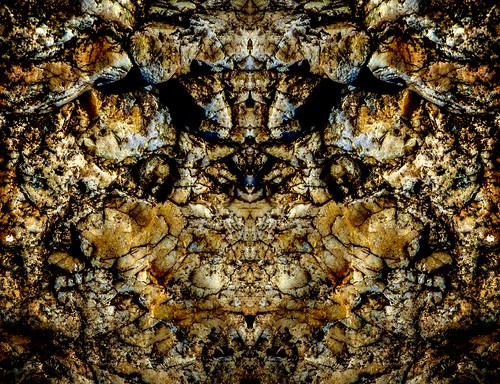
About a year ago we were participants in an online workshop with Andy Ilachinski, the upshots of which are still echoing in my photographic life, and the stuff I wrote still rings true when I reread it. One of my own personally-most-important images is at the top of the page of one exercise, and reminds me of an Encounter with Paul Caponigro himself at Home Kitchen Cafe a bit more than a year ago. Overhearing a conversation about photography next to me at the counter, I guessed that it must be Paul Caponigro who was saying that his son (John Paul Caponigro) did that digital stuff, but he himself was still using film. When his interlocutor got up to leave, my golden opportunity arose:
me: You must be Paul.
he: Who wants to know?
… (back and forth introductions)
me: I’ve been a fan for 55 years…
he: You aren’t that old.
me: One of your photographs changed my life
he: Oh yeah? which one?
me: (describes the soaped window, enthuses, fawns…)
he: There’s a horse in that one.
Exactly. And thus, in 1964 or so, I realized that it was OK to see, and to seek out, things that weren’t really there, shapes and forms that bloom from one’s imagination.
Yesterday I stopped at Drift Inn beach (which I’ve visited hundreds of times) on my way home from Marshall Point, and walked around revisiting the familiar array of rocks, and of course found some new ones which I duly photographed. It wasn’t until I began processing this one that I noticed the horse in the upper left quadrant:
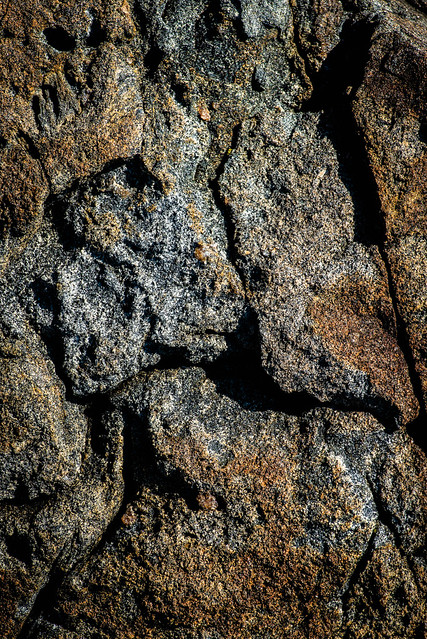
I spent part of yesterday morning photographing the familiar rocks of Marshall Point, a locale just 3 miles away that I’ve explored many times and basically feel is bottomless (i.e., I can keep going back and not ever feel it’s been exhausted). See the Flickr album for pretty much the whole haul of images. Earlier collections: A Marshall Point afternoon and Marshall Point revisited. Some of the same rocks recur, with subtle variations of mood and mien.
Introspection around what I’m doing and why is pretty much ceaseless, and really something of a pleasure at every stage, from initial capture through processing and on to eventual grouping and layout in the pages of a Blurb book. But what, you may ask, is the point of photographing rocks? Or, for that matter, anything else that one returns to again and again? Initially I’m looking for patterns and designs that fill the frame in an interesting and pleasing manner, and sometimes I see a face or a creature that prompts the click of the shutter, but many times the creatures only resolve themselves during the processing, or even after the processed image has been uploaded to Flickr. And sometimes it’s not until an image has been mirrored (tessellated, as I like to say) that the hidden beings manifest. Minor White wasn’t just blowing smoke with his oft-quoted dictum
In a somewhat more Delphic mode, Minor White also said
…all photographs are self-portraits.
Perhaps I should be choosier about what I photograph and what I commit to the semi-public space of Flickr, and surely many of my images are ultimately forgettable, but many of them have the germs of stories that only emerge after days or months of ripening. This blog space ought to see more of those tales.