Author Archives: oook

Wee

I enjoy the playfulness of linguists much more than that of, say, economists or quantum physicists, perhaps because it seems accessible and directly relevant to things I might do, hear, or be. Today’s Geoffrey Pullum posting at Language Log (A wee conventional implicature) relays his observation of Scottish English and “its much more inscrutable sister language, Scots, which in general I cannot even understand” and has all the charm of the aforementioned linguistical playfulness, and so is worth quoting at length (though you’ll doubtless want to go and read the whole thing):

…When you check in at the desk for a dental or medical or optician’s appointment they will mark you down as having arrived and then say, “If ye’d just have a wee seat over there, we’ll call ye in a minute or two.” The seats indicated are not liliputian but of standard size, with a sitting surface about as 1.3 times the width of an average butt.
Usages of this sort are actually the majority of instances of wee that I hear. And what this usage seems to be doing is to impart some kind of friendly and encouraging attitude about this event not being a significant setback…the wait for the doctor won’t be too long and they’ll call you quite soon… That’s the sort of thing people seem to be implying by popping a wee wee in there.
I have a hypothesis about the meaning. I think wee is developing into something rather like damn, only positive. Let me explain.
Damn has the syntax of an attributive adjective but the semantics of a scowl. When you say Somebody stole my damn guitar, you aren’t describing the guitar as damned. It might be a much-treasured full-bodied Martin acoustic from the 1960s with genuine mother of pearl fretboard inlays and you might love it dearly. The irritation is at the whole event, the theft and everything surrounding it. Damn can be inserted as a modifer of any suitable noun phrase in the sentence (and I agree that “suitable” there needs some detailed explication), but its semantic contribution is always one of speaker attitude toward the whole situation…
It seems to me that wee has a similar syntactic privilege of occurrence — you can just pick a salient noun at random and stick wee on that — but the semantic contribution is just an optimistic and comforting attitudinal overtone: rather than the vague impression that the speaker is pissed at the situation, which is what damn conveys, wee supplies a vague impression that the speaker is being helpful and optimistic and that things are going to be just fine. But there is no necessary entailment that anything is little.
I’ll keep an eye open for further examples of this, and perhaps post them here as updates.

[Ye shouldnae hold yer breath for me tae open comments, even if ye’re a Scot, but if ye’ve got a wee example for me tae consider, I wouldnae object tae a wee email. Try mail2languagelog at Gmail.com; but keep in mind that we’ve no staff at all here at Language Log Plaza, and we’ve no got the time tae read all the email that comes in as it is.]

See? A stem-to-stern treasure
The pipeline so desired by congresscritters

It’s ALWAYS been easy enough to find examples of Big Lies and Shell Games and Emperor’s Transparent Raiments in the stream of foolishness that passes for “news” in American mass media, but the last few years has been an especially fruitful epoch. Today’s OMG OMG OMG (at least so far, and it’s not yet 7:30) is from Anthony Swift at National Resources Defense Council, and won’t take long to read: Keystone XL is a tar sands pipeline to export oil out of the United States. A bit to whet the whistle:

Keystone XL would be Canada’s first step in diversifying its energy market. The pipeline would divert large volumes of Canadian oil from the Midwest to the Gulf Coast, where it would be available for the first time to buyers on the world market. To sweeten the deal, many of the refineries on the Gulf Coast happen to be located in foreign trade zones, where they can export Canadian oil to the world market without paying U.S. taxes. Oil Change International investigated this issue in a report that found the Keystone XL pipeline was part of a larger strategy to sell increasing volumes of Canadian crude on the international diesel market… Simply stated, Keystone XL is a way to get Canadian oil out of the United States, not into it.

Getting the attention of congresscritters

Hafta say, Clay Johnson is righter than I wish he was (Dear Internet: It’s No Longer OK to Not Know How Congress Works). A few bits, yanked from their contextual underpinnings, to get your attention:

Right now, if you want effective legislation around your industry, then you need to pay the right lobbyists, make the right campaign contributions, and write the right legislation at the right time in order to get it out of Washington. If you had to objectively pick the winning team in Washington, pick the team with deep pockets and great lobbyists, not the team with community organizers and signed petitions. It’s a gross system that needs change. It’s a cancer on our democracy.

But looking for a specific innovation to try and change the way Washington works by the time Congress votes on SOPA is about as foolish as Steve Jobs trying to diet his way out of having pancreatic cancer. With billions of dollars in the bank, and not a lot of time left, isn’t it worth going for the sure bet? Just spend the money. Then, after you’re sure you beat cancer, worry about disrupting the system that caused it…

Right now, Congress uses a tool called “Intranet Quorum” to effectively listen to constituents. It’s a tool built by Lockheed Martin, built in the 1990s, and built without any real social media… Unfortunately, the world of government is a world of locked-up vendor contracts and displacing Intranet Quorum isn’t as simple as just building a better product, offering it at a lower cost. It’s entrenched, and there are all kinds of rules and regulations around what kinds of software members can use in an official capacity… Both chambers have the same problem, really: in order to provide software to members offices, that software must be hosted inside the data centers of each chamber, using the hardware that each chamber provides, using only the languages and software available on that hardware…

It’s no longer acceptable for us to not take responsibility for our Congress anymore. If we want it to be better then throwing bums out, and replacing them with new bums doesn’t seem to be doing the trick. Let’s work instead to educate whomever is in Congress, and the professional class around them. Let’s do more of the stuff that works, and less of the stuff that doesn’t.

Doc’s at it again

Thanks to Doc Searls’ Weblog posting, I read How Luther Went Viral in The Economist, and then Doc’s very provocative Comment on the article. The triplet of writings casts more generally useful light upon the grand Events of 2011 (Arab Spring, Occupy this’n’that) than anything else I’ve encountered. It won’t take you 15 minutes to read those things, but I predict you’ll be thinking about their implications for the next few days… and perhaps bending the ears of others. And maybe you’ll be provoked to take a[nother] look at The Cluetrain Manifesto too. Thanks for all the fish, Doc!

Right on

The closing paragraphs of today’s Tom Dispatch:

It’s clear enough — or should be by now — that the electoral process has been occupied by the 1%; which means that what you hear in this “campaign” is largely refracted versions of their praise, their condemnation, their slurs, their views, their needs, their fears, and their wishes. They are making money off, and electing a president via, you. Which means that you — that all of us — are occupied, too.

So stop calling this an “election.” Whatever it is, we need a new name for it.

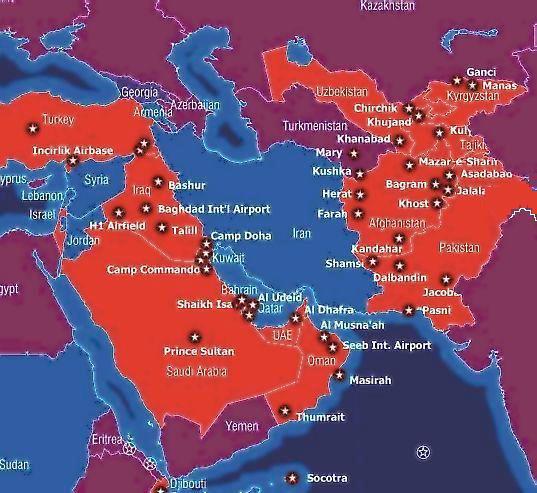
And this just in via Juan Cole:

Iran has US Surrounded, All Right

The Parenthesis

Here’s Dave Weinberger liveblogging Jeff Jarvis at the Berkman Center:

We’re going through a huge transition, he says. He refers to the Gutenberg Parenthesis. Before Gutenberg, knowledge was passed around, person to person. It was meant to honor and preserve ancient knowledge. After Gutenberg, knowledge became linear. There are beginnings and ends and boxes around things. It’s about product. There’s a clear sense of ownership. It honors current knowledge and its authors. Then you get to the other side of the parenthesis, and there are similarities. More passing it around, more remixing, less sense of ownership. The knowledge we revere starts to become the network itself. Our cognition of the world changes. The CTO of the Veterans Admin calls the Internet the Eighth Continent. “I used to think of the Internet as a medium,” but now he thinks of it more as a place, although there are problems with the place metaphor. (“All metaphors are wrong,” interjects Doc Searls. “That’s why they work.”) It was a hard transition into the parenthesis, and it’ll be hard coming out of it. It took 50 years after Gutenberg for books to come into their own, and 100 years to recognize the impact of books. We’re still looking at the Net using our the past as our analog.

Sure is a lot to chew on in that paragraph.

In praise of Gardner

I’m ALWAYS interested in what Gardner Campbell has to say, even when it’s in a realm of which I’m largely ignorant (e.g., Miltonics) or one where I have a different and possibly complementary take on the subject (viz musics). Gardner has a way of putting things that piques and niggles and provokes hmmmmmm, and my chief regret is that my responses don’t see the light of blogging day more often. Today’s case in point is his post on the origins and prospective utility of the RFC. Vintage Gardner, riffing like the bass player he [also] is:

  • begin with a pointer to something one might could have already known about but, well, didn’t (in this case, John Naughton’s A Brief History of the Future: From Radio Days to Internet Years in a Lifetime),
  • extract an essential nubbin of metastuff (here it’s the tale of the origin of the Request For Comment, an essential integral to the evolution of ARPANET, instantiated by Steve Crocker) and labelling it memorably (“a new genre of professional writing”),
  • summarize the intellectual linkages and broader significance in a few trenchant phrases (“a praxis of intellectual discourse”) and offer cogent linkages to familiar domains

    You can see the similarity to blogging right away. At least two primary Network Working Groups are involved: that of all the other people in the world (let’s call that civilization), and that of the network that constitutes one’s own cognition and the resulting “strange loop,” to use Douglas Hofstadter’s language…

  • and then challenge, in the nicest way possible, all of us to rethink what we do and how we’re doing it:

    Why would we not want to produce such a record within the academy and share it with the public? Or are we content with the ordinary, forgotten, and non-riveting so long as the business model holds up?

  • and then close with a rumination on self:

    I yearn for documentation conventions that will produce an extraordinary record of thought in action, with the production shared by all who work within a community of learning. And I wonder if I’m capable of Crocker’s humility or wisdom, and answerable to his invitation. I want to be.

My admiration for Gardner’s Way is unbounded and perpetually renewed with each post at Gardner Writes. AND the bookshelves chez my splendid otium are incremented when the Brown Trucks roll to bring me the volume he’s mentioned…

of towel-snapping

Mark Liberman, over at Language Log, has a totally brilliant post: Towel-snapping semiotics: How the frontal lobe comes out through the mouth. He closes with this essential HL Mencken quote, perennially useful:

… more than anywhere else that I know of or have heard of, the daily panorama of human existence, of private and communal folly–the unending procession of governmental extortions and chicaneries, of commercial brigandages, and throat-slittings, of theological buffooneries, of aesthetic ribaldries, of legal swindles and harlotries, of miscellaneous rogueries, villainies, imbecilities, grotesqueries, and extravagances–is so inordinately gross and preposterous, so perfectly brought up to the highest conceivable amperage, so steadily enriched with an almost fabulous daring and originality, that only the man who was born with a petrified diaphragm can fail to laugh himself to sleep every night, and to awake every morning with all the eager, unflagging expectation of a Sunday-school superintendent touring the Paris peep-shows. [“On Being an American“, 1922]

I’m currently enjoying Colin Woodard’s American Nations: A History of the Eleven Rival Regional Cultures of North America, and this fits right in.