Author Archives: oook

argybargy du jour

All those years ago I was drawn to Anthropology because I thought it was a comprehensive and comprehensible way to MAKE SENSE of the world around me; and in my years as a prof I approached teaching Anthro in the same spirit, looking at the great variety of solutions to the practical problems of living that people had developed over the vastnesses of time and space (well, 10,000 years or so; and terrestrial space, but still…), returning again and again to the observed Fact that the Emperor was Naked. And now I find myself looking to one particular/peculiar strain of the discipline to, once again, [try to] make sense of the contemporary world.

Lately I’ve been reading a number of things that have fundamentally the same message. Much seems to emanate from David Graeber, and is concerned with bamboozlement in many forms:

…a kind of strategic pivot of the upper echelons of US corporate bureaucracy — away from the workers, and towards shareholders, and eventually, towards the financial structure as a whole… corporate management became more financialized, but at the same time, the financial sector became corporatized with investment banks, hedge funds, and the like largely replacing individual investors. As a result the investor class and the executive class became almost indistinguishable… (19)

…the last two centuries have seen an explosion of bureaucracy, and the last 30 or 40 years in particular have seen bureaucratic principles extended to every aspect of our existence… (27)

What was being talked about in terms of “free trade” and the “free market” really entailed the self-conscious completion of the world’s first effective planetary-scale administrative bureaucratic system. (30)

…public and private bureaucracies finally merged together in a mass of paperwork designed to facilitate the direct extraction of wealth. (35)

If one gives sufficient social power to a class of people holding even the most outlandish ideas, they will, consciously or not, eventually contrive to produce a world organized in such a way that living in it will, in a thousand subtle ways, reinforce the impression that those ideas are self-evidently true. (37)

…what we call “the public” is created, produced through specific institutions that allow specific forms of action — taking polls, watching television, voting, signing petitions or writing letters to elected officials or attending public hearings — and not others. (98)

(The above from The Utopia of Rules: On Technology, Stupidity, and the Secret Joys of Bureaucracy. There’s much more I’d transcribe from Graeber’s writings, including Fragments of an Anarchist Anthropology and of course Debt.

A similarly resonant voice: Tariq Ali in the latest London Review of Books:
The New World Disorder (Vol. 37 No. 7 · 9 April 2015)

But social democratic reforms have become intolerable for the neoliberal economic system imposed by global capital. If you argue, as those in power do (if not explicitly, implicitly), that it’s necessary to have a political structure in which no challenge to the system is permitted, then we’re living in dangerous times. Elevating terrorism into a threat that is held to be the equivalent of the communist threat of old is bizarre. The use of the very word ‘terrorism’, the bills pushed through Parliament and Congress to stop people speaking up, the vetting of people invited to give talks at universities, the idea that outside speakers have to be asked what they are going to say before they are allowed into the country: all these seem minor things, but they are emblematic of the age in which we live. And the ease with which it’s all accepted is frightening. If what we’re being told is that change isn’t possible, that the only conceivable system is the present one, we’re going to be in trouble. Ultimately, it won’t be accepted. And if you prevent people from speaking or thinking or developing political alternatives, it won’t just be Marx’s work that is relegated to the graveyard. Karl Polanyi, the most gifted of the social democratic theorists, has suffered the same fate.

and this announcement by William Arkin, via Gizmodo, of a Twitter feed covering a lot of the same dolorous but important ground:

o here’s what I plan to do: Expose. Explain. Secrecy and euphemisms are carpet-bombing us into submission. I’m sick of the parameters of the sanctioned debate. So instead I will try to treat the secret world like a sports league: There are coaches, players, commentators, bookies, and marketing geniuses. We’ll have something to say about all of them, something to reveal every week. The teams are the NSA, the CIA, FBI, Army, Air Force, Navy, Marine Corps, Department of Homeland Security, TSA, ICE; and that’s just Division I. There’s a Division II playing somewhere else, far more obscure but nevertheless influential and odious, populated by billion-dollar institutions like the Counter-Narcoterrorism Program Office or the Defense Threat Reduction Agency or U.S. Army North, real parasites on the American spirit, survivors because what they do festers in the dark. Each has a history and personality, a lineup, a budget cap, a general manager, a narrative to sell.
(much more and very worth reading)

Smacked upside the head

Sometimes it’s a bit of text, sometimes a phrase in a tune, sometimes a (photo-)graphic, but the experience is pretty much the same: a brief guffaw loosed at the sheer excellence/audacity/brio of the thing. Case in point, this from the end of a piece by Charles Simic, from New York Review of Books, which just rolled in via RSS:

Here, to give you an idea, is the beginning of a story called “Water Liars” from a collection of [Barry Hannah’s stories] called Airships:

When I am run down and flocked around by the world, I go down to Farte Cove off the Yazoo River and take my beers to the end of the pier where the old liars are still snapping and wheezing at one another. The line-up is always different, because they are always dying out, or succumbing to constipation, etc., whereupon they go back to the cabins and wait for a good day when they can come out and lie again, leaning on the rail with coats full of bran cookies. The son of the man the cove was named for is often out there. He pronounces his name Fartay, with a great French stress on the last syllable. Otherwise, you might laugh at his history or ignore it in favor of the name as it’s spelled on the sign.

I’m glad it’s not my name.

This poor dignified man has had to explain his nobility to the semiliterate of half of America before he could even begin a decent conversation with them. On the other hand, Farte, Jr., is a great liar himself. He tells about seeing ghost people around the lake and tell big loose ones about the size of the fish those ghost took out of Farte Cove in years past…

Having previously read the story and knowing what was coming, reading this far was all that was required for my purpose, which was to close my eyes and go to sleep with a smile on my face.

Maybe epiphany is a sufficiently weighty word to bear this freight of delight. I guess I could say that I live for such moments of glee, and this one sent me directly to Amazon to snag Hannah’s book on the Kindle.

A photographic example from the just-concluded trip to France is another suchlike, a scene I glimpsed for just a moment while ankling around in Pont-Aven (on the south coast of Brittany) and had the wit to capture:


Everything about this is just right: the apparent transparency of some of the figures, the dim reflection in the window glass through which I shot, the illusion of depth in the room, the moments of movement transfixed… I took a lot of pictures that I like in that fortnight, but this one seems to me the most glorious. I might never have seen the opportunity if I hadn’t just been to the Florence Henri exhibit at Jeu de Paume…

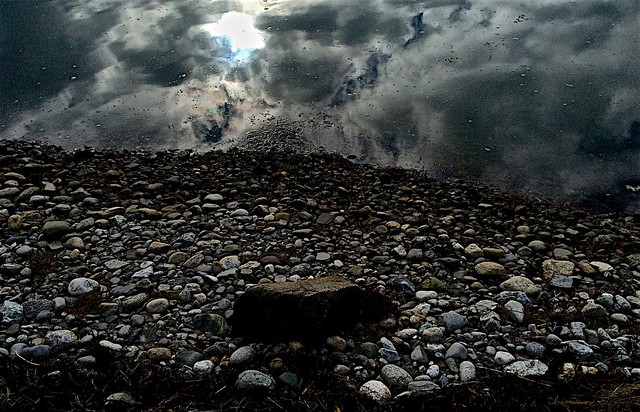
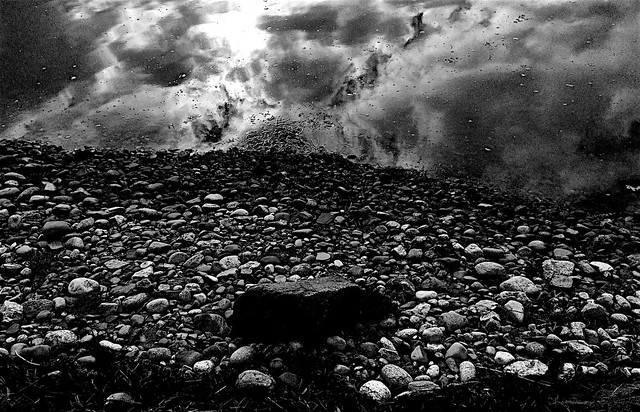
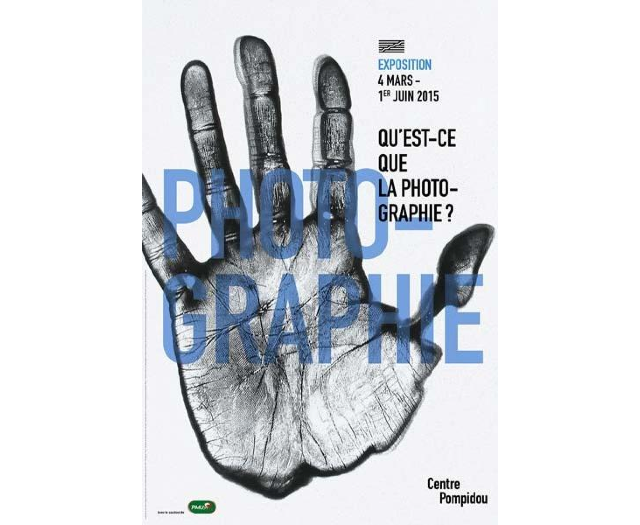
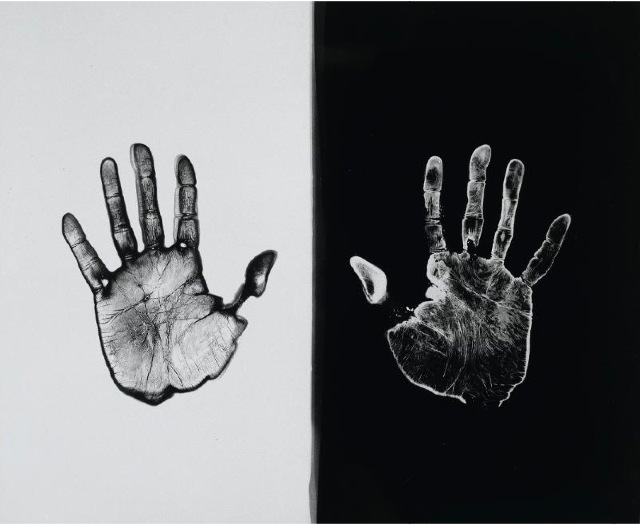
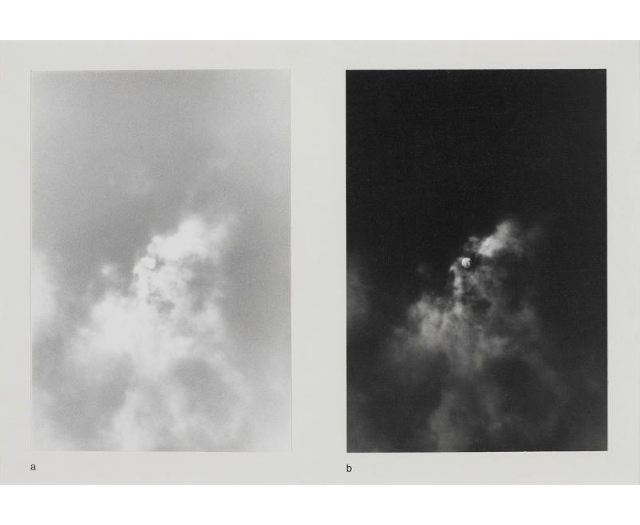
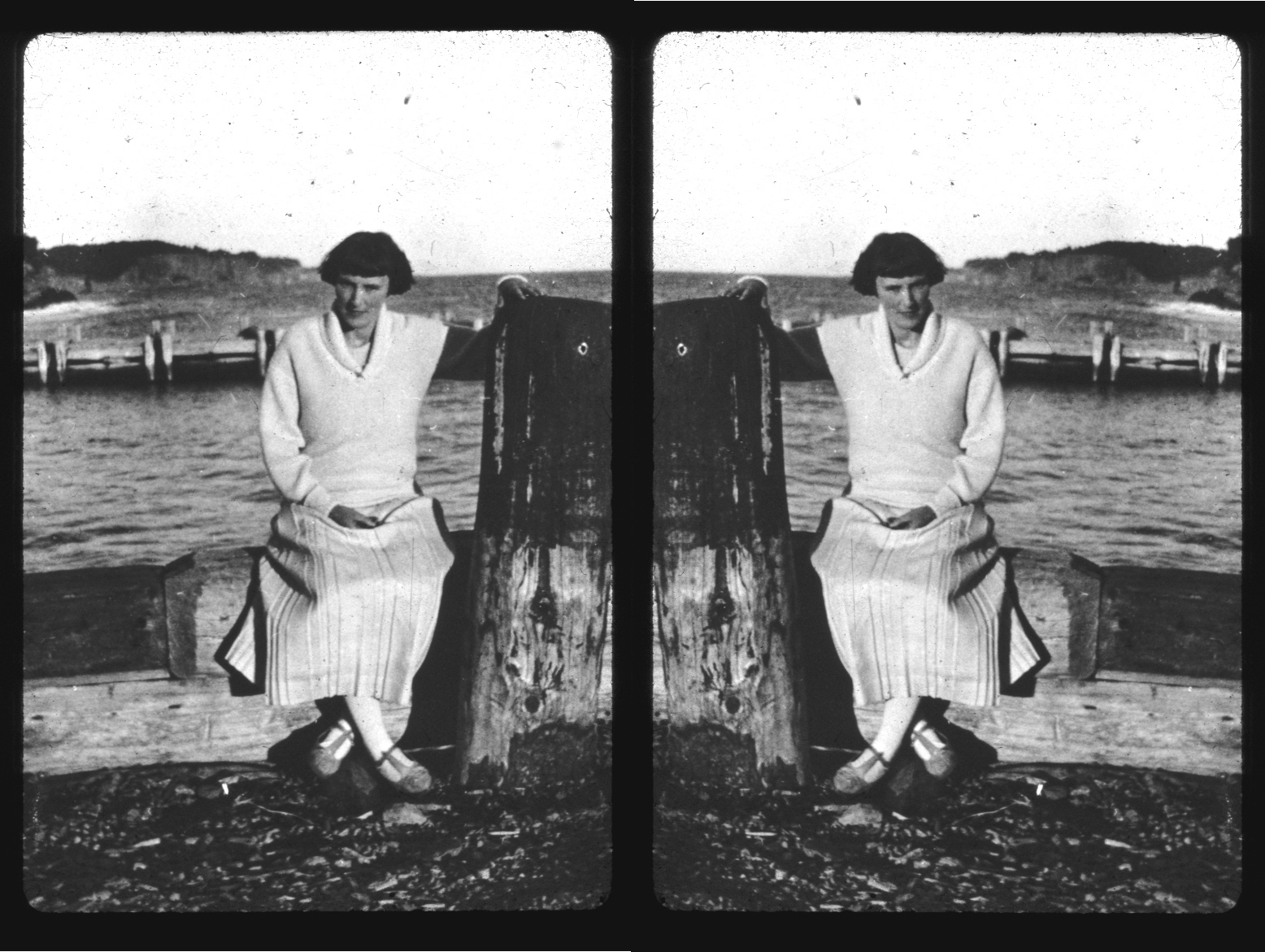
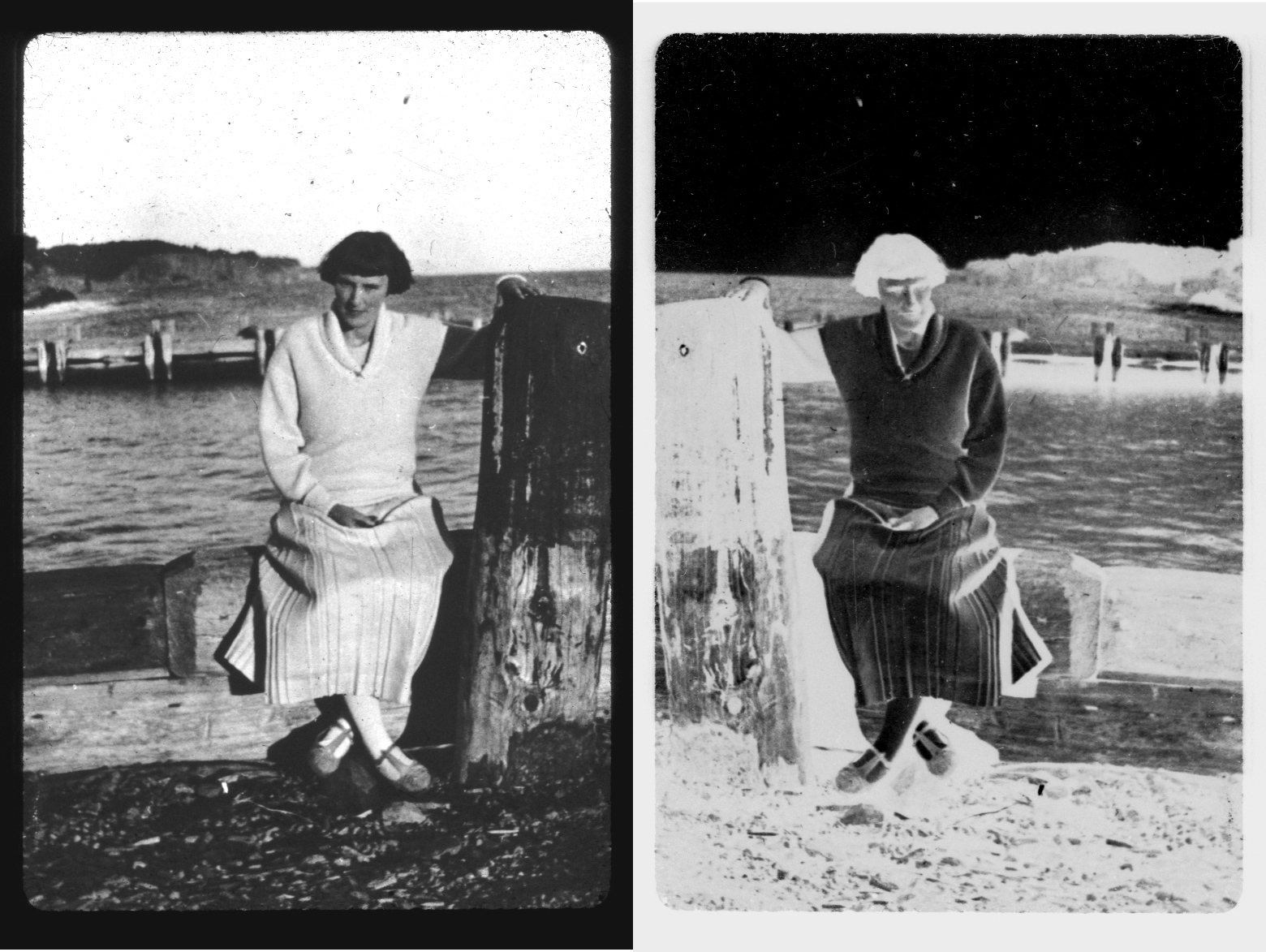
addendum: it occurred to me to try a bit of manipulation, inspired by the Qu’est-ce que la photographie? exhibit:

Photographic high tide

Yesterday we visited the Griffin Museum of Photography in Winchester (the town in which Betsy grew up) to see the exhibit Photography Atelier 21. The photographs themselves were pretty inspiring, and the presentation was stunning, but the ‘artist statements’ accompanying the images were the real revelation for me. I’ve previously limited my image of such statements to introducing the photographer, rather than contextualizing the images, and the new perspective started me thinking anew about several of my own photographic projects.

I especially admired the work by Dianne Schaefer and James Hunt, both of which used infrared digital cameras (Schaefer’s Blurb book The Light You Cannot See really eponomizes the medium and technique).

We’re planning to visit a couple of photographic exhibits in Paris in the next few days: Qu’est-ce que la photographie ? at Centre Pompidou and Florence Henri at Jeu de Paume, and anticipate further inspiration.

I’ve just snagged Why It Does Not Have To Be In Focus: Modern Photography Explained which looks like it will further enlarge my thinking about what I’m doing with photography.

a bit from March 2004

I found this grumble I’d written 11 years ago, as I followed links in the hypertext mentioned in the last post. Still find it relevant:

Innovation
at small liberal arts colleges
is all but dead
except for independently/externally funded efforts
and rogue actions.
Administrations have insulated themselves
behind a smokescreen of
‘strategic planning’
which privileges risk avoidance
in the name of ‘management’.
Add more deans,
institute performance reviews,
emphasize assessment of instructional objectives.
Distrust visionaries.
Reduce creativity and experimentation with unpredictable outcomes.
Recline upon past laurels.

Faugh.

mid-March, surrounded by snow

Every five years my Harvard class publishes a volume of Class Reports, and this year is the 50th. I sent a brief submission for the book and included a link to an expansion, a pretty elaborate hypertext document that I’ve been working on for the last couple of months. I have no idea if others will explore its labyrinthine wanderings, but somehow that matters less than that I’ve managed to piece together into quasicoherence all sorts of elements of what I’ve been doing and thinking about since 1965. Such things are never finished, and I keep going back to tuck in further links and add bits of text, so the document will continue to evolve. The Reunion itself in in late May, and [quite uncharacteristically] I’ve signed up to attend. I hope for something more than paunchy bonhomie with people I never knew back in the day, but many of those I did know are either dead or constitutionally averse to Reunions. We shall see…

Meanwhile, we’re about to depart for two weeks in France, one of them in Brittany. Many photos will doubtless ensue.

Cuisine collides with living language

Lately we’ve been exploring what can be done with ground duck. Last night I used half a pound in a stir-fry (with tofu, collards, a tomato; and using a Thai prik mixture smuggled by a friend) and there was a half pound of duck left… So I went to sleep on it, and woke up thinking about a solution: fine choppage of ginger, scallions, cilantro (all withering in the refrigerator and needing to be used); mix with duck; shape into little torpedoes; steam, or sauté, or poach. I followed that inspiration through several steps:


quenelles1

quenelles2

quenelles3


But what are these little torpedoes? From some back corner of the mind came an answer: quenelles de canard. I was pretty sure that ‘quenelle’ was the right designation for the shape and even the cooking method, but I googled it anyway. And immediately found myself in a rapidly-unfolding linguistic muck heap. Yes, I was right about ‘quenelle’ in a culinary sense, but recent argybargy in France has put the term into hazardous territory, such that one might want to find another designation for the …ummm… torpedoes. I’ll leave it for you to peruse the relevant Wikipedia page (Quenelle_gesture_) and consider the depths of linguistic play.

Others have found themselves deep in it:


(from International Business Times)
and

(from http://fr.kichka.com/2014/01/02/quenelle-au-canard/)

And here’s where it all began a decade or so ago.

Evidently quenelle derives from knödel, at least in the mind of the OED, so we’re somewhere in dumpling-land, a pleasant place to be on a snowy Sunday morning.

artful dreaming

I’ve been reading Will Gompertz What Are You Looking At? The surprising, shocking, and sometimes strange story of 150 years of modern art, and this morning woke from a dream in which I was conducting a seminar in looking at photographs, and presenting an exercise for the participants. I showed them three photographs and asked that they write a response to the question “What are you looking at?” for the three. The idea was that some would know the photographs and/or their makers already, and might write on the place of each in the photographer’s oeuvre; some would be seeing the images for the first time, and might respond more subjectively; some might respond from a technical perspective, discussing how the images were captured and processed; and some might come up with other entirely novel responses to the three pictures. These were the three that came clearly to mind in the dream:


In case they’re not familiar to you, the first is Edward Steichen’s 1903 portrait of financier J.P. Morgan (see discussion), the second is by the 18-year old Jacques-Henri Lartigue in 1912 (see discussion), and the third is from August Sander’s People of the 20th Century, taken in 1914 (see discussion).

I was just imaging the discussion that would result from everyone’s reading of each other’s responses when I woke up. What surprises me is how clear the whole thing was, the images and the process and some of the outcome.

What I love about Gompertz’ title is the various emphases one might give: WHAT are you looking at? What are you looking at? What are you LOOKING at? What are you looking at? All deliciously valid questions, of course, and applicable to any appreciation of visual material (which is just Gompertz’ point, natch). And pursuing this set of questions seems a worthwhile objective for the New Year.

LRB in the New Year

Enticed by Jenny Diski’s recent columns tracking her cancer diagnosis, I succumbed to a year’s subscription to London Review of Books. I’ve spent several days reading bits from the Archive, and found a whole new vein of delicious and highly literate prose. A few examples follow:

From a review of 3 biographies of Charlie Parker:

Jazz may have been born and raised in brothels, gin joints, chthonic nightclubs, rather than respectable performance spaces, but it was a music of devilish complexity, exacting technical fibre. Musicians in touring jazz bands and orchestras had to satisfy the clamour of their weekend audience for beats that could be danced into the floor; satisfy their own high creative standards; and also find a way to leap unscathed between dense volleys of beckoning myth and image. (Ian Penman, “Birditis”, 23 Jan 2014)

And no American would (or could?) have written

In public the conversation has the same steely glint of challenge in one direction and moue of camaraderie in the other that you sometimes see when Jews tell stomach-curdling Jewish jokes, while the uncircumcised grope in their bag of possible socialised reactions for a way to respond. (Jenny Diski, “I haven’t been nearly mad enough”, 6 Feb 2013)

Many LRB articles seem like the sort of tutorial essays one imagines might be presented to Oxbridge dons: artful intro, controversy summarized, evidence adduced, competing arguments critiqued, case made. But by more erudite and well-informed writers than undergraduates can possibly be.

Adroit skewering is one hallmark, clarity another:

…Walt Rostow, who beguiled Washington with his five-stage programme for ‘The Take-Off into Self-Sustained Growth’, which, by contrast, claimed that industrialisation was the key. Rostow tied the United States to a series of unsavoury autocrats and littered the world with unprofitable steel mills.

The British ‘Modernisers’ (almost the first use of the term) of the 1830s and 1840s believed that if the government got rid of the idle landlords and dealt direct with the peasants, Indian farming would really take off. Unfortunately, the East India Company still needed vast quantities of rupees to support its great military apparatus, and the reforms created a bunch of aggrieved ex-landlords and a peasantry groaning under the British collectors, who tended to be more relentless than the old taluqdars and zamindars. Thousands of small farmers were driven into the hands of moneylenders and, under new British regulations, were eventually forced to sell up for not paying their taxes. A British official at the time lamented that ‘in the landed property of the country a very extensive and melancholy revolution has been effected’. Rather than warding off discontent, the land reform helped to precipitate the most terrifying mutiny in the history of the British Empire.
(Ferdinand Mount, “That Disturbing Devil”, 8 May 2014)

And in the vein of Western economic history, this adroit summary of stuff I think I ought to have known:

At the same time as trading in securities was frozen, the London money market broke down. This had even more dramatic consequences: half of world trade at that time – and almost all of British trade – was financed via one of the major instruments traded on the money market, the sterling bill of exchange. This was a transferable promissory note, usually with a three-month maturity, that offered a convenient means of settling international transactions. An American merchant buying silk in Japan, for example, could pay for his goods with a sterling bill, which the Japanese merchant would then sell to a bank in Japan in exchange for local currency. The sterling bill would next be presented to an ‘accepting house’ in London (essentially a merchant bank, like Rothschilds or Schröders) that, for a fee, would ensure payment in case of default. The bill would then be sold again on the secondary market via a discounting house, typically to a bank that would hold the bill as a means of increasing its liquid reserves. When payment on the bill was due, the American merchant would send to London the amount he owed for the silk he had bought in Japan. Since sending actual bullion was impractical, and since the money he owed was in pounds sterling, the merchant would typically purchase another sterling bill using dollars he had earned from selling the silk at home, and that bill would pay off his debt to the bank in London. In this way, sterling bills facilitated the vast expansion of international trade in the late 19th century, providing a ready means of connecting most of the globe in an integrated commercial network. One of the first important tasks in the drawing up of international law was to regulate the global use of bills of exchange at the Hague Conferences of 1910 and 1912. Some considered these bills superior to gold – ‘more economical, more readily transmissible, more efficient’, as one Canadian banker put it. The City’s secondary market in sterling bills linked the world’s banks in a common system of exchange: its investment opportunities encouraged more than seventy foreign banks to open branches in London, with as much as half of the money changing hands on Lombard Street originating from outside the country. As early as 1873, Walter Bagehot referred to the London money market as ‘by far the greatest combination of economical power and economical delicacy that the world has ever seen’. (Jamie Martin ”
Better off in a Stocking”, 22 May 2014)

A good way in to Piketty:

The story of modern economic thought can after all be told as the shift from political economy, as its practitioners thought of it, to the discipline now simply called economics. With the ‘marginal revolution’ of the 1870s (named for Jevons’s theory of ‘marginal utility’), economics acquired a true scientific basis or – in the other extreme of judgment – lent itself to constructing mathematical alibis for capitalism, whose real behaviour it studiously ignored.

In general, economists favour mathematical modelling of axiomatised exchange relations over economic and other kinds of history; concentrate on individuals rather than classes or groups as economic agents; emphasise the preferences freely expressed in transactions rather than restrictive social circumstances; and describe self-sustaining equilibria of supply and demand when capitalist economies are striking for their growth and instability.

Economists, endowed until a few years ago with more authority than other scholars, now appear in the eyes of many to have produced models of efficiency and harmony whose perfection was won at the cost of reality. The mathematised dream of some future catallaxy – Hayek’s lovely word for the spontaneous peaceful order that would result from maximum liberation of the market – bore little resemblance to actually existing capitalism. Since the crash, behavioural economics has generated much of the excitement in the field, but it too is better equipped to make sense of individual economic actors than of the mutually determining trajectories of social classes and national economies. (Benjamin Kunkel, “Paupers and Richlings”, 3 July 2014)

Alas that it took me so long to discover LRB. Every article I’ve read has been enlarging, drawing me into new territory, or deeper into what I thought I knew already. More to chew upon, more to squirrel away… which leads me to wonder: Just how walled-off is LRB? So much of what I’ve read in the last few days of archive exploration seems of genuine and lasting value and even profundity, such that many reviews really ought to be attached to the original books, or cross-linked between compared volumes…

banjos

I have a checkered history of experiments with banjo-family instruments, the most recent episode of which features the current New Instrument, a rare bird indeed: a 1923 5-string plectrum Vega, just arrived from Gryphon in Palo Alto. It’s essentially a tenor banjo, but 5-course instead of 4-course, and with a longer scale (27″) than most tenors, and tuned lower. So perhaps a baritone.

I tripped over it on the Gryphon website, which I visit from time to time, usually about the time that a new issue of Fretboard Journal arrives (and of course I stop by Gryphon whenever I’m in Palo Alto).

Larry Chung plays the very instrument in this YouTube video:


(his approach is essentially plectral and tenorish; I tune it differently (GDGCF) and am exploring a fingerpicking style, derived from what I’ve been doing with the Apollonio cittern, which is tuned CGCFBb)

There’s pictorial evidence of former encounters with the family: a brief 5-string flirtation 1973, and the mandobanjo at Deep Gap 1979 (which started my own case of Mando Madness):


Brief Flirtation with the Banjo mandobanjo in Deep Gap NC, 1979

Also in the stable, and played occasionally, are Turkish cümbüş and a long-neck saz/tanbur, and I also have a very funky old friction-peg 5-string that has never been exactly playable (Jake Wildwood may be able to do something about that). And I once had a Silvertone 5-string, totally undistinguished.