Author Archives: oook

Cajun interlude

Listening to the CDs that accompany American Epic, I was brought up short by “La Danseuse” by Delma Lachney & Blind Uncle Gaspard (1929)


I know that tune, I thought… it’s “Jeanine’s Dream” by the Holy Modal Rounders (Peter Stampfel and Steve Weber):

So of course I did a Google search, which landed me with this, from Last Forever’s 2013 album, No Place Like Home:


…and with a blog post from 2009 that I had forgotten (that link is worth clicking for the lyrics to “Jeanine’s Dream”). A bit more digging disclosed that the singer was Sonya Cohen, daughter of New Lost City Ramblers member John Cohen (and niece of Mike Seeger, Pete Seeger, Peggy Seeger). Alas, Sonya died in 2015.

So round and round we go, rediscovering forgotten music and being whirled into explorations of Cajun music. Another that nailed me is Blind Uncle Gaspard’s Sur Le Borde De L’Eau, of which Amanda Petrusich says

Whatever he’s communicating, it’s extra musical. It’s something in the tone of his voice, the way that he’s plays the guitar. It’s extraordinarily sad. When I try to imagine the circumstances that would lead someone to sing this way, it’s devastating.


And here’s Feufollet’s updated version, as full of sadness as the original.

diverted

Diverted

A lot of thought and experimenting has gone into the Finding Aids project lately, and I’m discovering how easily I can be diverted from the grander overall scheme of developing orderly summaries by things encountered along the way. Every Thing that one picks up has edges that potentially link to other Things, and I’m sometimes sidetracked by shiny somethings. A few days ago I started to explore the vastnesses of my American music holdings, and so I’m wrestling with the sliding panoply of genres that belong within “Music of the Nacirema” (blues, jazz, old timey, bluegrass, folk, etc. etc.). Pretty much every item spins out into another Story, a facet (or several) of the glorious complexity of a musical landscape that spans more than a century.

The epic of Stagolee is one such: a tale of Shakespearean scope and perennial fascination, based on an incident that took place in St. Louis in 1896, centered on a shooting over a John B. Stetson hat. There are hundreds of variants since the story was first published in 1911. Fred Waring and His Pennsylvanians released an instrumental version in 1923, soon followed by Lovie Austin’s version with words in 1924, Ma Rainey’s (with Louis Armstrong’s cornet) in 1925, and Frank Hutchison’s in 1927. See the Wikipedia article for more detail, and enjoy the variety in these examples:

Hogman Maxey, Angola penitentiary, 1959:

Dr. John, 1972

Keb’ Mo’ from the film Honeydripper, 2008

Amy Winehouse, in Brazil 2011

Mikołaj Woubishet Wrocław, 2008

Grateful Dead, NY July 4, 1989


There are many possible readings of the story itself. See Bad-Ass Liberator, Singout!’s sanitized take, and a range of opinions via Mudcat.

Some of the quite different but similarly exemplary tunes that surfaced as I wandered in the Blues world are:

Bertha “Chippie” Hill’s “Pratt City” (Louis Armstrong, cornet) (1926):

Pratt City, is where I was born
If you get to there, you can get your water on

Get full of high‑powered liquor, it's bound to make him scream
Going back to Pratt City, if it takes nice and mean

You walk Sandusky, keep your head hung down
Don't worry hot papa, I'm driftrack bound

There’s a 1929 version on Spotify:

Pratt City, is where I was born
If you get to there, you can get your water on

Get full of high‑powered liquor, on eighteenth street
Going back to Pratt City, get sick nice and neat

You walk Sandusky, keep your head hung down
Don't worry hot papa, I'm driftrack bound

Pratt City girls should do treat you right
With those Birmingham girls, drink with you day and night


Hogman Maxey’s “Duckin’ and Dodgin'” (1959, recorded by Harry Oster in Angola penitentiary):

Geeshie Wiley and Elvie Thomas’ “Last Kind Words” (1930):

The last kind words I heard my daddy say
Lord, the last kind words I heard my daddy say
If I die, if I die in the German war
I want you to send my body, send it to my mother, lord
If I get killed, if I get killed, please don't bury my soul
I p'fer just leave me out, let the buzzards eat me whole
When you see me comin' look 'cross the rich man's field
If I don't bring you flour I'll bring you bolted meal
I went to the depot, I looked up at the stars
Cried, some train don't come, there'll be some walkin' done
My mama told me, just before she died
Lord, precious daughter, don't you be so wild
The Mississippi river, you know it's deep and wide
I can stand right here, see my babe from the other side
What you do to me baby it never gets outta me
I may not see you after I cross the deep blue sea

…and see The Ballad of Geeshie and Elvie (John Jeremiah Sullivan)


Lonnie Johnson’s “To Do This, You Got To Know How”

(see how it’s played by Josh Baum)

Ma Rainey’s “Prove It On Me Blues”

Went out last night, Had a bad big fight 
Everything seemed to go on wrong
I looked up, to my surprise
The gal I was with was gone.
Where she went, I don't know
I mean to follow everywhere she goes;
Folks say I'm crooked. I didn't know where she took it
I want the whole world to know.
They say I do it, ain't nobody caught me
Sure got to prove it on me;
Went out last night with a crowd of my friends,
They must've been women, 'cause I don't like no men.
It's true I wear a collar and a tie,
Makes the wind blow all the while
Don't you say I do it, ain't nobody caught me
You sure got to prove it on me.

Say I do it, ain't nobody caught me
Sure got to prove it on me.
I went out last night with a crowd of my friends,
It must've been women, 'cause I don't like no men.
Wear my clothes just like a fan
Talk to the gals just like any old man
Cause they say I do it, ain't nobody caught me
Sure got to prove it on me.

…and see more backstory

Skip James “Hard Times Killing Floor Blues” (original 1931, this version 1967)

Hard times is here and everywhere you go
Times are harder than ever been before
You know that people, they are are driftin' from door to door
But you can't find no heaven, I don't care where they go
People, if I ever can get up off of this old hard killin' floor
Lord, I'll never get down this low no more
When you hear me singin' this old lonesome song
People, you know these hard times can last us so long
You know, you say you had money, you better be sure
Lord, these hard times gon' kill you, just drag on slow

Robert Johnson’s “Walkin’ Blues” goes around the world:

overpowering

Radie Peat of the Dublin band Lankum is a powerful singer in a matchless band:


Hares on the Mountain

What Will We Do If We Have No Money

Katie Cruel

Live at WGBH: Wild Rover, Rocky Road to Dublin, Bear Creek

Hunting the Wren


from the comments of viewers:

Wrens were desperate women of Ireland who during the famine had no other way to live besides prostituting themselves to English soldiers. They lived outdoors in literal burrows roofed over with gorse. They clubbed together as a band for protection because they were treated with such derision by everyone else.

Sharp is the wind
Cold is the rain
Harsh is the livelong day
Upon the wide open plain

By Donnelly's hollow
Under sod, gorse and furze
There lies a young wren oh
By the saints she was cursed

The wren is a small bird
How pretty she sings
She bested the eagle
When she hid in its wings

With sticks and with stones
All among the small mounds
They come from all over
To hunt the wren on the wide open ground

They flock round the soldiers
In their jackets so red
For barrack room favours
Pennies and bread

The soldier is rough
In anger or fun
And he causes much bloodshed
With his big musket gun
 
They’re birds of the earth
The beasts of the field
By spite and by fury
Are people revealed

Attacked in the village
Spat on in town
They come from all over
To hunt the wren on the wide open ground

The wren is a small bird
Though blamed for much woe
Her form is derided
Wherever she goes

With cold want and whisky
She soon is run down
Her body paraded
On a staff through the town

Her head for her ceiling
The sod was her floor
She chose the cold open plain 
Cold open plan o'er
The dark workhouse door

With two broken wings
And feathers so brown
They come from all over
To hunt the wren on the wide open ground

KFTF

I’ve been thinking about the perennial problem of Keeping Found Things Found, and about narrating explorations of the past and present, and that has led to consideration of Finding Aids for my various collections. Many happy hours have gone into the process of figuring out how to construct such summaries and guides, and most recently I’ve been using LibraryThing to build the database for my library of photography books (see a list of those tagged ‘photography’ for its current state) and considering how to sort and sub-categorize that collection to make it more useful and accessible. Others will follow.

This morning I picked up Peter Turchi’s Maps of the Imagination: The Writer as Cartographer, which I’ve had for 10 years or so and dipped into now and again. A couple of passages leapt off the pages and seem to cast useful light on my present concerns:

The closer we look, the more detail we find. The only limitation to our view is the limitation of our ability to see. In order to find something new, we simply have to be willing to look more closely, more carefully.

We refer to the written work of the past to see what has been done and how it has been done… we focus on the maker’s methods and assumptions. We find tools and ways to use them… our work will, inevitably, echo and respond to the work of the past that resonates most strongly for us.

We all have our touchstones.

Peter Turchi, Maps of the Imagination, pages 207, 220, 221

Senses

Here’s a book I should have encountered years ago (first published in 2013) but only read (well, listened to via Audible) this last week:

On Looking: Eleven Walks with Expert Eyes by Alexandra Horowitz

Two more ways in to its content: a posting by Maria Popova gives a typically excellent entrée:

…and there’s a video of Horowitz talking at the New York Society Library:

The book is a narration of city walks with 11 different expert sensers:

  • toddler
  • flaneuse
  • typographer
  • geologist
  • field naturalist
  • wildlife scientist
  • diagnostician
  • physiotherapist
  • blind person
  • sound designer
  • dog

The book is wonderful for the detailed and ruminative descriptions of the perceptions and discoveries of the differently-abled lookers/sensers, and for focusing attention on the vastnesses we don’t notice, don’t sense.

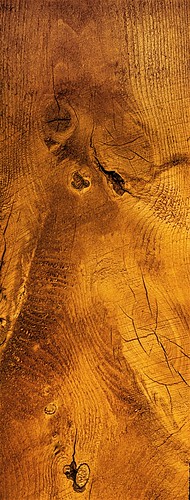
Yesterday morning I was looking up at the barn’s roof boards, scanning as usual for faces. I’d seen and photographed this one before, but it was only yesterday that I saw it as a slightly cross-eyed or perhaps Cubist-rendered alpaca:

perhaps alpaca

My eyes are accustomed to seeing, sensing, faces where an objective observer would say there is no face, just a random pattern of light and dark that an over-fertile imagination reads as a physiognomy, a personality, a face-like rendering. But for me the sense of a presence is undeniable.

…and this brings into focus for tonight’s Question the Senses (seeing, hearing, feeling, tasting, smelling… via eyes, ears, skin, nose, and mouth, the canonical “5 senses”). But it’s common to find extensions of the 5 (add proprioception, add emotions, add ratiocination, add imagination, perhaps others?). Arguably, all living things have “senses” that convey information about the environment—Horowitz’ example of the dog’s-nose view of the urban block is eloquent and immediately accessible: every tree and fire plug alive with messages.

And I look out the window to see several deer under the apple tree.

??what is the consciousness, the sensate state, of a deer eating apples?? Visually and aurally, in a state of extreme vigilance, alert for any movement; but drawn by the bouquet; entranced by the taste, returning day after day until the last apple has fallen, then moving on to the crab apple trees…

We each have a lifetime of sensory input stored somehow (holographically? fractally? in networks of synapses?) in our brains; our sensory apparatus AND that storage is a large part of what we know and who we are as individuals. But as Horowitz’s book shows so clearly, we miss so much of what happens in the world through which we move. We tune and hone for what we think important, and can develop fine discrimination; and we can shift attention between senses situationally. Indeed, we do it all the time.

An aesthetic sense finds pleasure in *the smell of bacon cooking, *the taste of a well-prepared dish, *the sight of a visual marvel (viz. the alpaca in barnwood), *the unique sound of a favorite piece of music… “aesthetic” is a vastly complex word: ‘sensitive, sentient, pertaining to the sense perception’.

And some pleasures come from the synaesthetic combination of senses, *the sound and feel of a plucked string, *the swirl of clouds with thunder in the distance, *the green smell just after a shower, any number of others one might name.


25viii2002

We live through our Senses, as do deer and dogs and butterflies and ants and anything else with processing capabilities… very likely plants as well. We are IN the world, participants with other living things in a vast dance, and, as Carl Sagan put it, our “star stuff” is recycled when its processing capabilities cease.

Each of the Senses has complexities that seem almost fractal—the further in you go, the more detail seems to manifest. Thus, with Taste we learned in high school biology that the tongue has receptors for salt, sweet, sour, and bitter… and, as it turns out, for umami (‘delicious taste’ in Japanese, receptors for glutamates first described by Kikunae Ikeda in 1908). But what’s a ‘receptor’? …a sensor for specific molecules …but how does that work? And with Sight, we know that there are rods and cones in our retinas, and black-and-white and color vision in different species, differential sensitivity to areas of the spectrum, and mechanics for focus, and multiple evolutionary versions of sensor systems (spiders, squid, vertebrates… though all involve opsins, “a family of photo-sensitive proteins”). For Touch there are specialized neurons for pressure, heat, vibration, proximity (think of the whiskers of cats and rats…). For Sound, sensitivity to different sectors of the audio spectrum for different creatures, ultra- and infra-. For Smell, vast differences in number of receptors—dogs have something like 50 times the number of olfactory receptors we have. And so on, for Senses beyond the first 5.

But where’s the Question in this?

I’m still working on it.

Ah. I think I’ve got it:

what would you wish to do with your senses? Which to augment? How?

Two examples inspire me in my response to this question, one very current and only available for the next few days:

a PBS documentary on Ursula K. LeGuin (https://www.pbs.org/wnet/americanmasters/worlds-of-ursula-k-le-guin-full-film/11632/) that I’m in the middle of watching

and the freedom and inventiveness of Thelonious Monk:

contra Sherlock

Today I was listening to Stephen Fry’s reading of Sherlock Holmes as I walked, and was diverted by this bit of Holmes’ practical philosophy:

I consider that a man’s brain originally is like a little empty attic, and you have to stock it with such furniture as you choose. A fool takes in all the lumber of every sort that he comes across, so that the knowledge which might be useful to him gets crowded out, or at best is jumbled up with a lot of other things, so that he has difficulty in laying his hands upon it. Now the skillful workman is very careful indeed as to what he takes into his brain-attic. He will have nothing but the tools which may help him in doing his work, but of these he has a large assortment, and all in the most perfect order. It is a mistake to think that little room has elastic walls and can distend to any extent. Depend upon it there comes a time when for every addition of knowledge you forget something that you knew before. It is of the highest importance, therefore, not to have useless facts elbowing out the useful ones.
(from A Study in Scarlet)

This is just about the diametrical opposite to what I’ve thought all these years, the antithesis to my patron saint Hugh of St. Victor’s dictum:

Omnia disce,
videbus postea nihil esse superfluum

(Learn everything,
you will see later that nothing is superfluous)

(and see my Goals and Methods of Teaching as summarized 25 years ago)

It’s the curation of stuff that makes the difference between the lumber-filled brain-attic and the well-oiled engines of synthesis and retrieval to which one aspires. I (seem to have to) learn this lesson anew whenever I try to make sense of one of my collections, and each pass reveals new interrelations I hadn’t noticed or fully appreciated before.

Convivium: Attachment

This week I think I’ll try a different approach to posing a Question for Convivial consideration, stating it in its general form and then providing a backstory to how it arose and what I think about it. Here goes:

We’re told that Attachment is a fons et origo of Suffering, with the implication that we shouldn’t BE Attached, or should shed Attachments. Of course there can be Attachment to immaterial as well as material, to notions as easily as to stuff.

So on the one hand one might Ask: how to be/become NOT Attached?

But perhaps the more useful question to mull is: what are one’s own Attachments, what’s their history, how does one understand their importance in one’s life?

Personally, my consideration of this Question has led to the realization that I don’t wish to shed Attachments, but that I enjoy the active engagement with their curation, with the working out for myself of those Attachments’ designs and architectures. This won’t surprise anybody who has been following along, nor will the scope of convolutions and serendipities that are the background to its posing.

Here’s how the Convivial Question-making seems to unfold: I’m reading in one or more books, attending to their main threads, and up pops a Relation to something we’ve discussed before—often quite tangential, but pointed enough to get written down, and thus to provoke further wondering. Other books come off the shelves, google searches may ensue, bits of summary of findings and thoughts get written down, and so it goes.

The impetus for today’s Question was a story from the New Yorker’s Annals of Gastronomy, 2 August: How a Cheese Goes Extinct, By Ruby Tandoh

…By July of that year, the farm ceased production, and Holbrook’s cheeses—Old Ford, Cardo, Sleightlett, and Tymsboro—slipped out of the living tradition and into the pages of history. A cheese is just one small piece of the world—one lump of microbe-riddled milk curds—but each is an endpoint of centuries of tradition. Some disappear for months or years; others never return. The cheesemonger and writer Ned Palmer told me that, when a cheese is lost, “Your grief reaches back into the past—into decades and centuries and millennia of culture. You feel all of that.”

When you talk with cheese aficionados, it doesn’t usually take long for the conversation to veer this way: away from curds, whey, and mold, and toward matters of life and death. With the zeal of nineteenth-century naturalists, they discuss great lineages and endangered species, painstakingly cataloguing those cheeses that are thriving and those that are lost to history. In his classic The Great British Cheese Book, from 1982, Major Patrick Rance—a monocled founding father of modern British cheese—intersperses his tales of surviving regional cheeses with obituaries for those that never made it so far, going as far as to describe their disappearance as extinction. Under “Extinct cheeses of the Midlands and East Anglia,” Rance pays his respects to a lost Newmarket cheese, “a 40lb marigold-coloured cheese,” pressed under cloth and rubbed with salt and cream, the recipe for which was unearthed in a 1774 housekeeping manual.

The cheese story ties in with ongoing reading of Alexander Langlands’ Craeft: An Inquiry Into the Origins and True Meaning of Traditional Crafts, one aspect of which is (on my part) a rather romantic engagement with (indeed, an Attachment to) technologies and lexicons of the past, and with the mysteries of Mastery of materials and processes, which may be (at least for me) anchors to windward against the storms of the Modern that perpetually threaten to swamp us. Among other books in this ilk are Robert Persig’s perennial and always-worth-revisiting Zen and the Art of Motorcycle Maintenance: An Inquiry Into Values (which first appeared in 1974) and Matthew Crawford’s Shop Class as Soulcraft: An Inquiry into the Value of Work (2010). And Glassman and Fields Instructions to the Cook: A Zen Master’s Lessons in Living a Life That Matters traverses much of the same territory.

I have a 50+ year engagement with the history (well, histories) of technology, broadly defined and ranging from poky sticks and string and rock-smashing through all manner of materials and mechanisms and clevernesses, all the way to today’s frontiers with nano-scale materials. All of this territory is of the mind, and wanders through human proclivities and imagination and dexterity and inventiveness, and not excepting mistakes and unforeseen consequences. A lot of territory, and spangled throughout with the by-now-familiar assemblage of this-and-that from reading and chance encounter and excavations of past enthusuasms and lines of inquiry… it’s what I do. Two extended examples from the past:

  • At the behest of this line of inquiry, yesterday I quarried a 1991 project from the archives, a design for “A Reference Collection for the Executive Offices of the Society for the History of Technology” that I produced for a Library School course taught by Jay Lucker, who was MIT’s Librarian. The first 10 pages read well even 29 years later and after a vast upheaval in the library world, and Jay Lucker’s comments warm the heart. The 434 items listed and annotated would provide several lifetimes of reading…

  • See also my Technology weblet, built before there were blogs and illustrating my approach to distributable digital note-making of 20+ years ago: the 1998/1999 scheme for a History of Technology course at Washington and Lee. See also electronic version of the Syllabus and notes for my presentation on the course to the Virginia Collegiate Honors Council, September 1998. There’s probably a lot of linkrot, but the implicit method is clear enough.

8 x 10

In the Spring of 1969 we spent most of a week in Death Valley with Kent and Shel and Jaca and her brother Kenny and his dog Pie. For us it was primarily a photographic expedition, and I have lots of as-yet-unscanned negatives from the adventure. Here are a few that have transitioned to digital:

Kentlee, Betsy and Jaca

Kentlee and Kenny

Shel and Jaca and Kentlee

Portrait of Jaca

At that point we had a half share in an 8 x 10 camera, with which I wrestled off and on (these photos by Broot, of course):


using the 8x10

using the 8x10

using the 8x10


What brought that to mind today was this marvelous little YouTube drama, the hilarity of which may not be fully obvious to those not deep-dyed in the mystical side of photography. It’s all there: the Equipment Fallacy that especially afflicts male photographers, the Resolution bugaboo, the sweaty palms of setting up and taking the shot, the agony of waiting for a result, the pretense… and zoodles.


Uncertainty

Last night’s Convivium question, posed by John McIlwaine: how do you deal with Uncertainty?

I didn’t have a very coherent response, but did sputter out something about trying to learn more to reduce uncertainty, seeking to understand factors in play, and I referenced a New York Times story on Argentinian weather extremes which offered this condensation of factors in the uncertainty of giant storms:

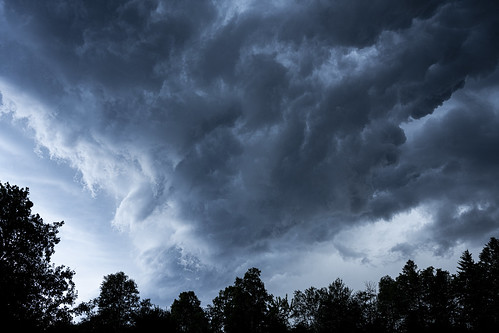
Every storm is composed of the same fundamental DNA — in this case, moisture, unstable air and something to ignite the two skyward, often heat. When the earth warms in the spring and summer months, hot wet air rushes upward in columns, where it collides with cool dry air, forming volatile cumulus clouds that can begin to swell against the top of the troposphere, at times carrying as much as a million tons of water. If one of these budding cells manages to punch through the tropopause, as the boundary between the troposphere and stratosphere is called, the storm mushrooms, feeding on the energy-rich air of the upper atmosphere. As it continues to grow, inhaling up more moisture and breathing it back down as rain and hail, this vast vertical lung can sprout into a self-sustaining system that takes on many different forms. Predicting exactly what form this DNA will arrange itself into, however, turns out to be a puzzle on par with biological diversity. Composed of millions of micro air currents, electrical pulses and unfathomably complex networks of ice crystals, every storm is a singular creature, growing and behaving differently based on its geography and climate.

With so many variables at play, it became apparent to modern meteorologists that predicting storms required sampling as many as possible. The perfect repository, as it turned out, existed in the Great Plains, where many of the world’s most dangerous storms are born. Here, in the spring and summer months, moist air off the Gulf of Mexico pools with dry air from the Arctic and southwestern deserts, which is all then corralled by the Rocky Mountains, forming a massive eddy. For meteorologists, this sustained volatility has made the plains the de facto national laboratory, where about 30 National Weather Service offices, tens of thousands of private radars and weather stations and hundreds of airports are sampling the air conditions before, during and after storms. Each sample, whether taken by radar or wind gauge, is a snapshot of that particular storm’s behavior and composition — such as air density, pressure, temperature, humidity and wind velocity — providing meteorologists a profile to look for in the future.

As often happens, I awoke this morning with a conversation in mindspace, this one having to do with the dynamics of Complex Systems, and the phrase

limn contingencies

floated to the surface. And that’s what I often find myself trying to do: sketching causations, incorporating stochasticities, tracking implications, assessing dependencies, always with an eye to the random, but rarely with a sense of arriving at a final solution. More an ever-growing appreciation for the ineffabilities of real-world complexity, with a soupçon of Micawberian “Something Will Turn Up!” … but I have to confess that another reflexive response to uncertainty is to make light, seeking irony or other embedded humor —the sardonic, the cynical, the parodic. Such responses are amusing, but hardly constructive.

Wende mentioned a heightened sense of perception (in a side conversation re: cataract surgery and other eye things), which fitted well with another set of thoughts that had been in the background recently, in the context of rediscovery of old favorites in the vinyl archive, and a consequent engagement in the vastnesses of my digital music files. The phenomenon of enhancement by new affordances (an upgrade to the viewing experience via a new monitor, or to ear quality via better speakers, or the effect on visual perception of new glasses) is familiar, as is the rapidity with which the heightened acuity becomes simply normal, until the next upgrade…

And so another Question spawned:

how can one revive the wonder once it becomes quotidian?

I think it’s largely a matter of direction of one’s Attention: the wonders are still there, e.g., the glories of the Milky Way when noticed on a clear night are pretty much eternal, but one’s mind may be otherwise employed. How is the mind to be reined in? In the words of H. Dumpty:

“When I use a word,” Humpty Dumpty said in rather a scornful tone, “it means just what I choose it to mean — neither more nor less.”
“The question is,” said Alice, “whether you can make words mean so many different things.”
“The question is,” said Humpty Dumpty, “which is to be master — that’s all.”

Down Memory Lane

While quarrying boxes in the barn I ran across reminders of a delicious story from almost 43 years ago, Fall 1977, when Ron Brunton and I organized (and I use the term loosely, since neither of us had a clue what we were doing) a visit to Acadia University by Gordon Bok, a musician we both revere. We had to have a ‘sponsor’ in order to book the venue, so we created the Acadia Folklore Society on the spot and printed posters and tickets… Gordon arrived with Nick Apollonio (builder of his instruments and a marvelous musician himself) and the concert took place, but was only sparsely attended because of our incompetence as promoters. Gordon and Nick were unfazed, and performed marvelously for a crowd of maybe 50. Afterwards there was a delightful evening at Ron’s house, music played and stories told and whiskey drunk. We’ve been friends ever since.


Ah for the days of $3 concerts…

Here’s an iconic song of Gordon’s: