Runnin’ around with the rag top down

As Gillian Welch puts it, Oh me oh my-oh
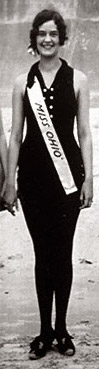
(detail from this panoramic gem, 1928)

My fascination with vernacular photography is generally known to readers of this blog [if not, see Nova Scotia Faces and Squidoo on Vernacular Photography], but perhaps you won’t yet be acquainted with Shorpy the 100-year-old photo blog, where things are really being done RIGHT, including images by Lewis Hine, Walker Evans, Andreas Feininger, various WPA photographers, and not-so-famous people too.

State, dog and syntax

Here’s a book some of you will love and need to possess, one more from my MIT Press Bookstore haul of a few weeks ago: Virginia Tufte’s Artful Sentences: Syntax as Style

Savor (or, if outside the US, enjoy the extra opportunity and savour) the opening paragraphs, which follow an exemplary quotation:

And the words slide into slots ordained by syntax, and glitter as with atmospheric dust with those impurities which we call meaning.
Anthony Burgess, Enderby, 406

Anthony Burgess is right: it is the words that shine and sparkle and glitter, sometimes radiant with the author’s inspired choice. But it is syntax that gives words the power to relate to each other in a sequence, to create rhythms and emphasis, to carry meaning –of whatever kind– as well as glow individually in just the right place.

The basic unit of English syntax is the clause. Its “slots ordained by syntax” are a subject and a predicate. What traditional grammarians call a “simple” sentence consists of an independent clause, independent in that it makes sense without being attached to anything: Time flies. Without losing its nature as a basic sentence, however, a “simple” sentence may include optional added slots such as spaces for modifiers, complements, objects. (pg. 9)

I suppose one could read the book as didactic, but it never descends to the nagging prescriptive, and few would sit down to read it: the book invites random visitation, nibbling, pick-up-and-put-down. Ideal bathroom reading, for those so inclined. It is about syntax, so it’s stuffed with terminology that one has perhaps too tenuous a grasp upon: appositive, participial, nominative. But the commentary is focused on more than a thousand examples, lovingly chosen and clearly explicated. And the book is beyond elegant in design and typography (Monotype Dante), as befits something from Edward Tufte’s Graphics Press. VT is ET’s mom, professor emerita from USC, Miltonist and historian of English. And if you don’t know who Edward Tufte is, you need to remedy that deficiency forthwith.

Of Practice

In answer to a friend’s question about the upshot(s) of our Kripalu adventure, and so that I can find it again later myself, I’ve written a summary of what seems at the moment to be the outcome and onward vector. This won’t be of interest to all, and it kinda goes on and on (and is therefore a static Web page, instead of a blog entry), but it’s what emerged from a few hours at the keyboard.

Nine-banded satori

You know how it is when your whole life seems to have been the setup for a punchline, and then the Golden Moment arrives?

At Kripalu there’s this Labyrinth, a landscape construction involving spiraling pathways punctuated by items left by visitors, displaying intentions of various sorts (decipherable and otherwise), fairly obviously mystically inflected and semi-informed by various Traditions. Watches left as memento mori, keys as metaphors for… coins, rocks, pinecones… well, you get the idea:
IMG_2391

Somebody has contributed a road-kill armadillo:
IMG_2389
Now, this is western Massachusetts, and the nearest armadillo on the hoof is maybe Texas… so SOMEbody has to have brought this road-kill armadillo from maybe Texas, in order to commit it to its place in the Labyrinth. Setting aside the questions of why and with what mystical intention, we can ask the practical question

HOW was it brought?

And the answer leapt to my mind immediately:

It was brought
as carry-on

There. My life is now complete.

On for whom to Stand Up

Walt Whitman 1855 Preface to Leaves of Grass:

All beauty comes from beautiful blood and a beautiful brain. If the greatnesses are in conjunction in a man or woman it is enough … the fact will prevail through the universe … but the gaggery and gilt of a million years will not prevail. Who troubles himself about his ornaments or fluency is lost. This is what you shall do: Love the earth and sun and the animals, despise riches, give alms to every one that asks, stand up for the stupid and crazy, devote your income and labor to others, hate tyrants, argue not concerning God, have patience and indulgence toward the people, take off your hat to nothing known or unknown or to any man or number of men, go freely with powerful uneducated persons and with the young and with the mothers of families, read these leaves in the open air every season of every year of your life, re-examine all you have been told at school or church or in any book, dismiss whatever insults your own soul; and your very flesh shall be a great poem and have the richest fluency not only in its words but in the silent lines of its lips and face and between the lashes of your eyes and in every motion and joint of your body…

I ran across this passage in John Leland’s Hip: the history (picked up remaindered at the MIT Press bookstore 10 days ago), and the above is one of the several bits that resonate at the moment, as I consider that which passes through the mind in an environment of yogic concentration. I came here after 8 months of involvement with yoga, sort of wondering whither this is headed. There’s lots that I have no wish to be involved with (the Spiritual trappings, mostly: “take off your hat to nothing known or unknown”). Having been NOT a student of English or American Literature (at least not since high school), though I’ve read a lot at my own speed, I’m forever finding lacunae in my experience. Leaves of Grass is one such Yawning (Yawping?) Gap in my Education, and I alternate between the pleasures of adult discovery and the regret that my adolescent self wasn’t Exposed to those specific Heresies in the passage. On sober reflection, it’s pretty clear WHY my long-ago teachers suppressed that side of Whitman (“dismiss whatever insults your own soul” ? I don’t think so…).

And as for “every motion and joint of your body”, well, that’s what I’m working on, and it’s turning out to be one of the best things I’ve ever done. The point of concentration for me personally is “have patience and indulgence toward the people”, working against what is for me the easy descent into Judgement of Others. I’m very interested to see what comes next…

The author, glimpsing himself in the mirror

I haven’t paid nearly enough attention to Italo Calvino, and it keeps coming back to bite me. My sister in law has an Inscription at the entry to her Library, from Calvino’s If on a winter’s night a traveler, and the sad fact that pretty much everybody but me was already familiar with it doesn’t diminish one bit my pleasure in having discovered it at last. Here it is, on the off chance that you don’t already know it:

In the shop window you have promptly identified the cover with the title you were looking for. Following this visual trail, you have forced your way through the shop past the thick barricade of Books You Haven’t Read, which were frowning at you from the tables and shelves, trying to cow you. But you know you must never allow yourself to be awed, that among them there extend for acres and acres the Books You Needn’t Read, the Books Made For Purposes Other Than Reading, Books Read Even Before You Open Them Since They Belong To The Category Of Books Read Before Being Written. And thus you pass the outer girdle of ramparts, but then you are attacked by the infantry of the Books That If You Had More Than One Life You Would Certainly Also Read But Unfortunately Your Days Are Numbered. With a rapid maneuver you bypass them and move into the phalanxes of the Books You Mean To Read But There Are Others You Must Read First, the Books Too Expensive Now And You’ll Wait Till They’re Remaindered, the Books ditto When They Come Out In Paperback, Books You Can Borrow From Somebody, Books That Everybody’s Read So It’s As If You Had Read Them, Too. Eluding these assaults, you come up beneath the towers of the fortress, where other troops are holding out:

the Books You’ve Been Planning Top Read For Ages,
the Books You’ve Been Hunting For Years Without Success,
the Books Dealing With Something You’re Working On At The Moment,
the Books You Want To Own So They’ll Be Handy Just In Case,
the Books You Could Put Aside Maybe To Read This Summer,
the Books You Need To Go With Other Books On Your Shelves,
the Books That Fill You With Sudden, Inexplicable Curiosity, Not Easily Justified,

Now you have been able to reduce the countless embattled troops to an array that is, to be sure, very large but still calculable in a finite number; but this relative relief is then undermined by the ambush of the Books Read Long Ago Which It’s Now Time To Reread and the Books You’ve Always Pretended To Have Read And Now It’s Time To Sit Down And Really Read Them.

With a zigzag dash you shake them off and leap straight into the citadel of the New Books Whose Author Or Subject Appeals To You. Even inside this stronghold you can make some breaches in the ranks of the defenders, dividing them into New Books by Authors Or On Subjects Not New (for you or in general) and New Books By Authors Or On Subjects Completely Unknown (at least to you), and defining the attraction they have for you on the basis of your desires and needs for the new and the not new (for the new you seek in the not new and for the not new you seek in the new).

All this simply means that, having rapidly glanced over the titles of the volumes displayed in the bookshop, you have turned toward a stack of If on a winter’s night a traveler fresh off the press, you have grasped a copy, and you have carried it to the cashier so that your right to own it can be established.

You cast another bewildered look at the books around you (or, rather: it was the books that looked at you, with the bewildered gaze of dogs who, from their cages in the city pound, see a former companion go off on the leash of his master, come to rescue him), and out you went.

(see more, nicely bracketed by bits of text on both sides, via Frank Pajares’ lovely site)