Author Archives: oook

since mid-March

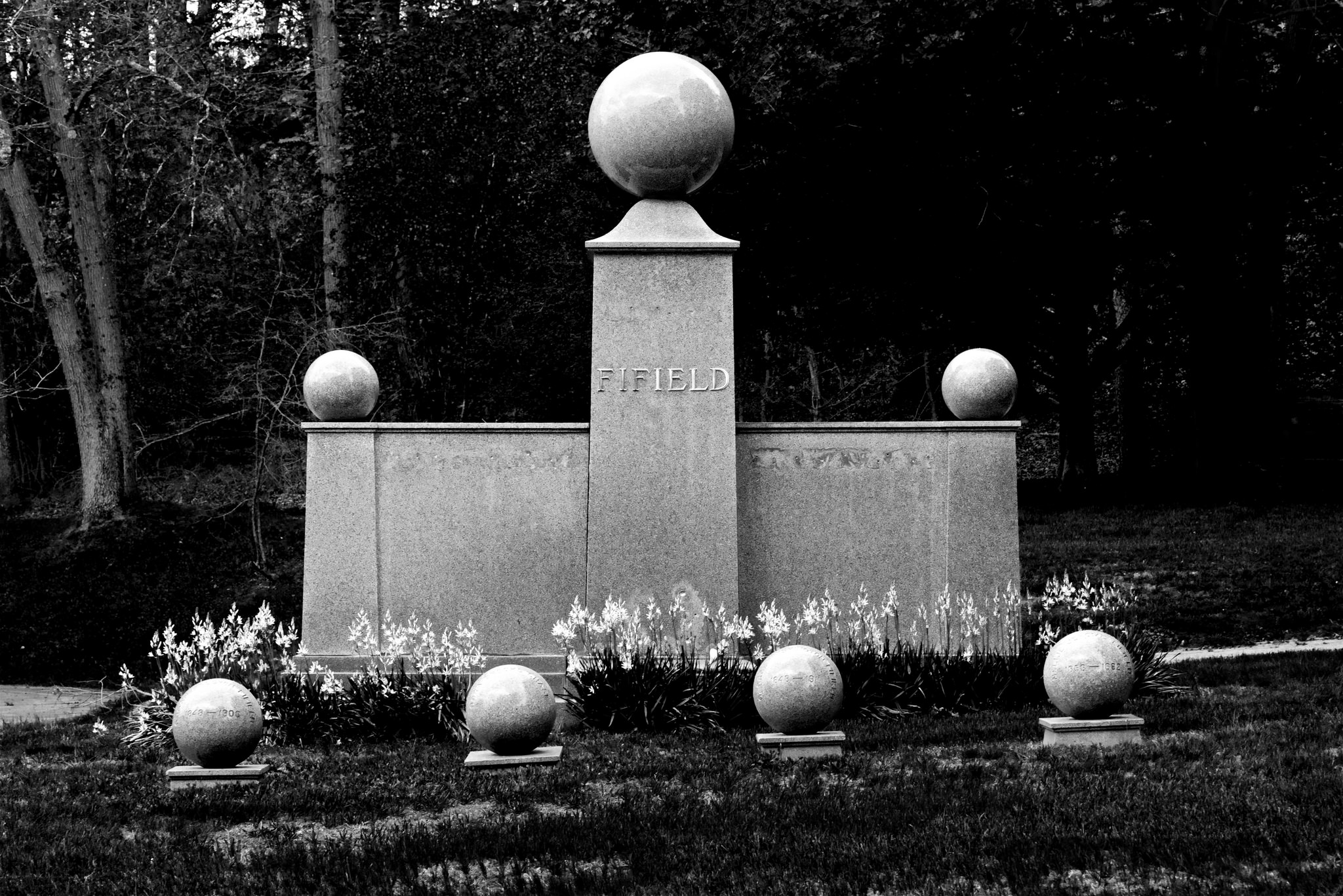
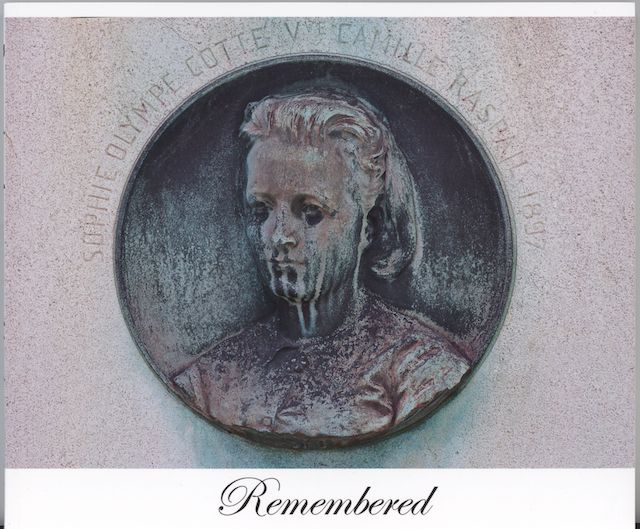
So we went to France in late March, and spent a few days in Paris on either end of a week in Brittany—our third annual Progress in those parts, with the usual eatings and wanderings (the Brittany parts mediated by our dear friends Rob and Barbara). I was able to spend several hours photographing in Père Lachaise and Montparnasse cemeteries, and that provoked another Blurb book project:

Remembered cover

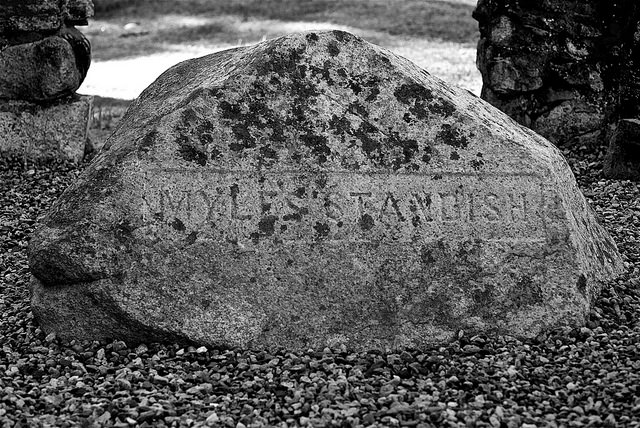
The v1.0 version can be downloaded (it’s a BIG file) here via a right-click and Save As. When we got home it occurred to me to look more closely at graveyards in midcoast Maine, and I’ve been busy on that front ever since. Later this week I’m going to Lowell MA to spend a day with members of the Association for Gravestone Studies, an organization I’d previously known nothing of. It turns out that the first 25 issues of their annual publication Markings are available at archive.org, and the several articles I’ve read have been fascinating.

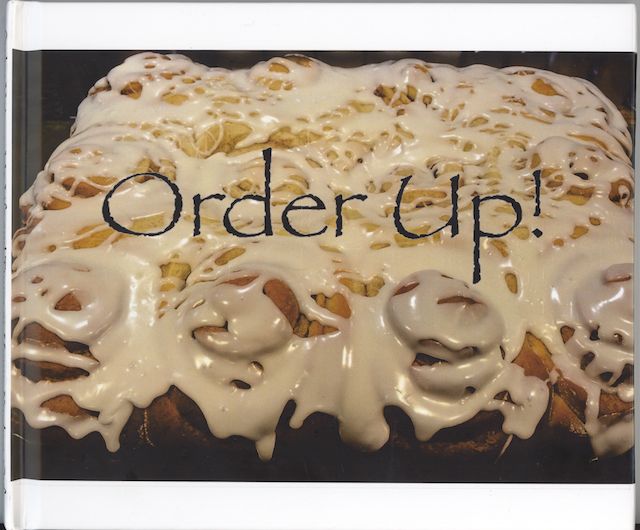
Another Blurb book project escaped my desktop, a narration of the collection of photos I’ve taken of meals enjoyed at Home Kitchen Cafe:

Order Up! cover

and that book is also available for download here.

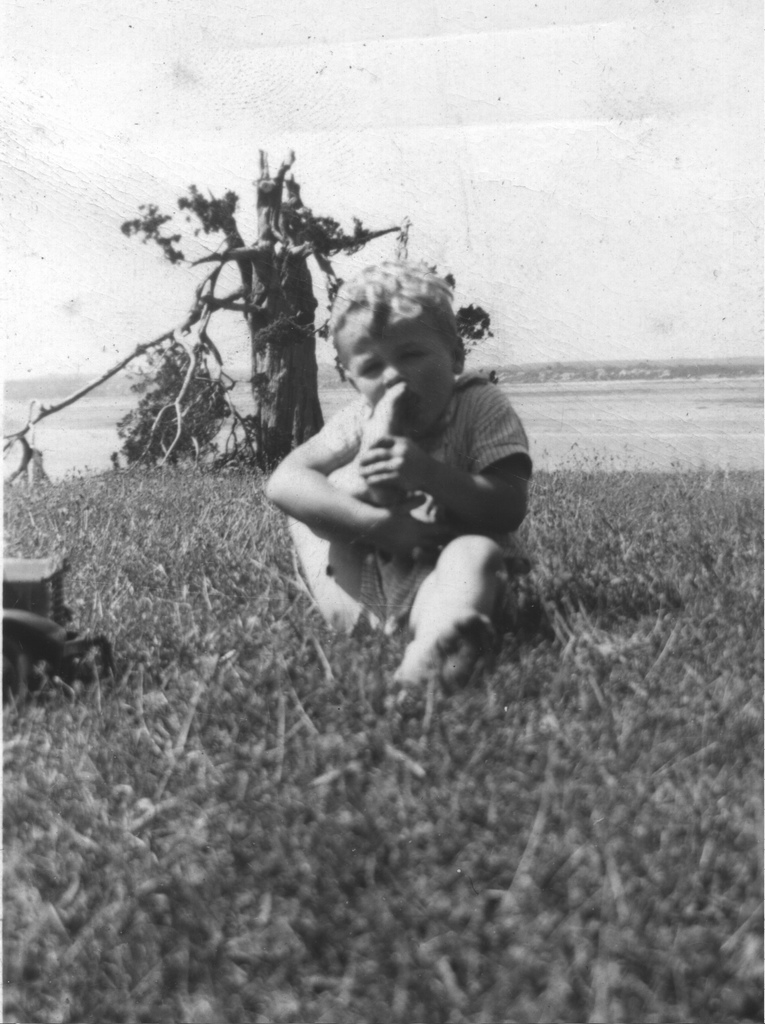
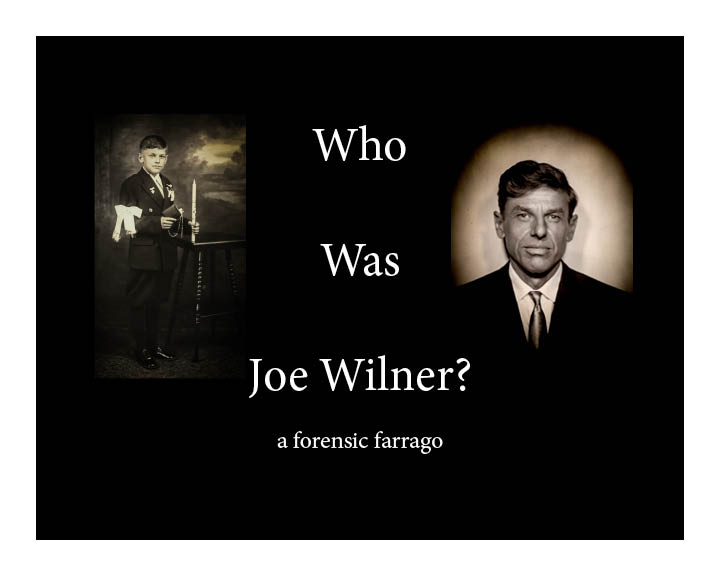
And as if that wasn’t enough, I’ve also put together a v1.0 of a project I’ve been working on for about 35 years:

Who Was Joe Wilner? cover

I’m still working on the cover, but the book itself is available for download here.

These books were all produced with Lightroom’s Book module, which is a bit confining (a restricted set of page templates), so I’ve just completed a week-long workshop at the Maine Media Center in Adobe’s InDesign, a vastly powerful program that should make it possible to make much more elegant versions of the six existing Blurb books and a bunch of others that I have in mind to do. Should keep me busy….

aaaaak!

I lost contact with the WordPress mother ship while trying to do an Update (back in March), and only just now managed to get things working again after far too long. Lots to catch up on, and several new ideas for what to do with the blog, so I’ll be thinking those things through a bit and posting again soon

Picking up where we left off?

It’s been months since I last posted anything to oookblog, but they’ve been busy months: some Blurb books, a bout of shop work, the usual flurriment around the holiday season. And here it is almost mid-March, and we’re preparing for a fortnight in France (a few days in Paris on either end of a week in Brittany) and contemplating other travels in the summer. A lot of material that I might have posted here (charting day by day encounters with stuff that piqued interest and comment) has gone into writing on paper instead, but I remain committed to the notion that it’s BETTER to put the quotidian flux where others might enjoy it.

The grandest accomplishment of the last 3 months has been a book of photographs and narrative drawn from the family archives that have been my responsibility for the last 40 years or so:


Forebears 3.0 cover

It’s now in its third revision/expansion, and almost ready for prime time release to its wider public, whatever that might be. The project has nudged me back into thinking about genealogical questions and the imponderables of Family, and it’s likely that I’ll pursue those subjects in the next few months.

And of course there’s photography to think about and work on. And the never-ending river of books to read.

The Geese

Christopher Lydon’s Radio Open Source has brightened a lot of the last decade for me, opening doors into places and subjects I hadn’t known I wanted to learn about, and introducing me to stuff I’ve since realized I care deeply about. A case in point: an interview with Colm Tóibín, towards the end of which he reads an Elizabeth Bishop poem which is achingly reminiscent of the Nova Scotia I know. His lead-in is absolutely spot-on (“…what was it that just hit you, emotionally? where it was in the poem where that began, and was sustained?”)

Poem

About the size of an old-style dollar bill,
American or Canadian,
mostly the same whites, gray greens, and steel grays
-this little painting (a sketch for a larger one?)
has never earned any money in its life.
Useless and free., it has spent seventy years
as a minor family relic handed along collaterally to owners
who looked at it sometimes, or didn't bother to.

It must be Nova Scotia; only there
does one see abled wooden houses
painted that awful shade of brown.
The other houses, the bits that show, are white.
Elm trees., low hills, a thin church steeple
-that gray-blue wisp-or is it? In the foreground
a water meadow with some tiny cows,
two brushstrokes each, but confidently cows;
two minuscule white geese in the blue water,
back-to-back,, feeding, and a slanting stick.
Up closer, a wild iris, white and yellow,
fresh-squiggled from the tube.
The air is fresh and cold; cold early spring
clear as gray glass; a half inch of blue sky
below the steel-gray storm clouds.
(They were the artist's specialty.)
A specklike bird is flying to the left.
Or is it a flyspeck looking like a bird?

Heavens, I recognize the place, I know it!
It's behind-I can almost remember the farmer's name.
His barn backed on that meadow. There it is,
titanium white, one dab. The hint of steeple,
filaments of brush-hairs, barely there,
must be the Presbyterian church.
Would that be Miss Gillespie's house?
Those particular geese and cows
are naturally before my time.

A sketch done in an hour, "in one breath,"
once taken from a trunk and handed over.
Would you like this? I'll Probably never
have room to hang these things again.
Your Uncle George, no, mine, my Uncle George,
he'd be your great-uncle, left them all with Mother
when he went back to England.
You know, he was quite famous, an R.A....

I never knew him. We both knew this place,
apparently, this literal small backwater,
looked at it long enough to memorize it,
our years apart. How strange. And it's still loved,
or its memory is (it must have changed a lot).
Our visions coincided-"visions" is
too serious a word-our looks, two looks:
art "copying from life" and life itself,
life and the memory of it so compressed
they've turned into each other. Which is which?
Life and the memory of it cramped,
dim, on a piece of Bristol board,
dim, but how live, how touching in detail
-the little that we get for free,
the little of our earthly trust. Not much.
About the size of our abidance
along with theirs: the munching cows,
the iris, crisp and shivering, the water
still standing from spring freshets,
the yet-to-be-dismantled elms, the geese.

(source for the text: “Poem”)

Uelsmania

The blog has been quiet for several months, not because I had nothing to say, but because so many things collided during the summer months, and writing happened in other media. The season seems to have been centered on photography and walking, including a pair of week-long Maine Media Center workshops that have nudged me in the direction of publication projects. Our 50th college reunion consumed a lot of psychic energy and turned out to be very interesting. There have also been trips (California, Nova Scotia), the usual array of summer visitors, and the consumption of many books, and of course many memorable meals. I’ve added infrared to the array of tools I’ve been working with, and I’m imagining a series of self-published Blurb books exploring various facets of my photographic archives. My Flickr photostream aggregates a lot of the visual byproducts of these activities, but doesn’t provide much in the way of context or backstory.

Yesterday I took a couple of iPhone photos that provoke some ruminations. I was crossing the bridge at Mosquito Harbor, near the end of a 10-mile walk, and stopped to look at a dramatic cloud pattern. I took out the iPhone and did a quick landscape shot:

Mosquito Harbor
That image captures some of the drama, in a landscape mode that’s quite familiar to me: distant horizon, something significant in the foreground. I lowered the iPhone to set its exposure in the foreground (to try to get more of the detail in the reflection), but inadvertently hit the button and captured the near foreground of cobbles, the margin between stone and rising tide, and the reflected sky:
Uelsmania
Note that this exposure was entirely accidental, composing itself in spite of what I thought I was doing. It wasn’t until I was looking at the results of the day’s shooting on the computer that I recognized the power of the inadvertent image. My immediate thought was that it was reminiscent of the marvelous work of Jerry Uelsmann, whom I’ve been following for 40+ years (see this profile), in which one order of reality glides into another. I got Uelsmann Untitled: a retrospective from the shelf and read Carol McCusker’s essay:

Interesting things happen on the margins of landmasses… his imagery, in which nothing is assured or known and layers of contradictory realities coexist… (pg. 8)

Uelsmann has always worked in black and white, and entirely with analog media (sandwiching negatives, performing a dance of movement among multiple enlargers, masking, dodging, burning…). I converted my color image to black and white:


UelsmaniaBW
and I can’t decide which version I prefer.

We’ve just bought an Epson P800 printer and are about to embark on fancy printing of some of our respective back catalogs of photographs. It’s not clear where this will lead, beyond the creation of portfolios of favorite images, but it does seem clear that we’re both putting more of our attention and energies into photography.

Dept. of Co-Incidence

This marvelous photograph is dated ’07, but I can’t remember just where I bought it:

sincerely '07
The inscription: “Sincerely Madeleine Vivian Long”

The pose is quite “modern” for 1907, the furniture is pretty bizarre, and the lace snowflake is all but unprecedented in my experience. What tale can possibly be extracted from this material?

Well. The photographer (Levering) turns out to have been active in the Connecticut Valley in the early years of the 20th century, and was apparently headquartered in Northfield, MA. And sure enough, there’s a 1900 Census record for Madeleine V. Long, 11-year-old daughter of Russell B. Long, of Northfield MA (not The Kingfish Russell B. Long of LA). Now, Northfield is a pretty small place, the principal jewel of which was Northfield School, founded by Dwight L. Moody in 1879. Both of our children went to NMH, and Betsy’s grandmother (Elizabeth Parmenter, as she then was) was Organ Mistress at Northfield in the early years of the 20th century. So our Madeleine might very well have known Elizabeth Parmenter. Small world…

Wish I could discover more of the story of Madeleine, now that I know there is one. She turns up as a resident of Northfield in 1935, suggesting that she never married, and I fully expect to find that she has some connection to the school (alumna? teacher?), which is now across the river in Gill and fully merged with Mount Hermon (the Northfield campus was closed in 2005).

these parlous times

I read a fair bit of the increasingly panicked College Disgruntlement/Higher Education Futures stuff, and there’s a vast gulf between the Now and what I experienced 50 years ago… and even a pretty deep canyon between the Now and what I retired from a decade ago. In the landscape of cutbacks and Queen Sacrifice I see nothing that evokes hopeful feelings, and much that suggests that the Way, once seemingly so clear, has been lost irredeemably. The latest case in point is John Warner’s The Problem ASU is Solving, which ends thus:

…we should be clear, in a culture of free-market competition, where education is increasingly viewed as a private, rather than public good, and states are moving to divest themselves of the responsibility to support their public institutions, this is the future for those of us who will not be able to afford entry into what we will come to think of as the “legacy[3]” higher education system.

ASU’s moves like the edX initiative, or Starbucks partnership, are absolutely rational, probably even savvy in the culture we have constructed. They will likely be cheered by Wall Street and Silicon Valley because they present more opportunities for markets that can be disrupted and monetized.

That’s what we should be most terrified about.

[3] I use this word to connote multiple meanings, including the notion that only the children of the already educated, the legacies, will likely have access to such places.

Being about to participate in a multi-day 50th Reunion event at which the glories of a (perhaps the…) premier institution will be trumpeted (and alumni contributions solicited), and where symposia on the menu include “The Awakening of Wisdom–How Do We Experience and Practice It?” and “The Challenge of Taking Collective Action–Societal Meaning” … well, I’m struggling to get the whole thing to come into focus. Maybe I’ll encounter some Wise classmates, and surely there are quite a few who still have faith in Collective Action, but I don’t aspire to membership in either category. Best I can do is to resolve to play at participant observation, making notes and gathering data.

lots of little bits

The strangest things float through the mind unbidden. As we were driving back from a day at Acadia National Park, the phrase “he shot him into doll rags, naturally” drifted in and then out again. Mmmm, I thought, I know I read that somewhere sometime… but how could I find it again? 20 years ago it would have been impossible, but with Google a search for “doll rags naturally” got one single hit, a certified BINGO: IF Science Fiction March 1961, in a story by Julian F. Grow, “The Fastest Gun Dead” … I was a high school senior then, and must have happened on that issue of the mag (though I don’t remember doing so), or maybe I read it a couple of years later in 7th Annual Edition: The Year’s Best S-F (1963).

I don’t advise a Google search for “doll rags shot” (too many distressing results, pro- and anti-gun). Take it from me that the phrase means lots of little bits…

inversion conversion reversion

I’m still processing our visit to the Qu’est-ce que la photographie? exhibit at the Pompidou, and looking forward to the arrival of the catalog (ordered via Amazon) and the challenge of reading the French text that accompanies the images.


Sometimes it’s a bit difficult to break out of preconceptions about stuff you think you know about –to see the familiar in new ways, and to find context and meaning for the unfamiliar. The Pompidou exhibit flung down just those challenges, and I’ve been exploring them ever since our visit. I’ll try to unpack some of that in what follows.

Consider two rather startling images, neither of which was familiar to me (and I’d never heard of the photographers either, which just goes to show my own insularity):


(see the Pompidou pages for Mulas’ Una mano sviluppa l’altra fissa and Rautert’s Sonne und Mond von einem negativ; and take a look at the website for Ugo Mulas (1928-1973) and a recent New Yorker piece on work by Timm Rautert (1941-))

Neither is quite what it seems at first glance, and the viewer struggles a bit before catching on.
Mulas inverts tonalities and flips horizontally: one hand becomes two. Rautert tweaks a single negative to represent two different celestial bodies.

It’s interesting to explore the notion that multiple renderings of an image can disclose things hidden or obscured in any one version, and the kindred idea that any photograph is potentially many photographs. Where does ‘truth’ or ‘reality’ lie? Is our perception of an image all subjective prevarication?

Digital tools put these questions at the ends of our fingers.

Inversion of tonalities and mirror-imaging are two techniques that are easy to play with using GIMP, and I’ve done quite a bit of that as I’ve explored tessellations of Betsy’s and my own images (see some examples and a few more). Is such manipulation merely a gimmick, or is there something more to it? This is a question that comes up often in the world of Art, and I’m learning to enjoy the ambiguities and widen my purview.

An interesting challenge came my way shortly before we left for France, as I read through the announcement of an exhibit that will open soon at the deCordova Museum in Massachusetts: Integrated Vision: Science, Nature, and Abstraction in the Art of Len Gittleman and György Kepes. Len Gittleman was our teacher in 1963-1964, and we revere him, but the description of the show brought me up short:

Gittleman’s Lunar Transformation portfolio is a series of ten vividly colored serigraphs created from black and white photographs taken during the Apollo 15 mission to the moon in 1971. Gittleman’s discerning use of color transforms the craters and crevices of the lunar surface into vibrant, colorful abstractions which aesthetically parallel the art movement of Abstract Expressionism. The serigraphs’ strong graphic presence reflects the awe-inspiring nature of their source material.

Wait a minnit, I found myself thinking, that’s not photography… and then I heard myself and had to laugh at stick-in-the-muddism. Of course it’s photography, just maybe not the comfortable and predictable sort that I know I like

As I’ve suggested in recent posts, visiting the Griffin Museum and Florence Henri and Qu’est-ce que la photographie exhibits has been ramifying across my own photographic life. This morning I woke up thinking about alternative presentations of an image that’s been a conundrum for me over more than 40 years: Poor Alice G.. I remembered that I’d once scanned a slide of the photo, but happened to reverse it, and I thought well why not? …and so


I’m not sure that either bit of trickery illuminates the tale of Poor Alice G. any further, or that these renderings have any place in Nova Scotia Faces, but the exercise did get me thinking about how confining a straight-ahead descriptive take on that gargantuan project would be.

Remember to breathe