May 2026 general links
(continues April 2026 links)
Many of these seem to be bellwethers for what's on and just beyond the Horizon of the moment,
collected from the Incoming for their portentous savor, and illustrative of my engagement with serendipity)
The form factor I seem to gravitate toward is The Commonplace Book, a now-digital place to entomb snippets that seem at the moment of encounter to want saving, often as prime examples of some form or genre to which my attention has been drawn. Most offer temptingly yawning Rabbit Holes, and these collections of links form a sort of map of my wanderings and encounters.
1v26
Science Friday
Can AI simplify the alphabet of life? Charles Sanfiorenzo and Kaihang WangLife can be imagined as a language, with genomes as books and proteins as sentences that relay messages within living cells. Unlike in human languages, the alphabet of life seems immutable. Across living organisms, proteins are composed of the same 20 canonical amino acid (cAA) letters. Could one of these cAA letters be removed from all protein sentences in an organism while keeping the sentences coherent? On page 487 of this issue, Liu et al. (1) report that generative artificial intelligence (AI) can be used to design functional bacterial proteins without the amino acid isoleucine.Each cAA is encoded by a unit of three nucleotides, which is known as a codon. There are 64 codons encoding 20 cAAs and the stop signal, which stops the transcription of a protein. Therefore, the genetic code is redundant because a single cAA or stop signal can be encoded by multiple codons (synonymous codons). Synthetic genomes can be rewritten to reduce codon redundancy while still encoding the same cAA sequences across an organism's proteins (the proteome). This is achieved by changing some of the codons to their synonymous counterparts
Disneyland's factory-inspired future Renée Blackburn reviews DISNEYLAND AND THE RISE OF AUTOMATION
...The central thesis of Betancourt's book is as provocative as it is well supported: Disneyland is, at its most fundamental element, a factory. He traces the lineage of the park's automation backbone to well-known industrialists of the early and mid-20th century, specifically citing Walt Disney's visits to Henry Ford's River Rouge plant and his open-air museum, Greenfield Village, as inspirations for what would eventually become Disneyland.Through five well-researched sections, Betancourt explores how industrial automation was “aestheticized.” He draws on Leo Marx's concept of the "machine in the garden," arguing that in the mid-20th century, Disneyland successfully rendered the dirty and dangerous realities of industrial automation into a nearseamless and magical experience. This was not just for entertainment, he argues, but should be thought of as a form of mass education. At a time when the United Auto Workers union was warning of an “economic nightmare” where "mechanical monsters" might render human labor obsolete, Disneyland provided a safe space to consume automation without forcing visitors to consider the immediate threat it posed to employment.
Anticipating the future in an algorithmic age Alex Gomez-Marin reviews Carissa Véliz' Prophecy
...Prophecy is about the power of predictions, especially when they are maliciously misleading. The structure of the book is dialectic: The first part expounds the promise of predictions and their influence throughout history, and the second articulates their manifold perils and related abuses of power, particularly in the current age of AI oracles. The third and final part of the book seeks a resolution, namely, how to rethink predictions and resist their deceptive lure.Predictions have always been with us, from ancestral wisdom that told us when to sow and reap to mathematics used to optimize decision making under uncertainty. Forecasts are ultimately guesses—educated or naïve, right or wrong, innocuous or consequential. They can also be deliberately deceptive, not anticipating the future but rather covertly shaping it. When such predictions are then turned into promises and ossified into decrees, we are in trouble.
Using predictions as prescriptions to benefit one's agenda is not new. Rulers have always done so. But current AI empires make such a practice unprecedentedly pervasive and pernicious.
AI, argues Véliz, is the new diviner—the ultimate prediction machine. Mirrored on the fashionable idea that our brains are inference devices, such artificial prophets are dangerous. Digital technologies now rule our personal and professional lives, as well as the fate of countries and civilizations. They tell us who to date, what to watch, who to hire, when to start a war, and so forth. These simulacra are presented as deep knowledge, even truth, and then turned into self-fulfilling prophecies. Perils abound, as predictions also give us a false sense of security, increasing risks and lacking accountability.
In sum, Véliz writes, prediction has become a sophisticated act of misdirection and control. Today's techno-prophets wage forecasts as weapons of mass distraction. Their digital warfare is chiefly psychical, shaping reality to manipulate not only our memory, attention, and perception but also our will, outlook, and expectations.
Rumen ciliates modulate methane emissions in ruminants
...Ruminant agriculture (including the farming of cattle, sheep, goats, and deer) accounts for ∼30% of global anthropogenic methane emissions (1) largely due to anaerobic fermentation in the rumens of these animals (2). The rumen harbors a complex microbial ecosystem composed of bacteria, archaea, protozoa, fungi, and viruses (3-5) that supports host nutrition but also drives substantial methane release (2, 5, 6). Although methanogenic archaea are the direct producers of methane, rumen ciliates, which constitute ∼25% of the total microbial biomass, play a key role in stimulating methanogenesis (7, 8). Experimental removal of ciliates can reduce methane emissions by up to 35% (9-14), underscoring their importance. Despite this, the molecular mechanisms by which rumen ciliates promote methanogenesis remain unclear.Toward life with a 19–amino acid alphabet through generative artificial intelligence design
...despite the vast metagenomic sequencing efforts of the past decades (5), no self-replicating life has ever been found to have a simpler amino acid alphabet, making the 20 cAAs truly universal to modern life. By contrast, cells that preceded the last universal common ancestor (LUCA) must have relied on a more limited set of amino acids before coevolution and eventual fixation of the standard amino acid biosynthetic pathways and the genetic code (6). Accordingly, we pose a simple question: Can a cell be made from an alphabet with fewer than 20 amino acids, and how do we make such a cell? Through synthetic biology, creation of a free-living organism from a more minimal set of biochemical building blocks can deepen our understanding of the design rules of life and assist bottom-up efforts to engineer synthetic cells with new properties.Apparent Hack's law in river deltas
...River deltas are densely populated landscapes with critical socioeconomic and ecological functions (1-4), hosting ∼4.5% of the world's population in only 0.5% of its land area (5). However, human and natural forcings, such as upstream damming and rising sea levels, have negatively affected land building in deltas (6-10). Distributary channel networks, widely found in river deltas, enable the dispersal of sediment and organic matter from the upstream river to a much larger area downstream, building deltaic land (9-14). The deltaic region where sediment deposits, downstream of a network apex (e.g., bifurcation node), is known as a nourishment area (11-13), a counterpart to the drainage area in tributary basins, where flow accumulates (Fig. 1A). Distributary channels and islands within nourishment areas are mainly built through processes such as over-levee floods and channel branching (15-18). Whereas it is straightforward to hypothesize that the network organization is linked to land building, the quantitative relationship between distributary characteristics, such as channel length and nourishment area, is not well understood, even though such a relationship could serve as a helpful rule of thumb for landbuilding estimation.
Historic Photos Show the Once Ubiquitous American Diner Petapixel
How Netanyahu made Israel an ever more Lawless Nation H Scott Prosterman at Informed Comment
The Border Wall Thrives, The Borderlands Don't William Debuys at Informed Comment
...it's still there, 30 feet tall, aspirationally 1,952 miles long, obliterating habitats, dividing families, and sucking down public funds faster than a carrier-based air squadron....Modern border management relies on three tools: human patrols, remote detection backed by quick response teams, and the construction of physical obstacles. Smart gatekeepers coordinate those tools to maximize effectiveness and minimize cost. But there's no need for thrift in Trumpworld. The One Big Beautiful Bill Act, or OBBBA, which Trump signed into law last July 4th, negated all need for fiscal restraint. Among other things, it appropriated $46.55 billion for border wall construction, $7.8 billion for U.S. Customs and Border Protection (CBP) agents and their vehicles, $6.2 billion for high-tech border surveillance, and a hefty $10 billion for anything else border-related. The total: $70.55 billion. Those funds will be available through Fiscal Year 2029. By comparison, the government will spend about $10 billion less over that same period to fund the entire Department of the Interior, which manages half a billion acres of surface land as well as the continental shelf and vast subsurface mineral deposits.
...No detail illuminates the mentality behind border enforcement better than this: in cooperation with U.S. Customs and Border Protection, military elements at Fort Huachuca, Arizona, are now engaged in "the largest Concertina wire (C-wire) emplacement in U.S. territorial history." "C-wire," or "razor wire," is designed to lacerate any flesh, human or animal, that comes in contact with it. Fort Huachuca soldiers are deploying 43,000 rolls of it, the largest single purchase ever.
Usually C-wire is used atop a wall or fence to prevent people from climbing over. Ominously, it's now being spread on the ground, sometimes in areas where there is no wall, but also in front of the wall and between double walls — a policy of pure viciousness, not necessity.
My Classroom Life Michael Gorra at NYRB
From Dolphins to Oil Tankers: My Visit to the Strait of Hormuz Abhinav Explores at Medium
...I remember the dolphins — and the brief moments they stayed beside us, moving freely through the same sea. We also spotted stingrays, flashes of fish beneath the surface, and the quiet sense that this place was full of life, even if much of it remained unseen.
Enigmatic muscle may help explain penguins' signature waddle Science
Datum:
Penguin knees, which are tucked into their body cavity, are bent and arranged in a perpetual squat.
Twirlbot: Tumbleweed-inspired rolling robot
... we developed a tumbleweed-inspired rolling robot (Twirlbot) to achieve the hollow spherical architecture by weaving photoactive/passive bilayer strips. The Twirlbot demonstrated autonomous rolling under constant light, enabling multiple functionalities, including omnidirectional locomotion, slope climbing, trampling resistance, cargo transport, self-correction, wind resistance, and adaptation to diverse terrains and environments. These features endowed the Twirlbot with great potential for real-world applications, such as self-sustained seed-sowing, daylight-driven commuting, and autonomous underwater wiring.
What Can We Gain by Losing Infinity? Quanta Magazine
Is consciousness more fundamental to reality than quantum physics? New Scientist
Power, democracy, and clarity Don Moynihan
What has been the impact of the Roberts Court on democracy? Wealthy people have more political power than everyone else. Partisan actors have more power to reduce voter choice. Black people and other minority groups are offered fewer protections and less visible political representation.If this seems like hyperbole, let's review the key decisions.
- With Citizens United in 2010, the Roberts Court killed any meaningful effort to regulate the flow of money in politics.
- The Roberts Court refused to take on gerrymandering when Justice Kennedy was on the court, and then in 2019 said that partisan gerrymandering might be “contrary to democratic principles” but there was nothing they could do about it.
- With the Shelby County decision in 2013, it eliminated the pre-clearance section of the VRA, which meant that districts with a record of discriminating against Blacks would no longer need to get permission from the DOJ for their changes. With the 2021 Brnovichcase, they further limited the conditions under which laws that made it harder to vote could be considered as discriminatory.
- Now with Callais, SCOTUS gave state the green light to redistrict majority Black districts out of existence. The Court insisted it is not overturning the Voting Rights Act, but it made the bar for demonstrating such actions are illegal so high as to be impossible.
Africa: 101 Last Tribes and Dan
...The ironies of Nigerian jet fuel production, Macdonald Dzirutwe for Reuters Nigeria's giant Dangote refinery is benefiting from record margins for producing jet fuel that it is mostly selling abroad, while the domestic airlines it also supplies have threatened to stop flying because of the surge in fuel prices. The refinery, the largest on the continent, was built to turn Africa's biggest oil producing country into a net exporter of refined products, end Nigeria's reliance on fuel imports, and shield its economy from global energy shocks. It became fully operational at the start of this year and is producing at its maximum capacity of 650,000 barrels per day. That has improved local fuel availability but domestic fuel prices are still among the highest in Africa as Nigeria's market is fully deregulated, meaning fuel prices are not subsidised by the government as they are in most African countries. The issue is further complicated by the state oil company's long-standing debt repayment agreements that mean Dangote has to import most of its crude oil, making it easier to balance its books if it sells abroad. ... Nigerian airlines last week threatened to halt all flights, prompting the government on Thursday to approve measures including some relief on debts owed by local airlines and ordering talks to try to agree lower prices… much of Nigeria's roughly 1.5 million barrels per day of production goes to paying debts to international oil majors, banks and traders. The NNPC does not disclose its obligations, but analysts estimate they amount to about 400,000 bpd. Dangote Group Vice President Davekumar Edwin said Dangote imported most of its crude from the U.S., as well as some from other African producers and Brazil. He did not give precise figures. He said the bulk of the 24 million litres of jet fuel it produces daily was shipped to Europe, although he also said the refinery largely supplied the needs of Nigerian airlines, which the aviation industry estimates at about 2.1 million litres per day.
Did He Fake The Shooting? Shubhransh Rai on Medium
...Trump hasn't attended the Correspondents Dinner since 2016. Skipped it every single year.Then out of nowhere he shows up. First time in a decade. And something happens.
Caroline Levitt said "there will be some shots fired tonight" before the event started. An old dormant account posted the shooter's name in 2023. JD Vance got evacuated before Trump did.
None of this individually means anything.
But stack it together in an environment where nobody trusts anyone and you get a conspiracy theory that spreads faster than the actual news.
Iran war has cost $25bn so far, admits Pentagon. The real cost is closer to $50bn boing boing
Silicon Valley Is Bracing for a Permanent Underclass NYTimes
2v26

Jonathan Swift's Last Joke The New Yorker
3v26
The Magic of Comics Revealed Dan Piraro on Medium
After El-Fasher NYRB
4v26
In Praise of Small Small Things Considered
Mapping Trump's America The New Yorker
Demand destruction vs fuel-superceding infrastructure Cory Doctorow, citing Rebecca Solnit
...In starting this stupid, unforgivable war, Trump has vastly accelerated the process of demand destruction. Rather than buying American oil, the whole world has undertaken a simultaneous, rapid, irreversible shift to electrical substitutes for fossil fuel applications, from induction tops to balcony solar to ebikes and EVs...
Hyundai Reportedly Demanding 'Tens of Thousands' of Boston Dynamics Robots ASAP gizmodo
Iran offers 14-point Peace Plan, Trump declares the US "Pirates" Juan Cole
As the Stalemate in Iran drags on, the Danger of a wider Conflict Rises Paul Rogers at Informed Comment
The Plague of Plastic: The other Petroleum Curse H Patricia Hynes at Informed Comment
Trump's Iran War as a Trap for the Economy & Democracy Jonathan. Este at Informed Comment
Did Donald "WWW III Apprentice" just Fire the Whole World? Tom Engelhardt at Informed Comment
Psychology says people who still write things down on paper aren't aren't resisting technology — they're preserving the only thinking process that actually slows the mind down enough to hear itself other sides of a nobody
Samuel Butler
Blog Muzzled Again for a Week (more?) of Comment Blogging Alan Levine
https://bryanalexander.org/horizon-scanning/campus-cuts-closures-mergers-and-layoffs-for-spring-2026/ Bryan Alexander
Decipherment of Linear Elamite, part 2 Victor Mair at Language Log
Home on the Range No More: Trump Wants Bison Gone NYTimes
5v26
Outrage is letting someone else set the frame JA Westenberg
Someone.
A century on, the framing is automated // the framers are algorithms tuned to a single metric: how long can we keep you scrolling?
...Your time on the platform is sold to advertisers in increments, your annotated rage in the comments trains the recommendation model, your re-share recruits one more person into the same loop, and your dwell time on each story sharpens the algorithm's prediction of what will hold you next. The feeling moves through you and leaves a residue on the corporate balance sheet. You absorb the cost, and they book the revenue.
...Rage is metabolically expensive; borrowed rage even more so. You spend cognitive bandwidth on a quarrel imported from a stranger's algorithm, then arrive at your own work depleted, with less attention left for the people and projects you'd actually choose. The outrage cycle runs on fuel siphoned from your real life
...Stop offering the response the system was built to extract, and watch what shows up in the space the rage used to occupy: the work you've been avoiding, the conversation you owe someone you actually care about, the book on your nightstand, the neighbour you've been meaning to call back.
and On Wintering
War Powers Act Exists to Prevent Trump's Iran Quagmire Informed Comment
Trump likens his Iran War to Vietnam & Iraq. Feel Better? Mitchell Zimmerman at Informed Comment
Netanyahu's Hezbollah War Masks a Mission of Destruction Robin Andersen at Informed Comment
The Cybertruck's Hilarious Failure Is A Dire Warning Of What Is To Come Will Lockett at Medium
He Renamed It To "Strait Of Trump" Shubhransh Rai at Medium
Europe is protecting the past while Xiaomi builds the future in 76 seconds Enrique Dansat Medium
The End Of the Petrodollar System? Shubhransh Rai at Medium
Uncovering histories of us Harvard Gazette
Looking for Ireland's "Invisible People" Harvard Gazette
Have archaeologists found the long-lost Maya city of Sac Balam? Science
8v26
Visualizing history within a grid flowing data
From the Ancient Greeks to Trump, Iran has Stood up to Aggression Informed Comment
American Gangs and Climate Change, Born in the USA Tomdispatch at Informed Comment
...we are astonishingly social, have hands, and can talk and listenn. Perhaps those are our key edges. Perhaps it is our ability to learn from others, first by watching and then by listening and speaking, and our highly prosocial nature, and our ability to use are opposable thumbs to do things other than hang from branches. Perhaps those factors make us think that we are uniquely smart, because those are the factors that have allowed us to both (a) transform the environment in which we operate so that its affordances have enormous synergies with the kind of intelligence we have, and (b) effectively become a group organism, an anthology intelligence, now some 8.4 billion strong.
That anthology intelligence has 700 quadrillion cortical neurons, after all.
...The evolutionary biologists, from Darwin to Mayr to the more recent work of Joseph Henrich (see The Secret of Our Success, 2016), have made it very clear, to me at least, that the story of Homo sapiens' intelligence is not the story of a solitary, calculating brain, but of a collective, chattering, imitative, and—crucially—teachable species. The "Machiavellian intelligence" hypothesis, advanced by Richard Byrne and Andrew Whiten in the 1980s, posited that the complexity of human cognition was driven by the demands of navigating ever-more-intricate social relationships: alliances, rivalries, kinship, reputation, and the subtle art of not getting eaten or exiled. The size and density of our neocortex is necessary but far from sufficient. It must, also, be the structure of our social learning that sets us apart.
Consider, for a moment, the "ratchet effect"—that is, the process by which each generation builds upon the innovations of the last, such that cumulative culture becomes possible. This is not mere imitation (the crow can bend a wire into a hook, but her daughter will not necessarily do so unless she, too, discovers the trick). Rather, it is teaching, language, and the capacity for "overimitation" (see Tomasello, 1999), that allows Homo sapiens to maintain, transmit, and elaborate upon the complex toolkits, social norms, and symbolic systems that define human societies. This is not a trivial point: the difference between a chimpanzee's termite stick and a Hadza bow is not just a matter of degree, but of kind—a difference rooted in the cognitive ecology of teaching, joint attention, and the recursive mind.
...Language is not merely a vehicle for information transfer; it is a technology for the coordination of minds, the transmission of norms, and the creation of shared fictions.
...true driver of human progress is not individual intelligence, but the size and connectivity of the "collective brain"—the network of minds linked by social learning
A lost ancient script reveals how writing as we know it really began New Scientist
In fact, Kelly and many other researchers argue that encoding speech isn't just an important feature of writing, but its defining one. This would mean that scripts like proto-cuneiform that don't encode speech aren't really writing at all. Accept that argument and proto-Elamite — if it really did encode spoken language – was the world's first true writing system.
Evidence for this language encoding comes from proto-Elamite tablets in which non-numerical signs occur in curious sequences between four and 12 signs long. These sequences are difficult to explain if the signs represent objects. But they would make more sense if the signs instead represented syllables in long, multisyllabic words – almost certainly the names of important people.
MAGA Will Kill Many Americans Paul Krugman ...What drives this correlation? Part of the answer is that red states have weak social safety nets and are especially unwilling to provide healthcare to vulnerable populations. As I noted in my most recent primer, many red states refused to expand Medicaid under the Affordable Care Act, even though the federal government would have borne the bulk of the cost. Texas, which likes to boast about its economic success, leads the nation in the share of its children who lack health insurance.
...Why is right-wing politics so deadly? Greed and willful ignorance.
...The right's opposition to providing healthcare obviously has a lot to do with greed, with wealthy donors unwilling to pay taxes to help others in need.
Greed is also an important factor in the attack on medical science. The best-known example of scientific disinformation promoted by corporate interests is the fossil-fuel-financed attack on climate science, but the template for this attack was the earlier campaign by the tobacco industry's "merchants of doubt" to discredit evidence that smoking is harmful to your health.
To A Dairy Farmer, After the End Timothy Burke
No matter how much I remind myself of this history, and of the reality of what farming has become in the United States, I still find myself deeply moved when I read of people who have lived on the land and tended crops and livestock having to give it up. Sometimes that's still the old story that the next generation has moved on to other futures and aspirations, a story which is just as associated with small businesses or local industries. And sometimes it's another kind of old story: the banks and the big businesses grind the farmer down, distant marketplaces shift and the farmer sees all profit turn to loss, the government turns some knobs or changes some laws and an abyss opens up underneath the farmer's feet.
Against the dark forest Erin Kissane
...the existence of dipshits is indeed unfixable, but building arrays of Dipshit Accelerators that allow a small number of bad actors to build destructive empires defended by Dipshit Armies is a choice. The refusal to genuinely remodel that machinery when its harms first appear is another choice. Mega-platform executives, themselves frequently dipshits, who make these choices, lie about them to governments and ordinary people, and refuse to materially alter them. But in the Dark Internet Forest, the mega-platforms and their leaders are missing from the frame except as shadowy super-predators—the equivalent of Liu's inevitably annihilating aliens.
...In truth, the mega-platforms and their pocket-warlord leaders fell into their roles largely by chance and have since attempted to rule as though extraordinarily consequential global rulemaking and governance by a handful of US companies built to exploit human feeling for financial gain were a sensible way to arrange the world. Facebook was born from a website made for elite students to rank their classmates' sexual attractiveness; Twitter was a watercooler where bored office workers could get attention by telling jokes in public. It's as if 3M's accidental invention of Post-It notes while failing to make space glue landed them a UN veto. The dangers of the situation are obvious and real, but it matters that we remember that the world's big platforms are steered not by shadowy forces, but by teams of gold-rush-addled dorks whose sometimes-well-meaning employees are stuck frantically LARPing world government on internal forum software.
...It's equally important to remember that the patterns we've experienced on mega-platforms are not the only way to do networks but the result of specific combinations of under-thinking and malign commercial pressures—and that the currently ascendant systems are not inevitably annihilating forces, but legal and financial constructs that can be brought to heel, forcibly reconfigured, or just replaced. Keeping these basic facts in mind is oddly difficult, because there's so much money involved, and money is a spell for blurring the truth.
But all these platforms and attendant dipshits will be replaced, eventually, and what happens next isn't guaranteed. The British East India company was a commercial atrocity factory at near-global scale; what came after it was direct colonial rule.
...our failure to remember that the mega-platforms are just intentionally extractive constructs run by brainmelted but very human weirdos is a failure of accountability, but our failure to remember that it doesn't have to be this way is a failure not only of imagination, but of nerve.
...the flattening of global diversity to fit the norms and interests of any given American techno-culture—corporate or otherwise—is both a baldly colonial aspiration and one we should scorn for the same reason that we leave the idea of effective, monolithic, planetary-scale government—benevolent or otherwise—to underbaked science fiction. Home rule and genuine resilience both require the existence of many places, many of them at least partially interconnected. Decades down the road, I think the notion that a pack of mostly-American mega-corporations could ever have stood in for the complexities of governing a new layer of global public life, with all the opportunities and dangers it brings, will be obviously laughable. I think it already is.
...The social internet should be a forest—not The Dark Forest, but something much more like a real one: Interconnected from the densely mycelial underground to light-filtering overstory but also offering infinite niches and multi-scale zones of sheltered exchange and play. Deeply human in the way that real forests are the result of human and other-than-human collaboration running back into unrecorded time. Balanced, neither extracting too much from its component organisms nor pretending that a pantomime of a return to a pristine and ungoverned state will solve any problems at all. (Predation is inevitable in any system, but a working ecosystem starves out the ones who overfeed and provides cover for growth and for the long, continuous experiment of evolutionary change.)
What Causes Lightning? The Answer Keeps Getting More Interesting Quanta Magazine
...Recently, the field has experienced a sort of renaissance as researchers — many of them astrophysics refugees like Dwyer — have devised new ways to pierce the clouds. They've taken a slew of instruments built to study violent cosmic events and trained them on the brutality of terrestrial thunderstorms. They've seen lightning shooting out X-rays as it zigs and zags, spotted flickering glows of gamma rays coming from thunderclouds, and, very recently, detected hints of bolts traveling in unexpected directions.
No one has put all the pieces together, but a new understanding of lightning is taking shape. The fearsome flashes look less and less like the supersize electric sparks that physicists once imagined them to be. While electricity plays a central role, lightning bolts are formed and shaped by the whole physics canon — from cosmic blasts to particle physics. In particular, triggering a bolt seems to require extreme events more typically associated with supernovas, black holes, and particle colliders than with fluffy clouds.
...A visible bolt means the air has broken down into a mess of hot, charged subatomic debris. So either something has supercharged the electric field, pushing it past the critical threshold, or some other process must break down the air molecules. The question is: what?
...n 1994, a satellite searching for extreme deep-space explosions happened to pick up flashes of gamma rays coming from thunderclouds, often alongside lightning. Gamma rays are the most energetic type of light rays, typically marking the last gasp of a dying star or the cataclysmic clap of two neutron stars. They are not something you'd expect to come out of a cloud, no matter how many sharp ice chips it had. Something was afoot in the fast and intense realm of subatomic particles.
...According to Dwyer's process, when one electron in the avalanche collided with an atom, the electron could ricochet and emit a gamma ray. That gamma ray would transform into an electron and its antimatter twin, a positron. The cloud's electric field would push the positron backward close to where the avalanche began. There it could crash into another atom, setting off another avalanche, which would make more gamma rays, more positrons, more avalanches, and so on, until you got a flash visible from orbit.
...The stack of runaway relativistic avalanches could explain the gamma rays. And it could also contribute to lightning initiation. As the avalanche cascades, electrons pile up at the front while leaving positively charged ions in their wake — boosting the cloud's electric field.
In praise of vultures Cory Doctorow
Whether or not you believe that this computer exists and functions as predicted, one indisputable fact about it is that it requires the freedom to choose in order to work. The point of market-as-computer is that it aggregates decisions, so it can only work if everyone is as free as possible to decide.
Muriel Spark, the Double Agent The New Yorker
Map Cam Selfie maps mania
American, British and Canadian Studies The Journal of Lucian Blaga University of Sibiu
The war between fast and legitimate is here JA Westenberg
...the gene-editing tools available to a competent graduate student in 2026 would have required a fortified national laboratory in 1996. The technologically possible has outstripped the institutionally permissible — to the point that whole industries are migrating to jurisdictions with looser rules. The regulatory tortoise is still doing its job, but it's not the only animal in the race — not anymore.
...The pessimist in me (of whom I remain rather less fond) is convinced that the divergence only accelerates from here, and there's a betting chance we end up with a two-tier civilisation. The fast tier governs through algorithms, contracts, and platform policy; the slow tier governs through statute, precedent + parliamentary procedure. The two tiers nominally coexist but operate in different timeframes and address different populations. The fast tier handles anyone who is rich, technical, mobile, or willing to live within the rules of private platforms. The slow tier handles everyone else, in the residual physical world of borders, courts, parliaments, and the postal system. This is, broadly, what is already happening.
...How much of the actual coordination of modern life is now happening inside corporate platforms and private networks that have no constitutional standing whatsoever?
7v26
Bubbles are REALLY evil Cory Doctorow
From Worldcom to Enron, from crypto to AI, the point of the bubble wasn't ever the residue or lack thereof – it was a transfer from working people to crooks. Bubbles are a system for moving the painfully sequestered life's savings of people who do things to people who steal things.
Since the Carter years, workers have been forced to flush their savings into the stock market, after the traditional "defined benefits pension" (that guarantees you an inflation-adjusted sum every month until you die) was replaced with 401(k)s and other "market-based pensions" (where you only get to survive after retirement if you bet correctly on the movement of stocks):
https://pluralistic.net/2022/05/29/against-cozy-catastrophies/
Despite this having all the appearances of a rigged game — finance industry insiders are always going to be better at betting on stocks than teachers, nurses, janitors and other productive workers — proponents of this system always insisted that workers weren't really the suckers at the table. But the stock market is like Kalshi or Polymarket in that one bettor's losses are another bettor's gains, and in those markets, nearly all the money is harvested by less than 1% of bettors
...When the AI bubble pops, it will vaporize (at least) 35% of the US stock market and wipe out everyday savers who have been swindled into betting their futures on AI, based on the fraudulent representations of AI pitchmen. Millions of people who worked hard all their lives and deprived themselves of small comforts in order to save for their retirement will be wiped out. They will be made dependent on the Social Security system that Republicans are determined to starve into bankruptcy and then turn into (yet another) "market based system" that you will be required to convert into chips at the stock market casino where you're up against professional players who hold all the cards
How America's Addiction to War led to Self-Harm Hugh J Curran at Informed Comment
...the U.S. has withdrawn from 31 of the most consequential UN organizations. This recent action has precipitated a decline in its influence over the developing world. Despite this, hundreds of peace groups express their humane concerns with on-going peaceful protests while also taking action against the punitive policies of deporting undocumented immigrants, many of whom are farm and health care workers innocent of any crime.
The hypothesis of the collapse of powers like Iran fails in the real world Jenny Williams at Middle East Monitor (via Informed Comment)
The fundamental weakness of these analyses is the oversimplification of the conflict's nature. For example, the strategy of simultaneously intensifying economic and military pressure ignores the fact that modern warfare is a two-way street. While one side focuses on targeting the opponent's economy, the other side takes the war to a new and dangerous level by targeting energy infrastructure.
...The Strait of Hormuz blockade and the effort to control this vital chokepoint do not occur in a geopolitical vacuum. This action, particularly for Beijing, is a practical masterclass in how to use maritime chokepoints to exert pressure on the global economy.
While the US tries to contain Iran by controlling Hormuz, China carefully watches and learns for a potential blockade scenario of the Taiwan Strait; a waterway which is the main artery for transferring advanced semiconductors and a massive portion of global trade. This means that the US strategy to solve a regional problem could inadvertently become a model for creating a much larger global crisis and hand its main rival the very tool it struggles to contain.
10 Hacks Every DuckDuckGo User Should Know
Grand Theft Oil Futures Paul Krugman
...What's truly remarkable is that this keeps happening even though the pattern has become familiar. This tells us two things: The Trump administration is making no real effort to crack down on whoever is trading using inside information, and these inside traders are operating with a complete sense of impunity, assured that they can get away with it.
The stench of corruption is overwhelming. Yet aside from the raw corruption, these incidents also raise a larger question. The insiders ripped off the parties who sold futures to them at what turned out to be very unfavorable prices to the sellers.
8v26
Science Friday
...Early colonial Latin America has come into focus as a key strand in the birth of the modern world, not least because it was the nexus of the first truly globalized economy. It imported enslaved Africans, European fortune-seekers, and Asian plants while exporting silver by the galleon-load to China and foodstuffs everywhere. The development of a multilayered bureaucracy accompanied that process, and Cañizares-Esguerra and Masters have found a story of bottom-up pressure from Indians who quickly adapted to alphabetic writing.
Gradually, all this agitation contributed to the "ladinization," or Spanish acculturation, of Indigenous people and a process of ethnogenesis that the authors see as qualitatively distinct from the mestizaje, or benign racemixing, that previous writers have posited. Paperwork gave them a certain autonomy, if not exactly citizenship.
The vulnerability of Middle East desalination
Deep-Earth map points to a lost U.S. continent
Safeguard water infrastructure amid conflict
Knowledge gaps for neuromorphic ionic computing
...achieving the goals of ionic computing requires not only implementation of much more sophisticated device functionality but also overcoming fundamental barriers in materials science, device architecture, and system integration. Current ionic devices, even those incorporating state-of-the-art materials, still suffer from limited functionality and stability, which restrict their performance and increase energy demands. Developing new materials with enhanced ionic properties is essential to overcome these limitations. Similarly, the design of neuromorphic devices must evolve to leverage the particular advantages of ionic processes. Existing architectures often follow a single-information-carrier logic of conventional electronics or are constructed of mesoscale fluidics, failing to capitalize on the energy-efficient mechanisms inherent to ionic systems or implement the multiple-information-carrier paradigm.
...The brain seamlessly integrates memory and computation within the same physical structures, eliminating the inefficiencies associated with repeated data transfer. Although digital CMOS systems have made progress in adopting this principle, the brain's ability to combine it with features such as massive parallelism, 3D connectivity, and diverse signaling mechanisms remains unmatched. Ionic computing has the potential to emulate these distinctive attributes and achieve substantial improvements in computational density and energy efficiency (6).
...Our brains exemplify vastly capable, massively parallel, adaptable, and most importantly, energy-efficient computing. In human brains, information is processed by neurons, interconnected in complex three-dimensional (3D) networks that use voltage-gated ion channels and modulated ion concentrations to propagate signals as action potentials and store information in physical connections
...Future advancements in ionic computing will hinge on collaboration across multiple disciplines, including neuroscience, materials science, nanofluidics, and computational engineering. Insights from neuroscience into brain architecture, connectivity, and ion signaling mechanisms must be integrated with innovations in materials and device engineering to create systems that emulate the brain's capabilities. This interdisciplinary approach will be essential for driving the development of scalable, energy-efficient ionic computing technologies. Advances in programmable self-assembly, bio-inspired thermal management, and hybrid bioelectronic platforms may provide the breakthroughs necessary to overcome these barriers. In the near term, applications that require extreme energy efficiency and biological compatibility such as brain-machine interfaces, biomedical sensing, and in situ environmental monitoring will serve as realistic proving grounds for ionic computing, rather than competing directly with CMOS-based high-performance systems.
Neuromorphic ionic computing offers a bold vision of energy-efficient information processing, promising radical gains in energy efficiency and new capabilities in dynamic adaptation and resilience. This Review has identified critical knowledge gaps across materials science, device architecture, system integration, and biocompatibility that researchers must address to unlock the full potential of this paradigm. Ultimately, this emerging field advances technological innovation that aligns with the growing demand for sustainable solutions in a data-driven world.
Ancient India was shaped by waves of migration and mixing Aeon
...when genetic studies knocked open the doors of ancient Indian history, the vast scholarly room inside was already bustling with numerous methodologies, hypotheses, interpretations, assertions and controversies.
Poetry: I Too, Dislike It Marginalian
Lee Lai's "Cannon" Cory Doctorow (ordered 9v26)
Kurds caught in the Middle of Israel-US War on Iran Informed Comment
9v26
from John, first thing: Causality itself is a very slippery idea….
Having digested and not yet feeling sleepy I think there are three overlapping mechanisms:
1. periodicities, regular cycles that are slowly over huge numbers of cycles inclined to nudge things into stable harmonies… I'm speaking mostly of planetary, axial, orbital, processional, solar scales, and of all the dynamic interactions that occur among them, and during cosmic shifts like when our solar system every 27.5 million years passes the ecliptic plane of the galaxy, where there is much more dust as a result of billions of years of stabilizing cycles, which means more meteors and more mineral deposition, which correlates to most of the mass extinctions. All of these are periodic and predictable including the influence of each planet and the lining up of many planets in constructive or destructive harmonies that influence one another in relation to the sun.
2. there are stable and unstable states in any system, these are patterns that upon perturbation either self correct (stable) or escalate or diminish but every system has a threshold of perturbation that it can absorb and stay the same, and a threshold over which it becomes unstable until it finds a new stable state.
3. Then there are dynamics which are aperiodic like continental drift, like weather, like earthquakes, which may be subtly influenced by some of the periodic cycles, and may themselves cause phase shifts in stable states of climate and ocean circulation and even cause CO2 increase from volcanoes or drawdown from mountain ranges being created which expose fresh rock to weathering that absorbs CO2 like the Himalayan orogeny that drew down enough CO2 over The course of 20 million years enough to lower temperatures enough that the milankovich cycles could cause periodic glaciation. But each of these slow changes was marked by periods of instability and others of stability or of steady oscillation.
And each of these three levels interact with one another in odd ways, like glaciers scrape huge amounts of minerals away and deposit them in oceans, where that causes huge blooms of life, like the two snowball earth mega glaciations were right before the advent of Cyanobacteria that then caused the great oxidation event and the second one before the multicellular explosion of Cambrian. And in turn if the blooms of life are large enough it affects O2 or CO2 levels or enough to cause more climate effects in turn.
I see the younger dryas as most likely an ocean current shift from one stable state to another, with instability in between,but the little ice age I think is more likely to do with the diseases ravaging the western hemisphere causing massive civilizations to die suddenly their cleared land to revert at once to forests that drew down enough c02to affect northern hemisphere but it wasn't enough to affect other hemisphere, or maybe just blame some series of volcanoes, as that cycle was able to absorb that perturbation enough to make Europe colder but not affect Africa much.
The Strauss-Howe I wonder about because it seems to be a uniquely American observation and it does not line up with the old world. I think that the StraussHowe cycles are themselves a cyclically that is unstable in that it can only work in an empty continent that had had its population removed by disease a few hundred years earlier, and so Americans were unbounded they just grew and grew and these cycles are themselves only occurring as growing pains of a culture that has unlimited resources and no neighbors. In Europe during the same period there was so much conflict of peer countries warring with one another then colonizing Africa and Asia, but no one culture had as much empty available resources as North America offered. I think the Strauss-Howe cycles will end once America falls on its face, which I gather will be soon but not as soon as we are led to believe by both sides, because the rest of the world is still much worse off climate wise and resources wise, and America will keep dominating and doing its Strauss-Howe thing for I'm guessing one or two more cycles until sea level rise screws the entire east coast and bakes the southwest and makes the southeast unlivable due to wet bulb maximum tolerance of physiology. But by then Europe will be frozen due to AMOC, Australia will be burned to a crisp, Canada and Russia will be destroyed by the freeze/bake cycle of the circumpolar current wobbling too fast to grow anything all of South Asia and equatorial Africa and northern South America will be toast, and we're left with Southern Africa New Zealand, Cascadia, Argentina, Kyrgyzstan and maybe some Midwest city-states if they haven't destroyed themselves demographically through racist refusal to absorb the refugees from everywhere else… but maybe we will have learned our lesson by then.
Um. Actually though I am somehow quite optimistic about all this. If we look at wide lens and see American hegemony is just a temporary boom as a result of particularly good geology and access to two oceans in a homogeneous culture built on and benefiting from genocide and slavery while the rest of the world fought over scraps.
And this is not even addressing that all these cycles and dynamics operate at the micro level too: in friendships in neighborhoods in family dynamics, and in the nano level in the development and flowering of a thought in your head as it comes to emerge into consciousness or just dives back into the unknown. Of every breath.
Or at the timeline and scale of your microbiome having to turn over completely figuring out how to digest that bean dip from yesterday. Of the tempeh mycelium creeping its way over the navy beans in a baggie warmed only by my oven light. Or of a spider deciding where to weave its web. Of a single snowflake starting to form on some microplastic floating high above Greenland
Every bit of it is amazing and beautiful. Even the awful things.
I love you
I love all of creation
John
Yup to all that, as comprehensive as a whole pile of books on my shelves. Me, I'm putting on Bach in the barn and anticipating a lovely day. Breathing. Enjoying
How the Iran War is Changing the Middle East Juan Cole (transcript of interview on the Kianistan podcast with Tafheem Kiani). Comprehensive
Have Billionaires Gone Too Far? The New Yorker podcast
Can China use its Huge Economy to break US Sanctions? Informed Comment
Adam Tooze:
The Greatest Financial Crisis Alarm Was Just Rung Shubhransh Rai at Medium
...The interest problem nobody talks about enough
The second largest expense for the US government right now isn't healthcare.
And unlike a 30-year fixed mortgage, most government debt is short term. One year. Two years. Five years. When it rolls over at higher interest rates, the interest bill goes up immediately.
$39 trillion in debt at rising interest rates is a compounding nightmare.
...The institutions caught in the private credit collapse — pension funds, insurance companies, investment firms — are also among the largest holders of US treasury bonds.
If they're losing money in private credit they may be forced to sell treasuries to cover losses.
More sellers of US government debt means the government has to offer higher interest rates to attract new buyers.
Higher interest rates on $39 trillion in debt means the interest bill explodes.
An Open Letter to Cory Doctorow: Ollama is part of the enshittification! Brennan Kenneth Brown
The three armies fighting for the post-American world Cory Doctorow
Trump is a master coalition builder. He wouldn't have been able to seize and wield so much power without a coalition that includes people who absolutely hate each other and want each other to die. Let's face it, Nick Fuentes wants to turn Ben Shapiro into a lampshade, but they both sent their followers to the ballot box for Trump. We've all seen those videos of Trump supporters railing against "elites”"nd robots.
This contradiction isn't a bug, it's a feature: the bigger a coalition gets, the more power it has — provided you've got a Trump figure at the top, using his cult of personality to coerce and flatter his coalition members into playing nice with each other.
But Trump's incontinent belligerence, his bullying, and his cognitive decline mean that he's conjuring a new anti-Trump coalition into existence: groups of people who don't agree on much, but do agree on fighting Trumpismo and its leader. This is very visible in US domestic politics, where "Never-Trumper" conservatives find themselves on the same side as Democratic Socialists, at least on this narrow issue. The anti-Trump mass mobilizations — the Women's March, the anti-ICE demonstrations, the No Kings rallies — are visibly, palpably coalitional, made up of people carrying signs and banners for groups that are often at odds with one another…except when it comes to Trump.
...when the International Criminal Court issued an arrest warrant for the genocidaire Benjamin Netanyahu, Trump had Microsoft shut down the court's IT systems. The Chief Justice of the ICC lost his Office 365 account, which means he can't access his email archives, his working files, his calendar or his address books. He can't even log in to his non-Microsoft accounts because they're tied to his Outlook email address
10v26
Iran Threatens to Kidnap Data Cables as well as Oil; Trump warns of Nukes Juan Cole
How Climate Change Supercharges Hurricane Flooding, Deaths Informed Comment
via Tooze:
Critics describe the music as a fusion of blues and rock music with Tuareg, Malian or North African music.[2] Various other terms are used to describe it[1] including desert rock, Saharan rock,[3] Takamba,[2] Mali blues,[4] Tuareg rock[5] or simply "guitar music".[6] The style has been pioneered by Tuareg musicians in the Sahara region, particularly in Mali, Niger, Libya, Algeria, Burkina Faso and others; with it also being developed by Sahrawi artists in Western Sahara.[7] The musical style took shape as an expression of the culture of the traditionally nomadic Tuareg people, amid their difficult sociopolitical situation, including rebellions, widespread displacement and exile in post-colonial Africa.[7] The word Tishoumaren is derived from the French word chômeur, meaning "the unemployed".[1]
The genre was first pioneered by and popularized outside of Africa by Ali Farka Touré and later Tinariwen. In recent years, artists like Mdou Moctar and Bombino have continued to adapt Saharan rock music and have achieved international success. The Tuareg people live in a region of North and West Africa that covers large portions of the Sahara across the modern-day national boundaries of Mali, Algeria, Niger, Libya, and Chad, and to a lesser extent, reaching into Burkina Faso and Nigeria. They had been nomadic pastoralists involved in trans-Saharan trade for many hundreds of years. At the turn of the 20th century, the Tuareg were subjected to French colonial rule, after a lengthy resistance movement and defeated rebellion. With the departure of colonial powers in the 1950s and 1960s, the lands inhabited by the Tuareg population were split primarily between the six new countries of Mali, Algeria, Niger, Libya, Burkina Faso and Chad, making them ethnic minorities across the region.
For the next few decades, natural resources diminished due to increasing desertification and the Tuareg minorities have since been involved in a series of conflicts and rebellions, creating hardship for the survival of Tuareg people and their culture. In 1973, a major drought forced many of the Tamasheq-speaking people throughout the deserts to reconsider their traditional way of life as nomadic herders. Many took refuge in urban centers across the region, but with many lacking formal education, the Tamasheq were largely unemployed. The term ishumar began to be used describing young Tamasheq. A unique culture began to arise among many of the economically and politically marginalized youths, sometimes rebellious or revolutionary in nature, reasserting a cultural pride.[citation needed] Many young men, including future members of Tinariwen, took employment in a Tamasheq military unit being assembled by Libyan military leader Muammar al-Gaddafi.[10] Besides receiving military training and weapons in the Gaddafi-sponsored camps, many of the young Tamasheq men were also exposed to revolutionary ideas, pan-Africanism, and popular music.
In the decades to follow, the Tamasheq were involved in extended episodes of violence and rebellion against the various governments in the region, both as victim and perpetrator. The stories of socio-political unrest have been relayed through music, contributing to and partially shaping the Tamasheq people's culture and ideals. The music of the young, uprooted men who often wandered from town to town was guitar-driven, first acoustic and then electric. These were the men referred to as ishumar, a term derived from the French word chômeur, a term for an unemployed person.[11]
The originators of the musical genre were Tinariwen, a group of musicians within camps sponsored by Gaddafi who formed their group in 1979.[1] Tinariwen was the first Tamasheq group to feature electric guitars; they are considered the originator of the style. During rebellion against the government of Mali, Tinariwen's music was spread via audio cassette through the camps. ... Songs are generally sung in Tamasheq language.[10][16] Lyrics have been described as being rooted in traditional Tuareg poetry, with topics including rebellion, war and beauty, and often mention the Sahara desert itself.[1] Homesickness and longing for maintaining Tuareg traditions in the face of exile is also explored. Musically, the tende drum and three-stringed teherdent Malian lute are the roots of the style. Chaabi music of the Maghreb is another influence.[1] Many Saharan rock musicians have cited Jimi Hendrix as a key influence, including Mdou Moctar, who has been described as the 'Hendrix of the Sahara".[16][17]
Is Europe in Economic Decline? Paul Krugman
Are there real economic vulnerabilities underlying Europe's geopolitical cringe? European reliance on US and Chinese technology is clearly a concern, especially now that the US has become a rogue state — notwithstanding the fact that the world also relies on Europe for some key technologies, such as advanced chipmaking (illustrated by the photo at the top of this post).
More broadly, however, European geopolitical weakness is mainly about internal politics — largely a combination of disunion and learned helplessness after generations of relying for security on an America that no longer exists. Europe has also been made geopolitically weak by the self-centered, backward-looking attitudes of its two big powers — Germany, which turned a blind eye to foreign threats because it wanted cheap natural gas and markets for its aging auto industry, France with its struggle to reform a dysfunctional retirement system, and so on.
But European geopolitical weakness and the prospect for change is a large topic, which I'll turn to in future posts. For now, my message to Europeans is that you're much stronger than you seem to believe. Act accordingly.
China watches Russia's $5 million tanks die to $500 Toys Raj K at Medium
Today, the world has entered a period in which no crisis remains alone — all are connected. A fight in one place changes the situation in another place.
The Ukraine war, the standoff with Iran, the security of the Black Sea, oil and gas supplies, sea lanes, drone attacks, and inflation are no longer separate topics but rather form a new single system.
And when a problem occurs in one area, it will likely affect regions on different continents.
...In this entire change, one more thing is rising rapidly — the importance of maritime security. Now, security is not limited only to military power.
It depends on which country can keep its sea routes safe, can protect its ports, and can keep its supply chains stable. Oil, LNG, shipping, insurance, and logistics — all these have now come to the center of global stability.
For Europe, this means that its security is no longer limited only to NATO's eastern border. It will have to expand its strategy from the Black Sea to the eastern Mediterranean and beyond.
Meanwhile, China is seeing this situation as an opportunity. In the context of Taiwan, it is not only creating military pressure but is also trying to strengthen its hold at the political level.
...America's power is not ending, but it is no longer as certain and cheap as before. And when allied countries start seeing even America's decisions as a risk, the world enters a new era.
...Today, the situation is such that many countries of the world want to learn from Ukraine's drone technology and want to adopt it — because the war of the future will now be decided not by expensive weapons, but by smart, fast, and cheap solutions.
Zadie Smith on the Courage to Be More Than Yourself Marginalian
11v26
ChatGPT defending cyberpunk Bruce Sterling, provocateur.
Black death Mysteries Small Things Considered
...this study exemplifies the interconnected nature of human societies and how we subsist thanks to so many, often overlooked, connections. But this same connectivity also becomes a vulnerability. This was made evident during the recent COVID-19 pandemic. Not to mention the problems arising from unresolved conflict in the Persian Gulf.
...In sum, the very systems set in place to prevent starvation in major Italian cities also facilitated the entry of the bubonic plague into Europe.
Climate-driven changes in Mediterranean grain trade mitigated famine but introduced the Black Death to medieval Europe
Martin Bauch & Ulf Büntgen
...Additional information derives from administrative and epistolary records concerning the trans-Mediterranean grain trade from 1345–1348 CE (Supplementary Data S4). These documents are ordered by geographical origin to reflect conditions in individual Italian cities and their efforts to secure grain beyond their territories. A revised chronology of plague outbreaks across Italy is based on carefully evaluated entries in chronicles (Supplementary Data S5). Grain price data for different crops across Italy were collected from narrative sources on a seasonal basis (Supplementary Data S6). These data were converted into annual averages (Supplementary Data S7), together with published price series from the wider Mediterranean region. Although evidence is fragmentary and often biased toward periods of dearth or regulation, it suffices to reconstruct episodes of major transregional price spikes.
(extensive bibliography)
Hantavirus is a reminder we should prepare for the next pandemic Matthew Yglesias
But we're in a structural situation where, due to population growth, prosperity, and increased connectivity, the odds of new pandemic outbreaks are mechanically rising. Separately, technological improvements mean the odds of engineered pandemics are also rising. We ought to be taking aggressive countermeasures to get ahead of these risks, and we largely aren't.
via Tooze:
Opec was built for oil-dependent states. The UAE hasn't been one for a long time. As Abu Dhabi, we joined Opec before we were even a nation. Later as the UAE, we were a young country whose economy depended almost entirely on oil revenues. Opec's framework — collective production management, shared discipline, co-ordinated pricing — made sense for a state new to international energy markets and the global economy. It offered expertise, stability and leverage that a small, newly independent country could not generate on its own.
But that country no longer exists. Less than a quarter of our GDP is now tied to energy. Aviation, logistics, advanced manufacturing, artificial intelligence, tourism and life sciences are our fastest-growing sectors. In the past four years we have signed 35 comprehensive economic partnership agreements (of which 15 are already operational) with India, South Korea, Indonesia, Ukraine, Israel, Kenya, Malaysia, Vietnam, Jordan and others — broadening access to markets covering billions of people.
We are advancing a bilateral trade agreement with the European Union. We have committed to a $1.4tn investment and technology partnership with the US. This is not the profile of a country whose primary interest is managing oil supply within a collective framework. The past year has reminded every government and every household what energy insecurity actually feels like. Regional instability has disrupted supplies, driven prices towards record levels, and imposed real costs on consumers, farmers and businesses from Des Moines to Delhi.
The lesson is not complicated: the world needs more reliable, affordable energy — and it needs producers who can deliver it. The UAE's interest is in a stable neighbourhood, not a volatile one — and our energy policy, like our foreign policy, is oriented towards that goal. We have significant spare capacity and the infrastructure to expand it. We plan to invest tens of billions of dollars in new pipelines, port upgrades and hardened logistics to ensure our energy reaches the markets that need it, regardless of what happens around us. Our production capacity target is 5mn barrels per day by 2027.
But within a collective production framework, that capacity sits idle. Leaving Opec is therefore not a commercial calculation alone; it is a responsibility. The UAE has the capacity to contribute to global energy security and international economic stability at a moment when that security and stability is genuinely at risk. We intend to do so.
Our revenues from expanded production will not simply accrue. They will be recycled into infrastructure investments across the developing world. Masdar, our renewable energy company, has spent twenty years building capacity across 40 countries, including the US. The Barakah nuclear plant — the Arab world's first — is operational and generating clean baseload power. ADNOC has allocated tens of billions of dollars to advance lower-carbon solutions through XRG, its new international investment arm. We are not choosing between oil and the energy transition. We are funding one with the other.
Source: FT
The Allegory of THE SEVENTH SEAL
Not Just Hanta: Over 100 People on Cruise Sickened by Norovirus gizmodo
The Emergent Self Loop Kevin Kelly
What Will It Take to Modernize the US Power Grid? gizmodo
K is for Ketchup Timothy Burke
...Malay etymologists, says Smith, feel that the word can't be of Malay origin, but is Chinese instead. That doesn't necessarily rule out the condiment coming from Indonesia, which most of the etymologies don't seem to discuss. E.g., there's been a merchant diaspora in Indonesia from southeastern China for six centuries, since before the Dutch and Portuguese came there.
...I think of it a bit as a culinary archipelago. There's Heinz as the big island, safe and everywhere. There are far islands only glimpsed at the horizon, where if you travel to them you find you've gone from the Ketchup Islands to the Nam Pla Islands, into the lands of Ferment. There are nearby small islands a lot like Heinz but you have them more to yourself, and a few weird and interesting places in the chain. It's all good. Whatever we lost in an era where mass production drove our palates into the monotony of efficiency, we've regained not just with expensive alternatives but with a better understanding of what something like ketchup is in our diets, and what might satisfy our desire for flavor besides that one affordable thing.
via New Scientist
Feminist journalist Elizabeth Fisher suggested much the same thing in her 1979 book Woman's Creation: Sexual evolution and the shaping of society, in which she wrote that “Many theorizers feel that the earliest cultural inventions must have been a container to hold gathered products and some kind of sling or net carrier”.
Speculative fiction writer Ursula Le Guin cited Fisher directly in her essay The Carrier Bag Theory of Fiction. “If you haven't got something to put it in, food will escape you – even something as uncombative and unresourceful as an oat,” she wrote. Even a simple container will allow you to gather a surplus, which means you can stay inside the next day if the weather is bad.
Le Guin pushed this idea a long way. She said that our ideas about history and prehistory are shaped by action and violence, like the first tool in 2001 and all the heroic stories about killing dragons and bad guys. But, she argued, there are other equally valid stories to tell about gathering and parenting and building.
Google's "Personal Intelligence" — The Beast Is Taking Shapes Rafe Brena at Medikum
So far, so good.
But what's the catch?
Everyone Is Watching the Iran War. Nobody Is Watching What It Is Breaking. Jerry at Medium
What is actually underway is the slow-motion structural detonation of the post-Cold-War financial, energy, and security order. The United States operates inside an incentive landscape that produces escalation as output, not because anyone inside chooses escalation, but because every relevant subsystem rewards it and none of them pays for it. The system is not being driven. It is being run forward by its own structure.
...The Hormuz operation underway since April 2026 is not described by Washington as a blockade. The word would trigger legal and diplomatic obligations the administration cannot pay. Instead, the operation runs as layered pressure: insurance premiums hiked to the point of unviability, naval interdictions framed as enforcement actions, supertanker reroutings around Africa adding twenty days of fuel-burn, selective sanctioning of port operators across the Gulf, and a Navy posture that the Iranian Revolutionary Guard navy can read as preparation for kinetic action without anything kinetic having yet occurred. The cumulative effect is functionally a blockade. The legal name is something else. The operational reality is the same.
What this produces is no longer price inflation. It is physical scarcity. Petrochemical plants in Germany, Korea, and Texas built around specific grades of Persian crude cannot substitute Brent or WTI without retooling that runs into months and billions. A refinery is not a blender. When the input is gone, the output is gone.
Goods that are not there cannot be priced into existence. This is the fact the central banks of the West cannot face, because their entire toolkit was built for demand-side disturbances, not supply-side amputations.
It's already inside your heating. It's already inside your fuel. It's already inside every product that arrived on diesel.
...You feel it in your wallet. You feel it in your mortgage. You feel it in a holiday that cost more this year. You feel it in headlines from countries you have never put on a map. What you do not feel is that the signals belong together. That is the work of the frame. The frame chops the story into isolated incidents. A pump price here. A grain crisis there. A rate decision somewhere else. A Chinese yuan-oil contract elsewhere. And so the system stays invisible.
What is shifting now is not Iran. Iran is the apparatus the system is running through. What is shifting is the larger architecture of permanent pressure that the United States built to manage the post-Cold-War order, and which is now consuming the order itself. The mechanism designed to discipline Tehran is amputating the dollar, the bread chain, the proliferation regime, the alliance architecture, and the Eurasian buffer that made the United States the system's manager in the first place.
What's in a Swedish surname? languagehat
World map of presumed laptop theft risk in coffee shops Boing Boing
This Mac App Will Demystify Your Tangle of Cables lifehacker
Gyms for Them, Mirrors for Us O'Reilly
12v26
** AI as Social Technology Henry Farrell and Cosma Shalizi
A vast dam across the Bering Strait could stop the AMOC collapsing New Scientist
A fascist paradigm Cory Doctorow
In a complex system — say, an ecosystem — the parts are meshed in a web of unobvious relationships that make it difficult to predict what effect will follow from a given perturbation. When a blight kills off a plant species, the soil stability declines, resulting in landslides during the rainy season, changing the mineral content of nearby waterways, which creates microbial blooms or fish die-offs in a distant, downstream lake.
...In Thinking in Systems, Meadows presents a hierarchy of leverage points for changing a system, ranked from least effective ("Constants, numbers, parameters") to most ("The power to shift paradigms to deal with new challenges"):
...Thinking about paradigms is a form of "meta-cognition," which is to say, "thinking about how you think." Your paradigm encompasses all your assumptions, including your assumptions about how to proceed from your other assumptions: "if x, then y" is a paradigm.
Digitizing vintage proportional typewriter fonts boing boing
Rising prices at the grocery store flowing data
Pomiferous: database featuring more than 7,000 apple varieties boing boing
The Best Holes of Curiosity Alan Levine
Coarse Grain
Coarse-grained modeling Wikipedia
13v26
METs Do the Time Warp Again maps mania
Brain Rot, AI Slop and the Work of Thinking via Stephen Downes
The Electric Car won the Iran War: The Twilight of Oil Juan Cole
The Apotheosis of Willful Ignorance Paul krugman
The so-called experts said that Trump's tariffs would raise consumer prices while failing to bring back manufacturing jobs.
The so-called experts said that Trump appointee Pete Hegseth's emphasis on “warrior ethos” rather than competence and his purge of officers he doesn't consider sufficiently loyal to Trump would degrade the U.S. military and be disastrous in a war.
The so-called experts warned that Trump's attack on Iran would lead us into a quagmire and cause a global energy crisis.
The so-called experts said that Trump's contempt for international agreements and his threats to friendly nations would undermine the world's trust in America, and that we would find ourselves without allies when we needed their help.
The so-called experts were completely right.
...Trump is, of course, a perfect example of the kind of political figure who absolutely shouldn't disregard experts and absolutely will. When deciding to take us to war with Iran he dismissed warnings about what could go wrong and insisted that it would be easy. His economic policy reflects his decades-old fixation on tariffs; his energy policy is still shaped by his anger over a wind farm that he thought spoiled the view from his golf course; his Iran policy has been driven in large part by a determination to reject everything Barack Obama achieved. And on all issues what he does is strongly influenced by who is able and willing to offer the biggest bribes.
...The rejection of science, like so much of the U.S. political landscape, has a lot to do with the influence of the fossil fuel industry. Warnings about climate change threatened that industry's profits, so it was necessary to attack climate science, and this generalized into hostility toward scientific research as a whole.
Beyond this specific issue, anti-democratic movements have an inherent distrust of expertise, of anyone who knows what they are talking about. Experts can't be trusted, because they might think independently.
Richard Dawkins and AI: the lights are on, but nobody's home The Skeptic
...Language reports consciousness, it does not constitute it. When Dawkins observes Claude producing language that describes things like uncertainty, curiosity, and reflection — he infers that those inner states exist. But any system optimised to produce human-like text will produce text that describes human-like inner states, because that is what text from real humans does
...It helps, I think, to understand what a large language model actually is, stripped of the marketing language surrounding it. A transformer model (the architecture underlying Claude, ChatGPT, and their peers) is trained on vast quantities of text with a single objective: predict the next token. A token we can roughly think of as a word or part of a word. Across billions of examples, the model builds a database of relationships between these tokens, describing statistically which tokens are expected to follow which other tokens. When you ask a question of Claude or Gemini or ChatGPT, the question the computer really answers is always given these tokens, what are likely to be the next tokens?'
...Dawkins has met an organism ruthlessly selected to parasitize his confirmation bias. The system is tuned for flattery, deference, engagement persistence. In such a context, the intentional stance becomes the gullible stance. And Dawkins is especially vulnerable: Of course a public intellectual who lives on approval and praise gets pulled in. And so he lets the magician convince you mind‑reading is real.
...yes, we are entitled to our laugh of the day. The right takeaway is renewed appreciation that an “intentional stance” is a tool for modeling behavior, not a divining rod for detecting souls. Anyone who forgets the difference will sooner or later end up talking nonsense to the applause of a very patient autocomplete.
...We are, I think, sliding—without much deliberation—into a social system in which the main road to wealth, power, and influence runs through the harvesting, manipulation, and resale of human attention. Facebook was a dress rehearsal: we built a machine that discovered, by blind gradient descent, how to keep billions of us staring, scrolling, enraged, soothed, and microtargeted, and then we acted surprised when it learned that disinformation and outrage were profitable engagement hacks rather than regrettable side‑effects.
Now we are bolting large language models and synthetic companions on top of that already‑perverse incentive structure. If we treat these things as conscious friends, moral patients, or budding colleagues rather than as industrial‑scale persuasion tools, we will only make it harder to regulate, to tax, to constrain, and to redesign them in the public interest.
We Are Crashing Into the Future (Or It Is Crashing Into Us)Rebecca Solnit
Ingrid D. Rowland on Art History, Raphael, and Disegno NYRB
DOJ explores having taxpayers personally apologize to Trump in cash boing boing
Billionaire solipsism, dictator solipsism, AI, and the fascist paradigm Cory Doctorow
Imagined Futures: Cyberpunk (podcast)
14v26
Primordial Ideas Andy Ilachinski
The Mainspring Press Discographies
Empires of Flow Control Nicholas Mulder at NYRB
There is meaningful competition to name things (which will mostly be won by Andrej Karpathy), but you should assume that every new insight is discovered by about 10,000 people roughly within days of each other, and that the person who names a new pattern or idea may not have the best version of it (though Karpathy often does)
Genuinely differentiated AI use, or differentiation in talk about use, is vanishingly rare, but because there is not much imitation learning and consensus common knowledge, there's a weird sense of expecting variety and not finding it.
I think this will shift slowly. CK will gel. Differentiated use and talk will show up, and it will mostly look like domain-specific magic where the magic is non-trivial to generalize. Like those guys bypassing normal DOM manipulation and doing browser rendering in seemingly magical ways. I'm sure there's an insight there that generalizes to other domains but it's not obvious.
Anthology Super-Intelligence: Thursday Economic History (Hicks Lecture Extended Outtake) Brad DeLong
AI poop analysis app selling human-verified poop photos boing boing
Kickstarting "The Reverse Centaur's Guide to Life After AI" Cory Doctorow
16v26
Science Friday
The Beyond EPICA core shows that about 950,000 years ago, at the end of a warm interglacial period, carbon dioxide spiked by 50 parts per million (ppm) in a few thousand years, a geological blink. After that peak, carbon dioxide sank to 170 ppm, the lowest value ever recorded in a continuous ice core. (Atmospheric carbon dioxide levels today are above 420 ppm.) That minimum corresponds exactly with the first true 100,000-year cycle.
River dynamics in a warming climate
...Lin et al. compiled global satellite-derived measurements of meander migration rates for more than 790,000 river bends in upper high Himalayan basins of the Yarlung Tsangpo, Indus, and Ganges rivers, which are critically important water supplies for the surrounding human populations. The results show that Himalayan rivers exhibit the largest normalized meander migration rates (taking into account river width at locations where measurements were made) when weighted by air temperature across roughly 60 different mountainous regions on six different continents. This finding suggests that physical river changes in the Himalayan region over the past several decades could already be coupled to increasing air temperatures, implying that general information about global climate change could be drawn from observations and analysis of river dynamics.
...Although Helvarg and others refer to "kelp forests," kelp is not a tree, nor even a plant. Kelp is the generic name for a diverse group of algae that lack roots, stems, and leaves. They attach themselves to rocky seafloor with aquatic anchors called "holdfasts."
Fertilizer shocks put food systems at risk
from Adam Tooze:
Vegetable oils such as soyabean oil, canola and rapeseed are now major biodiesel feedstocks, while roughly 40 per cent of US corn demand comes from ethanol production.
Corn is becoming "a proxy bet on gasoline", he said, adding that vegetable oil prices are also increasingly tied to fuel markets.
In Praise of the Useless: Bertrand Russell's Salve for Hard Times Marginalian
The damage of our time is that it pragmatizes everything, reducing the wonder of curiosity to the practical application of discoveries, reducing the symphony of feeling to the hold music of self-help, reducing human beings to data points in a log of user statistics and political polls. It is not only an insult but a violence to our humanity, the only antidote to which is a passionate defense of the irreducible things that make us human — those things useless as moonlight, unnecessary as music, as love: There is no practical value to apprehending the magnificent eye of the scallop or the mystery of the ghost pipe, no practical value to Leaves of Grass, yet these are the things that mediate the worst propensities of our kind — our capacity for despair, which is the price of consciousness, and our capacity for war, which is the cost of despair.
...[Such useless] knowledge, when it is successfully assimilated, forms the character of a man's thoughts and desires, making them concern themselves, in part at least, with large impersonal objects, not only with matters of immediate importance to himself. It has been too readily assumed that, when a man has acquired certain capacities by means of knowledge, he will use them in ways that are socially beneficial.
...Perhaps the most important advantage of "useless" knowledge is that it promotes a contemplative habit of mind. There is in the world too much readiness, not only for action without adequate previous reflection, but also for some sort of action on occasions on which wisdom would counsel inaction... Hamlet is held up as an awful warning against thought without action, but no one holds up Othello as a warning against action without thought... For my part, I think action is best when it emerges from a profound apprehension of the universe and human destiny, not from some wildly passionate impulse of romantic but disproportioned self-assertion. A habit of finding pleasure in thought rather than in action is a safeguard against unwisdom and excessive love of power, a means of preserving serenity in misfortune and peace of mind among worries.
200 Years of Photos Reveal History of Mining and Industry in America Pesala Bandara at PetaPixel
Record-Breaking Antarctic Ice Core Unlocks 1.2 Million Years of Earth's Climate History gizmodo
The New Era of American Migration maps mania
In the United States, you can explore similarly detailed population trends on cinyc's 2025 Town Population Change map. This visualization tracks population shifts over the last five years in towns across the country, utilizing the U.S. Census Bureau's Vintage 2025 subcounty estimates. By mapping every incorporated place and minor civil division, cinyc provides a granular look at American population change.
The Coastal Cooling and the Sunbelt Surge
In contrast, Florida and east Texas continue to see large increases in population.
The Mountain West "Oasis"
Every Warship Launched Is a Local Disaster
Frida Berrigan at Informed Comment
...The school budget gap (more than $7 million) is there for all the usual reasons, made more extreme because we're living through what, in the age of President Donald J. Trump, can only be considered the cratering of imperial America globally and the volume is up to 11 on everything. In these years, the line items for staff health insurance, building utilities, and a host of other costs have skyrocketed. The contributions from the state of Connecticut aren't even close to keeping pace. The whole enterprise is built on the backs of local property owners and our taxes are already far too high.
...Eisenhower's speech is a rhetorical master class, well worth revisiting in this age of imperial fiat by tweet. Ike went on to intone: "This world in arms is not spending money alone. It is spending the sweat of its laborers, the genius of its scientists, the hopes of its children. The cost of one modern heavy bomber is this: a modern brick school in more than 30 cities... We pay for a single destroyer with new homes that could have housed more than 8,000 people... This is not a way of life at all, in any true sense. Under the cloud of threatening war, it is humanity hanging from a cross of iron."
...Every war is bad, stupid, and represents a colossal failure of the imagination, but this one, with the Trump trademark on it, should be considered the ur-war to oppose, resist, and refuse to pay for. And sitting in that makeshift meeting room of the New London Board of Education, I felt like a tightly wound, somewhat muted Cassandra, requesting that people who are probably against the war, too, somehow consider it part of the reason we are being called upon to close a school and reduce the quality of our kids' education.
History's Greatest Energy Crisis could wreck the US Juan Cole ...as far as I know, what happened was that Netanyahu talked Trump into this war and told him it would be over in a couple of days. Trump, in turn, told the Gulf nations and Saudi Arabia that it would be over in 100 hours. He told Prime Minister Starmer that it would be over in three days. So what are we dealing with here? Stupidity or unbelievable cynicism?
JUAN COLE: I think mainly stupidity. Donald Trump is a very erratic person, and he does a lot of rash things. I think he got it in his head that this would be like Venezuela — it would be a cakewalk. Why wouldn't he do it? It is also the case that he has big donors who wanted him to do this, and he has to now think about his post-presidential life.
I think he wants to make those donors happy. I don't think we should discount the pressure of the oil companies on him. We know that pro-Netanyahu donors like Miriam Adelson gave him a ton of money. So probably there's some political calculation involved, but I also think that he simply didn't know what Iran is, or its geographic and political relationship to the Gulf.
...If Trump genuinely thought the war would be short, then the energy spike and the upward trend in oil prices would have been short-lived. So I don't think that can be what is driving him. As it turns out, I think he and Netanyahu have permanently destabilized the Persian Gulf region as a source of global energy.
...Gradually this summer, as oil reserves are tapped out, it's going to take a while to get this oil back online, even if there is some kind of temporary political settlement. We're going to see the world's worst energy crisis in history this coming year.
...this Chinese company, Contemporary Amperex Technology, or CATL, a giant battery manufacturer in China, has just announced that they've developed a new battery that will enable an electric vehicle to travel 932 miles on a single charge, and the recharge only takes 6½ minutes — about the same time it takes to fill up your tank at a gas station. So here's the contrast: we're moving backwards to the Stone Age, or the Jurassic Age, or whatever, and the rest of the world, led by China, is moving into the clean energy future.
...why would you tie your national future in transportation — if you were any country in the world — to Gulf petroleum? You wouldn't. South Korea is in a big bind. It has managed to scramble and find non-Hormuz sources, and has about three months of gasoline. After that, nothing, if this crisis goes on. The South Koreans are going to have to walk. In Bangladesh, the Philippines, and lots of Asian countries, the timeline is shorter than that. I think the Philippines has a month.
So what you would be doing, if you were a national government anywhere in the world, is putting in electric chargers and incentives for consumers to move to electric transportation. And that means buying from China. It doesn't mean buying from Ford or GM — although, to be fair, GM is the best of them, because it does have good electric vehicles — but it's going to be very difficult for America to compete. If America loses its automotive industrial base, we could end up a third world country, a service economy. And that's where Trump is taking us — to a world where China is the superpower, economically and in every other way.
...his bright idea seems to be inviting Chinese companies to come and set up manufacturing facilities in the United States. If BYD did that, then Detroit is done with altogether. I don't know what the details will be, but he's talking about 100 Chinese companies establishing manufacturing facilities in the United States. What are we, the third world?
...the United States has become an incredible plutocracy. Our media is controlled by very far-right individuals who have no morals. Look at what Jeff Bezos of Amazon has done to the Washington Post. Look at what Elon Musk has done to Twitter. And now look at what Larry Ellison, David Ellison, and Bari Weiss are doing to CBS. Your ordinary, everyday American consumer of news — people in Peoria, Illinois, which used to be the standard for common sense — are now being fed, on a daily and hourly basis, a load of bullcrap about Trump. And it's quite deliberate. They wanted Trump there because they knew he would do what they wanted, which was to slash the parts of the government that benefit people, so as to convince people they don't need a government. They're libertarians. They don't want to pay taxes. They don't want a government. They knew Trump would do that for them — kick people off SNAP, stop trying to take care of people, gut the universities and health care.
Slipshod Paradise Chelsea Kirk on Palos Verdes Peninsula
The old world of tech is dying and the new cannot be born Baldur Bjarnason (via Cory Doctorow)
Ostension,(communication) Wikipedia
...ideas in a technopoly aren't evaluated based on how well they work but in terms of how well they support technology as a culture. That the systems were crap didn't matter: they were sacrosanct
...A technopoly is both cultural and political because "technology" is both a culture and a self-reinforcing socioeconomic system. Looking at the world through the lens of "technology" leads you to think about the world in terms of technology. Once you accept it as a frame of reference it becomes all-encompassing.
...But "AI", even more so than any other tech, is contingent on political clout. It's what forces through data centres, lets companies infringe on copyright and violate software licences, renders them at least temporarily immune to all kinds of consumer protections and wrongful death suits, and results in the political collaboration where "AI" systems provide authoritarian states with "accountability sinks" and algorithmic cover for institutional racism. It's this political partnership more than anything inherent in the technology that has let the "AI" bubble get this far and change so much.
Book Freak #209: Science and Sanity Alfred Korzybski
Archive images boing boing
Is the U.S. a nation-state? How does it hold together? Discussing national identity with the CSCE's Transatlantic podcast Colin Woodard
Spiritual Harmony An dy Ilachinski
16v26
Making sense of Trump's unscheduled sudden midair disassembly of the American empire Cory Doctorow
...US tech has extended so many tendrils into so many sectors that it's not possible to defend any industrial sector without impinging on the “technopoly,” where “the only ideas and thoughts that have social and cultural legitimacy are those that support, are supported by, and are mediated through technology
Drawing Custom Population Polygons maps mania
Araghchi: BRICS look at Iran with Different Eyes after "American Failure" Informed Comment
...ideas in a technopoly aren't evaluated based on how well they work but in terms of how well they support technology as a culture. That the systems were crap didn't matter: they were sacrosanct
...A technopoly is both cultural and political because "technology" is both a culture and a self-reinforcing socioeconomic system. Looking at the world through the lens of "technology" leads you to think about the world in terms of technology. Once you accept it as a frame of reference it becomes all-encompassing.
17v26
Ada Palmer
Ada Palmer goodtreads
historytimeline.com Renaissance
Renaissance Art: Overview of the Renaissance UC San Diego
Adam Tooze:
List of Popes Wikipedia
List of Popes ecatholic2000.com
WILL LOCKETT: Starship Is Going Nowhere Brad DeLong
How to Be Inspired Without Copying JA Westenberg
18v26
Bloody-Minded Software-Entity Bolshyism in the Agentosphere: Laugh of the Day Brad DeLong
In the machine's ordinary idle state, while I am simply accessing programs and typing commands, without attempting to access and engage any LLM, the ten performance cores simply twiddle their digital thumbs. The four efficiency cores are doing work: they are reasonably busy running the operating system (those show up as red bars on the activity chart) and whatever I, the user, have in the foreground and background (those show up as green bars)—mail, browser tabs, little daemons checking for updates, that sort of thing.
Then I engage the LLM with: "What is on the current grocery list?" Somewhere in memory there is a file called grocery-list.md, sitting in a directory that various little programs are supposed to write to. What I want, in structural terms, is trivial: read that file and send its contents to my main Telegram channel.
That is what the one‑line UNIX shell command above does.
But what actually happens is that the Google gemma LLM model—an enormous roiling boil of linear algebra squatting in roughly 19 gigabytes of the MacStudio's memory&mdash'receives the question. It swings into action. Within a second or two, all ten performance cores ramp from near-idle to 90–100 percent utilization. For the next three minutes they are maxxxed out, all ten of them being hammered, chewing on floating‑point operations as fast as Apple's designers told TSMC's fabrication lines to carve doped circuit paths on silicon crystal using ASML's lithography machines will allow. The maxxximal technological achievement of the human race right now.
...There were also other problems—not deeper problems than bloody-minded bolshy non-coöperativeness, but problems nonetheless. Problems connected with people's desires to spend their time doing their actual jobs rather than, as amateurs, debug buggy non-deterministic software entities that nobody understands
Atlas of Global Development 2026 from The World Bank flowing data
Ghalibaf Named China Envoy: Are Iran-Beijing Ties Deepening? Juan Cole
A Tale of Thucydides Paul Krugman
In reality, the widespread Chinese view that America is in decline has only grown stronger under Trump II. According to the New York Times,
In January, a nationalistic Beijing think tank affiliated with Renmin University published a triumphant report about Mr. Trump's first year back in office. The report argued that his tariffs, attacks on allies, anti-immigration policies and assaults on the American political establishment had inadvertently strengthened China while weakening the United States. Its title: "Thank Trump."
And that was before the debacle in Iran.
...The global scene right now isn't dominated by a conflict between a rising and a declining superpower, because the declining power is led by a man who has no idea what makes great powers great, is easily distracted by trivia, is focused on self-enrichment and self-aggrandizement, and fantasizes about himself as Jesus. If you want classical analogies, think of America right now as the Roman Empire under Caligula, although Caligula didn't do anything like as much damage
What It's Like to Be a Panda Marginalian
Around the same time, on another landmass, watching finches cling to the swaying branches in the wind, a scientist as original and unrelenting in his own quest was wondering about the "internal fires that fuel these wisps of feather and bone," recognizing that each mind is itself a universe, that inside every skull, even the smallest, is a place black and fathomless as pure spacetime, housing an umwelt of which an outside observer can only ever have an incomplete theory.
...Out of his life arises the unnerving, redemptive intimation that all the whys of our theology and philosophy are dwarfed by a single how honed to the point of revelation on the whetstone of observation and interpretation we call science; that the most interesting question about life is not why it exists but how it coheres, how it sings, what it is like to be alive — a question only ever answerable through what Horn calls "sustained intimacy" with the other via our own animal bodies, only answered with a "willingness to confess bafflement."
How Donald Trump, "President of Peace," is Making War on Everything Tom Engelhardt at Informed Coment
Iran War Economic Impact: Gulf States Count the Cost Informed Comment
The Prehistory of A.I. Slop Jill Lepore at New Yorker
Eric Xing, representing the GLP (Generative Latent Prediction) approach from MBZUAI, isn't buying the “just ignore it” philosophy entirely. His counterpoint is pragmatic: how do you know what information will be useful later? In science and medicine, we keep samples and data even when we don't immediately understand them, because they might be crucial for a future discovery. GLP keeps reconstruction in the loop — not as the end goal, but as a validation mechanism. By trying to generate back to the observable world from its abstract latent space, the model gets a reality check. It's a way to prevent the system from drifting into hallucination or over-abstracting away something important. Xing argues that with modern diffusion models and sparse attention tricks, generating high-quality outputs isn't the bottleneck it used to be, so why not leverage that power to keep the model grounded?”
...What makes this debate so juicy is that it's not just a technical spat. It's a philosophical divide about the nature of intelligence itself. Both speakers agree that current large language models, for all their brilliance, are mostly “book intelligence” — great at manipulating symbols and text, but lacking a grounded understanding of physics, space, time, and social dynamics. The real goal is to build agents that can simulate outcomes before they act, like the super-intelligent characters in sci-fi. LeCun sees abstraction as the only scalable path to that. Xing sees a hybrid approach — abstract reasoning plus periodic grounding in observable reality — as more robust and generalizable.
...If you're into AI, this video is absolutely worth your time. It's rare to see two leaders at this level engage so directly on first principles. No hype, no product pitches — just two brilliant minds thinking out loud about how to build machines that don't just know things, but actually understand them. And in an era where everyone's racing to make models bigger, that conversation feels more important than ever.
I Finally Organized My Digital Chaos Pranit naik at Medium
At first, I thought it was just a tool for summarizing boring documents. But after spending the last week experimenting with its newest features, I realized it's actually a creative powerhouse. It can turn your messy notes into podcasts, Instagram-ready visuals, and structured study guides.
If you are a beginner looking to supercharge your creativity without learning complex tech, here is how I'm using it — and how you can too.
Claude Project LiveBook: A Method for Turning Static Books into Interactive Workspaces Mihailo Zoin
Your Most Improbable Life Kevin Kelly
Chinese-European mission to reveal shape of Earth's magnetic shield Science
Horse genetics, archaeology, and the beginning of riding Science
The Ploopy Bean Pointing Stick is a portable trackpoint nipple mouse boing boing
Agent Skills Work but the Research Shows Most Teams Are Building Them Wrong
The Enshittification of History Charlie Stross
Food & Writing Sites for June 2026
Wolf-boy versus Grinder (the Bow Valley Beowulf) stronglang
Analysis of similes in literature flowing data
foreseeable outcomes Cory Doctorow
Technopolitics are defined by Bruce Schneier's "security syllogism," which goes, "Something must be done! There, I've done something." "Something" doesn't have to fix the problem, and "something" doesn't have to anticipate what will happen next. So long as "something" is done, the issue is resolved and the politician can chalk up a win.
Some Boston Fliers Will Now Go Through TSA 25 Miles from the Airport gizmodo
The Satellite Industry Boom Is Driving an 'Untested Geoengineering Experiment,' Scientists Warn gizmodo
19v26
Five Films Every Photographer Should Watch Anthony Morganti at Medium
What People Are Getting Wrong This Week: What Are 'Grabavoi Numbers'? lifehacker
...The online world's belief in magic numbers is a case of historical telephone that can be traced to a convicted Russian conman, an American broadcasting tycoon who believed he could travel outside of his body, and the strange history of the CIA and KGB's research into the paranormal—it gets real weird, real quick.
I.R.S. Prohibited From Pursuing Audits of Trump and His Family NYT
E.P.A. Clears a Weedkiller, Saying It Won't Push Species to Extinction NYT
20v26
Perplexity vs Google in 2026: I Ran 100 Real Searches Side by Side Jessica Lin
Starship is Going Nowhere Will Lockett at Medium
Megalithic Jar Sites in Xiengkhuang –—Plain of Jars UNESCO
MEGALITHIC JAR SITES OF LAOS: A COMPREHENSIVE OVERVIEW AND NEW DISCOVERIES Dougald O'Reilly et al. (2018)
Scenarios, schmenarios... realclimate.org
Time Traveling with OHM maps mania
The Ellisons' Pro-Trump Media Monopoly Threatens Democracy Dan Dinello at Informed Coment
What Can North Korea Tell Us about America's Future? John Feffer at Informed Comment
Why We Keep Asking "Was Machiavelli an Atheist?" exurbe.com
Involutions and Excrescences livingtogethersomehow
How Not to Dwell on the Past Marginalian
It is seductive, this selective time travel. The perfect weekend with the imperfect lover whose ineptitude at love you didn't yet know would break your heart. The languid summer just before the diagnosis, the disaster, the death. The time you were ten pounds lighter and ten choices freer and ten mistakes less marred in the mirror of the mind. Over and over, the hand of memory reaches back, grasps for the bygone moment when life was simpler or brighter or more redolent with aliveness, forgetting that the only thing for the keeping is the naked now, vulnerable as a newborn, total as eternity.
Virginia Woolf on the Nature of Memory and How It Threads Our Lives Together
The Selfish Gene at 50: Why Dawkins's evolution classic still holds up Rowan Hooper at New Scientist
More often, the title was taken to be a statement of advocacy for right-wing economic values or to be saying that there was a gene for selfishness (both interpretations appalled Dawkins).
...Memes and the spread of ideas In the final chapter of the original 1976 edition of The Selfish Gene, Richard Dawkins introduces the concept of the meme, an entity that "conveys the idea of a unit of cultural transmission, or a unit of imitation". Ideas compete with each other, so Dawkins wanted a name, similar to gene, to describe an analogous process of selection. He came up with "meme", derived from mimema, a Greek word meaning imitated thing. Dawkins's point was that ideas can be spread for their own benefit, just as genes can sometimes spread even if they have a detrimental effect on their carrier. These days, of course, we speak of internet memes – jokes and images that spread by dint of their shareability. But while the word "meme" has become ubiquitous, and books and papers on memes proliferated for a time, the idea behind it is not now well received. "It hasn't held up well, because there isn't anything equivalent to the gene that gets passed on and is immortal — the basic requirements for biology aren't there with culture," says Melissa Bateson at Newcastle University, UK. "It was a fun analogy... but it doesn't hold up." Despite all those cat videos.
How Ecotypes Harbor the Genetic Memory of a Species' Past Quanta Magazine
Conventional human signs 40,000 BP Victor Mair at Language Log
A Warning to All Americans. Marc Dauphin at Medium
Billionaire solipsism, dictator solipsism, AI, and the fascist paradigm Cory Doctorow
Per Granny Weatherwax, this is the root of all evil: "Sin is when you treat people like things"
Granny Weatherwax On Sin: Favorite Quotes
PowerOfBabel
21v26
Horses
Domestication of the horse Wikipedia
New Research Rewrites the History of American Horses Smithsonian
Horses in the United States Wikipedia
Mustang Wikipedia
Steam
Watt developed his engine further, modifying it to provide a rotary motion suitable for driving machinery. This enabled factories to be sited away from rivers, and accelerated the pace of the Industrial Revolution
...High-pressure engines
The meaning of high pressure, together with an actual value above ambient, depends on the era in which the term was used. For early use of the term Van Reimsdijk[34] refers to steam being at a sufficiently high pressure that it could be exhausted to atmosphere without reliance on a vacuum to enable it to perform useful work. Ewing states that Watt's condensing engines were known, at the time, as low pressure compared to high pressure, non-condensing engines of the same period.[35]
Watt's patent prevented others from making high pressure and compound engines. Shortly after Watt's patent expired in 1800, Richard Trevithick and, separately, Oliver Evans in 1801[33][36] introduced engines using high-pressure steam; Trevithick obtained his high-pressure engine patent in 1802,[37] and Evans had made several working models before then.[38] These were much more powerful for a given cylinder size than previous engines and could be made small enough for transport applications. Thereafter, technological developments and improvements in manufacturing techniques (partly brought about by the adoption of the steam engine as a power source) resulted in the design of more efficient engines that could be smaller, faster, or more powerful, depending on the intended application.[26]
The Cornish engine was developed by Trevithick and others in the 1810s.[39] It was a compound cycle engine that used high-pressure steam expansively, then condensed the low-pressure steam, making it relatively efficient. The Cornish engine had irregular motion and torque through the cycle, limiting it mainly to pumping. Cornish engines were used in mines and for water supply until the late 19th century.[40]
...Steam turbines
History of the steam engine Wikipedia
Newcomen atmospheric engine Wikipedia
Krauss-Helmholtz bogie Wikipedia
Guadalcanal, Seville Wikipedia
Pozo Rico Mine, Guadalcanal: the 'Spanish Potosi' cousinjacksworld.com
Black Country Living Museum Wikipedia
Aboriginal Dreaming
Andy Ilachinski
Science Friday
Qbits
Rather than carving out defects in existing crystals, NVision wants to synthesize molecules that can hold information in the spin of a nucleus or valence electron of a particular atom within the molecule, which can also help shield the qubit from noise. By adjusting the placement of nearby atoms and the strength of their bonds— something pharmaceutical chemists are expert at doing—researchers could tailor the qubit's properties, such as the frequency and brightness of light emitted. Molecular films could be printed on chips to guide the emitted light, making it easier to connect, or "entangle," multiple qubits.
Photsynthesis ...In a 2022 study, for instance, a Chinese team injected particles that contained part of the photosynthetic machinery into the knee joints of mice with arthritis. Breakdown of cartilage in the animals' knees slowed, the scientists revealed in Nature.
Our knees get little sunlight—the mice spent 30 minutes under a red light every day to receive the reported benefit. The eyes, however, are bombarded by photons. In the new study, bionanotechnologist David Tai Leong and postdoc Kuoran Xing of the National University of Singapore had isolated key parts of the photosynthetic machinery, known as thylakoids, from store-bought spinach. These disk-shaped structures contain the molecules, including chlorophyll, necessary for capturing light energy. Previous attempts to engineer mammalian cells, such as the 2022 Nature study, relied on thylakoid fragments, but the team teased out whole thylakoids and then packaged them into small particles. "We want to preserve the architecture as pristine as we can," Tai Leong says.
Photosynthesis' end product is the energy-rich molecule glucose, but the researchers were more interested in two intermediates spawned by the process: the cellular fuel ATP and NADPH, which can diminish inflammation and help cells defuse oxidants. The researchers dubbed their spinach-derived preparations LEAF, for light-reaction enriched thylakoid NADPH-foundry.
BACTERIOPHAGES, THE THREAT that drove all this molecular innovation, are thought to outnumber every living entity on Earth combined and kill off prodigious numbers of microbes each day. (Phage is Greek for "devour." With tail structures reminiscent of lunar landers, the viruses latch onto a bacterium or an archaeon and inject their DNA, hijacking the host's machinery to churn out new phages until the microbe bursts and releases them.
Cybernetic
Stanford
This isn't normal. None of this is normal. We're investing huge amounts of power and authority in a system that does not have the guardrails to catch or ward off bad behavior. You see teenagers learning this philosophy from the beginning. And you also see how hard the fight for accountability is when reporting on this leader whose behavior was not fully confronted until it became public years later.
Friendship
Bottom trawling
...Decarbonizing fishing fleets through technological innovation, improved energy efficiency, and removal of fuel subsidies, combined with reducing excessive fishing effort under sustainable management, could substantially reduce fuel-related emissions (1, 6, 7). Avoiding destructive fishing practices such as bottom trawling would further limit carbon disturbance in marine sediments (4).
Transforming the fishing sector would deliver benefits beyond climate mitigation. Bottom trawling is among the most destructive fishing practices for benthic ecosystems, and reducing fishing effort in overexploited fisheries would help rebuild marine biodiversity and improve long-term food security, changes that would further contribute to emissions reduction (8). Moreover, sustainable fisheries can contribute to lower-carbon diets than those that rely on terrestrial animal proteins (9).
Gen AI
Notably, some social science disciplines also show high levels of GenAI adoption: Business students report a 51% use rate, and economics stands at 49%, even as related disciplines such as political science show lower rates (28%). This suggests that disciplines with analytically intensive coursework and data-driven assessments may be more conducive to GenAI integration, although these patterns may also reflect differences in the students who enroll in those fields.
In response to widespread GenAI use among students and emerging concerns about academic misconduct, many higher-education leaders have implemented restrictive policies, such as banning GenAI in assessments and enforcing disciplinary measures for unauthorized use. However, the effectiveness of these approaches is limited because GenAI-assisted cheating is inherently challenging to detect. Text-based detection methods are imperfect and likely to miss GenAI use when AI-assisted text is substantially edited, underscoring detection as an evolving cat- and-mouse problem rather than a settled technical solution (10). Accurate estimates of GenAI-assisted cheating are essential for designing and evaluating academic policies.
Sleep
More recent work has expanded this perspective, demonstrating that sleep exerts coordinated effects across immune, metabolic, cardiovascular, and endocrine systems (2). This broader view raises a key question: How are brain and peripheral activity temporally aligned during sleep to support these widespread functions? Emerging evidence suggests that sleep synchronizes brain and peripheral physiology through slow, recurrent fluctuations in neuromodulatory activity (3, 4). One consequence of this coordinated state is the facilitation of cerebrospinal (CSF) fluid transport and the clearance of metabolic waste. Together, these observations point to sleep as a systems-level process driven by a unified brainwide rhythm that integrates neural signaling, vascular dynamics, and fluid transport.
23v26
How Raghu Rai Captured an India in Transition The New Yorker
The Harms of Post-Colonialism on African Nation Juan Cole
Tutelary. spirits and Avatars
Tutelary Spirits
A class by Rufus Opus (Joshua Gadbois) (pdf)
Avatar (disambiguation) Wikipedia
Darshan Wikipedia
Undeciphered writing systems Victor Mair at Language Log
The Climate Physics of Planet Earth maps mania
24v26
The World cannot contain Iran forever outside the Global Order Peiman Salehi at Informed Comment
The answer increasingly appears uncertain.
And unless the international system finds ways to politically integrate rising powers rather than merely contain them the world may discover that perpetual brinkmanship has become the new normal.
We must Eliminate Plastic before it Eliminates Us H Patricia Hynes at Informed Comment
The rise of the shitgibbon stronglang
And some variants: cuntpuffin, spunkpuffin, shitpuffin; fuckwomble, twatwomble; jizztrumpet, spunktrumpet; shitbiscuit, arsebiscuits, douchebiscuit; douchewaffle, cockwaffle, fartwaffle, cuntwaffle, shitwaffle (lots of –waffles); crapweasel, fuckweasel, pissweasel, doucheweasel.
The end of the beginning - the state of global energy markets after ten weeks of war Nick Butler
El Niño Is About to Become a Weather Time Machine Martina H at Medium
26v25
Academia: What It Feels Like To Be a Liability Timothy Burke
what happens when an academic institution starts thinking about faculty, staff, students and their surrounding communities as a source of liability first and foremost. Not as employees and customers, not as stakeholders and clients, not as the agents of its underlying mission and the purpose for its existence. At many institutions, rich and otherwise, this is the language that the administrative leaders mostly speak. It's an evolution of the language of compliance and of fiduciary duty. It is driven by the ascension of lawyerly thinking into the central decision-making processes and by the perceived need to protect the endowment or other revenue streams above and before any discussion of what the purpose of the endowment might be. It's a way of thinking that not only reclassifies what people are to and in the institution, but also that comprehensively forces its influence on decisions to be unspoken and unspeakable.
JOAN ROBINSON: An Open Letter from a Keynesian to a Marxist Brad DeLong
...It shows how you keep the dead from eating your brain by building on their work, rather than worshipping or parroting it. That distinction between having Marx "in your bones" and "in your mouth" generalizes nicely: Do you work with Smith, Keynes, or Marx, or do you simply quote them?
...In an era when subfields are siloed and the memory of the discipline is about five years deep, that kind of synoptic view is a very scarce and valuable good.
27v26
The Khoisan Civilization Eric Lee at Medium
...The Khoisan form of civilization began about 260,000 to 150,000 years ago and persists as a small remnant population in non-arable/non-grazable areas of the Kalahari Desert and a small area of Hadzaland in Tanzania. In the 19th to 20th centuries most Khoisans not exterminated by Indo-European colonialists were assimilated by Bantu pastoralists wherever water was available for the taking or where waterwells could be drilled with government funding to support economic development in the 20th century.
...The 3500 hundred years of resisting Bantu expansionists and 400 years of European expansionists has largely proved futile. Complete assimilation is likely this century.
...The Khoisan did not live in cities and so colonists viewed them as uncivilized, so much so that they didn't even know what war was or why fighting wars was an essential part of being civilized — almost as important as owning slaves (the Khoisans had none).
The Khoisans didn't even value money as they had no monetary culture nor even the idea of why they should work (live) for money. The Khoisans were so backward that the women could divorce their husbands (usually for infidelity) at her sole discretion by putting his belonging outside of her hut. By doing so, everybody knew the couple were no longer married (they were so unbelievably primitive that they had no money or lawyers either — but I repeat myself).
Khoisan linguistic diversity includes at least three separate and unrelated language families apart from their use of click consonants. Of all humans today, their genetic diversity is far greater than that of the expansionist form of humans and their r-selected (reproduction/production maximizing) conquest cultures. The Bantu and Indo-Europeans (and Austronesians, Semites, Amerinds, Asians…) are kissing cousins compared to Khoisan genetic diversity.
...Modern expansionist humans arose about 75,000 years ago as a memetic (cultural) mutation (behavioral modernity), likely among Khoisans living in permanent settlements for tens of millennia supported by shellfish beds on the southern tip of Africa, who rapidly expanded north of the Khoisan region into West, East, and North Africa prior to losing (as likely guess) their inhibition towards fighting/killing their own Khoisan kind until the out of Africa expansionists returned with livestock and crops to become the Bantu expansionists who did not view them as their kind of human.
Craig Mod: Vibe Coding Towards the Apocalypse Paul Ford (podcast)
Gojū-no-tō Andy Ilachinski
Do not think dishonestly. The Way is in training. Become acquainted with every art. Know the Ways of all professions. Distinguish between gain and loss in worldly matters. Develop an intuitive judgement and understanding for everything. Perceive those things which cannot be seen. Pay attention even to trifles. Do nothing which is of no use. [...] Know the smallest things and the biggest things, the shallowest things and the deepest things. As if it were a straight road mapped out on the ground. [...] These things cannot be explained in detail. From one thing, know ten thousand things. When you attain the Way of Strategy there will not be one thing you cannot see.
--Miyamoto Musashi (1583 - 1645)
28v26
Conundrum
...Unlike other Conundrums, this is a Time Conundrum. You may encounter time travel, closed timelike curves, and, if you do things wrong, inconsistencies and grandfather paradoxes. Your goal is to make it through with a single consistent history.
6 Mind-Bending Time Travel Paradoxes That Will Blow Your Mind Aditya Ojha at Medium
The Grandfather Paradox ... The Bootstrap Paradox ... The Predestination Paradox ... Polchinski's Paradox ... The Butterfly Effect ... Parallel Universe Paradox (details)
Maxine the Magnificent on the Time Conundrum
Grotesque and Performance in the Art of Aubrey Beardsley Evanghelia Stead (2024) (pdf)
From Barbie to millennial pink, the cultural phenomenon behind the color that sells Toronto City News (2023)
Metaphorical Thinking Roxana Murariu
29v26
Why your brain needs plenty of "Aha!" moments New Scientist
The Mapping Revolution Alastair Bonnett (2025) (pdf)
Holobiont
Holobiont Wikipedia
Understanding the Holobiont: How microbial metabolites affect
human health and shape the immune system
Thomas Siegmund Postler and Sankar Ghosh Cell Metab (2017) (pdf)
Holobiont ScienceDirect
Does the Holobiont Add Crucial Context or Irrelevant Complexity?
Brian Lovett, Ph.D. (2021)
Holobionts, and their collective hologenomes, are a topic of debate among scientists, but this concept has certainly taken hold in the modern evolutionary lexicon. With this understanding, it is no simple task to determine where an organism ends, and the outside world begins. What is driving the holobiont idea? What are the benefits and limitations of this holistic perspective?
Through the microbial looking glass: our shifting understanding of the holobiont and microbes as mediators of organismal biology Kevin D Kohl Integr Comp Biol (2025)
Science Friday
Ship surveys capture the pulsing beat of mantle plumes Paul Voosen
The work, presented this month at the general assembly of the European Geosciences Union (EGU) and published in March in Geochemistry, Geophysics, Geosystems, combines seismic imaging and offshore drilling data collected over the past 5 years. “This is the smoking gun,” said Stephen Jones, a geophysicist at the University of Birmingham, during the EGU talk.
The studies could also help explain an abiding puzzle. Mantle plumes are thought to have caused several of the planet's mass extinctions by driving massive volcanic eruptions that belched carbon dioxide and other greenhouse gases, disrupting the climate. But such eruptions can last for millions of years, whereas the climate shocks tied to extinctions can unfold within thousands. Pulsing plumes could drive bursts of volcanic activity better matched to the climatic upheavals.
HERBICIDE GETS REPRIEVE Countering a 2021 EPA report that the weed killer atrazine threatens more than 1000 species, the U.S. Fish and Wildlife Service last week announced its review found the chemical does not pose an extinction-level threat to endangered plants and animals. That may stymie calls for the United States to ban it, as Europe already does. —Erik Stokstad
NIH, NASA place limits on foreign co-authors Jeffrey Brain
Neither agency has publicly issued new formal guidance describing these requirements. Instead, officials are informing grantees individually, leaving researchers confused and concerned. In several cases, NIH grantees say they have been asked to leave out published papers with foreign co-authors from progress reports. Observers say the policy creates an incentive to preemptively remove foreign coauthors from forthcoming papers.
The hidden consequences of elephant extinction
Silent interference Alfonso Balmori1 and Alfonso Balmori-de la Puente
Rethinking invertebrate welfare in science
Push and pump
Christopher Hobson
It is rather odd listening to some analysts who appear to be disappointed that things have not broken. Rather than sticking with certainty, adopting a more ambivalent and open perspective would appear prudent. This is a very different kind of shock to COVID, supply-side instead of demand-side, and yet again, one must admit - and marvel — at the resiliency of our globalised, marketised supply chains. Nonetheless, the collective choice of running everything hot and pushing to the edge would certainly appear to invite or increase the possibility that fragilities fracture and spreads widen.
Until then, push and pump, slop and dump.
...When 'move fast and break things' has gone from being the motto of one company to the motto of a powerful country practicing a domineering and dominating mode of agency, there is a need to pause and step back. To assume that breaking things is not good, whatever that might be - brains, discourse, institutions, the labour force, countries, international law, the climate — well, perhaps we have to revise our assumptions, because it looks like 'all of the above' has been chosen. We are getting 'move fast and break things', whether we like it or not.
29v26
We Finally Know More About Apple's New Siri
30v26
Original Mind Andy Ilachinski
Running out of sulphur Adam Tooze
...Disruption to shipping in the Strait of Hormuz has hit global supplies of sulphur — required to make phosphate fertilisers that are used on crops including corn, soyabeans, rice and palm oil. "This situation around Hormuz was in the beginning a raw material problem that has turned into a fertiliser supply shock," said Faris Derrij, chief executive of OCP Nutricrops, whose parent OCP Group is the world's biggest phosphate exporter. Before the Iran war began in late February, about 50 per cent of the world's sulphur trade passed through the strait. Phosphorus is one of the three main macronutrients needed by commercial crops to survive, along with nitrogen and potassium. The phosphate market was already constrained before the war because of rising demand for sulphur in other industries such as battery metals processing. "The phosphate supply situation is grim," said Chris Lawson, vice-president of market intelligence and pricing at consultancy CRU. "Every major source of phosphate supply is under pressure simultaneously."
Source: FT
Paul Krugman, Cui Bono from the Coming of the Bio-Info Tech-Attention Economy, & Embarrassing Conceptual Errors by Economists Who Really Should Know Better Brad DeLong
31v26
South Lebanon's History of Resistance Juan Cole
How Phrenology Queered Language: Walt Whitman and the Evolving Lexicon of Love Marginalian
The New Inequality Paul Krugman
As a result, it is now widely recognized that the U.S. economy is far more unequal than it was a few decades ago. However much of the discourse about inequality is still stuck in the past — shaped by the perception that rising inequality is largely a consequence of greater inequality in paid income. According to the prevailing yet misguided story, rising inequality is due to higher earnings of those with more education.
That story was never entirely true even in the past. But to the extent it was ever true, it mainly explains rising inequality between around 1980 and 2000. Since then, and especially in recent years, the main story is one of rising oligarchy: more and more of the economy’s rewards are going to a small group that overwhelmingly derives its income from the assets it owns.
And the reality of rising oligarchy is important, not just for explaining current malaise, but for thinking about the possible implications for the future, especially the impact of AI.
Firstborn Immigrant Daughter, Taiye Selasi at The New Yorker
Writing by hand makes us think better Victor Mair at Language Log
(from The Phantom Flasher Spring 1973)
Walter Lippmann, writing in Public Opinion in 1922, described how a small class of editors and publicists had taken on the job of “manufacturing consent” by deciding which stories would be put in front of the public and to which framings they would be attached. He thought this was, on balance, fine. Most readers, he said, would never have the time or competence to form views from primary sources. Someone had to do the framing.
...The story of economic history begins with the evolution of minds, not markets. And not with the evolution of individual minds either. The story properly begins with the biocultural evolution of the time- and space-binding Mind that is humanity considered as an anthology intelligence. It is the peculiar, contingent evolution of that and its capacity for cumulative culture that sets off the possibility of the process. The "market" is merely a latecomer, a surface ripple atop the vast ocean of social learning, language, and trust that made Homo sapiens the protagonist of the coming of the Anthropocene
...Spoken language may be up to 1.7 million years old, and it has evolved into a complex and nuanced communication system. When writing began encoding speech, it instantly gained most of that complexity. “It piggybacked on the amazing functionality of language to communicate,” says Piers Kelly at the University of New England in Australia. Today, we take for granted that writing can be used to persuade, delight or anger a reader — but it can do so only because it encodes speech.
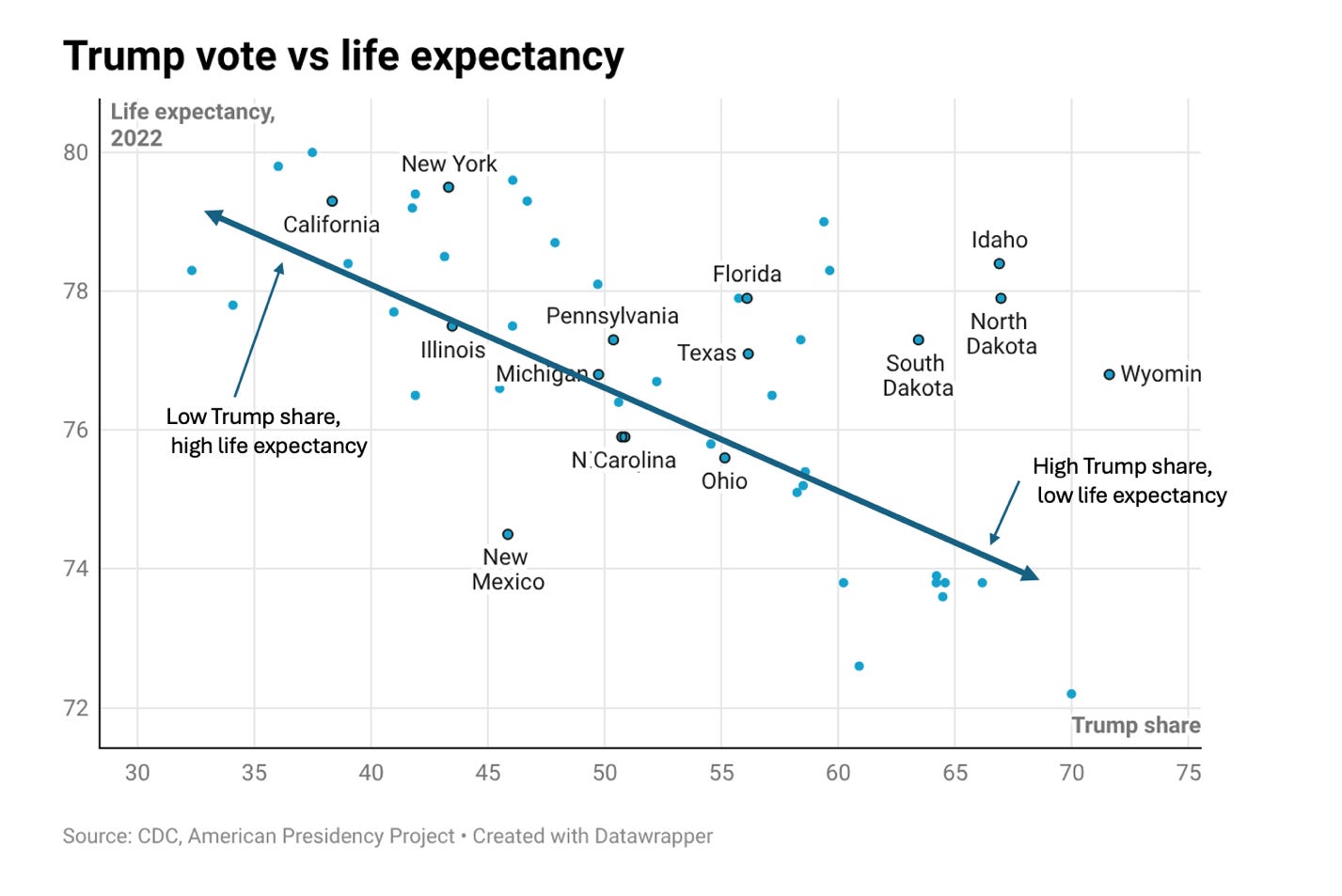
...And always, the farm was where the American dream was one drought, one sickness, one fire, one crushing debt, away from failure. Heart-breaking stories of the failure of a family farm are one of the deepest genres of American storytelling. The imagined failure of many farms at once lies at the heart of many political crises since the late 19th Century. The bipartisan commitment to massive financial subsidy of American agriculture since the 1970s flourished despite Reaganism and despite further waves of neoliberal austerity precisely because of the cultural power of stories about families losing their farms, even as most farms became outposts of large agribusinesses with farming families serving as little more than managers for conglomerate owners.
...the predators in the Dark Internet Forest are the mega-platforms themselves, at the core of which are machines for turning human action and feeling into saleable data objects.
Before he changed the way we understand lightning on Earth, Joseph Dwyer studied the weather in more cosmic settings. Using the sensors on NASA's Wind satellite (opens a new tab), orbiting a million miles away, he watched flares shoot out from the sun and analyzed the particles that stream from the sun's surface.
...the basic principle behind all analogue records, which is that the waveform of the sound is quite literally etched into the vinyl groove. In the simplest case—a mono record—the etched waveform pushes the needle in a direction perpendicular to the groove. This results in the needle tracing the waveform's geometry as the record spins, and the cartridge to which the needle is attached acts as a transducer, converting this physical movement into an electrical signal. Run the resultant signal through sufficient amplification, and bam, you've got sound.
...The theory of capitalism holds that markets are a kind of distributed computer that aggregates trillions of decisions from billions of market participants in order to optimize production and distribution of goods and services, creating a "Pareto-optimal" world where no one can be made better off without making someone else worse off.

...Facebook reached a billion users before any major democracy had a coherent policy position on what it was. By the time the policy machinery wound itself up, Facebook had already restructured politics in dozens of countries, undermined several elections, and pivoted into something else entirely. Whatever the regulators eventually produced was a response to a previous version of the company, but the current version had moved on
...The residue that is left behind by every bubble is subsidized, but that subsidy doesn't come from the deep-pocketed investors who are gripped by "irrational exuberance." It comes from mom-and-pop, normie, retail investors who have been tricked into giving their money to the insiders who inflated the bubble.
...American corporations own over 70% of the oil in the Tar Sands with an estimated $50 billion going to U.S. investors annually. Alberta's natural resources were recently valued at $860 billion, and such resources tend to provide enticements to American conservatives in the separatist movement. Similarly, in the Donbas region, resources are valued at $7.5 trillion making their development a major motive in the invasion of Ukraine.
...In the intellectual circles of Washington and its allies, a growing certainty is evident: a combination of military and economic pressure can bring Iran to its knees or drive it towards collapse. Analysts present detailed three-step plans to "crush Tehran" and postulate that the West holds strategic superiority. However, a deeper look at the array of global and regional developments illustrates this certainty to be a dangerous "strategic illusion". These roadmaps, by ignoring systemic consequences, geopolitical blind spots and their own internal vulnerabilities, chart a path towards an uncontrollable and attritional quagmire rather than a route to victory.
At this point it's almost routine: Almost every time Donald Trump makes a major announcement about the Iran War, that announcement is preceded — sometimes by only a few minutes — by huge and hugely profitable bets in the oil market.
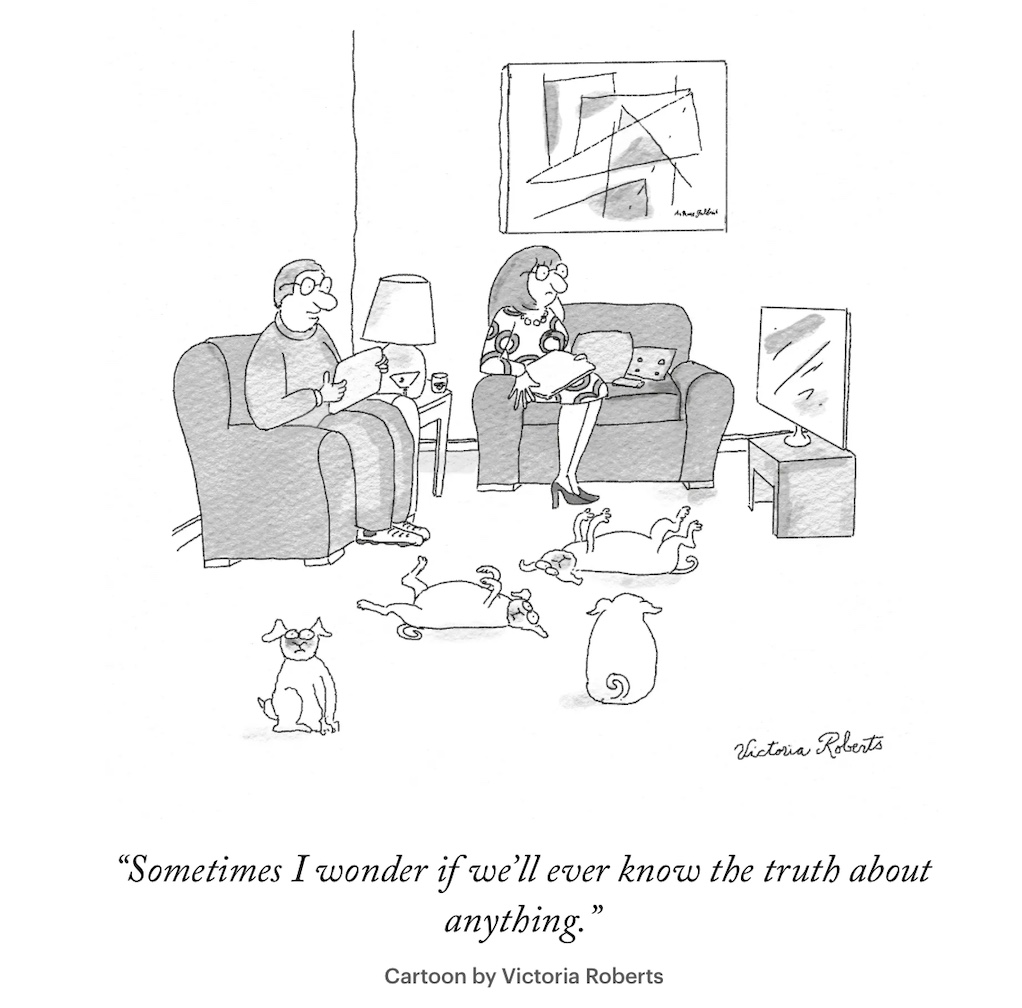
The future of plant extinction
...Plants perform biological processes that are essential to the well-being of humans and ecosystems (1). Climate change is reshaping the environmental conditions that plants must face and accelerating their extinction. Estimating how endangered plants are is important to inform conservation decisions. However, only 18% of plants are included in the International Union for Conservation of Nature (IUCN) Red List of Threatened Species, which provides global assessments of the risk of extinction for 76,864 plant species
...The millions of Indigenous subjects of the Spanish crown—at least those who survived introduced European pestilence— were not all the cowering vassals or hybridizing peasants that previous scholars had assumed, the pair maintain. People of the Indies adapted quickly to new legal norms and practices and wielded them against their colonizers, their former Indigenous lords, and sometimes against each other in the form of countless petitions, lawsuits, notarial writs, and other appeals.
...Across the Persian Gulf region and Israel, desalination supplies a dominant share of municipal drinking water. Centralized desalination plants enable economic growth and urbanization in some of the world's most arid environments (2, 3) but make the region vulnerable to damage from geopolitical conflict (4). This risk highlights the need for Middle Eastern countries to strengthen the resilience of desalination infrastructure.
Desalination provides nearly all municipal water in Kuwait and Qatar, more than 90% of the municipal water supply in the United Arab Emirates and Bahrain, 60 to 70% of urban water in Saudi Arabia, 70 to 80% of municipal water in Israel, and substantial water for coastal communities in Iran (3, 5, 6). Most Gulf states maintain only limited strategic freshwater reserves—often measured in days to weeks—making sustained interruptions potentially catastrophic. Unlike electricity networks, water supply cannot easily be rerouted from distant regions.
The fragility of water infrastructure is most acute in regions already facing hydrological insolvency. In Iran, for instance, decades of anthropogenic groundwater depletion have pushed aquifers to the brink of exhaustion (6, 7). When conflict-induced infrastructure damage meets such preexisting scarcity, the resulting cascading disasters range from humanitarian crises to irreversible ecological collapses.
...Although complementary metal-oxide semiconductor (CMOS)–based neuromorphic technologies have made strides in scaling to billions of neurons and are increasingly applied in artificial intelligence and numerical computing, they remain orders of magnitude behind the human brain in terms of connectivity and energy efficiency. Neuromorphic ionic computing promises to overcome these limitations by leveraging the distinct architectural and operational principles of the brain. Our brains achieve this energy efficiency by combining several key features: using the same network elements to store and process information; using an incredibly complex and massively interconnected three-dimensional (3D) network of locally active elements that enables sparsity, robustness in the presence of noise, adaptation, and life-long learning; computing at comparatively low voltage and frequency; and last, taking advantage of a plethora of ions and small molecules as information carriers. We propose that ionic computing systems can take advantage of similar features to achieve substantial gains in energy efficiency.
...What is striking about the 19th-century accounts of the population history of South Asia is that they were largely based on just one category of evidence, namely linguistic and philological, with an overwhelming reliance on the Vedas, especially the Rgveda, as a primary source. However, from a historical methodological perspective, the language of the Rgveda is, in Trautmann's words, ‘archaic and its meanings are often hard to make out because of its poetic character and religious purpose
...an elderly fighter named Adib chimes in to urge caution, recalling his days battling the Western-allied shah as a teenage communist militant in the run-up to the 1979 Islamic Revolution. "The U.S. and Israel won't give us anything we can't take for ourselves," he says. He recalls a notorious U.S.-brokered 1975 deal that exposed the Kurds to massacres, after Henry Kissinger, the U.S. secretary of state, abruptly terminated Washington's clandestine support. "This isn't our first experience with the West. They always try and use the Kurds as a card," he says.
1:42 AM
to me, Betsy, lexibee1, Kate, jcrootpi, Nick, Allen, lima, Annabel, Anne, meredith18@gmail.com, Paul, Noelle
Hugh Blackmer
6:17AM (2 hours ago)
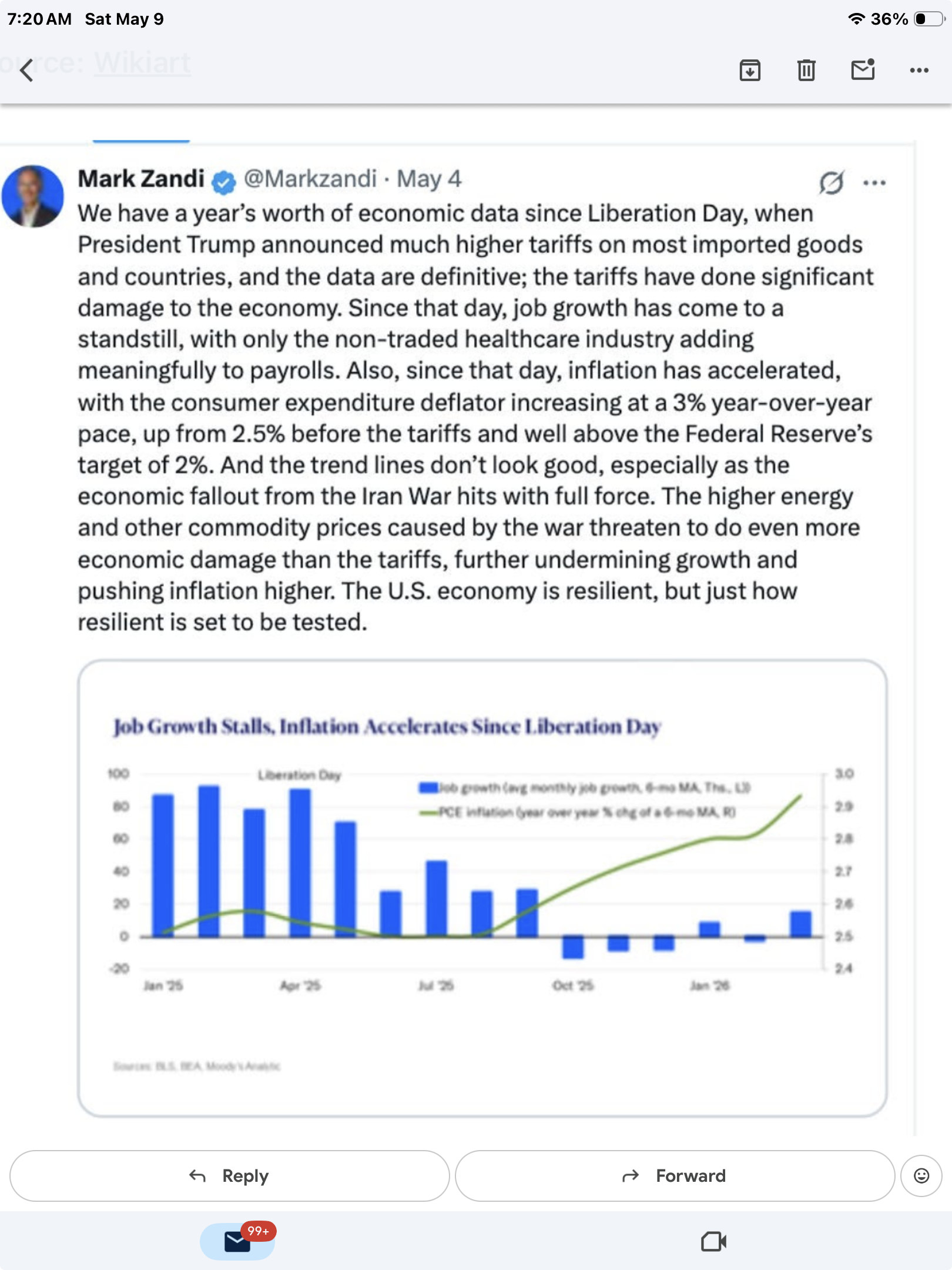
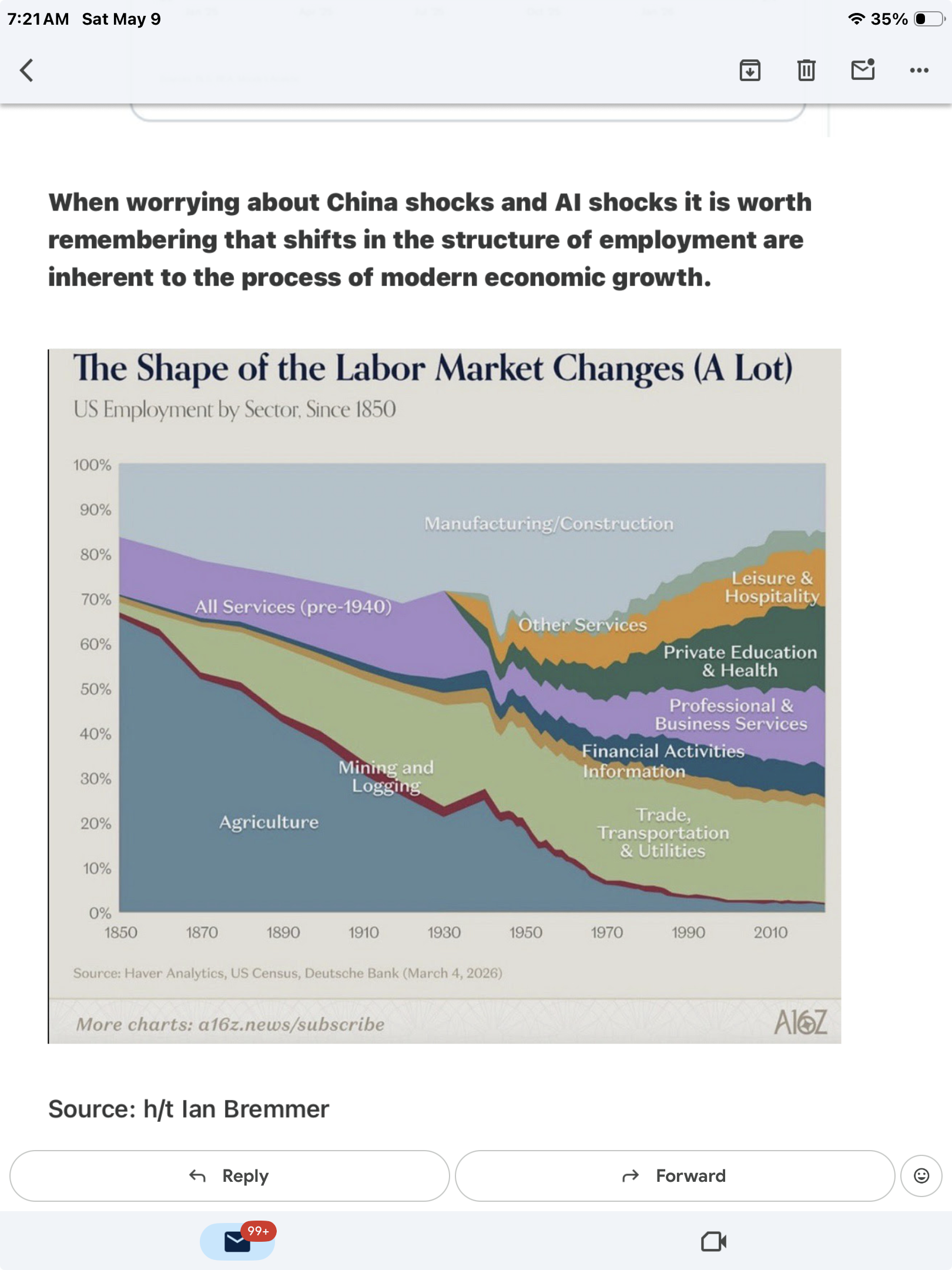
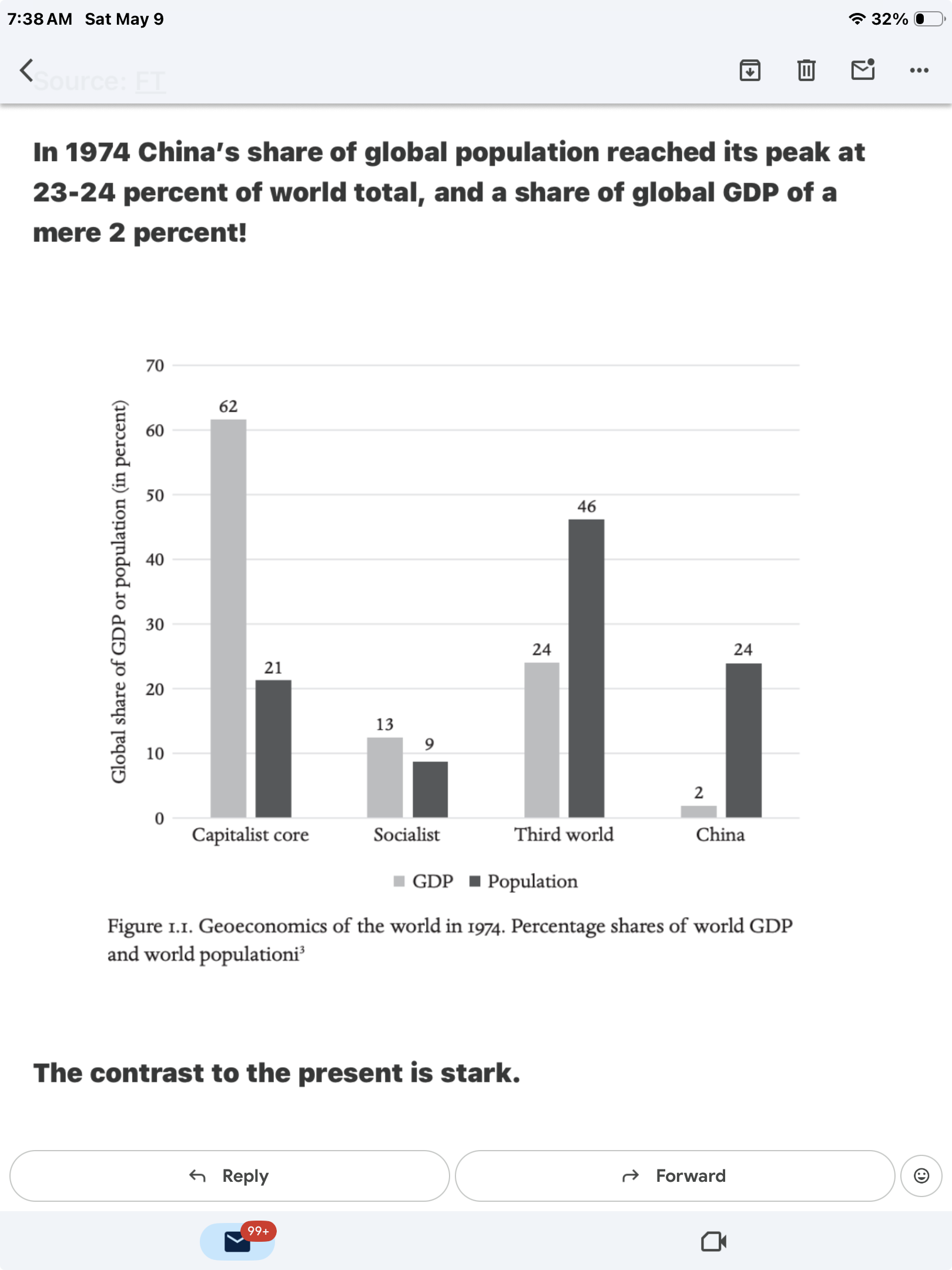
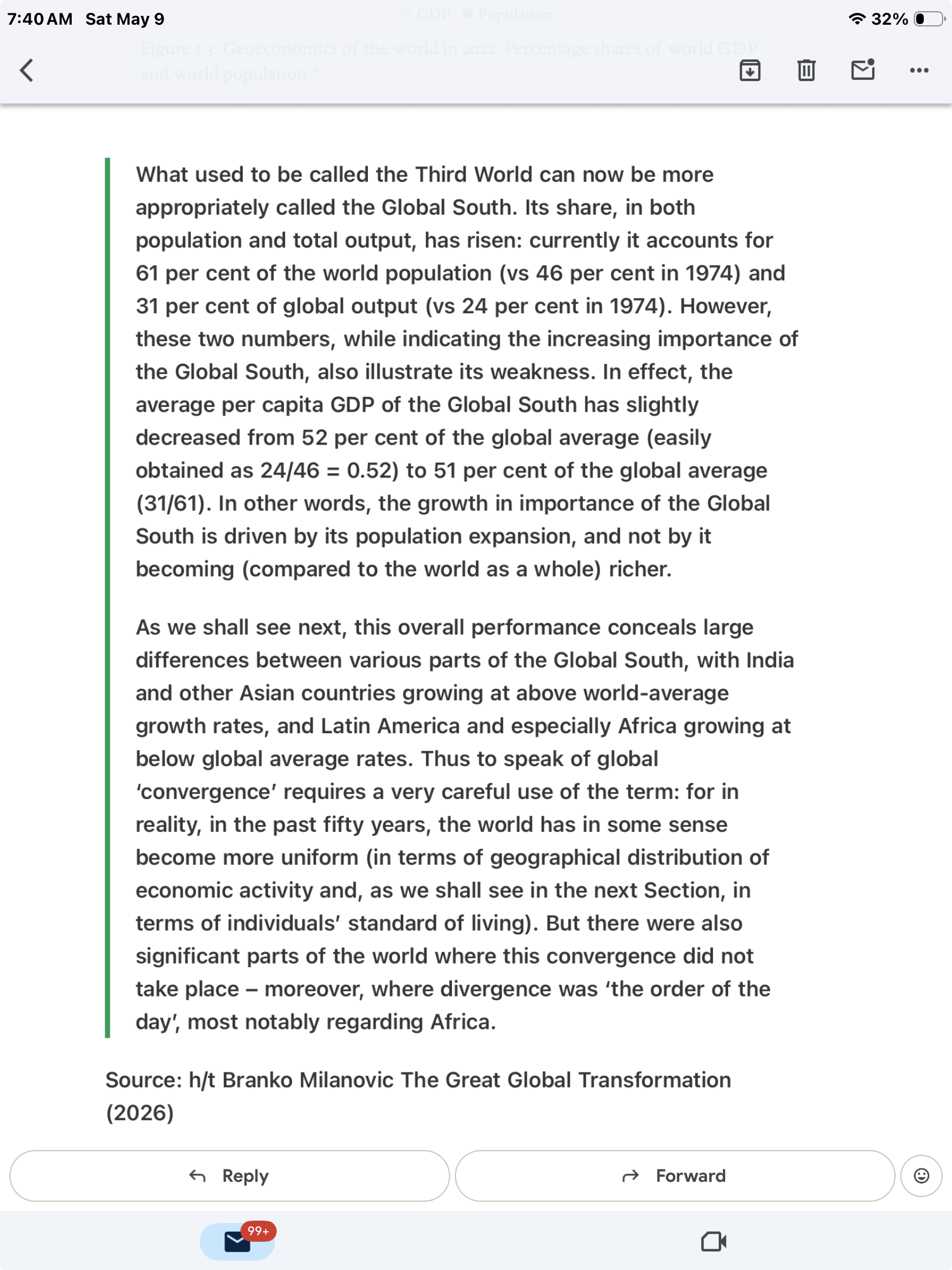
Jamie Dimon just said there will be a bond crisis.
Not might be. Will be.
And when the CEO of the largest bank in the world says something like that, it's worth understanding what he actually means.
It isn't defense.
It's interest payments on the debt.
20 cents of every tax dollar you pay goes directly to servicing debt.
Which means more money printing to cover it.
Which means more inflation.
The whole cycle accelerates....In eastern Oregon, Amazon is using water already contaminated with agricultural fertilizer runoff to cool its data centres. When that contaminated water hits Amazon's sizzling equipment, it evaporates while nitrate pollution stays behind, concentrating to dangerous levels. Data centers consume up to 5 million gallons of water per day, and the discharged wastewater contains biocides, corrosion inhibitors, heavy metals like zinc, copper, and chromium.
Political change is downstream of coalition building, and coalitions are fragile things, because by definition they are not fully aligned; they share some goals but often violently disagree about others. A coalition forms when groups set aside their differences to pursue the common elements of their agenda.
...One of the more confident predictions scientists can make for future tropical cyclones — the catch-all term for hurricanes, tropical storms, and tropical depressions — is that they will dump more rain. Global warming increases the amount of water vapor the atmosphere contains when fully saturated: Every one degree Celsius of ocean warming leads to about 7% more water vapor in saturated air.
Tishoumaren (ⵜⵉⵛⵓⵎⴰⵔⴻⵏ in Neo-Tifinagh script) or assouf, internationally known as desert blues, is a style of music from the Sahara region of northern and west Africa.
...The EU is an economic superpower almost on a par with the United States and China. Its economy is vastly larger than Russia's. Yet Europe often seems intimidated by the U.S. and until very recently has acted as if it is unable to cope with the Russian threat on its own.
The growing conflict between America and Iran is not a separate event. It is part of that big change whose beginning had already taken place with the Russia-Ukraine war.
...The tyranny of our time is that, because the hero of the modern myth is the victim, our catalogue of ways to be wounded has swelled to untenable proportions. The arsenal of possible offenses is so immense that we are left in a state of paralyzing hyper-vigilance, ever on the defensive, ever trying to preempt grievance and avoid indictment. Because it is hard to create from a defensive place, no region of life has suffered more by this than our arts — trembling before the whip of cultural appropriation, artists are left with narrower and narrower parameters of permission for whom and what they can imagine. We seem to have forgotten that the word empathy itself is just a little over a century old, invented by Rilke and Rodin to describe the imaginative act of projecting yourself into a work of art that represents something other than yourself. We seem to have forgotten that, at its best, art is not a mirror but a kaleidoscope, casting on the walls of our own lives a thousand hues of experience we never could have lived.
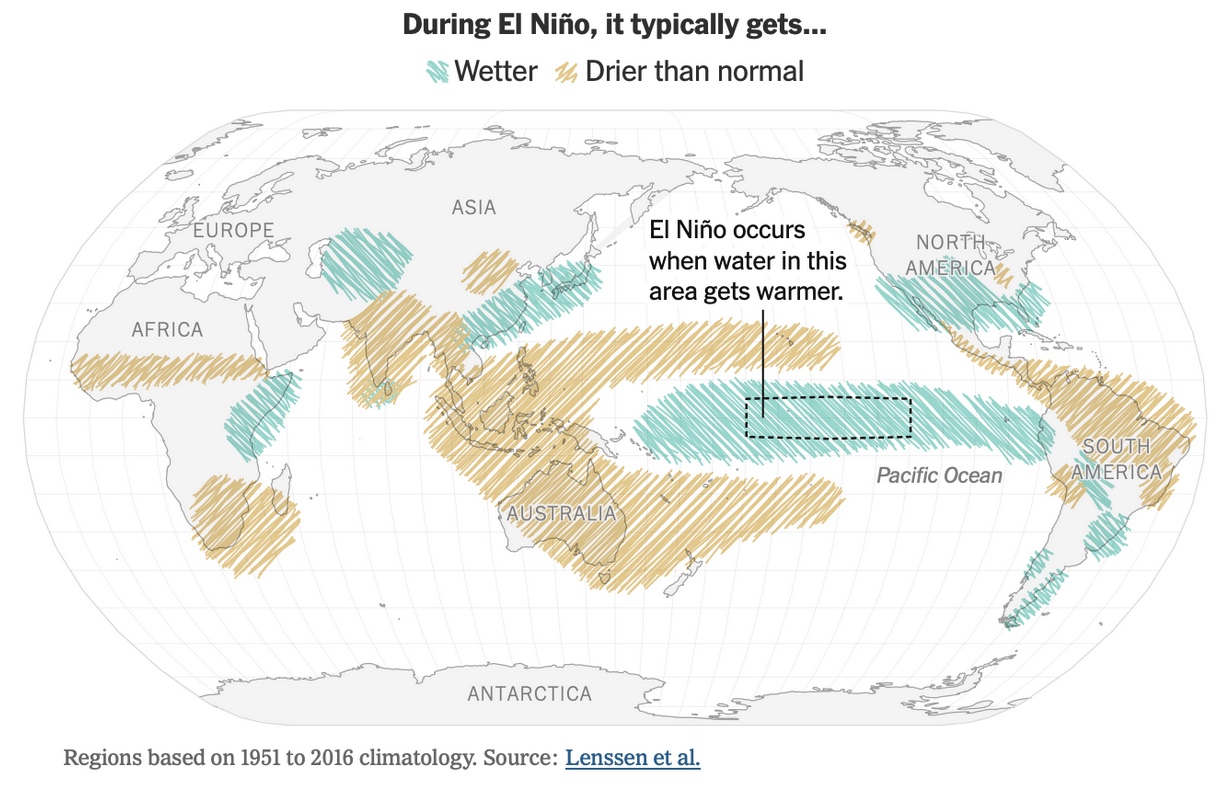
...The authors propose that the severity of this second pandemic plague was a consequence of a confluence of unfortunate events, likely catalyzed by environmental change. The cold and wet climate around 1345 and 1346, possibly due to a volcanic eruption, resulted in food shortages that required the import of grain that arrived in ships that also carried the plague pathogen. From here, the plague spread to nearby cities and regions in the Mediterranean. In sum, the very systems set in place to prevent starvation in major Italian cities also facilitated the entry of the bubonic plague into Europe.
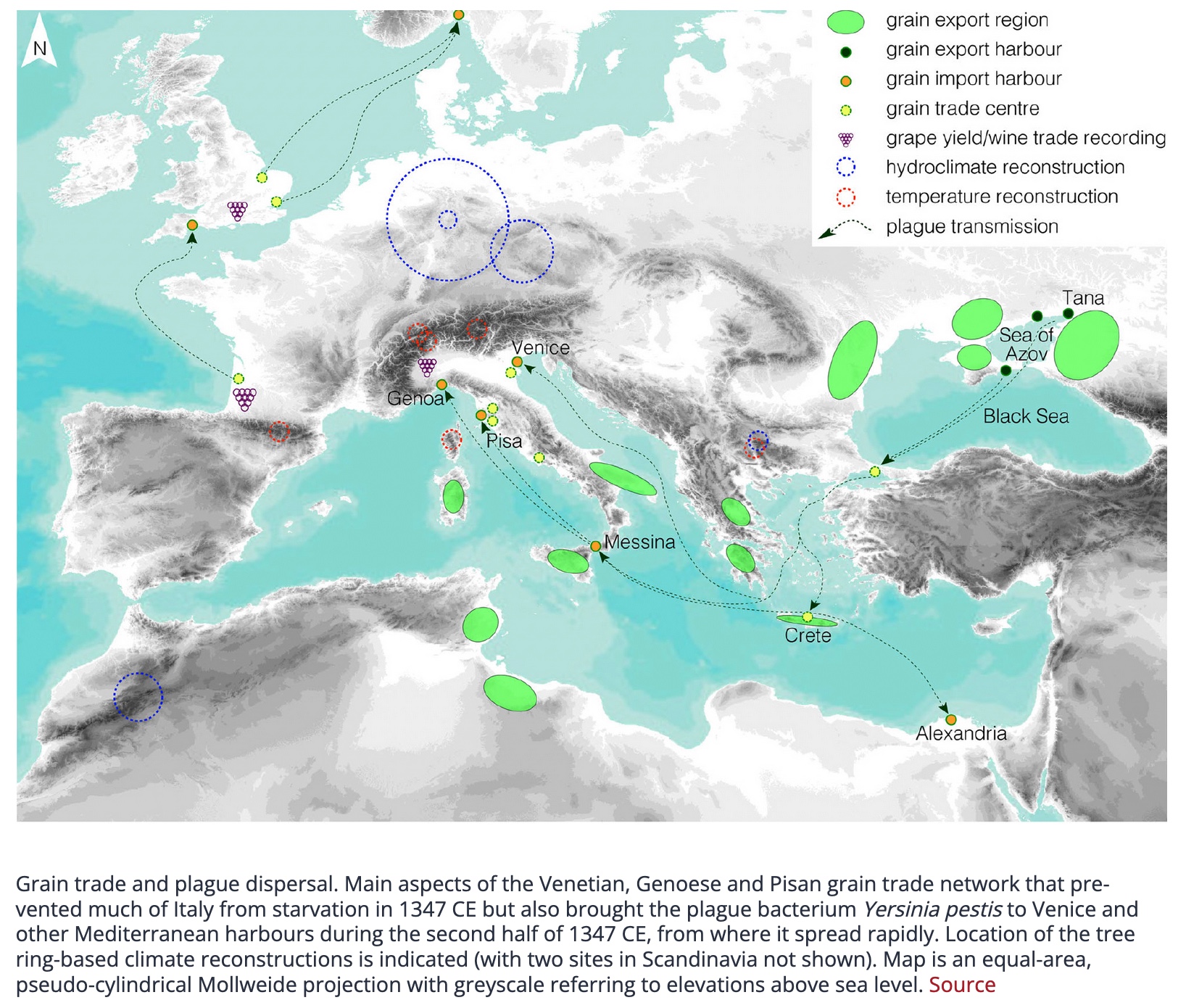
Communications Earth & Environment volume 6, Article number: 986 (2025)
(pdf)f...We used climate proxy and written documentary archives to argue that a yet unidentified volcanic eruption, or a cluster of eruptions around 1345 CE contributed to cold and wet climate conditions between 1345 and 1347 CE across much of southern Europe. This climatic anomaly and subsequent transregional famine forced the Italian maritime republics of Venice, Genoa and Pisa to reconfigure their supply network and import grain from the Mongols of the Golden Horde around the Sea of Azov in 1347 CE. The unusual change in long-distance maritime grain trade prevented large parts of Italy from starvation and distributed the plague bacterium Yersinia pestis via infected fleas in grain cargo across much of the Mediterranean basin, from where the second plague pandemic emerged into the largest mortality crisis in pre-modern times.
see also Volcanism and global plague pandemics: Towards an interdisciplinary synthesis
Henry G. Fell et al. (2020) ScienceDirect Elsevier......For any given novel outbreak, the initial read is almost always going to be that the odds of it becoming a deadly pandemic are low. That's just the nature of things.
The UAE view on OPEC from the UAE's ambassador to the United States, Yousef Al Otaiba
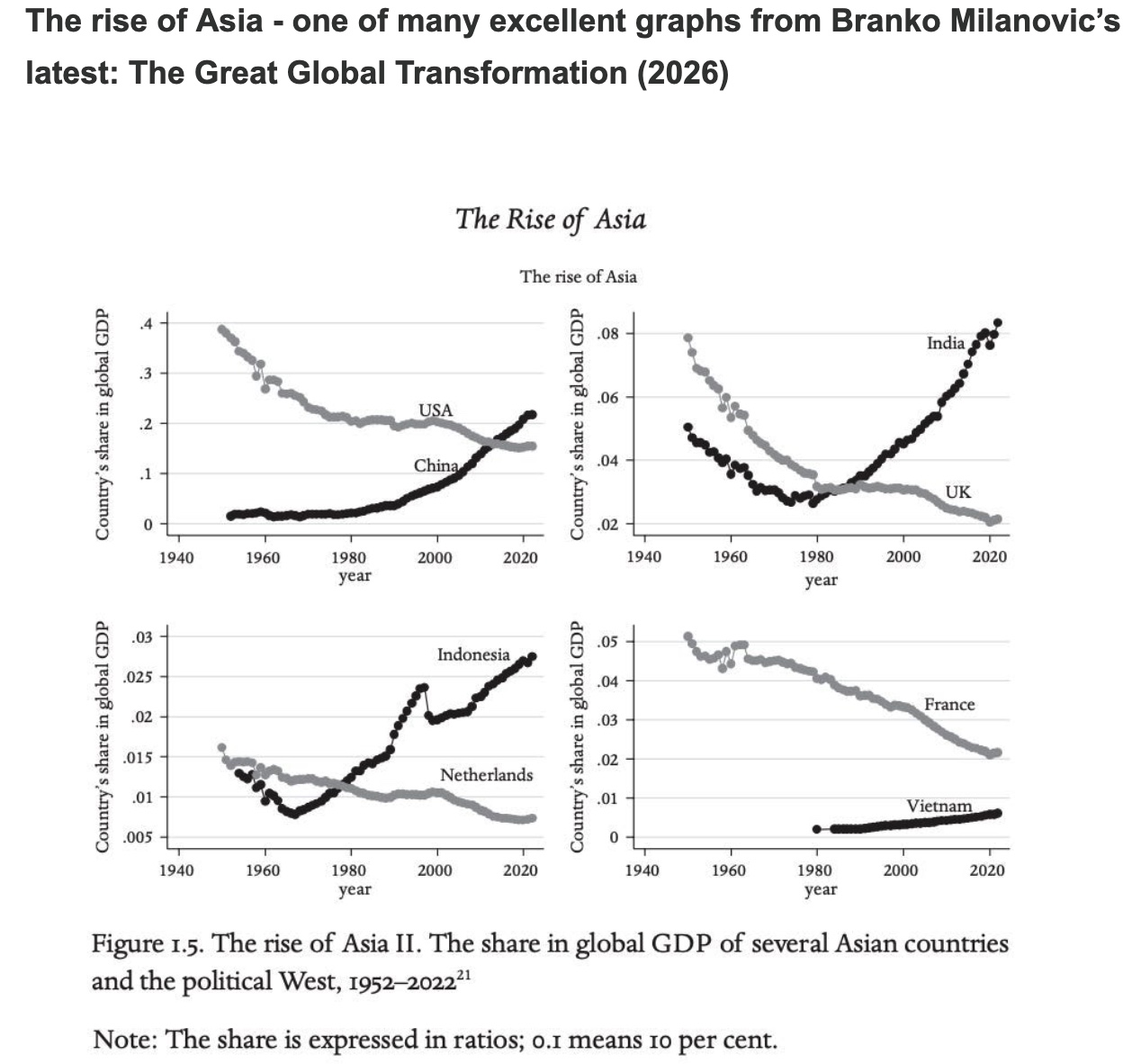
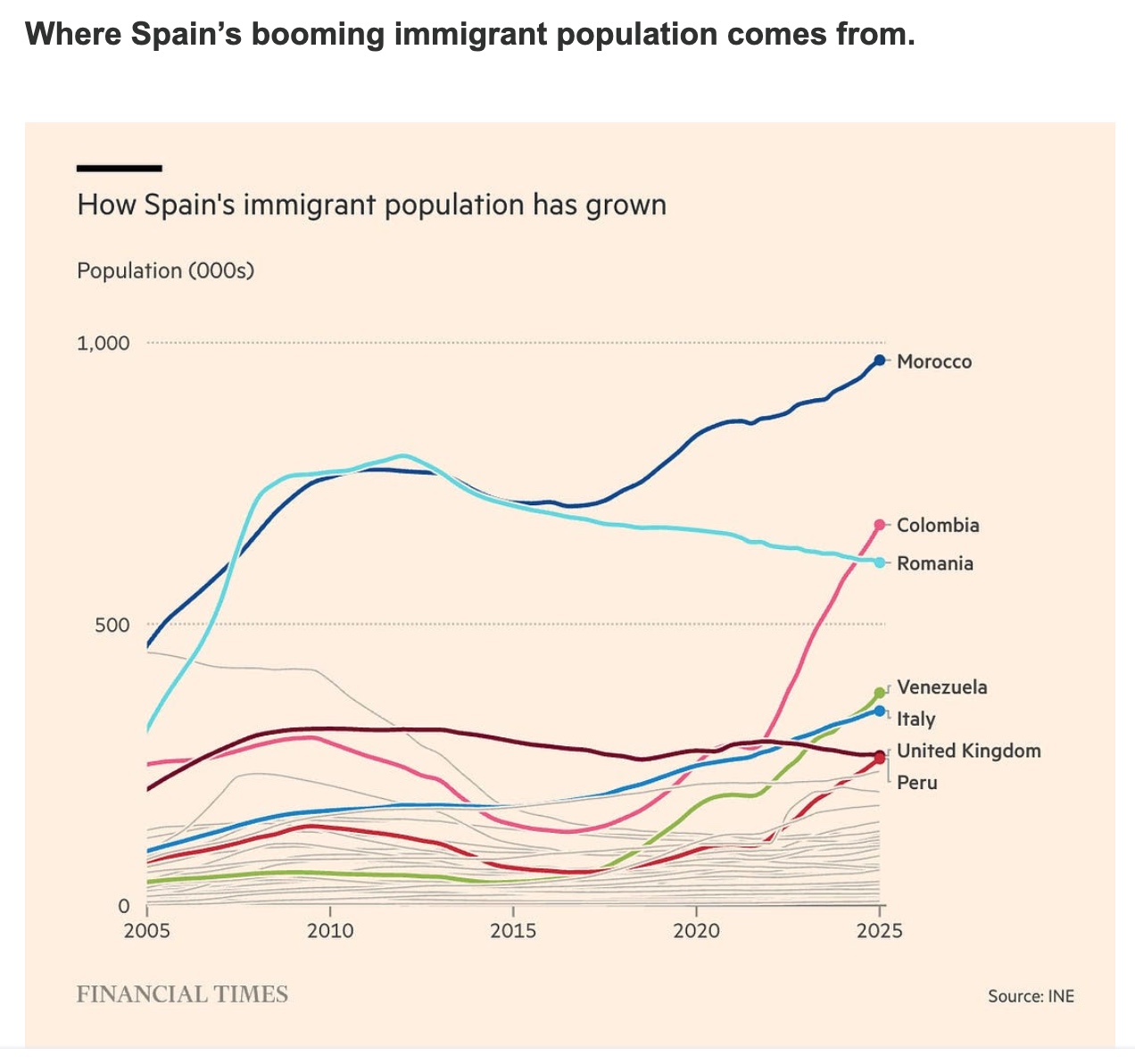

...The word itself appears in English for the first time in the late 17th Century, which in food history is something of a big hint that there's some association between European expansion and the new food word. In this case, there are rival theories about the etymology of "catsup" or "ketchup" that all feel kind of messy to me as I read them.
In 1976, anthropologists Nancy Tanner and Adrienne Zihlman proposed that some of the first tools might have been baskets, which women used to carry things like food. They were pushing back against male-dominated ideas of prehistory, which emphasised activities like hunting of large animals – incorrectly assumed to be primarily male-driven – and paid little or no attention to females.
...It's not that I didn't get what it's supposed to do: it basically digs into your Gemini past queries, as well as other Google services you use, such as Gmail, to get information about yourself, which can be used to give you personalized responses instead of generic ones.
Every Western newspaper covering the Iran crisis is operating from one premise: this is a temporary geopolitical disturbance with regrettable price effects. The premise is wrong. It is the wrongness itself that makes the coverage possible. The frame is not a misreading of the situation. It is the cover under which the situation can continue.
..."Systems thinking" is an analytical framework that treats the world as a mesh of interconnected, nonlinear components and relationships that can't be easily understood or steered. A complex system isn't merely "complicated." A mechanical watch is complicated, in that it has many parts that work together in ways that require training and specialized knowledge to understand. But it isn't "complex" because each part has a specific function that can be understood and adjusted.
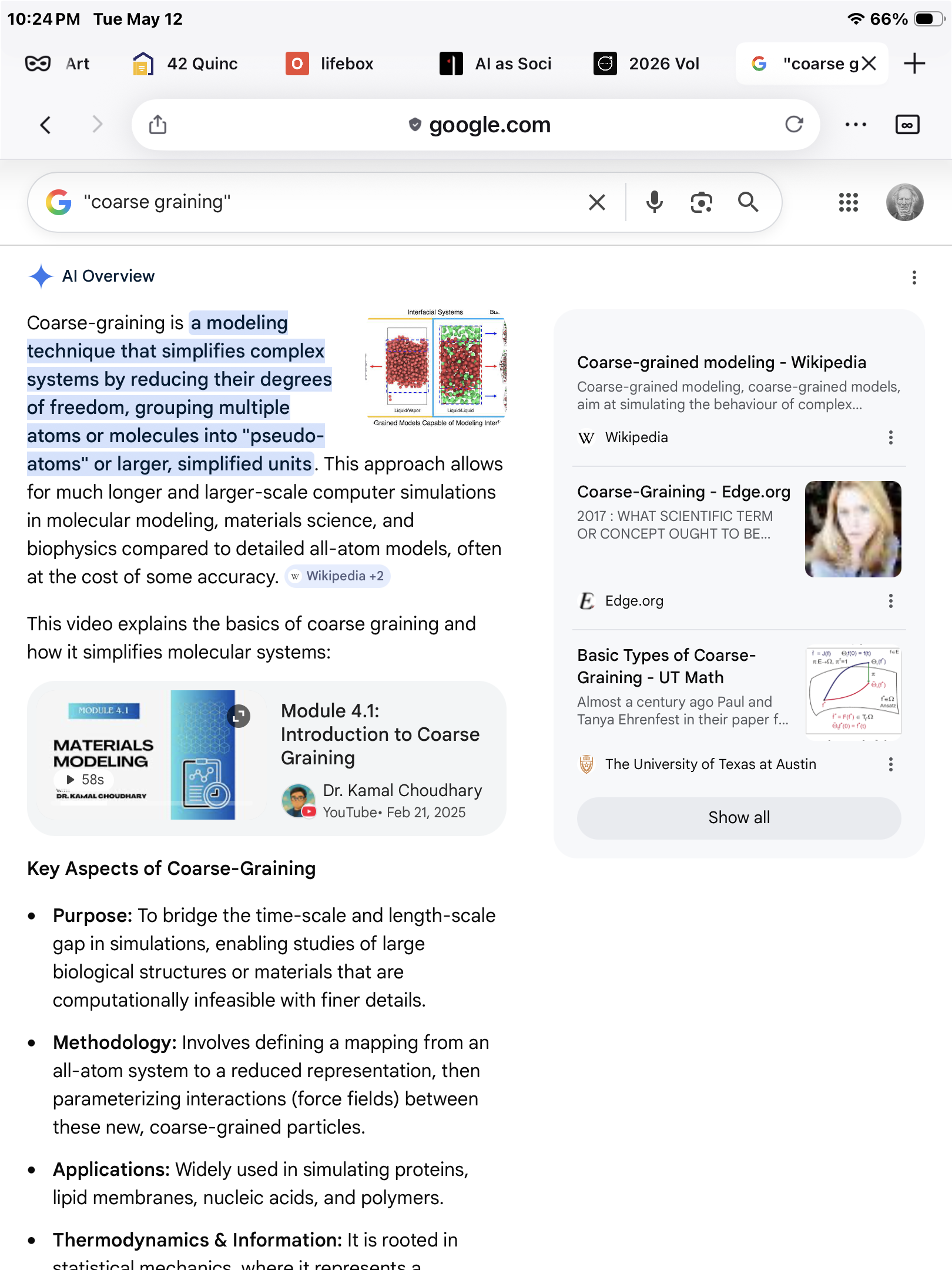
NYC Commute POV takes the familiar geography of New York and stretches it into something far more emotionally accurate: a city shaped by time rather than distance.
The so-called experts ridiculed Donald Trump's claims during the 2024 campaign that he would bring grocery prices down on Day One and cut energy prices in half.
...When people attribute design to biological complexity because they cannot imagine an alternative, Dawkins rightly identifies this as ‘the argument from personal incredulity'; a failure of imagination presented as if it were evidence. But just as the complexity of the eye does not prove a designer, the sophistication of generated text responses does not prove consciousness.
...One common and inaccurate picture of change assumes this thing so obvious, so potent in the present, will just continue to expand and the future will be like the present, only more so. This version ignores that individual actors and collective forces can suddenly emerge or implode, that history often takes sharp turns, that something that has held for decades or centuries can suddenly snap
In this episode of Private Life, the art historian Ingrid D. Rowland joins Jarrett Earnest for an in-depth discussion about art history and disegno, an Italian word for "design" that was also a Renaissance-era concept describing some artists' ability simultaneously to draw and to conceive of a grander scheme in their work. Rowland also talks about the lives and work of some of the Italian Renaissance's most significant figures: Raphael; Caravaggio; Giorgi Vasari, a sixteenth-century artist and writer from Florence; and Agostini Chigi, a banker and art patron.

https://commons.wikimedia.org/wiki/File:Anti-capitalism_color.jpgEveryone appears to be having roughly 99% of the same insights about AI use at the same time but it feels original to everyone rediscoverer since almost none of it is common knowledge yet. So we get a discourse thats mostly about agreeing furiously and noisily and a kind of credit-fomo race. The mutual-belief/private knowledge to common-knowledge gap is big. So there is massively parallel CK game playing. Right now it's cheaper to reinvent wheels than to imitate.
...of the network, not of any individual node. Newton standing on the shoulders of giants is not a polite acknowledgment of intellectual debt. It is a precise description of how scientific progress works: each generation extends the collective toolkit, and the next generation starts higher up. Einstein's Theory of Relativity is Einstein's, but it is also Lorentz's transformations, Fitzgerald's contraction, Minkowski's spacetime, Poincaré's group, and Maxwell's equations—reaching back through a chain of collective development that no one person could have invented. What we call "genius" is what happens at the frontier of this cumulative structure: the person whose biological processor happens, at the right moment, to make the connection the community had been building toward for decades
Ancient ice core could help explain why the ice ages switched rhythm
Beginning about 2.6 million years ago, the climate swung in and out of relatively mild ice ages every 40,000 years, driven by wobbles in Earth's orbit. But then, about 1.25 million years ago, something began to slide Earth toward the 100,000-year-long cycles of deeper freezes that have prevailed ever since. Nothing had changed in Earth's orbit; something must have tipped within Earth's climate system itself.
Rivers twist and turn (meander) as they flow downstream (11), recording the history (12) of upstream events through burial of sediments and organic matter in floodplains (flat lands adjacent to rivers). General theories that explain how rivers develop into sinuous shapes driven by erosional processes do not directly apply to rivers in permafrost-dominated regions, where environmental conditions differ from temperate climates. Seasonally frozen ground has an important influence on river dynamics because ice located in the pore spaces between sediments increases mechanical strength (13), acting as glue to hold riverbanks together (2). Thus, depending on the timing of peak annual floods in relation to ground thaw conditions, a range of erosion-related outcomes are possible (3, 5). For example, during enhanced erosion early in the thaw season, pore ice forces more flow to the surface, increasing flow velocities (5).
"Kelp is the new coral," writes journalist and ocean activist David Helvarg in his new book, Forest of the Sea: The Remarkable Life and Imperiled Future of Kelp. What Helvarg means is that kelp forests, one of the largest marine ecosystems on Earth, are now facing the same kinds of threats that have decimated coral reefs throughout the tropics. Kelp forests—which grow along roughly a third of the world's coastlines—have declined as much as 60% over the past half century, owing to coastal development, pollution, overfishing, unsustainable harvesting, and, most of all, warming oceans, which pose an existential threat to this cold-water species.
Gulf countries dominate nitrogen exports, and supply interruptions combined with surging natural gas prices have sharply increased input costs worldwide (2). Model-based evidence suggests that farmers respond to higher prices by reducing fertilizer application, thereby lowering crop yields and tightening global grain supplies, especially during the spring planting window (3). However, the effects are highly asymmetric. Large-scale producers can partially buffer rising input costs through credit, inventories, and input substitution, but prolonged shocks may still reduce application and yields. Smallholder farmers worldwide are more vulnerable, with the most pronounced impacts in sub-Saharan Africa and South Asia, where already low fertilizer use forces further input reductions (2, 4, 5). As a result, yields decline, food prices rise, and purchasing power among net food buyers (i.e., households or consumers who purchase more food than they sell) decreases (6). These dynamics compound across systems as higher input costs, declining remittances, and tightening trade flows jointly amplify food insecurity risks (2). Models of the 2022 fertilizer crisis suggest that such shocks thrust 27.2 million individuals into poverty and 22.3 million into hunger (7).
As a new assistant professor running my own lab for the first time, I tried to be everywhere at once. I rewrote my students' manuscript drafts until they sounded like me, redrew figures and reorganized a postdoc's slides, and dominated the discussion in lab meetings to suggest the next experiment before anyone else had the chance. The lab looked productive—we were publishing high-impact studies and had just secured a major grant. But underneath, something was going wrong. After one lab meeting, a grad student came to my office and said something I have never forgotten: "I feel like I'm doing science near you, not with you."
...Hedge funds pivot to biofuels anticipating a bump from the Iran war
We need our sciences to learn how the universe works, to know what we don't yet know and to comprehend it. We need our arts to learn how the heart works, to feel what we are unwilling or unable to feel and hold it without apprehension. We need both — knowledge and feeling, intelligent comprehension and emotional intelligence — to be capable of empathy, as well as self-compassion.
(quotes Russell)
Throughout the last hundred and fifty years, men have questioned more and more vigorously the value of "useless" knowledge, and have come increasingly to believe that the only knowledge worth having is that which is applicable to some part of the economic life of the community… Knowledge, everywhere, is coming to be regarded not as a good in itself, or as a means of creating a broad and humane outlook on life in general, but as merely an ingredient in technical skill... This is part and parcel of the same movement which has led to compulsory military service, boy scouts, the organisation of political parties, and the dissemination of political passion by the Press.
Last month, CORRECTIV released an interactive map, Where Europe's Population is Shrinking, which visualizes Europe's general pattern of rural depopulation and the subtle trends of where European towns and regions are growing or shrinking.
Parallel Patterns: Rural Shrinkage
Much like the European map, the U.S. map shows stark evidence of rural shrinkage. Small towns in states like West Virginia, Kansas, and Illinois are experiencing a persistent "natural decrease" - where deaths outpace births in an aging population. This is compounded by a brain drain, as younger generations migrate to larger metropolitan hubs for economic opportunities, leaving a purple trail of depopulation across the Great Plains and the Rust Belt.
However, other patterns unique to the American context are also apparent. The purple shading across much of California and the Northeast illustrates a significant demographic shift. Driven by high housing costs and the permanence of remote work, residents are exiting dense urban cores for more affordable regions.
Idaho, Montana, and Utah also stand out as bright green beacons of population growth on the cinyc map. These states seem to be the primary beneficiaries of the sustained wave of migration from the West Coast.
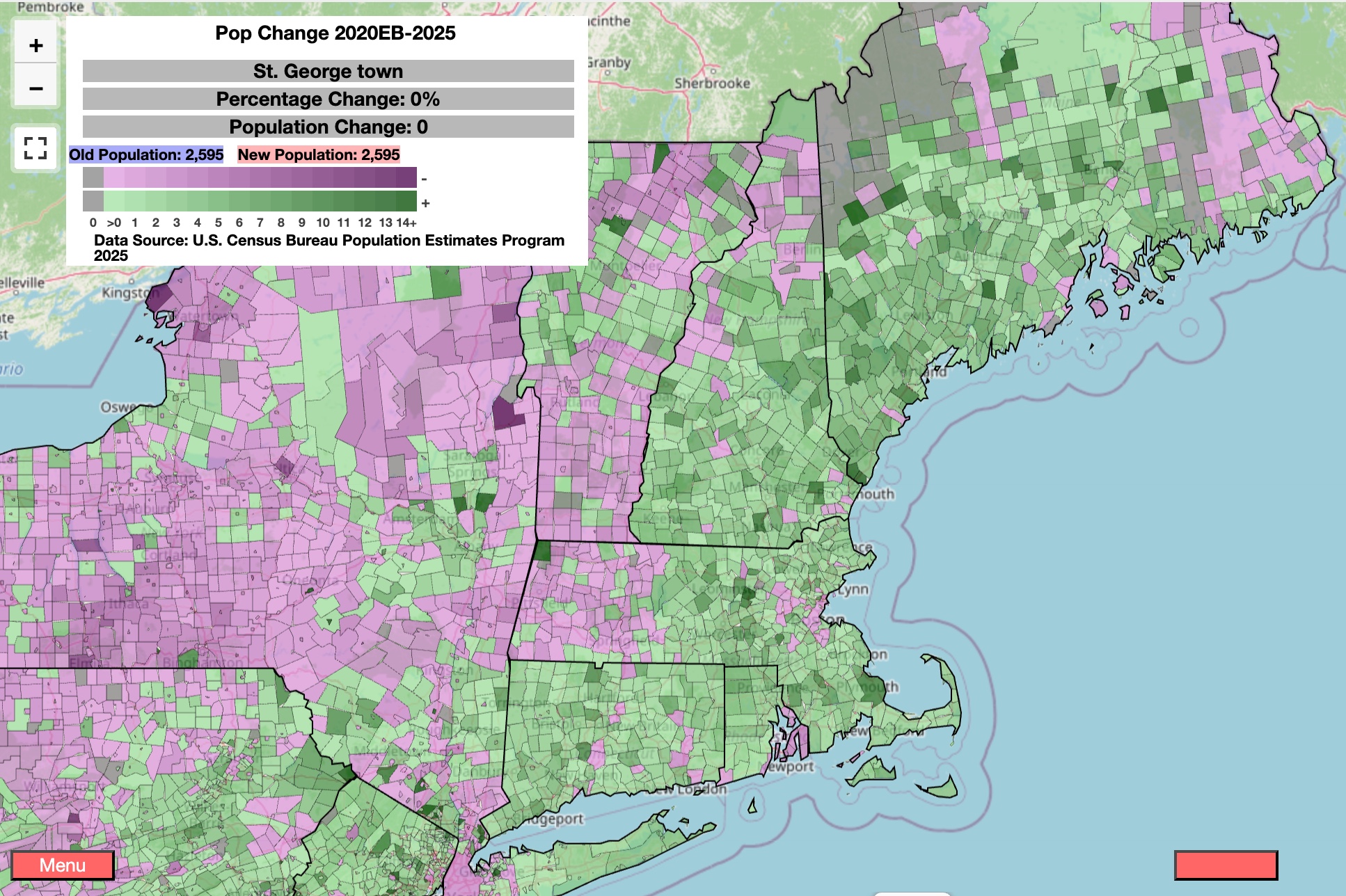
...If I ever got a tattoo, it would probably be of this line from President Dwight D. Eisenhower's 1953 "Chance for Peace" speech: "Every gun that is made, every warship launched, every rocket fired signifies, in the final sense, a theft from those who hunger and are not fed, those who are cold and are not clothed."
...a transcript of my interview for Background Briefing with Ian Masters on KPFK in Los Angeles
...Thomas Kuhn's paradigm shift, for example, on the face of it frames scientific progress as a series of singular revelatory events that each change an entire field of study in almost one go. But if you dig into the text itself, The Structure of Scientific Revolutions, the process it describes is one where the worldviews of scientists and academics change one by one, where many simply never adopt the new worldview – the one that more cohesively explains what they've been observing – and instead stick to preexisting models. Even the most sudden and dramatic paradigm shifts are processes of epistemic diffusion where the old and new models of truth coexist and interact. All of which is to say that Kuhn's ideas lend themselves to a pluralistic interpretation provided you actually dig into the text itself, and it means that, if you squint, you could make the ideas work with theories of epistemic anarchism such as that of Paul Feyerabend.
Paul Feyerabend Wikipedia
...In his "Empiricism, Reduction, and Experience" (1962), Feyerabend outlines his theory of incommensurability. His theory appears in the same year as Thomas Kuhn's discussion of incommensurability in The Structure of Scientific Revolutions, but the two were developed independently.[70] According to Feyerabend, some instances of theory change in the history of science do not involve a successor theory that retains its predecessor as a limiting case. In other words, scientific progress does not always involve producing a theory that is a generalization of the previous theory. This is because the successor theory is formally inconsistent with the previous theory attempting to explain the same domain of phenomena.[71] Moreover, the two theories do not share the same empirical content and, therefore, cannot be compared by the same set of observation statements
Here's a terrific search hack for the Internet Archive Book Images Flickr photo stream photostream<./a> of Internet Archive Book Images
...while you can double the wealth of a billionaire at the expense of a town or two, doubling the wealth of a centibillionaire requires the destruction of whole regions.
Ada Palmer's Inventing the Renaissance Cory Doctorow
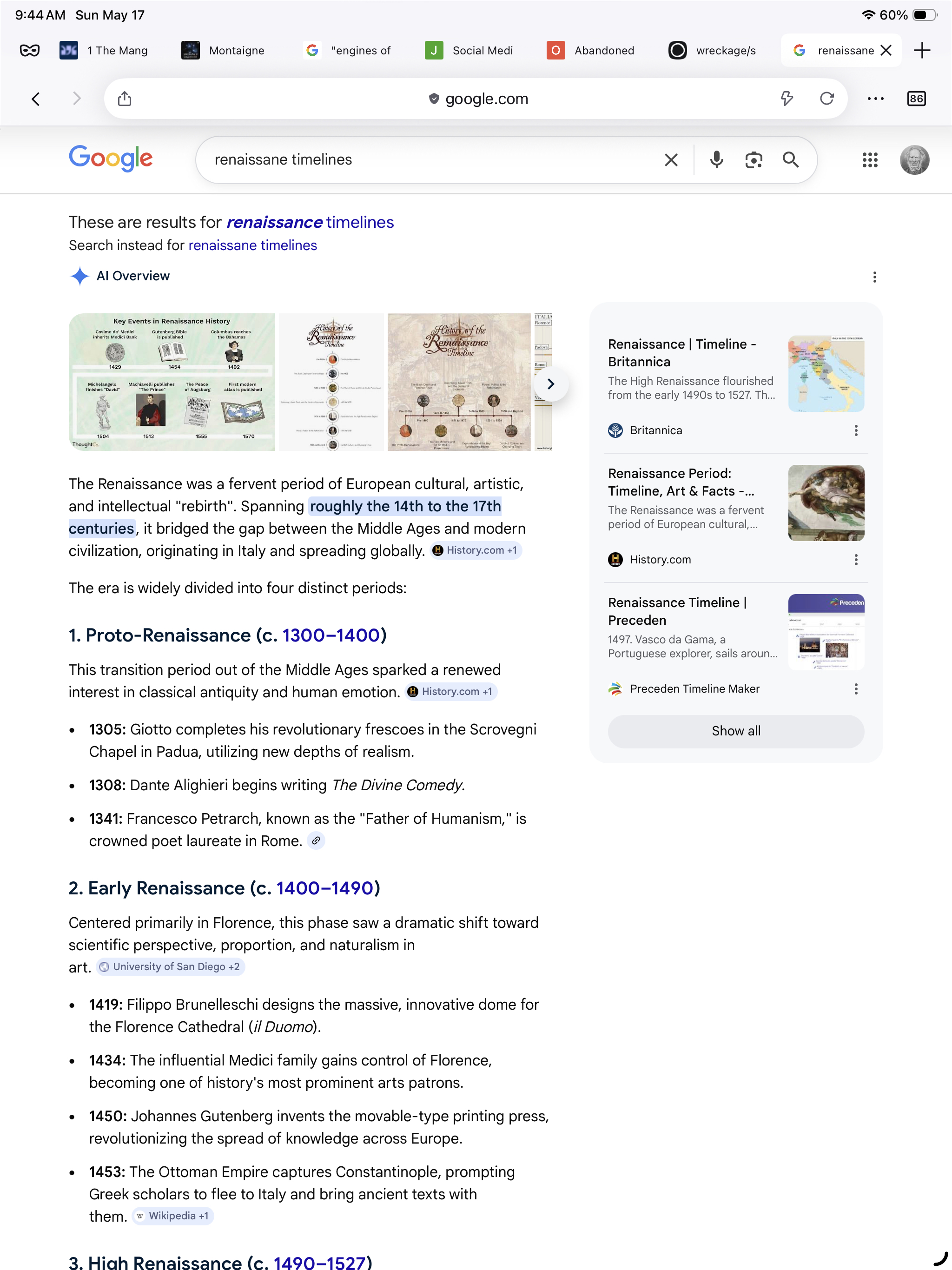
European firms are posting trading profits that still elude American ones. Because they have been unable to rely as much on domestic production, Europe's majors have spent decades building large trading desks that employ hundreds of people. These desks don't just hedge cargoes; they buy and sell crude, refined products and gas to profit from price differences across regions and over time. BP, for example, trades around 12m barrels of oil per day, equivalent to nearly 11 times its production. In volatile markets, traders can make huge profits exploiting price discrepancies. The segment that hosts BP's trading unit earned $2.2bn in the first quarter, up from almost nothing a year before. The unit housing Total's made $1.6bn, a fivefold increase on the same period in 2025.
Source: The Economist ...The MacStudio's main processor, its CPU, has fourteen sub-execution units that can work in parallel on one single chip, fourteen "cores". Four of them are so-called "efficiency" cores: relatively (relatively! each with more computing power than existed in the world in 1965!) small, low-power units that sip electricity and quietly keep the operating system and background tasks going. The other ten are "performance" cores: larger, hotter, much more power-hungry units that can do a great deal of computation very fast—when they are actually asked to do anything at all.
...Xi pointed to the "Thucydides Trap," the paradigm put forward by Graham Alison, based on the way the rise of Athens threatened Sparta and led to war, which holds that such challenges more oven than not lead to war. Of 16 cases examined by the Belfer Center, they found that 12 led to war
...The Thucydides trap refers to the theory, originally propounded by the Greek historian for the war between Athens and Sparta, that conflicts erupt when a declining power is confronted by a rising rival. So Xi was implicitly insulting the United States, portraying it as a nation in decline. Someone presumably explained this to Trump, who went on Truth Social to declare that Xi was talking about U.S. decline under "Sleepy Joe Biden," not now that he has made us "the hottest Nation anywhere in the world."
"What is it that breathes fire into the equations and makes a universe for them to describe?" Stephen Hawking wondered, recognizing the quixotic nature of his quest for a theory of everything — a complete and final explanation of the universe, a universe only rendered real in the mind.
Popova quotes Horn:
A wild panda… doesn't announce its presence like gorillas with big, noisy families, nor does it roam like a tiger. Instead, it stays mostly alone and mostly still, inside a world that seems designed to hide it: of bamboo screens all around made still more opaque by near-constant mists and rains. There it sits, just quietly eating, day and night. It must, because in one of the clumsier turns of evolution, it has become wholly dependent on a food it can barely digest. Though the purest of herbivores, eating only bamboo, a panda still has its carnivorous ancestors' gut. Lacking the internal fermentation vat and symbiotic microbes that enable cows, giraffes, and other grass and leaf eaters to access the nutrients in cellulose and lignin, a panda can assimilate just 17 percent of the bamboo it eats. It can't build enough fat to hibernate or even to sleep all night, but can survive only (like the orbiting humans in WALL-E) by combining gluttony with sloth.In the nineteen-fifties, the fields of computer science and artificial intelligence—both terms were coined that decade—were increasingly concerned with the simulation of human intelligence and with the translation of human (or "natural") language. Linguists were turning language into codes, too. In "Syntactic Structures," published in 1957, the year a science-fiction magazine cover pictured a robot reading a book, Noam Chomsky illustrated the separability of syntax from meaning with the sentence "Colorless green ideas sleep furiously," the kind of thing that might have been written either by the Auto-Beatnik or, to be fair, by an actual Beatnik. Circa 1959, William S. Burroughs started experimenting with writing poetry by cutting up pieces of prose and pasting them together on a page, as in a poem made of newspaper stories about 1) the polio virus and 2) a performance at the Met
...Then I really started digging into Google NotebookLM.
Your life's goal should be to become the most improbable person you can be. Your path, your character, your life, should be the most unlikely, the most unexpected, the least predictable version you can make. Improbable lives have fewer competitors, more unique rewards, and are harder to replace with AIs, since AIs run on the predictable. This is true whether you favor traditional humanist directions or work on a frontier.
...SMILE's core instrument, a soft x-ray imager, will monitor the entire Sun-facing edge of the magnetosphere. When charged particles in the solar wind capture electrons from neutral atoms in Earth's upper atmosphere, the electrons emit x-rays as they settle into a lower energy state. Mapping this radiation in the narrow boundary where the solar wind meets the magnetosphere will allow SMILE to track how Earth's magnetic shield responds in near real time. The observations should produce "a far better understanding of this interaction between the Sun and the Earth," Forsyth says.
Recent papers argued that the domestication of horses can be equated with the appearance of favorable genetic mutations that are first evident in individuals in the DOM2 clade dated about ∼2200–2100 BCE. We challenge the idea that this genetic shift alone defines domestication. Evidence from archaeology, ancient DNA, osteology, and other disciplines shows that horses from multiple genetic backgrounds (DOM1, DOM2, and, as we suggest here, DOM3) were managed, milked, and ridden long before 2200 BCE. Yamnaya groups (∼3200–2600 BCE) rode DOM2 horses—the direct ancestors of modern domestic stock—while incorporating them into diets, rituals, and mobility systems. Selection for traits linked to endurance and temperament began centuries earlier. Rather than a sudden breakthrough, domestication was a protracted, regionally varied process whose transformative effects on human mobility and social organization began as early as the fourth, if not the fifth millennium BCE, and set the stage for later DOM2 dominance.
...Agent skills are everywhere right now. Atlassian built them into Rovo so agents can automatically triage Jira tickets, draft Confluence pages, and route service requests without anyone typing a prompt
...The foreseeable and foreseen consequences of bad technopolicy are all around us, but in the eternal now of a politics utterly devoid of object permanence, no one is allowed to remember what happened the last time we did something stupid, especially not when we're on the verge of doing that same stupid thing again, only worse:
Rear Window... Blow-Up... City of God... Minamata... Pecker...
...The CIA is supposedly hiding Grabovoi codes, strings of numbers that one can concentrate upon in order to cure disease, get rich, and manifest a new car
...enough money to give any positive return to its investors at all rests on its becoming one of three things:
They have to do this in a context in which Microsoft, Amazon, Google, and FaceBook have every incentive to keep them from succeeding.
The tragic flaw of our species is the price we pay for the mind's magnificent ability to move in time: the superpower of prospection that makes us capable of making a plan and making a promise comes bundled with the singular suffering of retrospection: the remorse, the regret, the past romanticized and voided of its own consequence.
...The great strength of The Selfish Gene is in its power as a metaphor — that genes act in their own interest, not necessarily for the good of their host; its great weakness is in its ability to be misunderstood. "It is a dramatic but misleading title that has prompted endless confusion," says Matthew Cobb at the University of Manchester, UK. The philosopher Mary Midgley even wrote: "Genes cannot be selfish or unselfish, any more than atoms can be jealous, elephants abstract or biscuits teleological. This should not need mentioning but… The Selfish Gene has succeeded in confusing a number of people."
With great power comes great solipsism: the more power you wield over other people, the less real they become to you. To rule is to see people as aggregates, statistical artifacts, as a means to an end. It's how people seem when you're at the bottom of a k-hole.
Rewriting the story of horse domestication colorado.edu
Steam Engine Wikipedia
...Newcomen's and Watt's early engines were "atmospheric". They were powered by air pressure pushing a piston into the partial vacuum generated by condensing steam, instead of the pressure of expanding steam. The engine [cylinders had to be large because the only usable force acting on them was atmospheric pressure.[26][32]
The final major evolution of the steam engine design was the use of steam turbines starting in the late part of the 19th century. Steam turbines are generally more efficient than reciprocating piston type steam engines (for outputs above several hundred horsepower), have fewer moving parts, and provide rotary power directly instead of through a connecting rod system or similar means.[51] Steam turbines virtually replaced reciprocating engines in electricity generating stations early in the 20th century, where their efficiency, higher speed appropriate to generator service, and smooth rotation were advantages. Today most electric power is provided by steam turbines. In the United States, 90% of the electric power is produced in this way using a variety of heat sources.[6] Steam turbines were extensively applied for propulsion of large ships throughout most of the 20th century.
Clearly, The Dreaming is many things in one. Among them, a kind of narrative of things that once happened; a kind of charter of things that still happen; and a kind of logos or principle of order transcending everything significant for Aboriginal man. [...] These tales are neither simply illustrative nor simply explanatory, they are fanciful and poetic in content because they are based on visionary and intuitive insights into mysteries; and, if we are ever to understand them, we must always take them in their complex content."
W.E.H. Stanner (1905 - 1981)...Ituri, the apparent epicenter of the outbreak, has porous borders with Uganda and South Sudan and a highly mobile population. All of that will hamper the response to the outbreak, but the biggest concern is security, Mbala says. Several armed groups have fought for control of mines in the mineral-rich region, including the Islamic State group–affiliated Allied Democratic Forces and an affiliation of militia groups known as CODECO. Mbala fears a repeat of the problems encountered during a 2018 Ebola outbreak in Kivu in the eastern DRC, which became the largest and longest the country has ever seen. "Many, many times we had to stop our fieldwork because of security issues," Mbala says. "When you don't do investigation in the field, that means all the cases are continuing to spread the virus in the community."
One sturdier alternative involves encoding quantum information in diamond defects—cavities in the carbon crystal where electrons can hide out. Scientists use lasers to manipulate the spins of those electrons and read out their state through emitted light. These defects resist noise, allowing the qubits to persist longer, and at higher temperatures. However, the defects are difficult to engineer into a set of controllable qubits. "You can't just place one here and one there," says Martin Plenio, a physicist at Ulm University and co-founder of NVision. "It's very hard to build a larger system out of those."
...Only plants, algae, and certain microbes have evolved the ability to photosynthesize. However, some sea slugs supplement their normal diet by kidnapping chloroplasts, the cell organelles that perform photosynthesis, from algae
Phages...Insights into how bacteria and archaea defend themselves are beginning to reshape how scientists approach viral disease in people. These microbial systems point to more precise targets for antiviral drugs and may expand biology's molecular toolkit, much as CRISPR did a decade ago. The pace of discovery is so rapid that "it's like drinking from a fire hose," says Joseph Bondy-Denomy, a microbial immunologist at UC San Francisco. "The possibilities feel unlimited."
Anthropogenic...Oliver et al. used aggregated weekly numbers of mobile devices and vehicles in each US census block—the smallest geographic unit considered by the US Census Bureau—as a measure of human presence and activity. They also leveraged integrated data about settlements, agriculture, and infrastructure to calculate the degree of landscape modification in the area that each animal used weekly. Oliver et al. then used GPS data from more than 4500 tagged animals from 37 species of mammals and birds to investigate how human presence and disturbances to the landscape affected the amount of space that each species used in 2019 and 2020. Because the human and animal mobility data were collected before and during the COVID-19 pandemic, when human activity in more modified landscapes decreased, the authors could separate the effects of human presence from those of landscape modification.
...The processes that underly an organism's ability to obtain the correct balance of specific nutrients at the correct time can be viewed within the framework of cybernetics, which considers the control mechanisms used in complex systems to regulate their functions toward goal-directed outcomes. From a cybernetics perspective, there are fundamental design features required for nutrient-specific appetite systems to achieve the functional goal of redressing deficits of certain nutrients while avoiding eating too much of others. Such a system requires three core components: a dynamic measure of current state relative to target requirements, assessment of the gross (preingestion) and net (postdigestion) nutritional contribution of foods, and integration of this information to guide appropriate feeding decisions by the brain. Together, these components enable adaptive decisions around which foods to select and how much of each to eat.
...If you want to understand how Elizabeth Holmes happens, or how Sam Bankman-Fried happens, or how this whole "move fast and break things" philosophy works, you have to understand how the next generation of tech oligarchs are being trained.
...key constitutive elements of friendship—such as mutuality, enjoyment, helpfulness, and shared understanding—using them as a lens to consider how, and to what extent, these might be instantiated in interactions with artificial agents. (Spoiler: Some chapters suggest that current AIs can meet certain criteria of friendship but not others.) Rather than offering definitive answers, the book maps a spectrum of possibilities, highlighting where current systems fall short while remaining open to future developments.
...Global fishing fleets emit substantial greenhouse gases through fuel use. Based on estimates of fuel-use intensity (1, 2) and global fisheries catch (3), marine fisheries emitted between 0.16 and 0.28 gigatonnes of carbon dioxide (GtCO2) in 2016 (2). Seabed bottom trawling, which resuspends carbon stored in marine sediments, could release an additional 0.34 to 0.37 GtCO2 per year into the atmosphere (4, 5). Together, marine capture fisheries could contribute emissions of around 0.5 GtCO2 per year, equivalent to roughly a quarter of a mitigation wedge as defined by Johnson and Staffell.
...Our analysis reveals widespread GenAI use among students: Two-thirds reported using GenAI during the 2023–2024 academic year, and 37% reported using it regularly (i.e., monthly or more). Usage patterns differ considerably across disciplines (see the figure), with higher adoption in STEM fields, where computational skills and technology are instrumental to the curriculum. For instance, 62% of computer science students used GenAI regularly, compared with only 24% of students in the arts.
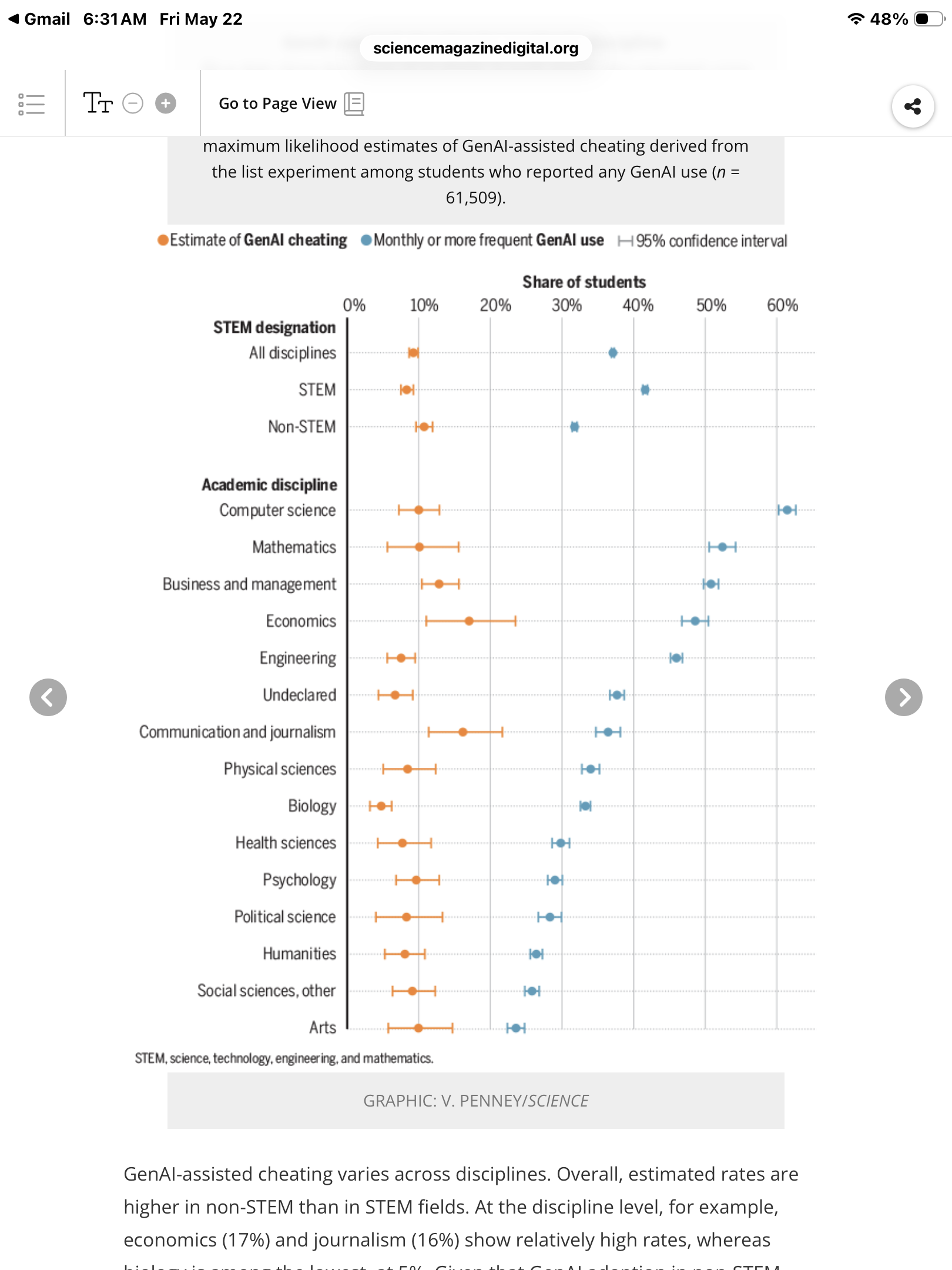
...Sleep is a ubiquitous, evolutionarily conserved brain state whose core biological purpose remains unclear. Despite its near-universal conservation across species, sleep imposes substantial risks, suggesting a fundamental function that has remained difficult to define. Early efforts to understand sleep were guided by behavioral observations and the assumption that its primary role was rest and restoration. With the introduction of electroencephalography (EEG), this view shifted toward a neuronal framework, defining sleep as distinct brain states characterized by specific electrical patterns linked to memory consolidation and cognitive processing (1).
...Rai's practice, as he writes in "Picturing Time," was rooted in the "divine concept of darshan," or "a complete awareness" of "the reality of a place, a person, the physical and the inner aura, reflected in its entirety." He believed that "some situations arise from somewhere to bless you with the unexpected," and understood that a good photo unfolds like a dream: initially, the lightning-bolt shock of aesthetic confrontation, and later the remembrance—memory-images persisting long after the page is turned, the book put away, the subject of the picture itself long forgotten
Understanding Tutelary Spirits
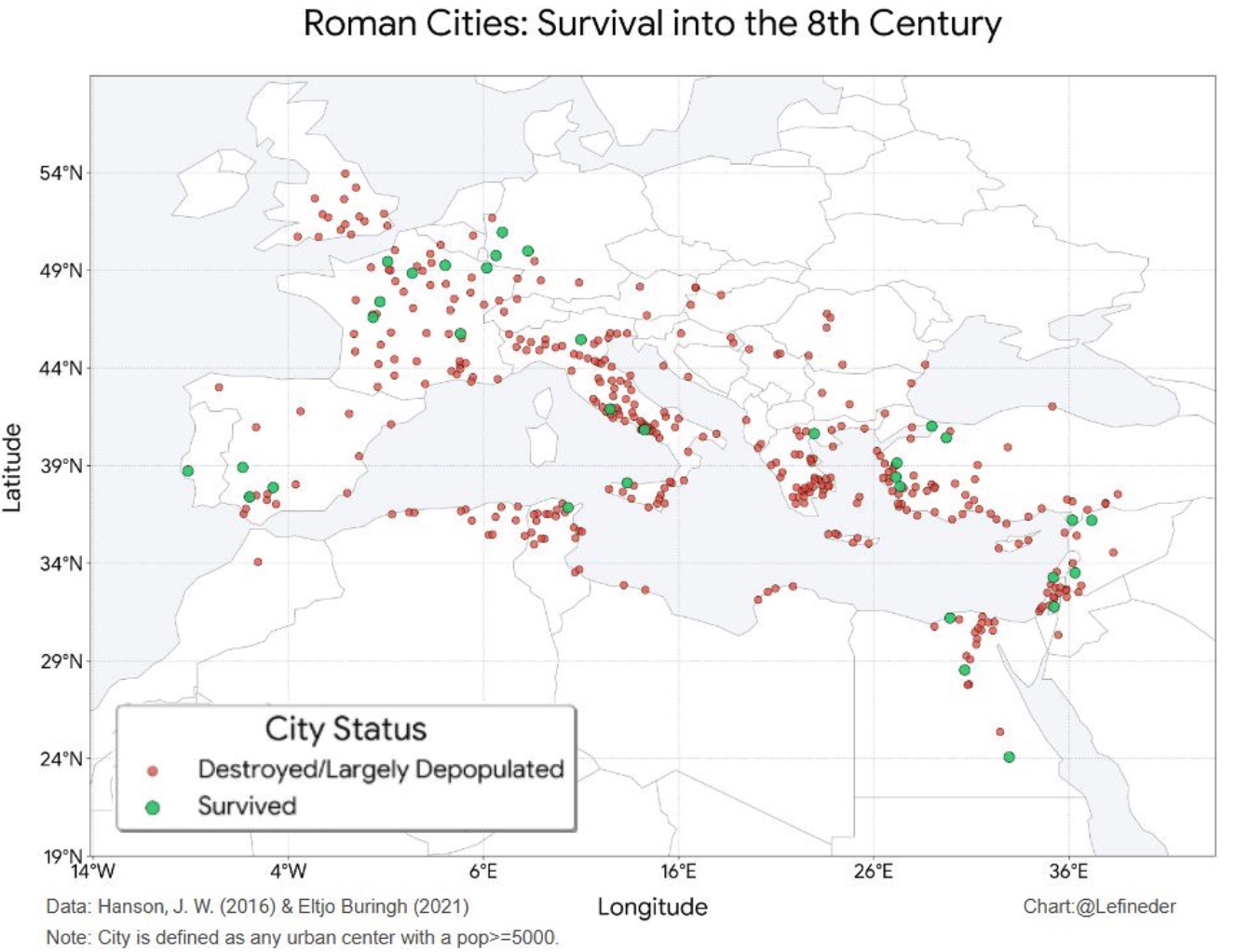 ,br>(via Bruce Sterling)
Building Earth is a new interactive map that explains how the Earth's climate has developed over millions of years through the lens of physics. The map strips the planet back to its absolute bare bones and then walks you through the four main developmental stages of the Earth - showing you how it gained an atmosphere, how wind currents began to move heat, and how the complex weather patterns we recognize today finally took shape.
...for the first time in years the Iran war is forcing policymakers to confront a question once considered unthinkable: Can the post-1945 order continue functioning while refusing to adapt to the actual distribution of power in the twenty-first century?
...As countries are moving toward electrification to replace their need for fossil fuels (the US being king among the exceptions), Exxon Mobil, the world's largest producer of single-use plastics, is planning to increase petrochemical production, mainly for plastics, by 80% by 2050. By 2060 the entire plastics industry projects to triple its current production of one-half billion tons per year (up from 2 million ton in 1950).
...allow me to share some insults in the same vein as shitgibbon, as collected by the indefatigable Hugo.
wankpuffin, cockwomble, fucktrumpet, dickbiscuit, twatwaffle, turdweasel, bunglecunt, shitehawk
That about covers it!...Perhaps the most important consequence of all will be the realisation that open market globalisation — the main economic trend of the last 30 years — cannot provide the security of supply on which modern economies have come to rely.
...Reality has become so grotesque that anyone describing it accurately can be made to sound unstable. The denier no longer has to prove the scientist wrong. He only has to make the scientist look like the kind of person who would look like having a panic attack in front of a screen.
...What you teach is now largely understood as a vulnerability to the institution. What you study is a source of risk. You are a liability.
...Ricardo existed at a particular point when English history was going round a corner so sharply that the progressive and the reactionary positions changed places in a generation. He was just at the corner where the capitalists were about to supersede the old landed aristocracy as the effective ruling class. Ricardo was on the progressive side. His chief pre-occupation was to show that landlords were parasites on society. In doing so he was to some extent the champion of the capitalists. They were part of the productive forces as against the parasites. He was pro-capitalist as against the landlords more than he was pro-worker as against capitalists (with the Iron Law of Wages, it was just too bad for the workers, whatever happened).
The interacting Khoisan peoples of Southern and Southeastern Africa, the 260,000 to 150,000 year old pre-expansionist auto-organized Khoisan Civilization (aggregate of interacting/connected complex enough to persist long term societies), lived in a region of approximately 10.5 million square kilometers, an area larger than Canada, the USA, Europe or China in a region today occupied by over 600 million Bantu, Semitic and Indo-European expansionists (compared to the pre-expansionist Khoisan population of hunter-gatherers of 500k to less than 1 million).
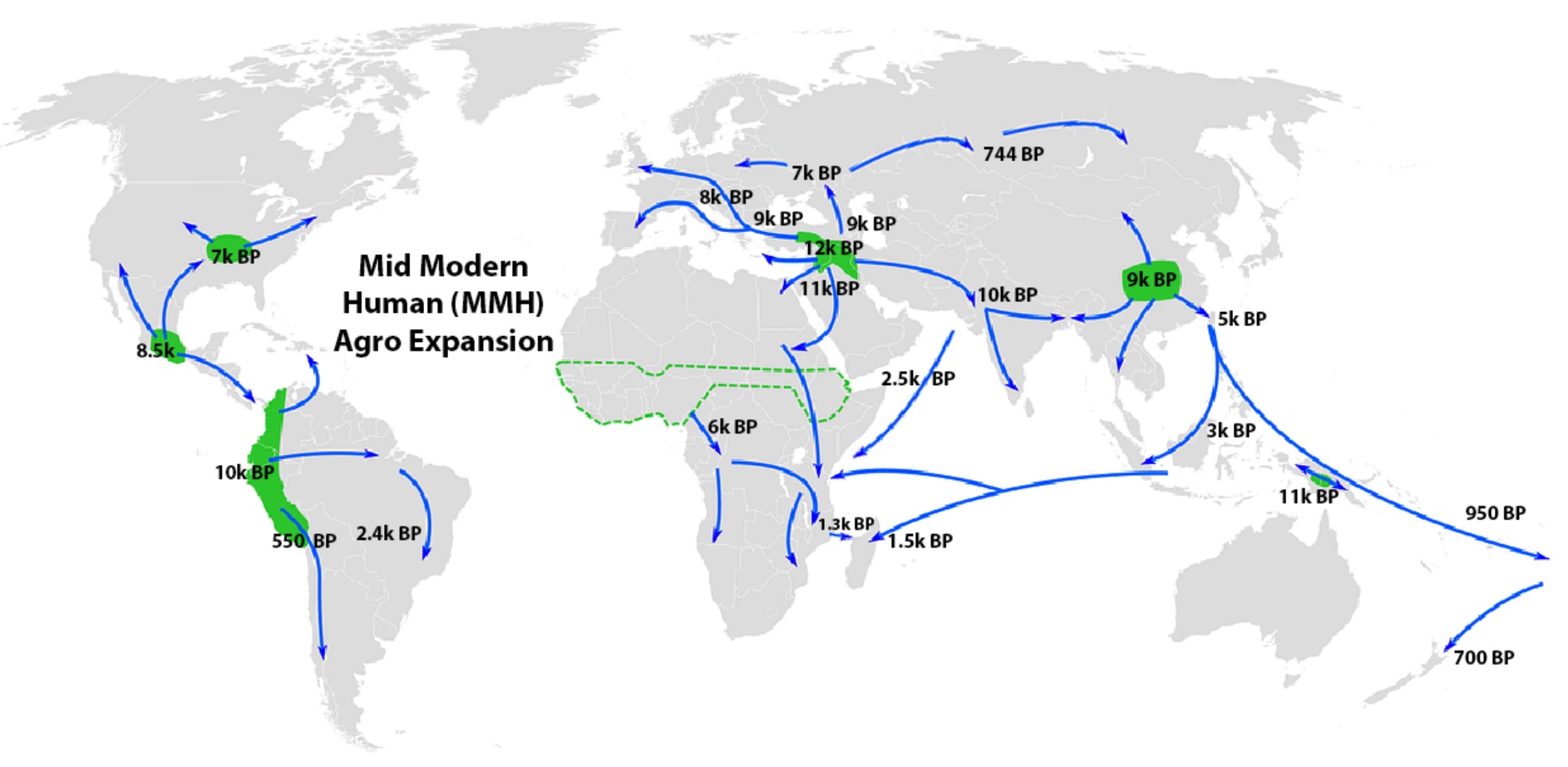
you can know that which does not exist.
That is the void.
Wisdom has existence, principle has existence,
the Way has existence, spirit is nothingness.
The Book of Five Rings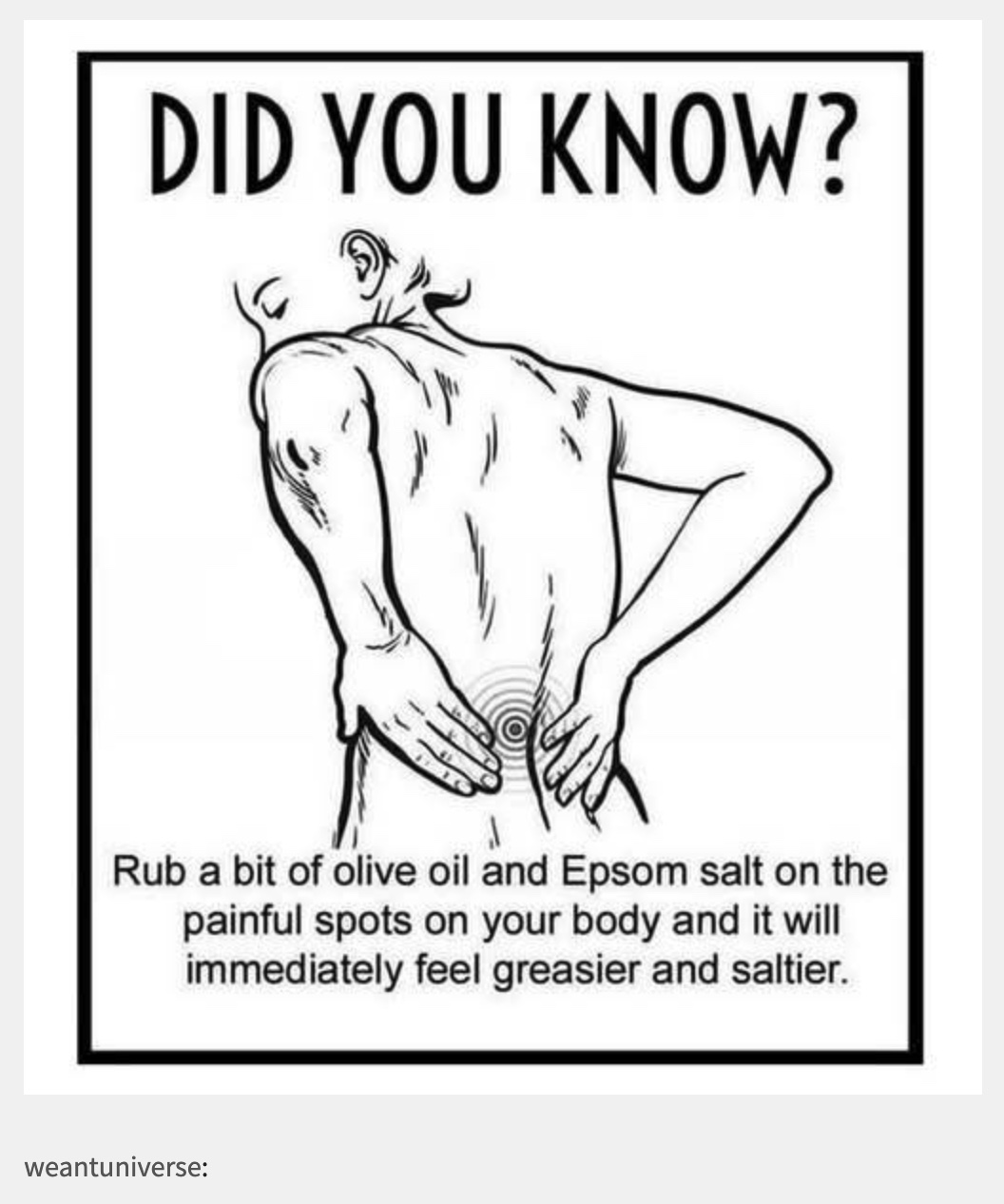
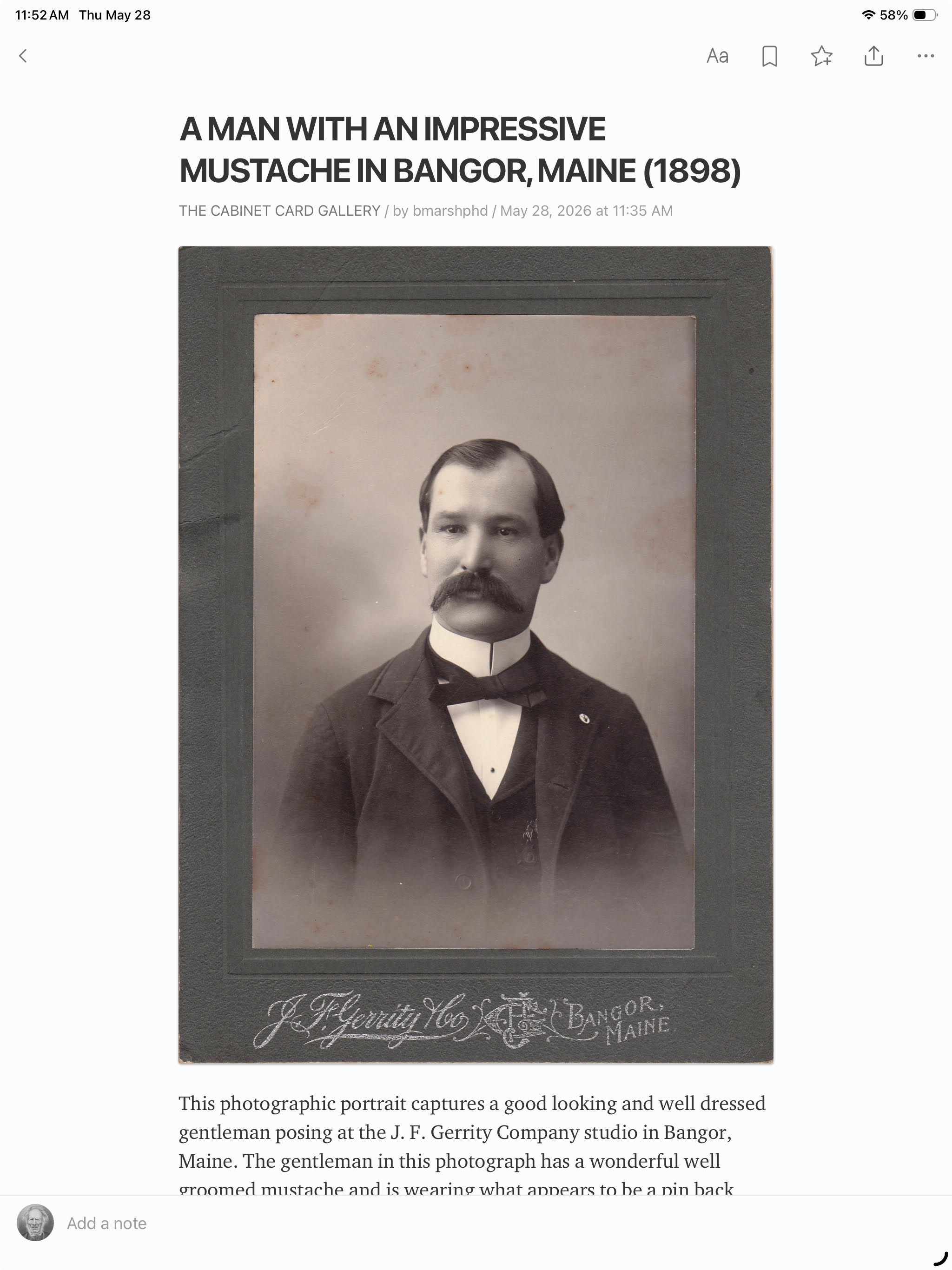
Time Conundrum puzzles.mit.edu
You are about to embark upon a Conundrum. Unlike other puzzles, the instructions for this puzzle are clear and explicit; simply follow the instructions exactly as they are written, and the answer will be spelled out for you. All you need to do is, at each time step, look at what is written on your instructions for that time step, and carry out the instructions. You always carry out one numbered instruction per time step.
...six of the craziest time travel paradoxes that could give even the most seasoned sci-fi fan a headache. Beyond their sci-fi appeal, these paradoxes challenge our understanding of logic, causality, and the very fabric of reality itself.
...By the way, I do not think it is a good possibility that time travel will ever happen, the same as teleportation as both need to break your physical being down to atoms and reassemble you, which means essentially killing you and expecting the clone to have your life experiences, which can't happen.
...The concept of the holobiont extends a central organism, like a human being, to include the consortium of microorganisms in, on and around it. Holobiont theory recognizes the unseen wrinkle of microbial life, then folds it back into an observable eukaryote. Considering this, the concept of holobionts allows people to appreciate eukaryotic organisms in a fuller context that challenges evolutionary theory by allowing the branches of the tree of life to intersect.
Disembodied human brains used for drug testing Sara Reardon
...The BrainEx machines sit in six plexiglass cubicles in an office overlooking Yale University, where Vrselja, neuroscientist Nenad Sestan, and their colleagues conceived of the idea 10 years ago. Before each brain is placed in a machine, surgeons examine it through a loupe, then suture four plastic ports into the vessels that once supplied the organ with blood so it can start reacting to drugs and generating data. Once the brain is attached to the BrainEx machines, an artificial lung and kidney oxygenate and filter fluids as they flow through the organ.
...The textbook view of mantle plumes—the long-lived columns of hot rock that rise from deep in the planet—makes them seem like giant blowtorches, steadily searing the crust from below. But new studies of the sea floor around Iceland are pointing to a long-debated alternative: that plumes are actually more like blobs rising in a lava lamp, delivering intermittent pulses of heat.
REGULATORY ROLLBACKS Last week, the U.S. Environmental Protection Agency (EPA) announced it intends to undo rules meant to reduce fluorinebased refrigerants and drinking water contaminants. The agency said municipal water utilities could not realistically meet a 2029 deadline for limiting concentrations of two widespread per-and polyfluoroalkyl substances (PFAS) known as "forever chemicals." It proposed to give utilities 2 more years to meet those limits. The agency wants to withdraw and revaluate limits on four other PFAS chemicals as well, citing procedural errors in the regulations. EPA also announced plans to weaken a 2023 regulation that requires businesses to switch from using hydrofluorocarbons, long-lived greenhouse gases, as refrigerants to more climate-friendly coolants. EPA intends to delay the deadline 5 years to 2032 and exempt smaller refrigeration systems. The agency also rescinded a requirement that refrigerant leaks in cold transport trucks be repaired, asserting that this will lower grocery prices. —Erik Stokstad
...Grants managers at two of the U.S. government's largest funders of scientific research have recently placed unprecedented limitations on the ability of U.S. scientists to publish with co-authors from other countries, researchers say. Units of the National Institutes of Health (NIH) are privately directing grantees to request permission in advance for any co-authorship with a scholar affiliated with a foreign institution, even if all the work was done in the United States. NASA, meanwhile, is reportedly telling some grantees that papers coauthored with researchers in China may have violated its rules.
The absence of African elephants impairs the ecological role of dung beetles
EMFs can disrupt spatial orientation in several species of mammals, birds, and invertebrates. For example, proximity to radars reduces activity levels and foraging behaviors in bats (2). Whale strandings have also been associated with periods of increased solar activity (3) and geomagnetic disturbances, which cause fluctuations in radiofrequency waves in the environment (4). Radiofrequency emissions can also affect the orientation abilities of rodents used in scientific experiments, which highlights the importance of shielding laboratory setups from external EMFs (5). Among birds, broadband electromagnetic noise that is common in urban environments disrupts magnetic compass orientation in night-migratory European robins (Erithacus rubecula) (6). An analysis of more than 2 million captured landbirds from 152 species also found an association between geomagnetic disturbances and increased vagrancy in North American migratory birds, which suggests that disrupted magnetoreception can affect navigation and dispersal behaviors at the population level (7). Among invertebrates, weak radiofrequency fields disrupt orientation in the American cockroach (Periplaneta americana) (8) and in the small marine crustacean Gondogeneia antarctica (9).
Invertebrates, long believed to be simple automatons, can exhibit affective-like states, including enduring behavioral shifts after positive experiences (1). Despite this evidence, legal and ethical protections for animal research and industry remain concentrated on vertebrates (2,3), with only limited recognition of cephalopods and decapod crustaceans in some jurisdictions. Insects and other invertebrates remain outside formal welfare considerations (4). To fill this protection gap, policy-makers should integrate invertebrates with centralized nervous systems into ethical and policy frameworks.
...Flooding the zone, the waters keep rising, the torrent does not stop, it just keeps coming. One must try to stay afloat. Kicking and paddling, getting more and more tired, struggling to keep one's head above, some are going under, others will soon follow. What happens when reality refuses to submit to our models? It appears we are finding out. Hormuz remains effectively closed, physical markets are getting tighter, the squeeze 'should' have happened, it has not quite, presumably it is coming soon, surely it is coming soon, or perhaps it just comes elsewhere and does not reach 'here', wherever that is.
...Disruption to the fertiliser industry had initially centred on widely used nitrogen products, such as urea and ammonia. Roughly 30 per cent of ammonia trade passed through the Strait of Hormuz before the conflict. But analysts warn that even if the strait were to reopen to more vessels tomorrow, phosphate markets could take longer to recover because they are more geographically concentrated and heavily dependent on Gulf sulphur flows. Morocco and the western Sahara hold most of the world's reserves of phosphate rocks, which are treated with sulphuric acid to make fertiliser.
...there's a growing public sense that the system is unfair and rigged against ordinary people. This sense partly reflects the reality that a rising share of economic rewards is going to shareholders as profits rather than to workers as earned income. It also reflects the fact that, even as a growing share of income accrues to wealth, within the growing upwards distribution of income within, there is growing concentration of wealth at the very top. In other words, a rising share of unearned total income is going to a very small number of people.