June 2026 general links
(continues May 2026 links)
Many of these seem to be bellwethers for what's on and just beyond the Horizon of the moment,
collected from the Incoming for their portentous savor, and illustrative of my engagement with serendipity)
The form factor I seem to gravitate toward is The Commonplace Book, a now-digital place to entomb snippets that seem at the moment of encounter to want saving, often as prime examples of some form or genre to which my attention has been drawn. Most offer temptingly yawning Rabbit Holes, and these collections of links form a sort of map of my wanderings and encounters.
1vi26
Nam Jun Paik Jörg Colberg
...I actually don't own many catalogues of artists' career retrospectives, mostly because I feel that they're not made for me. They tend to be huge, printed on heavy, glossy paper. They tend to come with unreadable essays written by museum curators, who possibly are the closest people we have in our contemporary world to medieval monks — the kinds of people who labour over things 99.9% percent of people don't care much about, describing it in a language that the same 99.9% of people can't understand. I'm generally not very interested in broad populism about the arts, given that typically it comes with an agenda (the anti-elite art discourse is mostly promoted by right-wing or far-right actors). And I actually am able to read specialized text; it's just that I don't want to. "What can be said at all," Ludwig Wittgenstein declared, "can be said clearly," and that's how I prefer my art writing. If you need to use specialized jargon my main assumption is that you either prefer to only address your peers or you need to hide the paucity of your argument behind jargon (or, as is usually the case in the world of art, both).
Forward Into Foreignness Joseph O' Neill at The New Yorker
U.S. names with the oldest population file under Nacirema
What's the oldest name in the U.S.? erdavis.com
Names from Census data flowing data
Molly Crabapple's Here Where We Live Is Our Country Cory Doctorow
Torture, Racism, War and Male Chauvinism: Fighting Back Rebecca Gordon at Informed Comment
2vi26
It Makes You Sick: The Attacks on Health, Healthcare, and Care Rebecca Solnit
...when healthcare is under attack, so is our health, and when health declines everything declines. The Trump Administration is disinvesting in the people of this country and this world. That's typical of their shortsighted self-centered policies, which are pretty much the same thing as their inability to recognize the value of anything whose positive impact is slow, indirect, immeasurable, etc. It's a smash-and-grab regime that doesn't understand even the wealth its corrupt members are amassing is not separate from the systems that provide all the stability, workforce, laws, resources, customers, etc. that make an enterprise profitable or at least not bankrupt....To assert individuals are fully responsible for their own physical and economic health is to deny collective responsibility and too often to deny major health causes such as environmental and social factors. Conservatives all but deny there is an environment, because they'd rather see the nonhuman world as a collection of commodities that can be sold, altered, poisoned, destroyed than as a delicately orchestrated system in which each part contributes to the whole.
...The US is rich in material goods, badly distributed, so for example, San Francisco has about three times as many unoccupied homes as it does homeless people — meaning that there is no actual housing shortage in this context, just the kind of distribution problem capitalism specializes in. So rich in material goods, so poor in other ways, and that seems to be the root of our mental and physical health crises. I have often thought when I roamed the streets and saw the unhoused and the mentally distressed that this country is good at breaking people.
The tedious power of storytelling Cory Doctorow
...Art is intended to make other people feel something." This distinguishes "art" from "beauty." A sunset can be beautiful, but no one intends anything by it. An artist who takes a photo or paints a picture of a sunset does so in the hopes that it will make you feel something, but the sun and the atmosphere and the Earth's curvature and rotation don't hope anything, because they are inanimate.This distinction has lately become far more significant, thanks to the rise of images and words that have the seeming of intent, but who don't have an intender. When you paint a painting, every brushstroke conveys an intent, even if you can't point at an individual brushstroke and articulate its purpose. The same is true of prose: every word and punctuation mark is there for a reason, and "being good at writing" (like "being good at painting") is how we describe someone who has practiced so much that these reasons can be infused into each micro-decision on a near-totally subconscious level.
The Only Three Distinctions Between People Marginalian
It may be that consciousness evolved to sieve the relevant from the incomprehensible allness of all there is, to parse the world into concepts and find an organizing principle for the chaos of them. Our cognitive inheritance is a restless yearning to fathom how things cohere and where they belong, a yearning we have given shape to in laws and labels, weights and balances, hierarchies and categories. It has served us well, this instinct to categorize in order to contain, giving us music, the laws of planetary motion, and democracy. But it also pulsates beneath every ism we have ever invented, beneath every stereotype and every genocide, beneath every algorithm that reduces us to variables then adds them up to sell the sum of who we are, beneath all the parcels of preconception we trade daily and mistake the barter a for a genuine encounter with one another.
Canons ftrain
...We'd much, much rather fight over an author than read them. So now it's the age of smashing. MMA on the White House Lawn. Ocean sensors being decommissioned. God even knows that the NEH is today. The national body is becoming insensate. We are losing our eyes, our ears, any sense of touch. We can't even feel the weather. Ultimately only our mouths remain, demanding a steady feed of goop. We are an old man jamming crumbling cookies into his sore gums. The whole country has gone to Snak Kakes.
The Strait of Hormuz: The Supply Chain Loop that broke the World Behrouz Bakhtiari at Informed Comment
...Describing the waterway as a place where Iran and the U.S. flex their muscles doesn't tell the whole story. The story did not start on March 4, when Iran closed the strait with a combination of asymmetric naval tactics, geographic control and maritime blockades. It was years in the making.Understanding why the strait stayed open for so long, and why it's not open now, requires thinking not in terms of current entities but in terms of loops.
...Iran has long leveraged the Strait of Hormuz to transport its own oil to international markets. The revenue generated worked as Iran's binding self-constraint. In the language of systems thinking, this is called a balancing loop: a mechanism where the system corrects itself.
Think of the predator-prey dynamics in ecology: when rabbits multiply, foxes thrive. When rabbits are scarce, fox populations decline and the rabbit population recovers.
The oscillation in Iran's relationship with the West followed the same self-correcting logic. Iran's revenues were the rabbits and the West's diplomatic pressure were the foxes.
...What's known as the balancing self-deterrence brake loop kept aggression in check until its breakdown in 2025. The strait was not kept open by the U.S. navy. It was held open by the logic of restraint and self-interest.
The 2015 Joint Comprehensive Plan of Action (or JCPOA) was this loop in full action.
...Operation Epic Fury was, in systems thinking, a direct injection of energy into the reinforcing aggression loop.
It not only destabilized Iran's internal political and financial state, but also destroyed Iran's willingness to engage in diplomatic talks. The Iranian regime saw no clear pathway forward but to fight back hard to survive.
The Strait of Hormuz was closed for the first time in the life of the Islamic Republic. Restoring the brake requires both a credible diplomatic offer from the West and genuine invitation to China to take part in a mutually beneficial diplomatic settlement with Tehran.
The strait will eventually open again. But between now and eventually, Pakistani children are out of school to conserve fuel. Bangladesh's garment factories are running at half capacity. In North America, gas prices continue climbing and the cost of everything that moves by truck is rising with them.
None of this was inevitable. The feedback structure was visible. The trajectory was traceable. The blockade was the predictable output of a system with a stabilizing feedback loop that had been systematically dismantled over a decade.
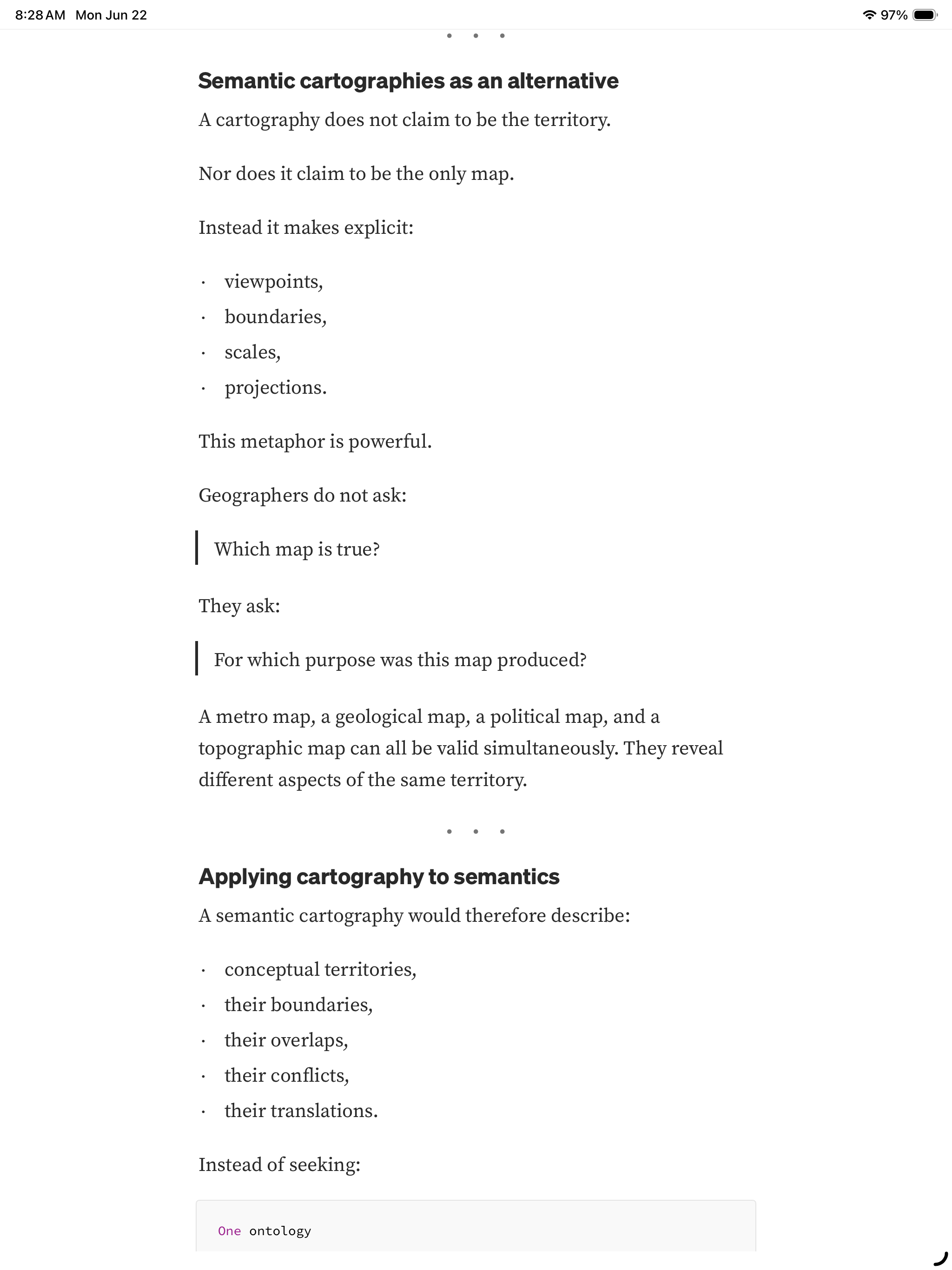
Everyone Has an Ontology Now. Almost Nobody Has an Ontology: Extended Analysis Dr Nicolas Figay at Medium
...reality increasingly suggests that coexistence of partially incompatible semantic worlds is not a failure to be corrected — it is a structural condition. Domains differ. Scales differ. Observers differ. Purposes differ. Representations differ. Epistemologies differ. These differences are not resolvable through better tooling or more disciplined engineering. They are constitutive of how distributed knowledge works.
All the Versuses of Life languagehat
The poet Tony Harrison... I have now discovered his long poem "V.", first published in the LRB in 1985 (archived), and it is (among many other things) so gloriously filthy I can't resist sharing some of it, while hoping any interested parties will click through for more. (cached)
Unflattening / Exploring Calvin and Hobbes Kevin Kelly
3vi26
Emma Chapman, from the New Scientist 'Lost in Space-Time' subscriber-only newsletter
Long before I understood I was tuning into part of the electromagnetic spectrum, I felt the wonder of sensing something my eyes couldn't see.Human eyes evolved to detect only a narrow band of light — enough to navigate landscapes and recognise danger — but the universe shines across a vast spectrum stretching from gamma rays to radio waves. Different wavelengths of light interact with matter in different ways, meaning each reveals a different side of the world, and universe, around us. We encounter these properties constantly in everyday life. Microwaves, for example, are just the right energy to excite water molecules, perfect for the noble application of reheating last night's leftovers. X-rays, meanwhile, have just enough energy to pass through soft tissue, but are absorbed by bone, allowing doctors to image our skeletons.
Radio light is the longest wavelength and lowest energy light in the electromagnetic spectrum, able to travel enormous distances largely unimpeded, and pass relatively easily through Earth's atmosphere. This makes radio waves a powerful medium for communication on Earth, as I experienced as a child, but they are also an ideal messenger from the distant reaches of space and time. Years later, as my interests turned towards cosmology, it felt fitting that I would end up using radio telescopes to study the universe's first stars and galaxies.
The electromagnetic spectrum as we know it today follows centuries of scientific discovery, as researchers gradually discovered that the universe extended far beyond the limits of human vision. It started with a rainbow in 1665, when Isaac Newton used glass prisms to show that white light could be split into a spectrum of colours, from red to violet. By 1800, astronomer William Herschel had discovered infrared light, again with a prism, by measuring the temperature of different colours of light and noticing that his thermometer ticked higher just beyond the red end of the spectrum. By the end of the 19th century, advances in electromagnetism and laboratory technology had revealed radio waves, microwaves, X-rays, and gamma rays, completing our modern view of the spectrum.
...Optical astronomy is as ancient as civilisation itself, born from the simple fact that we arrive into this world already equipped to see sunlight or starlight. Other regions of the spectrum require additional tools: antennas and dishes for radio waves and microwaves, and specialised detectors for X-rays and infrared light. We can think of each of these subcategories as languages where, to understand the universe, we need the ability to translate to the optical light our eyes more naturally comprehend or, in the case of household radios, sounds our ears can appreciate. Only then are we rewarded with a complete cosmos of unseen messages and hidden histories.
...We are born fluent in only a single language of light, yet the universe is profoundly multilingual. The electromagnetic spectrum is a Rosetta Stone, allowing our telescopes to translate unseen stories written in invisible scripts. When read together, these stories allow us to tune into a universe far richer than the one our eyes alone can see.
Start your zucchini engines NYTimes
...One year after the president stood in that Rose Garden and announced the highest U.S. tariffs in nearly a century, the manufacturing sector has shed jobs and inflation has climbed.Let that sentence sit for a moment. The two metrics that mattered most to the entire enterprise — manufacturing employment and consumer prices — moved in precisely the opposite direction from what was promised.
...In nearly every state — 45 in total — blue-collar job creation following the tariff announcement failed to meet the average annual number created under the Biden administration. From April to December 2025, the average state lost more than 2,500 blue-collar jobs, compared with an average annual gain of more than 7,400 under Biden.
These are not abstract numbers. They are lives. They are mortgages not met, health insurance not renewed, retirement plans not funded. They are the human wreckage of a theory that sounded muscular in a Rose Garden speech and proved catastrophic on a factory floor.
Small-business bankruptcies increased 10 percent over the past year, and the number of large corporate bankruptcies reached its highest level since 2010. The promised manufacturing renaissance was a mirage — visible from the podium, invisible from the shop floor.
...Tariffs function as part of a consumption tax, and like all such taxes, they are regressive. The Tax Policy Center finds that households in the bottom income quintile face a 0.9 percentage-point rise in their effective federal tax rate compared with 0.7 percentage points for those at the top. Lower-income households spend a greater share of their income on imported goods and essentials, meaning they absorb a disproportionate share of the cost.
Let the irony marinate: the president who promised to champion the forgotten American worker enacted one of the most regressive tax increases in a generation — one that fell hardest on the very families who could least afford it. And he did it while telling them it was free.
How much of a photograph is actually yours? Przemek Zajfert at Medium
...Henri Cartier-Bresson is widely regarded as the embodiment of control over the photographic moment. The "decisive moment" feels like pure mastery: everything under control, everything intentional.Yet one of his most famous images tells the opposite story.
"Behind the Gare Saint-Lazare" (1932): a man leaps over a puddle, his reflection perfectly aligned beneath him. A frozen instant that appears completely composed.
In reality, Cartier-Bresson held his camera through a gap in a fence. He did not see the image. He only anticipated it. Even the striking poster in the background — which completes the visual tension — only became visible to him later. He simply called this photograph:
luck.
What makes the image powerful is not control. But what escapes it.
...You never get what you controlled. You get what happened.
Human Flatus Atlas flatus.info
4vi26
Delusion as a service Cory Doctorow
...there are rare pathologies lurking in all of us, vulnerabilities that may never surface – until we come into the presence of a novel stimulus that unlocks them.There's an analogy here to technology debt: technologically unsophisticated people think of software as a machine that never wears out and has no incremental usage costs (apart from electricity). In this framing, software is the perfect asset, one that never depreciates. But the reality is that software is a liability, not an asset:
https://pluralistic.net/2026/01/06/1000x-liability/#graceful-failure-modes
Software exists in a system, and while software might function perfectly under the conditions in which it is first created and deployed, there are continuous changes to all the technology that is upstream, downstream and adjacent to the software, which means that systems that are robust and secure at the time of deployment can become brittle and dangerous, even though the software doesn't change at all:
https://pluralistic.net/2022/04/24/automation-is-magic/
There's another analogy here, to utopianism. A "utopia" can't just be a place where everything works perfectly. Even the most well-functioning, orderly and prosperous system is beset on all sides by exogenous shocks: belligerent neighbors, tsunamis, zoonotic plagues, even asteroid strikes. You don't perfect your society just by making it work well. You have to make it fail well. A utopia isn't a society where nothing goes wrong – it's a society where things go wrong all the time, but we're able to fix them:
https://www.wired.com/2017/04/cory-doctorow-walkaway/
The point being that things that work fine may still fail badly when they are exposed to unanticipated external stimuli, and the one thing we can absolutely anticipate is that the future will have many unanticipated stimuli in it.
If Mission: Space is a machine for surfacing unsuspected anatomicalvulnerabilities, the internet is a machine for surfacing and exploiting all kinds of unsuspected psychological vulnerabilities. Note that I'm not claiming that the internet drives everyone crazy — rather, that the internet can locate and exacerbate vulnerabilities, including vulnerabilities that might have lain dormant for your whole life, but for the fact that the internet exposed you to such a wide spectrum of stimuli.
5vi26
Science Friday
A narrowing window to understand AI Eric Horvitz and Robert WestAs capabilities of artificial intelligence (AI) advance rapidly, human understanding of these systems is increasingly falling behind. Several trends are converging to make AI systems harder to understand just as they become more consequential. Without deliberate countervailing efforts, the window for building AI systems that we can meaningfully understand and guide may close beyond recovery....As AI systems become deeply embedded in human environments, they may respond to preferences but also shape them. Systems optimized for engagement or approval may reduce friction and discourage scrutiny. Over time, curiosity and skepticism may erode, leading to neglect and acceptance.
Preserving human agency must therefore remain a central goal. It is not enough to monitor how AI systems behave. We must also understand how they shape human goals and judgment, and ensure that people retain the capacity and motivation to question, audit, and guide them.
...The goal is not just more capable AI, but AI that is more intelligible, accountable, and aligned with human aims. The window for achieving that future is narrowing. Without sustained efforts to keep AI intelligible, we may come to depend on systems that we can neither adequately understand nor effectively guide—transforming the relationship between people and the systems they create.
Proposed orbital 'airbag' would block solar storms Paul Voosen
String theory is rebuilt from first principles Zack Savitsky
...String theory traces back to the 1960s, when Italian physicist Gabriele Veneziano, using only particle collider data and basic principles about nature, discovered a formula that seemed to capture the behavior of elementary particles. Although physicists soon found that standard quantum theory could explain particle behavior in a more systematic way, Veneziano's equation gained a second life when researchers realized it described particles not as points, but as vibrating strings....Over the following decades, string theory grew into an ambitious framework in which all the fundamental particles and forces arise from tiny vibrating strings, much as different notes emerge from guitar strings of different tensions. Because strings are extended objects rather than infinitesimal points, the theory sidestepped mathematical headaches that plagued other attempts to merge quantum theory with gravity. Threatened 'rolling stone reefs' are surprisingly diverse
...Rhodoliths are considered "habitat engineers" because, like corals, they form reeflike structures that serve as home to other algae, small invertebrates, and fish. Although these beds cover about 4 million square kilometers worldwide, an area larger than the combined extent of tropical coral reefs, kelp forests, and seagrass meadows, few studies have inventoried their full suite of species...by making it faster and easier to produce professional-seeming papers, AIs threaten both to overwhelm journals and peer reviewers and to take opportunities away from junior scientists. But far upstream of that, many scientists interviewed by Science sense a phase change underway. Many fear that if unleashed in all parts of the scientific process, AI tools could lead to nothing less than the death of astrophysics as a human endeavor. "A lot of people think that it's too late to intervene—we're done,” says David Hogg, a computational astrophysicist at New York University (NYU).A provocative view of evolution turns 50
...Half a century on, Dawkins still stands by the book's central claim: Biology is best understood from the perspective of genes. Organisms—the animals, plants, and fungi that surround us, and long biologists' natural units of explanation&mdash'are, in evolutionary terms, too fleeting, in his view. They come into being as unique products of genes and environments and last a single generation. Genes, by contrast, persist across generations. It is this evolutionary longevity that makes genes, or "replicators" to use Dawkins's preferred term, both the ultimate beneficiaries of natural selection and its fundamental unit.Effects of China's underground infrastructure
Wine's warning for farming in climate change
...Wine grapes are clonally propagated monocultures that are tied to specific cultivars by the regional identities that give them value, such as pinot noir in Burgundy and cabernet sauvignon in Napa (1, 2). Unlike M. cardinalis, wine grapes have limited capacity to adapt through rapid evolutionary change on relevant timescalesDual-use research under scrutiny
...Science and national security operate on conflicting principles (3, 4). Science advances through cumulative knowledge generation and free information flow, with publication serving as the primary vehicle for knowledge dissemination and the foundation of scientific reward systems (5). By contrast, national security operates on information control, restricting dissemination of knowledge that could risk public safety. This tension creates tradeoffs between competing institutional interests, making policy balance a persistent challenge.
What Dan Read Victor Mair at Language Log
...Two years before me, another Ohioan, Dan Pelzer, was posted to Dharan, a sub-metropolitan city in Sunsari District of Koshi Province. He was also gifted with a book chest by the Peace Corps, and that propelled his lifelong passion for reading. Dan, who passed away at the age of 92 in July 2025, kept a handwritten list of the 3,599 books that he had read since 1962. ...I printed out Dan's entire book list and it amounted to 215 pages (46,001 words) at 1.15 line spacing.https://what-dan-read.com
The War on Terror Comes Home in the Trump Era Tom Engelhardt (last post to TomDispatch)
Trump's support is collapsing in every American Nations region Colin Woodard
Daniel Anderson Photography drone landscape images
Escher: The paradoxical artist beloved by mathematicians New Scientist
The cat, the cake, and complexity: a short guide to systems intelligence Houda Boulahbel at Medium
...What Is systems intelligence?The term was originally coined by researchers at Aalto University in Finland as "intelligent behaviour in the context of complex systems involving interaction and feedback."
...Systems intelligence cannot be engineered or directed through an individual course or curriculum. It develops from the interaction over time of multiple elements, including but not limited to, new and previous knowledge, life experiences, self-reflection, perspectives, bias, circumstances, social and professional networks, limitations and opportunities.
These elements are deeply entangled. Like ingredients in a cake, they interact and transform one another. They create multiple ways in which individuals, communities, or organisations, can elevate their systemic awareness and apply it in order to solve problems and fulfil aspirations.
...In systems thinking, emergence describes situations where the whole is more than the sum of its parts. In other words, new properties arise from the interaction of individual parts over time.
A cake is more than just heated up eggs, sugar, flour, and butter. As the ingredients are mixed, they interact with, and transform each other, becoming something entirely new: a product with properties that are different from those of its individual components.
...To work with emergence is to understand that outcomes cannot be predicted and controlled, and that considered probing, and experimenting can provide a better sense of a situation.
...Systems intelligent thinkers appreciate that the way they view reality develops over time from the interplay of their education, previous knowledge, experiences in life, genetics, social circles and many other factors. They recognise that their own mental models are partial — and often biased.
Therefore, they actively engage in internal reflection. They also seek to challenge their assumptions and expand their mental models. Curiosity, exploration, going beyond disciplinary boundaries, continuous learning and reflective practice are key.
...If we accept that reality is continuously evolving, emerging from dynamic, interdependent forces, we begin to see the present as the seed that shapes the future. We recognise that the future is not written in advance, but shaped by our choices and actions in the present.
6vi26
How Nature Imagined the Figment of You Marginalian
It is there like a constant whisper, like a ceaseless gust of thought rustling through the canopy of the collective mind: the haunting sense that ours is a particularly difficult time to be alive, that reality today is particularly hard to bear. Such sentiments are errors of proximity — we live too close to the bone of our personal predicaments, have drawn the horizon of time too close to see the of chance.
7vi26
Warren Ellis:
The days of lonely old hermit farts collecting up things on the internet for you are passing, because most of the time we can't find anything online worth passing on because social media buries the cries of artists and real conversation happens in private spaces now, and nobody tells us things. This is fine. It's just change....people sit on the kerb of a street in a town that isn't pretty enough for Instagram influencers, their skin aged prematurely by their phone screens and the digital billboards all around them, googling for peptides to restore the collagen their own phones are evaporating out of their faces and being told by the Google AI summary that tobacco reduces skin cancer. Goldfish with tits of congealed microplastic fuck in the black water sludging its way down the gutter. A "celebrity," which they understand to mean "someone who is on a screen somewhere for a period of time longer than fifteen seconds," appears on the nearest digital billboard. Its teeth are white. Taylor Swift white, Rylan white, bone-white, skull-white, nothing-white. The alien teeth seem to swell on the screen, as an inhuman voice drones from the frame about low-cost funerals to the musical accompaniment of something Spotify has inserted into eight million playlists this year. They know the song intimately but they don't know what it's called or have any context about it beyond the fact that it must be popular because all the machines make them listen to it over and over again. The teeth seem to invert and bend, twisting inwards to become the event horizon of a black hole that emits only the elongated howling word ddddeattttthhh in an utterance that sounds eerily like Pedro Pascal's because he had a spare three minutes to ensure he was literally fucking everywhere. They run from the town into the countryside, because "people" on X have told them to "touch grass." But the grass bends away from their feet, because even vegetal microintelligences can tell when something approaches that is essentially Wrong and no longer of this world. They fall to their knees and whisper for mercy to a seedling in the undergrowth, as an AI gardening podcaster had once told them to talk to plants. But the seedling blackens and crumbles under their graveyard breath. They crawl through the undergrowth to the shore, and look at the water, but they do not know how to feel about the water because no mathematics has told them how to feel about it, for they are basically just a meat coffin containing a low-voltage ghost that knows nothing and feels nothing beyond a faint, fearful urge to spend money on tokens to feed huge calculators that might tell them what to like. In the weeks and months to come, even the carrion eaters reject the corpse by the shore, instinctively recognising that its grey fibres contain no nutrition. Because they have taste.
Ursula K. Le Guin on the Meaning of Life Marginalian
We are the survivors of immense and minute events — violent cosmic collisions and subtle genetic mutations, the deaths of innumerable suns and the births of innumerable cells, the splitting of continents and the splitting of atoms. Out of it all, we emerged as creatures muzzled by a consciousness that demands we give meaning to our survival. It will not come like alms dropped from the unfeeling hand of the universe. It cannot be found ready-made in the great books and the great teachers, or bought at the price of an Ivy League tuition, or sold by Silicon Valley in a ChatGPT query. That meaning is not something we find but something we make, that it is intimate as love and subjective as the reasons for it, may be the great gift and the great onus of being alive.
The Biological Definition of Species: Gotta Catch 'Em All! JF Cudennec
...The real living world turned out to be approximately the opposite. It is leaky, gradient, hybridising, time-smeared, constitutionally allergic to clean boundaries. Where Linnaeus expected hard edges, biology has spent the last two centuries finding fades: kinds bleed into their neighbours, split without warning, merge back together, lose their sexual partitions altogether, differ from themselves across a few hundred kilometres of coastline.
Humanity's Greatest Mistake Eric Lee at Medium
...indigenous and pre-expansionist modern humans [pre early/mid/late modern humans: i.e. EMH/MMH/LMH] lived in a complex enough society, an aggregate of interacting communities that auto-organized as ethno-linguistic-cultural societies regionally, e.g. within a watershed or several within an ecoregion, that consisted of enough interacting bands [bands of up to 30 were the norm, to form societies totaling minimally 150 individuals in 5-10 bands for enough genetic diversity (founding population of New Zealand was about 400, over twice the minimum) with a shared language/culture/ethnic identity (and shared with all expansionist humans, the all in common zero-order humanist ideology)....In their youth, most individuals and pre-childbearing couples would visit other societies/cultures to visit relatives (the 2%) and learn more of the social and environmental milieu within their tolerated travel distance before about 98% returned home. Fewer individuals willingly cross civilizational divides, e.g. few Indo-Europeans expansionists became Bantu expansionists or Persian expansionists but all share one of the two forms of civilization (r vs K) containing the subforms (e.g. those of Mesopotamia, Egypt, Indus Valley, Yellow River, Mycenaean, Greek, Roman, Maya, Caral–Supe, Aztec, Inca, Phoenicia, Hittite, Persian, Nubian, Minoan, Khmer, ...
...An operational definition of "civilization": A citizen's as-stated largest socioeconomic-political system identity. As a modern human, as a biosphereian earthling, I refuse to be a citizen of any overcomplex society that would have me as a member.
...K-strategists are evolved (K-selected) to live within limits. K-selected culture is antithetical to r-selected culture, especially the late modern CIV1c form. Laozi represents nature-centric partially renormalized indigenous K-culture, while Confucius of the Warring State period epitomizes human-centric r-culture
... a Macintosh application that automatically downloads websites from the Internet. It does this by asynchronously copying the site's webpages, images, PDFs, style sheets, and other files to your local hard drive, duplicating the site's directory structure. Just enter a URL (Uniform Resource Locator), press return, and SiteSucker can download an entire website.
Refining humanity Cory Doctorow
...For the past four decades, an increasing proportion of the population have spent an increasing proportion of their lives explaining things to machines that have no assumptions or shared context: computers. What we call "programming a computer" is really "breaking down a thing that seems obvious to you into increasingly simple instructions that will be followed to the letter."Computers are like the genies of legend, bloody-minded literalists who will do exactly what you say, in the way that is perversely furthest from what you mean. To get a computer to do anything, you must first understand it to a degree that far exceeds the understanding needed to explain something to any other human, even a small child.
the person who designs a form with a blank for "name" might never have met a Malagasy person whose first name is Randriamananjararadofabesata, but in the pre-digital world, when Madagascar Slim met a public official who had to transcribe his name onto a paper form, that official could simply draw an arrow in the margin next to the "name" blank, turn the form over, and write out all 28 characters on the reverse:
https://en.wikipedia.org/wiki/Madagascar_Slim
Computers can't do this. If the programmer doesn't know about Malagasy first names, the computer doesn't know about them either, and the only person who can "teach" the computer about these names is a programmer with access to the code for the database, who has to manually alter the code, compile it, and distribute it to everyone who uses it.
...a computer doesn't have any agency or context or flexibility. If the computer says your name isn't valid, you can't argue the computer into accepting it. The only way to get a digital world to acknowledge your existence is to campaign for systemic change. A trans person might (with great difficulty, to be sure) convince the regional registrar to white-out an old X on one "gender" box and mark a new X in the other box. But the only way to make that change in a software system that has been programmed to treat the "gender" field as immutable is to change society itself.
In this way, computers are machines for teaching us what we don't know about ourselves. They require that we interrogate and faithfully recreate our personal tacit knowledge, and they require that our societies interrogate their tacit presumptions as well.
...Take chess: there are more possible chess games than there are hydrogen atoms in the universe, so brute-forcing chess by running all possible games is a technological impossibility. The best human chess players do something we don't quite understand, mixing their recollections of previous games with rules-of-thumb about the best strategies, with "creativity" (whatever that is) that lets them spontaneously develop new strategies. We can easily get a computer to memorize all the known-good chess sequences and all the rules of thumb, but we don't know what "creativity" is, so we can't encode it as a series of instructions.
But thanks to breakthroughs in machine learning and its successor, "deep learning," we have created chess-playing software that can beat every human, partly by assaying gambits that we would term "creative" if they originated with a human player.
8vi26
When AI Maps More Than Places maps mania
Yglesias:
... I think many people underestimate the extent to which a lot of seemingly straightforward factual issues hinge on weedsy methodological assumptions that are both technical and also subject to manipulation by biased researchers.
Forget Hormuz it's all about the IPOs Adam Tooze
...Michaelangelo, Botticelli, Raphael all there," Willie says. "Imagine, for somebody like me.” Though he was born in Sabah, in Malaysian Borneo, the artists' imagery still resonated. “I grew up Catholic, so those kinds of things have meaning for me,” he says. “Quite apart from them as pictures. I didn't have to be told what they meant." ... Descended from Chinese migrants and the Kadazandusun ethnic group in Sabah, Willie was a product of this geography. And as nation-building gave way to globalization, these old networks of migration and commerce that had made him and his home were reinvigorated. ... The region's connective tissues also became apparent. "We are basically the entrails of two great civilizations: China and India," says Willie. "And because we are islands, not one mass, it is very easy for culture to get absorbed without war." (Willie's own networks always tended toward archipelagic Southeast Asia rather than the mountainous mainland).
Genome Sequencing Is Rewriting the History of Disease Outbreaks—but Without Social Context The Conversation U.S.
...genome sequencing has changed how disease detectives study outbreaks by allowing them to read a pathogen's genes as a biological record of where it came from and how it spread.
9vi26
Civilization
Civilization Wikipedia12 Oldest Civilizations in the World (Updated 2026) Pratik Patil at oldest.org
Early civilizations Khan Academy
Ancient Civilizations Timeline: The Complete List from Aboriginals to Incans Jana Louise Smit at historycooperative.org
10vi26
Mapping the Lone Star's Northern March maps mania. Lone Star Ticks...
Photography Archives in the Age of Artificial Intelligence Przemek Zajfert (7th Day) at Medium
...Photography was born from a paradoxical desire: to stop a fleeting moment, as if it could somehow be saved from disappearance.Every photograph says something simple: this person, this street, this afternoon. Not: I am. But: I was.
A photograph is always a record of something that is no longer there — a trace, an imprint, a small fragment of time pulled from the river.
...When I send a pinhole camera out into the world, what comes back are negatives: a specific sheet of paper, specific traces of light. Sometimes a letter. Sometimes exposure notes. Sometimes a deeply personal story connected to a single image.
...The 7th Day archive is not interested in what is typical.I care about a single view from a woman's window in Bogotá, photographed over seven days in March. I care about a photograph submitted by a child from the Congo — the only image in the entire project from that region.
I care about every photograph as an unrepeatable event.
In a culture that increasingly accesses the past through models, typicality begins to dominate singularity.
Archives become a counterweight — a form of resistance.
They preserve not only repetitions but exceptions: margins, outliers, singular testimonies.
They preserve the possibility that something may become important only in the future.
Frozen squirrel scat preserves ancient DNA from hundreds of species New Scientist (Can't make this shit up...)
Just Be Normal About Things JA Westenberg
...The seed oil wanker can't eat dinner at a friend's house without making everyone aware of their purity hierarchy. The political obsessive can't watch a natural disaster unfold without immediately sorting victims and responders into ideological categories. The productivity extremist can't enjoy a walk unless it's contributing to a measurable objective. The social media addict can't experience a private emotion without imagining its public framing. The wellness convert can't be tired without interpreting it as a hormonal, spiritual, dietary, environmental, or civilizational crisis.
An Early Step on the Long, Strange Road to Photosynthesis Carrie Arnold at quanta magazine
The News: Money For Nothing, Your Trial Balloons For Free Timothy Burke
...The Pentagon Papers, COINTELPRO, and Watergate at least taught one generation of American journalists that not only did the American government lie, but also that it counted on journalists to either be innocent patsies or knowing collaborators in those lies. Watergate, unfortunately, also taught another lesson, a mostly false one, that a good journalist could cultivate individual sources in the government who would provide them with guidance and evidence to counteract those lies....Almost none of the coverage we've had of American policy since 1980 has come from the spiritual descendants of Daniel Ellsberg. It's mostly come from people like Mark Felt: people with grudges, people working to advance a personal policy agenda against their adversaries within the Administration, people with ambition hoping to burnish their own reputation, and people who are covering their own asses by letting a story leak that makes some other guy responsible for an unpopular decision. That is, when they're not just fake-leaking as part of a public-relations plan designed to feed the press the story that a particular Administration wants to have in circulation anyway. That last tendency has been particularly pronounced around military operations and diplomatic affairs since 9/11, in which the press has compliantly agreed to help misdirect adversaries and deploy infowar campaigns designed to detour public awareness or divide critics. Most confidential-source stories aren't data, they're trial balloons.
Are we living in a Usurocracy? How the digital world is putting us all on a subscription leash How & Why. July 2025
(re: Ursula Huws)
...uws is currently exploring how digital globalisation has been evolving new ways to empty our wallets through various kinds of 'rent', in an upcoming book Taking its Toll: Digital Capitalism and Everyday Life based on research with Professor Neil Spencer, head of the University of Hertfordshire's Statistical Services and Consultancy Unit.Such modern 'usury', she argues, has contributed to the extraordinary wealth being amassed by the owners of a tiny number of companies, exemplified by the fortunes of tech billionaires like Elon Musk, Jeff Bezos and Bill Gates.
'Usury' is an old term for lending money at exploitative rates. Huws and Spencer have re-purposed it for the 21st century to describe the financial tolls (thousands of tiny raids on our bank accounts) taken by tech companies to enable us to remain online. Think broadband, Sky channels, Microsoft software by subscription, Amazon Prime, mobile phone charges, smartwatch subscriptions, umpteen mobile phone apps, LinkedIn Premium, Zoom, Vimeo, Spotify, Uber, Cloud storage, and so many more.
Cloud data storage is an insidious newcomer that addresses the limited data storage capacity of mobile phones, laptops and other devices. Today's data-hungry apps ensure our devices run out of space rapidly. And so companies like Apple, Amazon, Google and Microsoft offer us extra data storage, for a fee. Apple's iCloud, for example, was reported to have over 850 million users, accounting for 9% of Apple revenue in 2020 and with a 68% adoption rate among iPhone users.
What a great business, if you own lots of Apple shares!
Huws and Spencer argue that our growing dependence on being online is the single most transformative upheaval in daily life of the the 21st century, leading to ‘rent-taking' replacing one-off sales of physical commodities as a source of income for tech companies. For example, in 2025, Apple's income from services exceeded that from sales of computer hardware.
...The balance between what is bought and what is rented has also shifted because digital technology has allowed new resources, both physical ones (land, energy, digital infrastructures and commodities), and intangible ones (licenses, intellectual property, carbon credits or debts) to become profit-making assets through some form of rent.
...Look at Amazon. First, it acts as a merchant, reselling goods it has bought from others. Then it provides a marketplace in which other companies can sell their products (while taking a rent from them for providing this service). It also charges rents for other services, e.g. for the use of its cloud services, and the commissions it takes on the online platform Amazon Mechanical Turk from users' transactions.
Let's not forget Amazon Prime, a subscription service (pushed on you every time you go on the site) that lowers delivery costs, giving you the incentive to buy more stuff from Amazon while also replacing one-off payments with a steady income stream.
Amazon has a presence in the banking business, issuing its own credit cards, and is involved in the manufacture of commodities like the Kindle. It now even provides health services via telehealth, in-person care, and online prescriptions. Amazon Health, says its blurb, "is here to make it easier and more affordable to get and stay healthy." For a monthly fee. And no guarantees.
...in the era of electric vehicles, exemplified by Musk's Tesla, you as the buyer nominally own the car but it's impossible for you and your friends to maintain it. You are locked into a service contract which you will have to continue paying for as long as you ‘own' the vehicle. You might as well be renting it, points out Huws.
It's the same model as in the computer industry: sell the hardware to the customers, then make them pay for a service charge and software licenses whose costs can be raised with each upgrade. In the past, software was sold on physical disks. Once bought, it was yours to keep.
11vi26
Photon
Photon WikipediaPhoton phys.org
What Is a Photon? Light, Energy, and Quantum Ideas Explained physicsclassroom.com
from Quanta:
...the set of chemical reactions we call photosynthesis has bewitched and befuddled scientists for generations. It requires the coordination of dozens of proteins and hundreds of pigments that harvest photons, all embedded in a cellular structure less than one-thousandth the width of a human hair. Electrons pinball across membranes and between compounds to drive molecular turbines that rebuild air and water into sugars to provide the energy and raw materials that cells need to grow....The discovery of Gloeobacteria, a group of photosynthetic bacteria that branched off from other cyanobacteria over 2 billion years ago, changed this. Although Gloeobacteria haven't remained at an evolutionary standstill — no organism has — they seem to have changed little over billions of years, making them a sort of genetic time capsule.
"[Gloeobacteria] tell us a little bit about what the earliest cyanobacteria might have looked like," said Christen Grettenberger(opens a new tab), a geochemist and microbiologist at the University of California, Davis. "It's not some weird one-off species. It has a real pattern of retaining these tools."
...The leaves of modern land plants are packed with chloroplasts, oblong organelles that are themselves stuffed with stacks of coin-shaped compartments known as thylakoids. Thousands of proteins and pigments stud the thylakoid membrane, creating a sprawling biochemical circuit with a single purpose. A large protein complex there, named photosystem II, hosts light-harvesting "antenna" complexes on its outer ring that maximize the number of photons the plant can snag. Chlorophyll and other pigments embedded within the antennae absorb the energy from captured photons. Then, as in a game of hot potato, chlorophyll and other pigment molecules funnel this excess energy to the reaction center of the photosystem.
...Energy is lost every time the photon hops between pigments, but it retains enough to jolt electrons loose from nearby water molecules, releasing oxygen as waste. These liberated electrons then flow through a series of membrane-bound proteins, known as an electron transport chain, where their energy pumps protons and spins molecular turbines. This molecular assembly line generates life's energy currency, a molecule known as adenosine triphosphate (ATP).
But photosynthesis isn't complete at that stage. Mostly depleted, the electrons then reach photosystem I, where another burst of sunshine kicks the flow back into high gear. Supercharged again, the electrons drive a separate set of reactions that build sugars from carbon dioxide. These sugars are themselves a form of energy, as the plant (as well as other organisms) can break them down to make more ATP.
...Even the earliest photosynthetic system must have already been a tiny solar-powered electrical circuit, capturing light and channeling electrons into metabolism
...The protein megacomplex boasts multiple subunits in a precise structure, where antenna proteins are decorated with chlorophylls and other pigments and surround a core reaction center where electrons twirl in an elaborate pas de deux.
...Most modern cyanobacteria have large antenna complexes (or phycobilisomes), built from proteins infused with light-absorbing pigments, that fan out from the thylakoid membrane in a large semicircle
...Over the past few billion years, most cyanobacteria and plants have evolved new features — more complex photosynthetic proteins as well as entirely new structures, such as thylakoids, to make the process more efficient
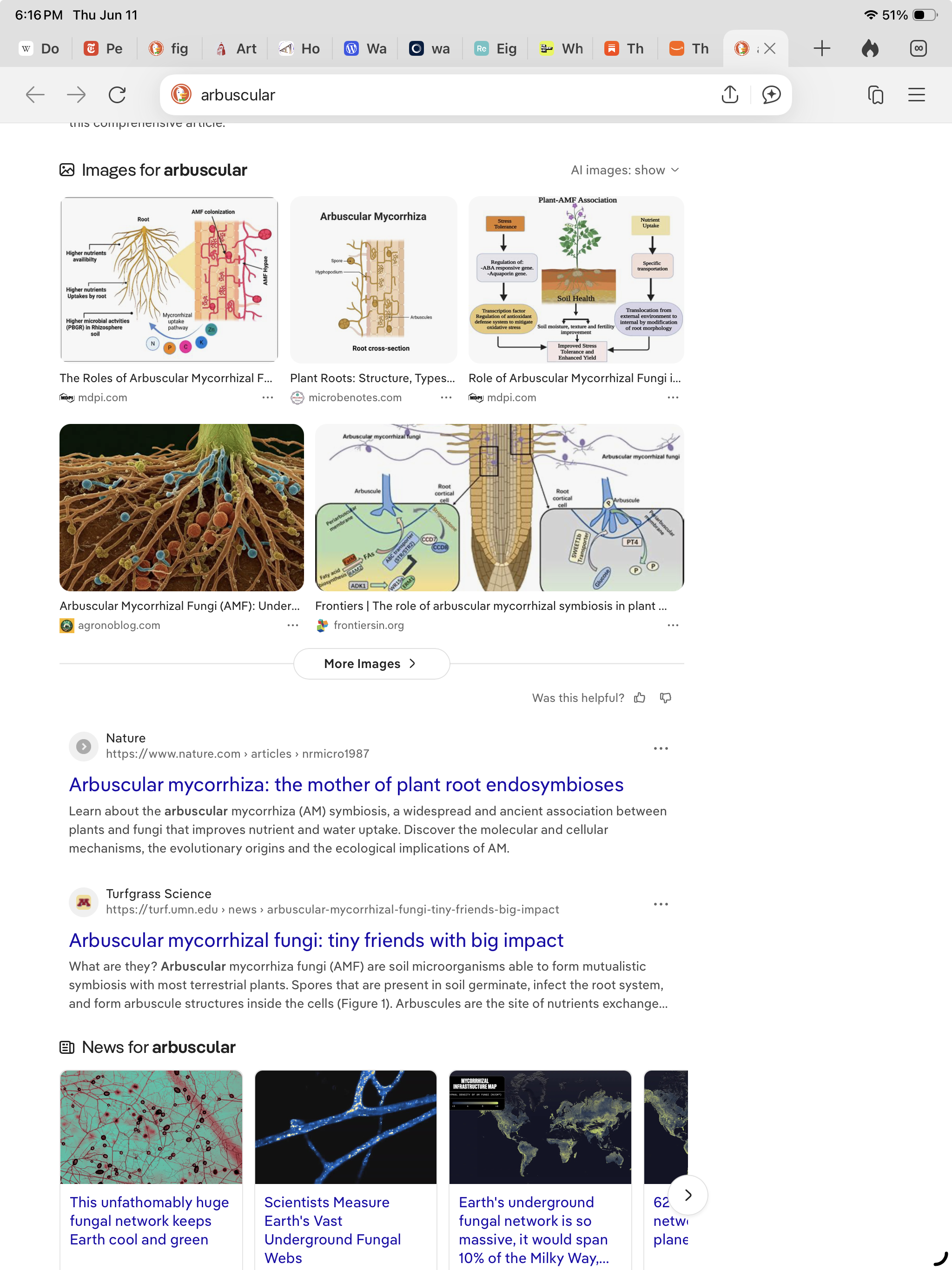
Arbuscular Mycorrhyzal Fungi
68 Quadrillion Underground Miles of Fungi NYTimes...A hidden circulatory system pulses just beneath the planet's surface. There, embedded in the soil, are dense networks of microorganisms known as arbuscular mycorrhizal fungi. These fungi attach themselves to the roots of plants, sending long, thin filaments out through the soil. These ferry water and nutrients to plants and whisk away carbon, helping to keep vast quantities of it out of the atmosphere.Laid end to end, these filaments would extend for 68 quadrillion miles — roughly 730 million times the distance between Earth and the sun, scientists reported in a new paper. Collectively, the filaments contain approximately 300 megatons of carbon, or four to six times as much as the carbon contained by all the human beings on the planet, according to the study, which was published in Science on Thursday.
An international team of scientists conducted the research, using a combination of advanced techniques, including machine learning and a high-resolution imaging robot, to measure, predict and map the size of these fungal networks in ecosystems across the globe.
The study revealed particularly dense fungal networks beneath the world's grasslands, adding to the evidence that these ecosystems, which tend to receive less conservation protection than forests, serve as significant carbon sinks for the planet.
Global density and biomass of arbuscular mycorrhizal fungal networks Science
Arbuscular mycorrhiza Wikipedia
Arbuscular mycorrhiza: the mother of plant root endosymbioses Nature Reviews Microbiology (2008!)
Subterranean fungi networks more than 100 quadrillion km in length, study finds Guardian
This unfathomably huge fungal network keeps Earth cool and green Grist
See the hidden fungal network so big it could stretch to Proxima Centauri and back Scientific American
12vi26
The Ways in Which I Never Thought About My Great-Grandfather: An Essay on the Potentials of Photography as a Historical Document Filip Mitricevic (pdf)
Science Friday
Ecological risks of orbital solar reflectors Jiangwei Zhu1 and Li FuReflect Orbital, a California-based company, plans to deploy 4000 mirror satellites designed to reflect sunlight to Earth's night side for nighttime lighting and supplementary solar power generation. Although such orbital solar reflector systems offer promising energy and lighting applications, they introduce severe ecological disturbances by altering natural diel light cycles (1). The US government should withhold authorization until ecological assessments have been completed and should regulate the use of the satellites once they have been deployed.Orbital solar reflectors can produce localized illumination up to four times the brightness of a full moon, covering areas several kilometers in diameter (1). Previous attempts, such as Russia's Znamya project, demonstrated technical feasibility but also raised concerns about possible ecological risks (2). The large-scale artificial night lighting that Reflect Orbital's satellites could produce threatens to disrupt ecosystems adapted to natural light cycles over evolutionary time (2, 3).
A 2D plan cannot govern a 3D ocean Xin Zhao1,2, Xin Fang3, Debin Du1,2, Liehui Wang1,2, Peng Wang4, Qinghua Zhai
MYCORRHIZAE
Quantifying hyphal density Most species of plants form underground associations with arbuscular mycorrhizal (AM) fungi, which provide plant roots with nutrients in exchange for carbon. AM fungi form networks of hyphae that act as tubes spreading carbon and connecting plants, but the global scale of these networks is unknown because of the difficulty of observing them underground. Stewart et al. compiled field and experimental data on hyphal density and used machine learning to predict how AM density varies across the globe. They then predicted hyphal biomass using high-resolution image analysis of hyphal network length from two globally distributed fungal species grown on transparent media in the lab. The authors predicted a large and spatially variable extent of AM fungi across the globe. —Bianca Lopez Science p. 1171, 10.1126/science.adu4373
METAMATERIALS
Strong and sensitive piezoelectrics Piezoelectric materials can convert mechanical stress into an electric potential and vice versa. Yang et al. applied the ideas behind mechanical metamaterials, in which complex structures are used to create responses not found in simple material systems, to create mechanoelectrical metamaterials. Their materials show an extremely large range of piezoelectric sensitivity and detection limits, thus overcoming the normal trade-off between these two parameters. Potential applications for these materials include sensors that can detect minute pressure cues such as soap bubbles and insects while at the same time being able to withstand large loads and impacts. Further demonstrations involve sensitive robotic fingers, food freshness monitoring, and terrain mapping. —Marc S. Lavine Science p. 1177, 10.1126/science.aeb3456
PHOTONICS
Near-monochromatic emission in organics Narrowing the spontaneous emission spectrum of organic emitters remains a major challenge, particularly addressing disorder-induced inhomogeneous broadening. Mamada et al. report an organic molecule composed exclusively of carbon, hydrogen, nitrogen, and boron atoms that, through a modular multiple-resonance design, exhibits ultranarrow spontaneous emission, achieving a linewidth of just 6.9 nanometers in toluene. This pushes the physical limits of spontaneous emission linewidths in organic materials. The compound demonstrates suppressed vibronic coupling and minimal nonradiative recombination, with a delayed lifetime of less than 500 nanoseconds. These remarkable properties open new horizons for organic luminescent materials and pave the way for innovations in displays, optical communications, spectroscopy, photochemical reactions, bioimaging, and phototherapy. —Yury Suleymanov Science p. 1148, 10.1126/science.aee0001
MARINE BIODIVERSITY
Constraints on protist distribution Microorganisms, including the diverse single-celled eukaryotes referred to as protists, have long been assumed to face few barriers to widespread distribution, the so-called "everything is everywhere" hypothesis. This wide distribution is distinct from plants and animals, which have long been known to display strong biogeographic patterns. González-Miguéns et al. investigated the validity of this assumption for protists using a meta-analysis of cytochrome oxidase I gene meta-barcoding studies to investigate the range and genetic diversity of marine eukaryotes. Although the protists exhibited larger geographic ranges than multicellular organisms, differences in the strains present across ocean basins suggest that there are limits to protists' presumed cosmopolitanism. —Susannah G. Tringe Sci. Adv. (2026) 10.1126/sciadv.adz7158
PHYSICS
Looking for an altermagnet Altermagnets are a recently identified category of magnets with unusual real- and momentum-space properties. The material RuO2 has been one of the most hotly debated altermagnetism candidates, and recent evidence suggests that in its thin film form, it may indeed harbor altermagnetic ordering. Chen et al. studied nonlinear transport in RuO2 thin films and found that the third-order Hall response changed sign after flipping the direction of the magnetic order parameter. This finding is consistent with the presence of altermagnetism, and in particular with its effects on the quantum geometry of the material. The technique enriches the set of experimental tools available for the study of altermagnetism. —Jelena Stajic Nat. Nanotechnol. (2026) 10.1038/s41565-026-02159-4
...Large-scale vision-language artificial intelligence (AI) models are becoming popular for the analysis of image-based clinical data such as photographs, histology, and radiology images. Such models can be versatile, but require extensive training and can get confused and misinterpret the data because of missing context or insufficient training in the relevant specialized areas. Conversely, specialized models are easier to train and achieve greater precision, but only within their specific areas, such as reading chest x-rays or retinal imaging. To make the best of both, He et al. combined the two modalities, pairing a large-scale generalist model with a collection of specialist ones to achieve accurate diagnoses across many types of clinical imaging data. —Yevgeniya Nusinovich
...Bridging structures and text The three-dimensional arrangement of atoms in an inorganic material dictates its physical, mechanical, and electrical properties. However, converting a complex atomic structure into a text-based representation at a full resolution for integration in a large language model is challenging. Tang et al. introduce MatterChat, a cohesive model that can process both structural data and text-based queries. The framework features a modular architecture: a materials-processing module that represents atomic arrangements as graphs, a bridge model that is trained to convert structures into language-model compatible projections, and a languageprocessing module that processes text-based inputs. MatterChat not only improved user experience but also better predicted complex materials' properties such as formation energy and bandgap from structural data compared with existing models. —Sumin Jin Nat. Mach. Intell. (2026) 10.1038/s42256-026-01214-y
LANDSLIDE TSUNAMIS
Near miss in an Alaskan fjord Retreat of coastal glaciers may be exposing these regions to increasing risk of landslide-triggered tsunamis. Shugar et al. report on the 10 August 2025 landslide in Tracy Arm fjord that caused a tsunami with runup as high as 480 meters. The landslide-tsunami occurred early in the morning, before the arrival of tour cruises, which during the summer can include six vessels and thousands of passengers each day. Pre- and post-event seismic and satellite data revealed precursory microseismicity, global long-period waves, and a days-long, globally recorded standing wave in the fjord. The analysis highlights the potential for monitoring and risk mitigation along warming coastlines. —Angela Hessler Science p. 1142, 10.1126/science.aec3187
ANCIENT DNA
After the fall The dissolution of the western Roman Empire resulted in substantial population and political shifts across Europe. To better understand the role of migration in this period, Tian et al. sequenced genomes from 314 individuals from seven sites in the Little Hungarian Plain, a region at the border between the eastern and western halves of the empire through which the river Danube and major trade routes flowed. Genetic data and isotopes indicate an influx of northern European populations into the region over the 3rd to 6th centuries CE, but cultural signifiers such as grave goods remained consistent. Grave kinship and nutrition indicate that social structure changed independently across these settlements, suggesting idiosyncratic shifts in response to demographic change rather than complete replacement. —Corinne Simonti Science p. 1143, 10.1126/science.aec2634
DEVICE TECHNOLOGY
Fast all-optical signal processing Optical interconnects can enable high-bandwidth connectivity for the scale of artificial intelligence (AI) data centers, but they need improvements in latency (the delay before data transfer) and digital processing to equalize signals. Wang et al. designed an all-optical integrated signal-processing chip that can equalize signals from multiple channels and deliver 1.6 terabits per second of data. This chip overcomes the bandwidth-dispersion limitations of digital processing, enables real-time compensation of both linear and nonlinear impairments in transceivers and optical fibers, and delivers an energy efficiency of 67.5 femtojoules per bit and a latency of 55 picoseconds. —Phil Szuromi Science p. 1144, 10.1126/science.ady5344
ARCHAIC HOMININS
Charting archaic introgression Between 2 and 5% of modern Eurasian genomes are derived from admixture with Neanderthals and Denisovans, with Papua New Guineans bearing the largest fractions. However, Oceanian populations remain underrepresented in genetic studies, resulting in questions about the landscape of archaic introgression, including difficult-to-identify features such as structural variants. Hsieh et al. used long-read sequencing to identify archaicderived structural variants in two Papua New Guinean individuals, finding many unique insertions and deletions, as well as 11 centromeres potentially inherited from archaic hominins. Reilly et al. examined whole-genome sequences from 177 Near Oceanian individuals, revealing many potentially adaptively introgressed regions. The authors tested some of these for their gene-regulatory potential using massively parallel reporter assays. Together, these studies give us greater insight into how archaic introgression has shaped these historically underrepresented populations. —Corinne Simonti Science p. 1145, 10.1126/science.adr6749; p. 1146, 10.1126/science.adz7518
DEVELOPMENT
The brain's neighborhood Brain function and structure are known to be affected by environmental conditions. Marek et al. mapped brainwide association studies (BWAS) of 649 phenotypes and exposures to brain function and structure using imaging data from many sources (see the Perspective by Sisk and Satterthwaite). Across adolescents, neighborhoodlevel socioeconomics showed the strongest brainwide association, representing a single exposome pattern that explains 34% of all BWAS variance. In their datasets, the classic brain-IQ association largely disappeared when socioeconomic status was properly accounted for. These results provide valuable insights for understanding the effects of the environment on brain development. —Mattia Maroso Science p. 1147, 10.1126/science.aee6213; see also p. 1125, 10.1126/science.aei3393
Elon Musk, Human Ponzi Scheme With Wall Street's help, you're about to be forced to buy stock in SpaceX Paul Krugman
The world has moved on Cory Doctorow
...an eloquent and evocative account of just how rancid the vibe is these days. The writer said that when they and their spouse encounter this rot, they cite Stephen King's Dark Tower novels, quoting the oft-repeated phrase from that series: "The world has moved on."...There were always enshittifiers, but those enshittifiers faced external forces that checked their wreckers' urge. They were held in check by competition, and regulation, and workers' sense of fairness and duty, and by the threat of new products and services that might pop up to correct the defects they deliberately introduced into their products by enshittifying them.
...That's why Trump dismantled the consumer protection agencies, the antitrust agencies, the labor protection agencies, the environmental protection agencies. When someone in power cheats the system, that's not a crime, no matter how many people they rob, maim or kill. As Trump told us on the debate stage in 2016, that kind of cheating "makes me smart":
https://pluralistic.net/2024/12/04/its-not-a-lie/#its-a-premature-truth
That's why Elon Musk (almost) got to force every pension saver in America to bail out his money-incinerating AI business and his failed social media takeover — because the rules that protect everyday investors are "for the little people." Musk's mistake was trying to get a bunch of billionaires to hold the bag, too. The one form of systemic violence our society will not tolerate is trillionaire-on-billionaire violence:
https://www.cnbc.com/2026/06/05/spacex-blocked-from-early-us-benchmark-index-entry-as-sp-reaffirms-existing-rules.html
The world has moved on. 50 years of neoliberal rule has weakened and snapped the beams — the rule of law, consumer and labor rights, civil rights — that radiated from our Dark Tower — antitrust law, which blocked the emergence of the "autocrats of trade." The people who besieged these beams had the same motives as the Crimson King and John Farson and the Man in Black: they were willing to pay any price for a world free from consequences for people like them. They knew they were born to rule, and that the rules were "for the little people," that breaking those rules "made them smart".
13vi26
Crumpled Manifolds Andy Ilachinskii
The whole process of applying this complex geometric transformation to the input data can be visualized in 3D by imagining a person trying to uncrumple a paper ball: the crumpled paper ball is the manifold of the input data that the model starts with. Each movement operated by the person on the paper ball is similar to a simple geometric transformation operated by one layer. The full uncrumpling gesture sequence is the complex transformation of the entire model. Deep learning models are mathematical machines for uncrumpling complicated manifolds of high-dimensional data. [...] Our own understanding of images, sounds, and language, is grounded in our sensorimotor experience as humans -as embodied earthly creatures. Machine learning models have no access to such experiences and thus cannot 'understand' their inputs in any human-relatable way [...] this mapping is just a simplistic sketch of the original model in our minds, the one developed from our experience as embodied agents—it is like a dim image in a mirror."
—François Cholle
Smartphone Wikipedia
Zen and photography Dan Giannatti at PetaPixel
Central Asia, In Color Before Color Prateek Dasgupta at Medium
Almost no one outside of electrical engineering and applied mathematics even knows his name Rudra Nath at Medium
Google's new remote attestation scheme is every bit as terrible as its old remote attestation scheme Cory Doctorow
Flowerscapes: Photographing Flowers From a Bug's Eye Perspective Theo Bosboom at PetaPixel
An Early Step on the Long, Strange Road to Photosynthesis Carrie Arnold at Quanta Magazine
14vi26
The Most Shocking Mideast Blockades Are Coming Soon Hamza Farooq at Medium
The Economic Crash Is Coming, Even to America RL Vanwey at Medium
The Two Cultures 2026 Update Eric Lee at Medium
Everyone Is Watching NATO's Troops. Nobody Is Watching the Railway to the Baltics Jerry at Medium
Almost Everything is Bullshit Sebastian Schepis at Medium
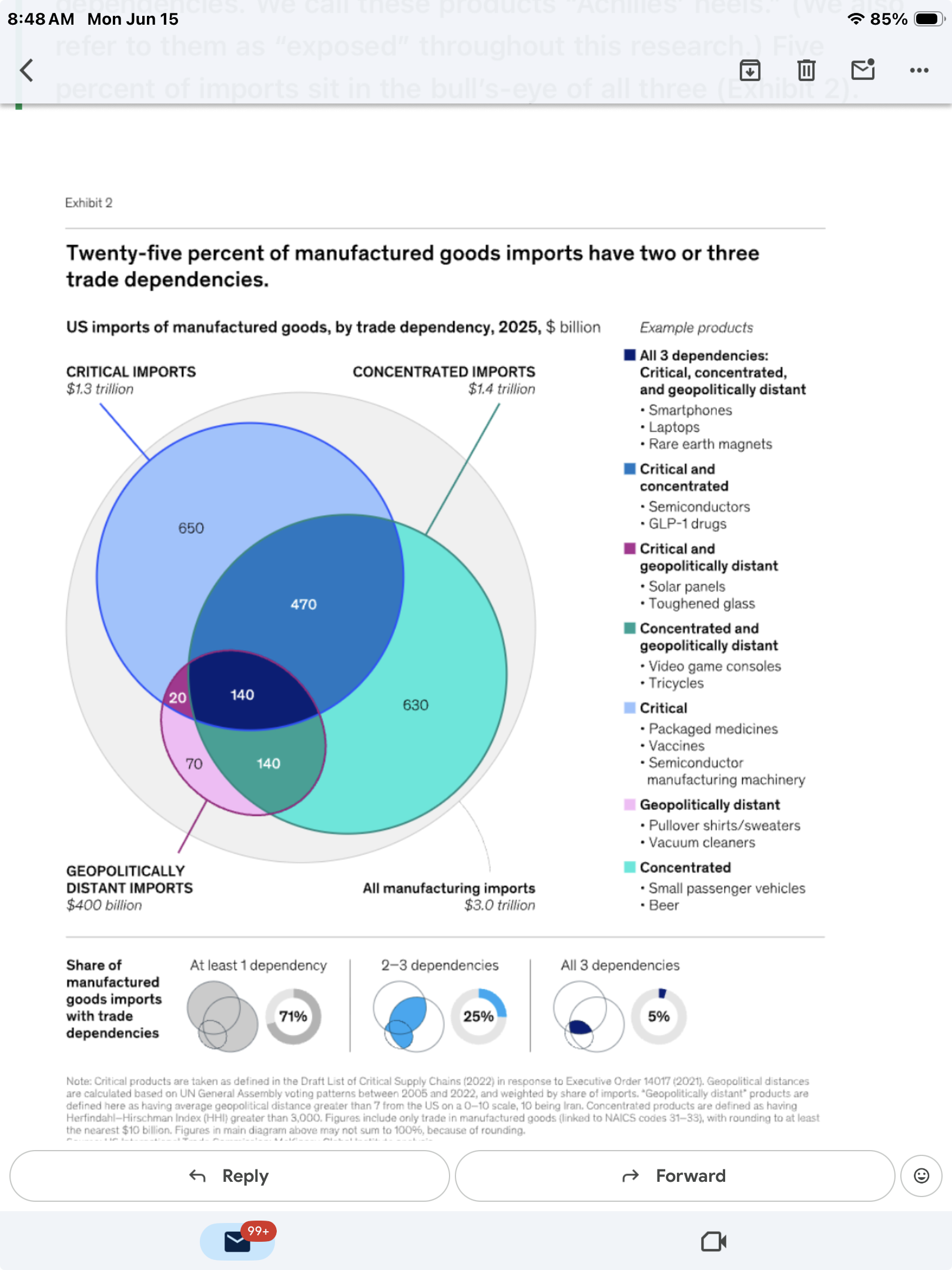
Foreign Footprints: Trends in U.S. Agricultural Land Ownership Market Intel via American Farm Bureau Federation
Are You an Internationalist? Arnold Oliver at Informed Comment
Sorcery's Mirror Andy Ilachinski
The Ceaseless Innovation of Duane Michals Martin Filler at NYRB
Would You Have Bet on the East African Plains Ape 75000 Years Ago? Brad DeLong
Technology and social change Paul Krugman
Despite AI's ubiquity, its economic impact remains unclear. We don't yet know what it will do to productivity, to employment, to wages or to income and wealth inequality
...As a result of shifting from on-site generated power such as coal-fired boilers to electricity, the physical process of production changed radically. Squat multistory factories gave way to sprawling, single-story factories in which each machine had its own motor. And, in many cases, trucks, rather than railroad spurs, delivered materials and picked up products.
On Caring (myself, June 2024)
500 Years Ago, Leonardo da Vinci's Notebook Was Cut Up and Separated. Now, the Inventor's Manuscripts and Drawings Are Reconstructed in an Online Archive other sides of a nobody
15vi26
One big grift John Quiggen at Crooked Timber
What Does It Feel Like to Live Under the Threat of Redundancy? Glen O'Hara, Independent Social Research Foundation, via Stephen Downes
If everything is a neighbourhood, is anything a neighbourhood? Tom Watson, via Stephen Downes
The Invention of Buses worksinprogress
16vi26
The turnspit dog was bred to run on a wheel and roast meat, then went extinct
boingboing
17vi26
Amanades
Amanes Panagiotis Kounadis at Kounadis Archive Virtual MuseumOliver Heaviside
amd
Real World AI Vs Modernity Eric Lee at Medium
...Human beings can adapt to almost anything if you do it slowly enough. Put a frog in boiling water and it jumps out. Put it in lukewarm water and slowly raise the temperature, and eventually the frog is attending virtual mindfulness seminars sponsored by a bottled water company while financing a third streaming service subscription to watch documentaries about minimalist living.
Such would be the successive phases of the image: it is the reflection of a profound reality; it masks and denatures a profound reality; it masks the absence of a profound reality; it has no relation to any reality whatsoever: it is its own pure simulacrum. In the first case, the image is a good appearance -—representation is of the sacramental order. In the second, it is an evil appearance — it is of the order of maleficence. In the third, it plays at being an appearance - it is of the order of sorcery. In the fourth, it is no longer of the order of appearances, but of simulation. [...] It is the fantasy of seizing reality live that continues—ever since Narcissus bent over his spring. Surprising the real in order to immobilize it, suspending the real in the expiration of its double. [...] Nothing is wholly obvious without becoming enigmatic. Reality itself is too obvious to be true."
—Jean Baudrillard...It's sometimes hard to believe that ChatGPT was first released to the public less than four years ago. At this point AI is everywhere. This may be the most rapid adoption of a major new technology in history.
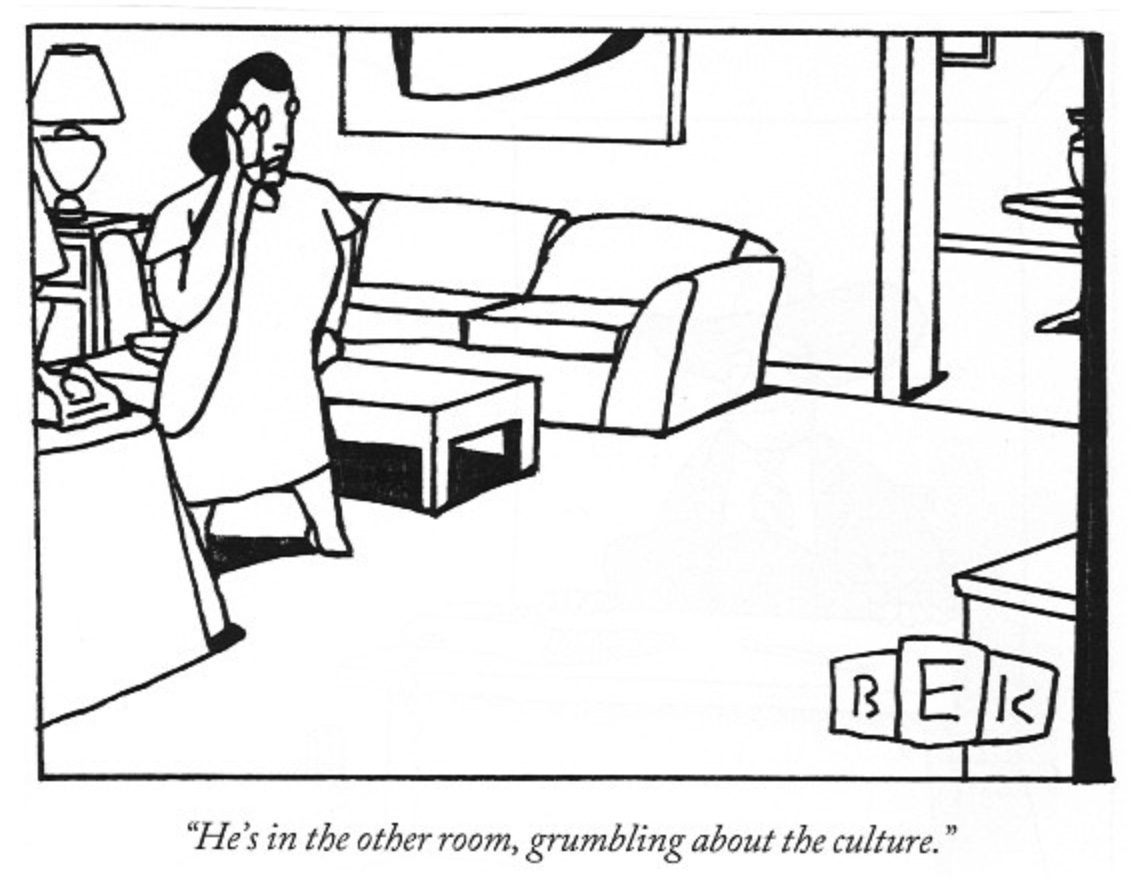
...The comprehensive corruption of the financial system confirms me in the view that the USA is one big grift. Not just the financial system, but politically and militarily as well. But that's a topic for another day.
..."Our universities have now become hollowed-out and unmoored from their original purpose... they are more like aggressive medium-sized enterprises struggling for market share than the school-like cloisters that voters perhaps picture."
...When you ask actual people to define a neighbourhood, "the answers were never about population counts (although the numbers were in the 4k range). People drew lines around a few streets. A park. The shop. The school run. The boundaries were small, personal, and there was nuance and disagreement." Contrast that with a definition that "becomes a unit of administration dressed up as a unit of belonging. A word borrowed to make bureaucracy feel human." What's the test? "Would the people inside the line say it's theirs? If yes, you've defined a neighbourhood. If no, you've defined a delivery area."
Holst on The Amanes
On The Governance of LLMs, and The University (of Chicago) crooked timber
Slow FoodCarlo Petrini and the Social Justice Popes H Scott Prosterman at Informed Comment
Coauthorship integrity: Reconceptualising assessment validity for the age of generative artificial intelligence via Stephen Downes
Trump's Iran Ceasefire: Costly Return to Status Quo Informed Comment
17vi26
The Meaning of Maturity: Ursula K. Le Guin on What It Really Takes to Grow Up I Marginalian
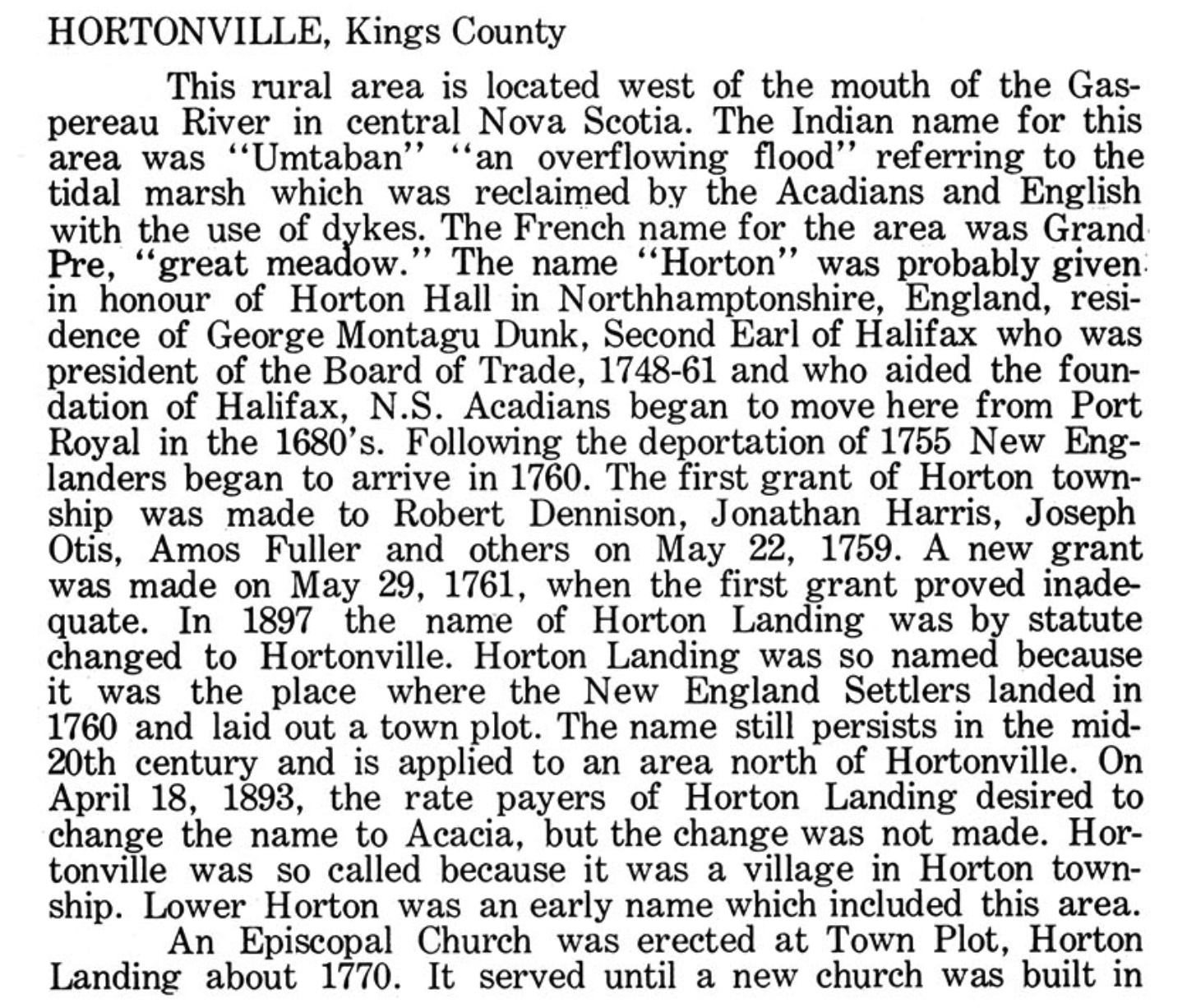
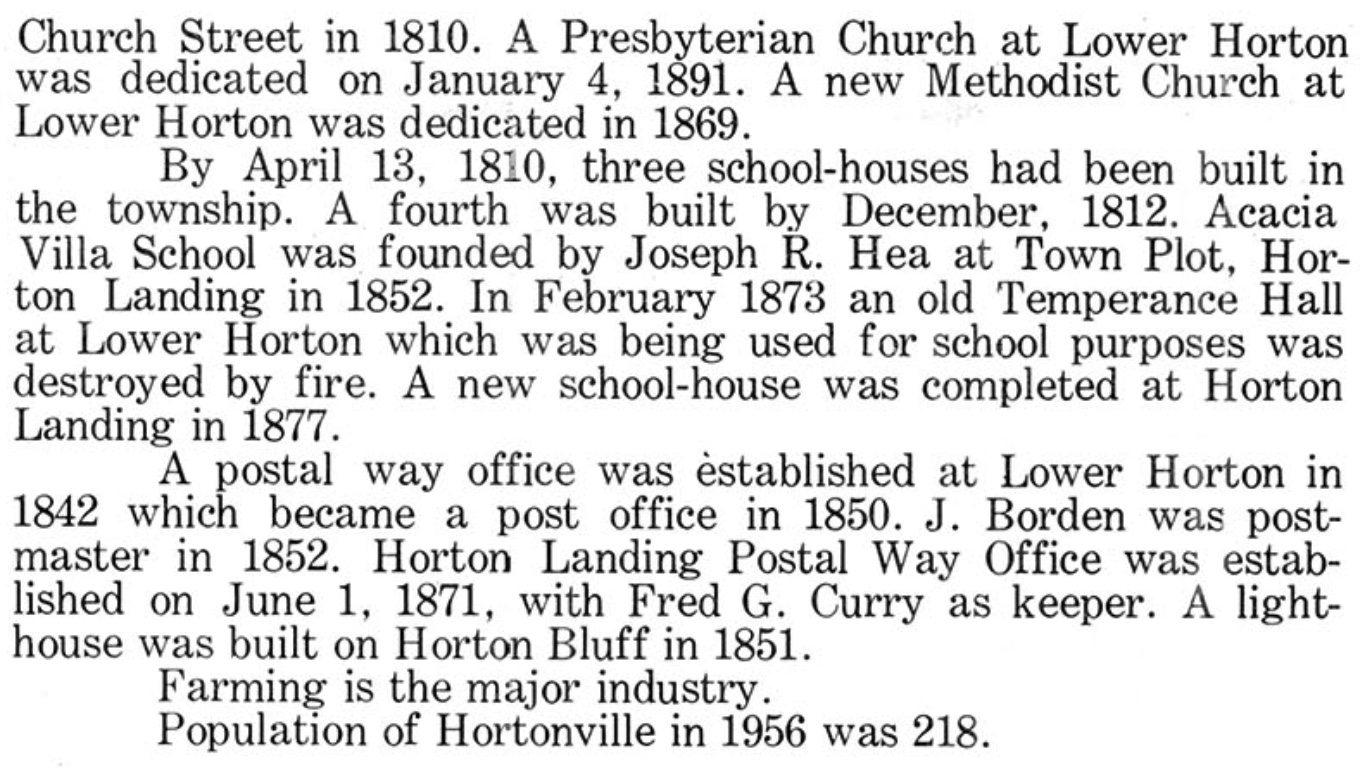
Apples in Nov a Scotia 1, from Nova Scotia Historical Quarterly
The (real) dead economy theory Cory Doctorow
Renato Rosaldo, Anthropologist Who Disrupted His Discipline, Dies at 85
18vi26
A linear thinker, a design thinker, and a systems thinker meet again... Houda Boulahbel at Medium
The first time the three thinkers met, they were in a bar, designing a hypothetical house on the back of a napkin.* It was easy to agree over drinks. Nothing was at stake, and everyone spoke in turn.Then they got a real job building the medical school of the future. A generous budget, a complex environment, and high stakes. This time, all three thinkers were involved from day one.
Fast forward four years. They returned to see what their collaboration had become.
The linear thinker looked through the curriculum and was proud. It was a well thought out journey split into three familiar, sequential phases: foundations in health systems, a phase for scientific integration, and finally experience in the clinical wards. Both research and clinical experience ran as a continuous thread throughout.
He noticed the international accreditations, the excellence awards, the school ranking. His internal dashboard for the school was all green, a comforting and slightly disorienting thought.
The design thinker noticed the energy and the vibe in the building. In the innovation lab, a group of students were working on a prototype. They had identified a small failure in a hospital's discharge process and were testing their solutions. On the walls, dozens of patient journey maps depicted real world clinical experiences. She wondered, briefly, where all those prototypes went after the showcase.
The systems thinker stood back and tried to play it cool, but he was secretly pleased. Very pleased. This was not a school with a hospital attached; it was a learning system where medical education, research, and clinical care were interwoven. They informed and shaped each other. The prototypes came from real-life experience of clinical care and were evaluated by working clinicians. He admired the interconnectedness of it all.
19vi26
Jerry's Map Interactive maps mania
...the life's work of artist Jerry Gretzinger, who began drawing an imaginary city in the summer of 1963. What started as a simple doodle gradually expanded into an immense fictional world. Today, Jerry's Map consists of more than 4,000 individual 8-by-10-inch panels arranged in a giant circular formation. Together they form a sprawling imaginary world that sits somewhere between a city plan, an abstract artwork, and a living organism.
MOU: Iran Gains stature, Arab States Diminished, US Humiliated Farhang Jahanpour at Informed Comment
Zoonoses Science
...Several devastating infectious diseases in human history, such as plague, tuberculosis, and paratyphoid fever, were elicited by zoonotic pathogens that began to infect people less than 10,000 years ago (1), when human groups transitioned from a nomadic to a sedentary or mobile pastoralist lifestyle. An increase in population size, major migrations, and the rise of agriculture—which was associated with animal domestication—are likely to have contributed to the emergence of many human infectious diseases
Towards a Regenerative Anthropology via Stephen Downes
Donald Dump Eduardo Castaldo
Colby and Port Clyde
A Town With Wyeth Ties Plans a Comeback From Disaster Ralph Blumenthal at NYTimes (text here)I asked somebody much better connected to Port Clyde than I am about the article. Some of his reply:
...The Colby President is saying just what he should be saying to appease everyone but the comparison of PC with Waterville and the Hathaway factory reuse is pure, unadulterated BS. He has no idea what he's doing other than keeping a rich donor happy and developing a "Center" around which he can raise money for the college (which is job one for a college president-a good friend who was a college president said to me that every day he woke knowing he had to raise over a million dollars that day). And for the Colby president to say it all has to be done with the input of the community is corporate double talk. There might, or might not be, a real community meeting but to think that will redirect the plans already decided on by the Tishmans, who know what's best for the community, is fanciful, IMHO.Colby College's Center for Resilience and Economic Impact to Launch on Port Clyde Waterfront Colby News
AI Overview
Dan and Sheryl Tishman are longtime residents of Port Clyde who are leading a major revitalization and coastal resilience initiative in the village, in partnership with Colby College. Following devastating 2024 coastal storms and a fire that destroyed the Port Clyde General Store, the Tishmans utilized their family foundation to acquire historic waterfront properties and establish a dedicated resilience center. [1, 2, 3] The revitalization and community projects include:
- Waterfront Acquisitions: Through their foundation, the Tishmans donated the necessary funds for Colby College to acquire the Seaside Inn, The Barn, the Squid Ink building, and the former site of the Port Clyde General Store. [1]
- Center for Resilience and Economic Impact: The acquired properties form the base of this Colby College program, launched to help small coastal communities prepare for and recover from catastrophic storms, climate impacts, and economic shifts. The center utilizes the Seaside Inn for student researchers and visiting scholars. [1, 2, 3]
- Disaster Mitigation: Dan Tishman co-chaired the Maine Commission on Infrastructure Rebuilding and Resilience, making Port Clyde a testing ground for community-level climate and economic defenses that can be scaled to other towns. [1, 2]
- Community Revival: The new development plans for the waterfront feature street-level community spaces, offices, and a restaurant to help restore the economic and social heart of the village. [1, 2]
Overlooked No More: Robbie Basho, Guitar Mystic Who Sought Enlightenment in Sound NYT
20vi26
Photography reawakened:






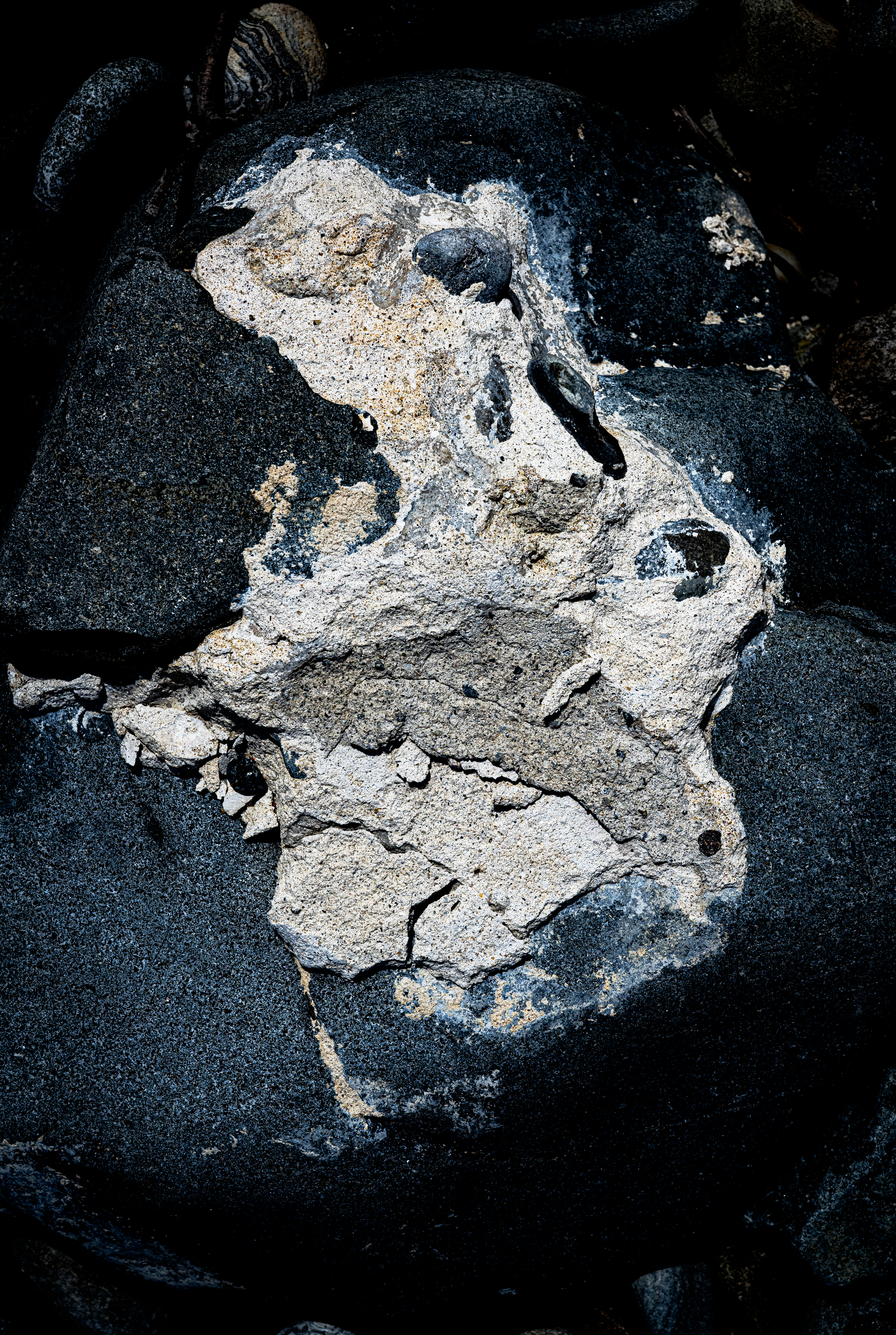




(see the entire Flickr Album)
Hormuz Is Open Again. But Gas Prices Won't Drop Soon Informed Comment
The obscure airfields of America boing boing
Unpack
Unpacking the Word 'Unpack' Merriam-WebsterUnpacking linguistics Wikipedia
Nepal, via Tooze
Thomas Bell:
It is a quarter of a century since Nepal's crown prince Dipendra gunned down most of his family at a grim dinner party, and transformed his country's future. Among the dead were his parents, King Birendra Shah and Queen Aishwarya, his sister Shruti, brother Nirajan, and five other relatives. Finally Dipendra himself was shot, in what the official inquest determined to be a suicide. Perhaps a military aide-de-camp put an end to the rampage. The right-handed prince was shot through his left temple, and among those in the know in Kathmandu a certain military officer is sometimes said to have killed him. Why did Dipendra do it? He had bad habits with drugs and alcohol, and a fascination with guns. His parents had said he could not marry his girlfriend, an aristocratic woman whose lineage was objectionable.Possibly he hoped that after killing his family he could become king and marry whoever he liked. In fact he was declared king, for the three days he survived in a coma. His victims all died on 1 June in Kathmandu's Narayanhiti Palace; Dipendra lived on until 4 June. That was the law, and the establishment had no idea what else to do. Faced with an incomprehensible event, and reflexively deferential to the monarchy, they were paralysed. The public was plunged into shock and grief; hundreds shaved their heads in public displays of mourning. The authorities bungled their initial communications, suggesting that a machine gun seemed to have gone off by itself. By the time the official inquest described the crown prince's responsibility a week later, many Nepalis had reached other conclusions.
Popular claims included commandos abseiling into the palace from helicopters, assassins wearing rubber masks to disguise themselves as Dipendra, and the alleged complicity of the CIA, or some other intelligence agency. Maoist insurgents, who were waging a violent republican campaign in the countryside outside the Kathmandu Valley, were quick to capitalise by amplifying such theories. There was an inclination to believe that the greatest beneficiary of the crime must also be its author. That would be the late king's unpopular brother, Gyanendra, who was fortuitously absent on the night of the massacre and now assumed the throne. Many, perhaps most, Nepalis still question the official story.
...Historical thinking about Nepal has often dwelt on the idea that the country is behind the times. Relatively isolated by its geography, it was never colonised by Europeans. Until 1951 a conservative regime sought to exclude foreigners. Nepal changed from an authoritarian monarchy to a constitutional one in 1990, a decade before the royal massacre, following a popular street movement. Parliamentary parties had run the government since then, but that did not stop the Communist Party of Nepal (Maoist) from launching an insurgency in 1996, arguing that the new democratic system was a mask for the enduring feudal reality. The palace retained at least one form of direct power: command of the army. The two institutions had been closely bound since the Nepali state's foundation by King Prithvi Narayan Shah in the 1760s, and in other circumstances this might have seemed a constitutional quirk of mostly ceremonial meaning.
Besides contributing to UN peace-keeping missions, the Royal Nepal Army had not been involved in a war since fighting with Tibet in the 19th century. In the late 1990s King Birendra resisted the elected government's wish to deploy the army against the Maoists. The counter-insurgency remained a police operation. The new king, Gyanendra, was a less moderate or less wise man than his brother. Five months after the massacre the Maoists attacked army camps and Gyanendra ordered the army into the conflict. Over the following five years the fighting escalated and, although the larger and better equipped army was able to kill more people than the rebels could, their less discriminate violence was a strategic failure. The rebellion spread. Meanwhile Gyanendra sought to reclaim the political power his brother had conceded in 1990, dissolving parliament, firing the elected prime minister, and installing a series of royalists to the position. As such he created a three-way contest between the palace, the parliamentary parties, and the Maoists. He then used the army to seize power outright, putting himself directly in control in a coup d'état in 2005. That forced the parties into an alliance with the Maoists. In 2006 another popular street movement — backed by the usurped parties and the insurgents — forced Gyanendra to step aside. The Maoists entered electoral politics. Two years later a constituent assembly abolished the 240-year-old monarchy.
...In September 2025 Nepal was rocked by an event that in its way was as strange, and may yet be as consequential, as the massacre. Thousands of young people, disillusioned with the country's geriatric political leadership, angered by corruption, and provoked by a social media ban, marched towards parliament. The police lost control and opened fire, killing 19 young people. The following day the streets filled with angry citizens who set fire to scores of public and private buildings, including politicians' homes, government offices, the supreme court, and parliament. The prime minister K.P. Sharma Oli — then in his third stint in the role — resigned under pressure from the army, which belatedly intervened to restore calm. The army chief appeared on television sitting in front of a portrait of Nepal's founder, King Prithvi Narayan Shah, who led the army to establish the country in the 1760s. ... On 5 March 2026 the election took place, and the youthful Rastriya Swatantra Party (RSP, founded in 2022) won a landslide victory. The RSP manifesto was explicitly republican. The royalist Rastriya Prajatantra Party won just four seats, equalling their second-worst result since 1990.
22vi26
Beyond Explainable AI: From Symbol Processing to Semantic Cartographies in a World of Babel Dr Nicolas Figay at Medium
...ontologies, knowledge graphs, standards, databases, and AI models are not the source of knowledge. They are the crystallization of prior human and institutional knowledge. The artifact does not create the epistemic authority; the epistemic authority creates the artifact....Current AI systems — including LLMs, GraphRAG systems, ontologies, and reasoners — are extraordinarily powerful tools for manipulating representations. The bubble often begins when this capability is conflated with the broader human and institutional phenomenon that we call knowledge.
Map-territory relation Wikipedia
A map is not the territory, or is it? Michael Batty (2019)
A Brief History of Agriculture Michael Porter Quantastic Journal
...To summarize, ensuring the supply of food has been the principle problem for agriculture for more than 10,000 years. Progress was slow but increasing until the 1800s, when progress accelerated. By 1962 almost every government was concerned about food supply and believed that starvation was preventable with proper policies and improving technology. The obvious goal was to increase total production of food to keep up with growing populations everywhere and to make the food affordable for their citizens. For thousands of years, increased food production was mostly due to more land being brought into cultivation. Since 1950, production has intensified, producers have specialized, and the resulting food supply has massively expanded. But the food supply does not look exactly like an enlarged version of the past. To understand that, you need to consider the influence of economics and government policy.
Elephant Seal Scolds Penguins in Superb Photo Shortlisted for Wildlife Award PetaPixel
Could This Super El Niño Trigger a Global Food Crisis? gizmodo
Your heartbeat quietly shapes how your brain processes information Science
The earliest plague epidemics may have been caused by marmots Science
23vi26
An Exceptional—and Depressing—Chronicle of Trump's Return to Office New Yorker
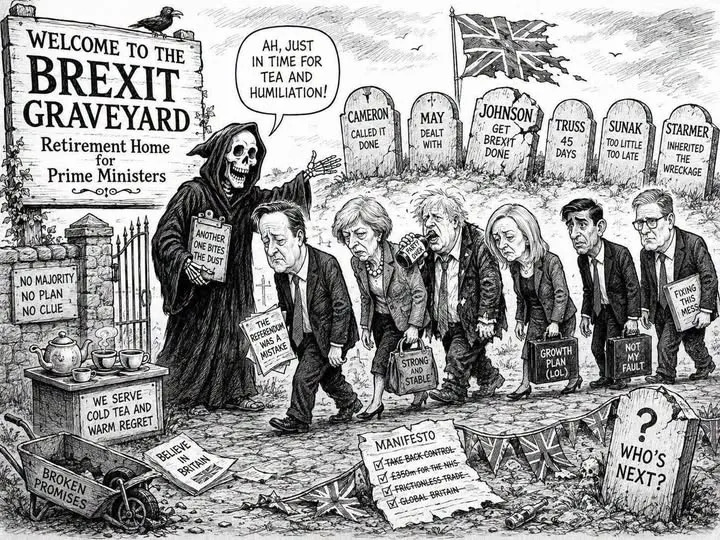
Paul's Reflections Andy Ilachinski
At the core of it all, there's something more. Something luminous, something shimmering.
Paul Cotter
Grandpa Pudding Brains is hunting for vandals in his $14.7 million algae farm bong bong
The Reverse Centaur's Guide to Life After AI launch at Kepler's Books with Angie Coiro Cory Doctorow
24vi26
Bartleby the Scrivener Herman Melvile (pdf)
Bartleby the Scrivener Wikipedia
How Philosophers of Reference Saved the World from Relativism Paul Austin Murphy at Medium
Diatoms and the Meaning of Life Marginalian
...Today, we know that diatoms — thousands of species of unicellular algae, each a living Noether theorem housed in a shell of opal — are not created for admiration but create the admirer: Every life-form on Earth depends on them. Tiny powerhouses of photosynthesis populating every body of water, these phytoplankton generate close to half of our planet's oxygen, pillar its biomass, and absorb the atmospheric carbon dioxide that dissolves in the ocean.
25vi26
We Thought Computer Chips Were Running Out of Room. IBM Found a New Way Forward gizmodo
The new chip technology packs nearly 100 billion transistors into a fingernail-sized chip.
Locating Rhubarb: Early modernity's relevant obscurity Erika Monahan (pdf)
26vi26
Gaza: How We're Learning to see the AI-Driven Genocide Informed Comment
Addicted to War? War Fever, Trump Style Tom Engelhardt at Informed Comment
What I blogged about tomorrow Gardner Campbell
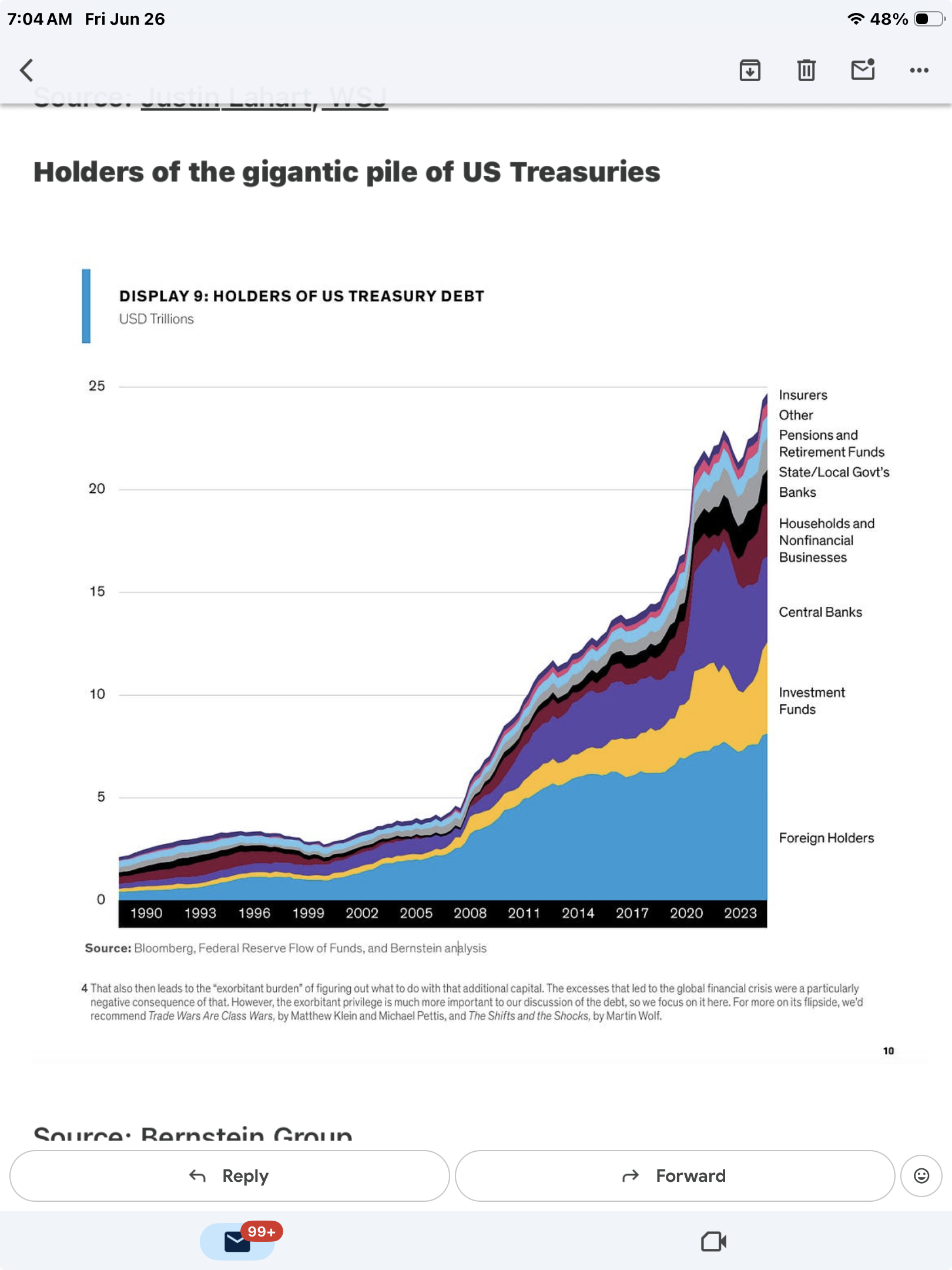
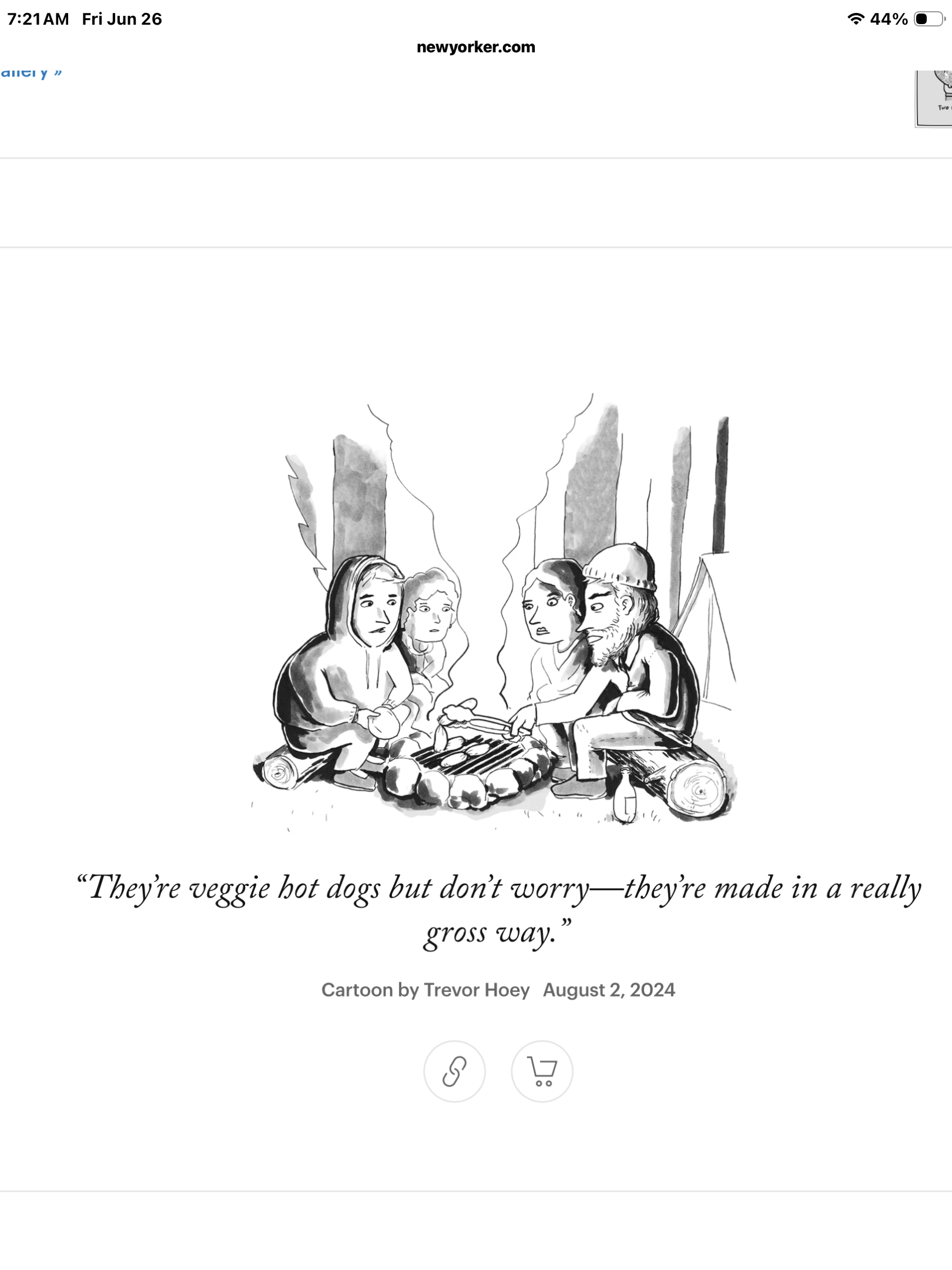
Let's Be Frank New Yorker cartoon gallery
Spot The Difference blignick
Gardo learns about sprawl Gardner Campbell
27vi26
Big Ag Hester van Hensbergen at LRB
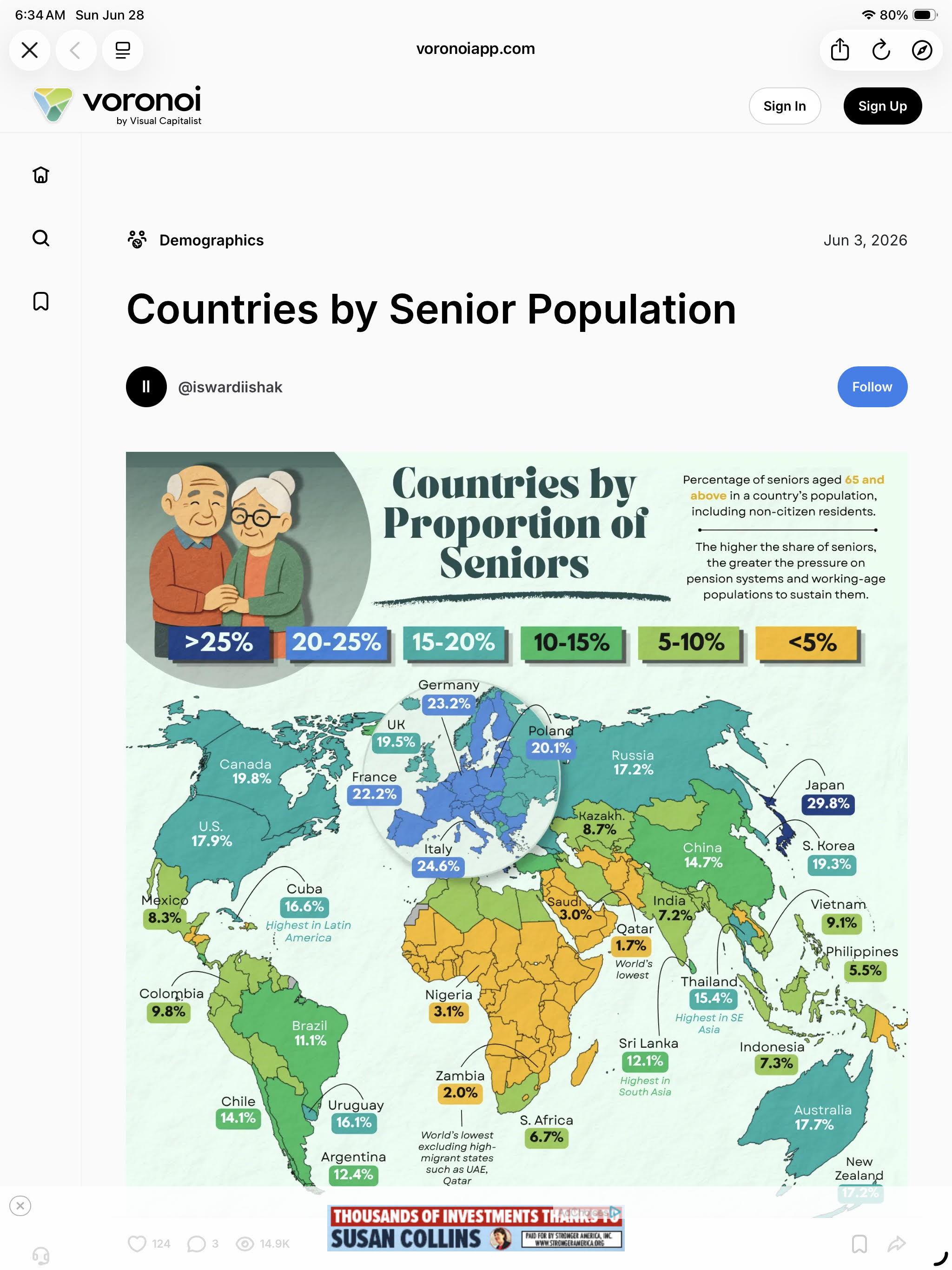
Two obits:
Brian/cuchuflete, RIP. languagehat.comAlan B Howard, 1939-2024 Gardner Campbell
Sheila Hicks Marginalian
Spare Me the Hedgehoggery Clare Bucknell, interviewed by Julia Shi in NYRB
...Tarring someone with the pedant brush is polemical, of course. In the seventeenth and eighteenth centuries, a time-honored way to bring down educated or opinionated women was to label them as pedants. Applied to men, the word meant roughly what it does now. Applied to women, it meant something more: that they were unfeminine, bad wife material, even sexually promiscuous. Pedantry in women, the writers Sarah Fielding and Jane Collier observed in 1754, was roughly equivalent to "want of domestic virtue." Collier published a satirical advice manual, The Art of Ingeniously Tormenting, in which intellectual women are figured as easy prey for tormenters: "Omit not any of those trite observations; that all Wits are slatterns; — that no girl ever delighted in reading, that was not a slut." When I was at school in the 1990s and 2000s, boys called clever girls "frigid," which I suppose is a version of the same thing, just flipped on its head. It's as if the perceived wrongness of intellectual ambition in women—a sense of wrongness that endures in various, more or less underground ways—can't be articulated on its own terms, it has to be yoked to sexuality. One kind of "perversion" gets expressed as another.
28vi26
The First Source of Personal Intent Doc Searls
29vi26
In 5 years, nobody will give a damn about AI-detectors JA Westenberg
As Cosma Shalizi Says, "The Singularity Is in Our Past" Brad DeLong
...Look at the leading edge of today's rich urban societies and you see a world our pre-industrial ancestors would not recognize: machines do the sweating, while hyperliterate humans teach, heal, entertain, and manage intricate symbolic systems of power and production. How did we get from "in the sweate of thy face" to this peculiar post‑industrial condition? 1776 to 1914 was the real singularity in human history, one that turned economic history from a slow background drift into history's driving force. Yet the transformation remains incomplete, and its patterns will organize the twenty-first and twenty-second centuries....Look at the bleeding edge of urban North Atlantic or East Asian civilization, and you see a world fundamentally unlike any human past. Hunting, gathering, farming, herding, spinning and weaving, cleaning, digging, smelting metal and shaping wood, assembling structures—all of the "in the sweate of thy face shalt thou eate bread things that typical humans have typically done since we became jumped-up monkeys on the East African veldt—are now the occupations of a small and dwindling proportion of humans. And where we do have farmers, herdsmen, manufacturing workers, construction workers, and miners, they are overwhelmingly controllers of machines and increasingly programmers of robots. They are no longer people who make or shape things—facture—with their hands—manu.
...What do modern people do? Increasingly, they push forward the corpus of technological and scientific knowledge. They educate each other. They doctor each other. They nurse each other. They care for the young and the old. They entertain each other. They provide other services for each other to take advantage of the benefits of specialization. And they engage in complicated symbolic interactions that have the emergent effect of distributing status and power and coordinating the seven-billion person division of labor of today's economy. We have crossed a great divide between what we used to do in all previous human history and what we do now. Since we are not in the realm of necessity, we ought to be in the realm of freedom.
...The history of how the world was greatly transformed is primarily economic and technological, and secondarily political and social. But historians are not used to placing the economic and technological in first place. In the study of any period back before 1800, there is no way that economic history can be seen as even one of the principal axes. Before 1800, most history at even the century-level—let alone the decade-level or the year-level—could not be economic history. History is change. And before 1800 economic factors changed only slowly. The structure and functioning of the economy at the end of any given century was pretty close to what it had been at the beginning.
...This post-1750 history takes place in two stages. The first stage is the nineteenth century: the century of the British Industrial Revolution. Call it 1750-1870. It opens up the possibilities. The second stage is the twentieth century. Call it 1870-2010. It sets the patterns into which the human world is likely to grow in the future.
Krugman
...one number makes the point: Last year 89 percent of foreign exchange transactions — transactions in which one nation's currency is exchanged for another — involved U.S. dollars. How is this possible, when the U.S. share of world exports is only around 10 percent? The answer is that the dollar is the world's "vehicle currency" — the currency businesses use to make transits between other currencies. A bank that wants to exchange, say, Indian rupees for British pounds generally won't try to find a counterparty who wants to make the reverse trade. It will, instead, sell rupees for dollars and then use the dollars to buy pounds. Why does everyone use dollars? Because so many other people and businesses use dollars, which makes markets in dollars far more liquid and efficient than markets in any other currency. As a classic old paper by Charles Kindleberger pointed out, the dollar's role as a global currency is similar to the role of English as a global business language: Everyone speaks English because everyone else does. When people warn that the dollar is at imminent risk of losing its status to, say, the Chinese yuan, my response is to ask how long they think it will be before businesspeople around the world begin making deals in Mandarin....premier global currency — our "exorbitant privilege," a term coined by Valéry Giscard d'Estaing in the 1960s — is not, despite what one sometimes hears, essential to U.S. prosperity. Our overall economic strength rests not on the role of the dollar but on our productivity and our leadership in science and technology. (The Trump administration is doing its best to destroy the latter, but that's another story.) What dollar dominance does do, however, is give America a powerful economic weapon against other nations. Transactions that involve dollar payments normally require transferring money between U.S. banks — which means that they are visible to and can be blocked by U.S. authorities. In the words of Henry Farrell and Abraham Newman, authors of Underground Empire: How America Weaponized the World Economy, the dollar's role gives the U.S. government a "panopticon" — it can see everything — and a "chokepoint" — it can cut nations off from the world economy, a power it demonstrated most notably by imposing sanctions on Iran over the years. These sanctions played a key role in getting Iran to sign President Obama's 2015 Joint Comprehensive Plan of Action, in which Iran agreed to limit its nuclear program in return for a relaxation of sanctions. Donald Trump ripped up the JCPOA, which he derided as a terrible deal. Now the Iranian regime is in a much stronger position than it was under the JCPOA. Yet we should also recognize that while the U.S. has suffered a military failure, it has also suffered a financial power failure. China has used the war to strengthen an alternative global payments system that bypasses the dollar — and hence allows governments that are at odds with America to evade both U.S. surveillance and U.S. sanctions.
...As the Wall Street Journal recently explained, Iran was able to continue selling oil (until the U.S. temporarily imposed a military blockade) and buying essential imports, despite U.S. financial sanctions, by taking payment in yuan and using those yuan to buy Chinese goods. Ships that paid Iran for safe passage through the Strait of Hormuz also paid in yuan (or in cryptocurrency, whose only real use case remains criminal activity.) The details are complicated, but using yuan essentially allows those designated by the U.S. government as rogue actors to fly under our financial radar.
...something important has happened. The Iran debacle has demonstrated that using dollars and retaining access to the U.S. banking system, while convenient, aren't necessary. Iran's ability to withstand American pressure has demonstrated that U.S. sanctions are a lot less effective than in the past given that rogue actors can use the yuan and CIPS as a work-around. And as the Gulf States' actions show, even countries that are U.S. allies are now considering signing onto the Chinese payment system.
Viruses via People's CDC
Other Infectious DiseasesRotavirus
According to WastewaterSCAN, national rotavirus levels have decreased to "medium" from their past couple of weeks at "high." Levels in the Northeast remain "high." Rotavirus is an easily transmissible virus that can cause severe diarrhea and consequential dehydration in infants and children. The current rotavirus vaccine prevents 40,000 to 50,000 hospitalizations annually. Rotavirus is one of the vaccines that MAHA is making efforts to remove from the current vaccine schedule. Recently, Trump issued an executive order for HHS to move to adopt the limited schedule, putting more children at risk.Norovirus
According to WastewaterSCAN, norovirus is at "medium" levels nationally. It is important to maintain hand hygiene to protect against this infectious disease, as it is spread primarily through contaminated surfaces, contaminated food, or contaminated water. Norovirus can also be aerosolized from vomit, so it is important to wear a mask if you're caring for a sick friend or family member with norovirus.Measles
Measles virus has been spreading rapidly across the US for over a year now. The worst outbreaks have been reported in Texas, Utah, South Carolina, New Mexico, and Florida, but dozens of other states have also reported increased cases. In 2025, the US saw 2,288 confirmed cases. Just 6 months into 2026, we already have 2,228 confirmed cases.These outbreaks across the world can likely be attributed to a variety of factors: misinformation about vaccine safety, poor access to vaccines, mistrust in government officials, and the dismantling of public health infrastructure by domestic and international parties.


Campus closures, mergers, and cuts: a summer 2026 survey Bryan Alexander
Here's What the Newly Formed Super El Niño Means for Summer in Your Region gizmodo
Quiet, My Exoself Kevin Kelly
Someday real soon, most of us — starting with young adults — will carry an always-on AI. This agent will help us navigate our journeys, answer our questions, tutor and teach us new skills, remember people we have met before, remind us of what we once knew before, offer advice and recommendations, do simple errands, and remember everything we say and do. Before long, it will know us better than we know ourselves. It will be our exoself.While we will use more than one agent, we'll primarily favor just one that knows us best. Always-on means this agent is listening, watching, tracking, present during all our waking hours, and maybe even while we sleep. We will allow this intimate access to our inner life because it gives us superpowers: knowledge, judgment, decisiveness, confidence, and most important, speed. We will feel productive, creative, smart, capable, and on top of it when it is on. When it is off, we will feel amputated.
This entity is clearly not our self. But at the same time, this always-on AI will be so close to us, understanding us so well and so deeply — better than almost any human could — that it will not be an other, or an outsider either. It can model us too well to be an other. It will be an exoself: something in between our self and an other self. Neither us, but also not outside of us. A new category.
...The very concept of the self is itself a fairly recent invention. The idea that we each have an atomic, central self — one that needs improvement and care — mostly dawned as individualism grew and our sense of tribe and group identity waned. More recently still, some philosophers have argued that even this modern sense of self is an illusion: there is no "I" in our head making decisions, only the appearance of one. The system of the mind makes decisions, and the apparent "I" follows along after. The illusion may be useful, even necessary for sanity — but an illusion nonetheless. If that's right, then an exoself extending an illusory self is, in some sense, doubly illusory.
We nonetheless act as if a self is real, and if exoselves appear as they seem aimed to, then we are faced with a very big question: which kind of relationship is possible, or do we want, with this new entity — something that knows us better than we do?
...a more ambitious agenda: shaping ourselves into an ideal or optimal form. Chasing an Optimal Self is a transhumanist goal, challenging enough for any one person — and far more demanding for us as a species, since we also have to decide, together, what we want humans to be in general. We are in the process of reimagining what humans are for. With genetic engineering, neural implants, new drugs, and AI, we now have the tools to reshape our brains and minds directly. In the broadest sense, we can reshape what our selves are.
Morson on Bakhtin languagehat
America 250 celebrates with contestants nearly puking pancakes Boing Boing
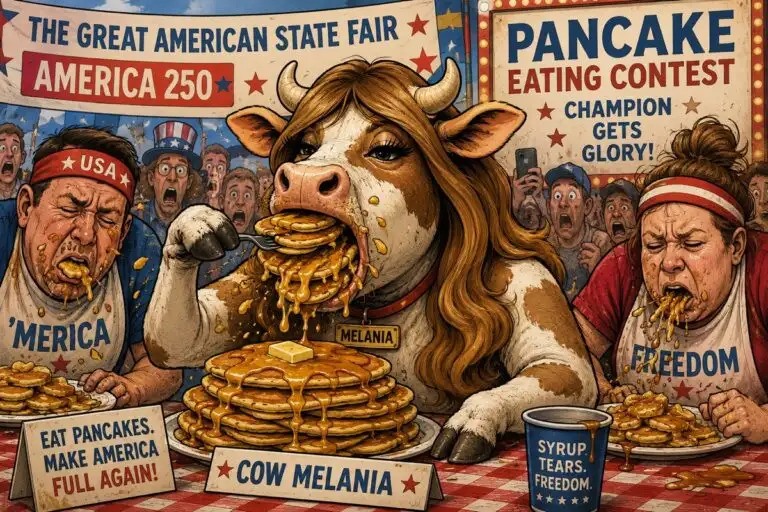
Archaeologists Can't Find Evidence for a Weapon Long Linked to America's Earliest Hunters gizmodo
Late Pleistocene Clovis atlatl hunting fails a chronological modeling test PNAS
Grandpa Pudding Brains declares victory over "criminally made algae" Boing Boing
Trumped Mark Liberman at Language Log
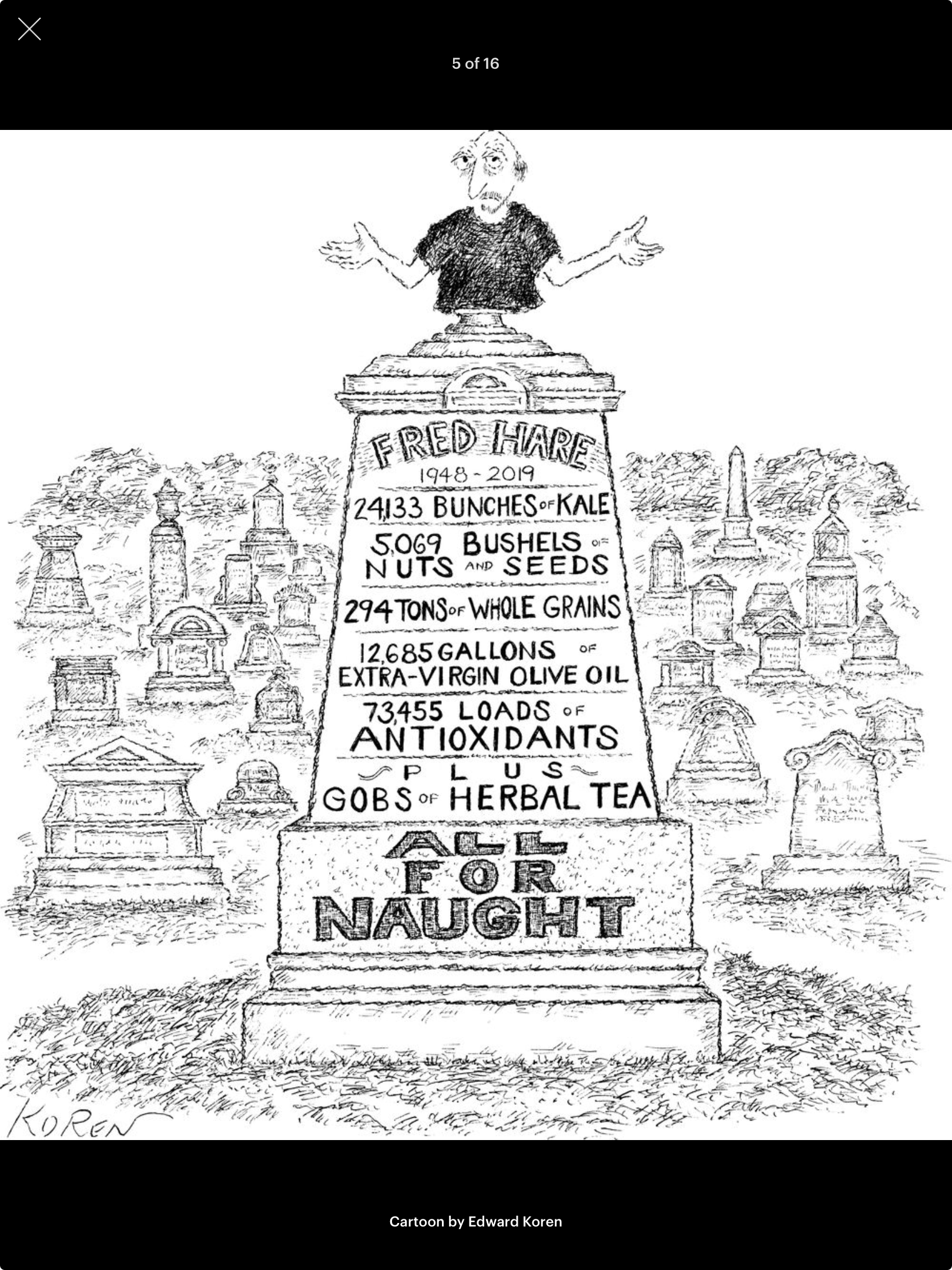
Now space has been corrupted by capitalism, there's only one place left to escape to: Null Island boingboing
How Big Oil Funded / Shaped a Landmark Princeton Climate Study Informed Comment
Browse 5.8 million works of art at the Last Museum ...Search across 5,843,965 artworks: The Last Museum
Archaeologists Hacked Through Miles of Jungle and Found an Intact Lost Maya City gizmodo
Jo Walton's "Everybody's Perfect" Cory Doctorow
horse idioms sesquiotic
Victor Mair RIP Language Log
(continued at July 2026 links)